While most people associate the term “learning disabilities” with children, or students, research has shown that these problems do not disappear in adulthood. As a result, interest in adults with learning disabilities is increasing. In Speaking for Themselves, nine adults with learning disabilities tell the "inside story" of how they deal with a very real handicap that the outside world does not see. Through their interview format, authors Paul J. Gerber and Henry B. Reiff take the reader beyond the usual boundaries of educational research and into the daily lives of fascinating individuals. Their subjects respond to in-depth to questions about careers, education, social and emotional concerns, daily living, and their own keys to success. Faced with a variety of challenges—from problems with processing language to difficulties in organizing daily routines—they describe their own strategies for coping with them, which are often amusing, sometimes sorrowful, and always intriguing. The subjects go on to offer their own first-hand definitions of learning disabilities and to give suggestions and advice not only to other adults who share their difficulties, but also to all of us who will come into contact with them. Their contributions produce a book that extends its interest not only to professionals in the field of learning disabilities, but to family members, friends, employers, educators, and psychologists. The interviews in this unique volume demonstrate that, for many individuals, learning disabilities do not preclude successful adjustment to adult life.
In the early 20th century, Marxist theory was enriched and rejuvenated by adopting the concept of reification, introduced by the Hungarian theorist Georg Lukács to identify and denounce the transformation of historical processes into ahistorical entities, human actions into things that seemed part of an immutable "second nature." For a variety of reasons, both theoretical and practical, the hopes placed in de-reification as a tool of revolutionary emancipation proved vain. In these original and imaginative essays, delivered as the Tanner Lectures at the University of California, Berkeley in 2005, the distinguished third-generation Frankfurt School philosopher Axel Honneth attempts to rescue the concept of reification by recasting it in terms of the philosophy of recognition he has been developing over the past two decades. Three distinguished political and social theorists: Judith Butler, Raymond Geuss, and Jonathan Lear, respond with hard questions about the central anthropological premise of his argument, the assumption that prior to cognition there is a fundamental experience of intersubjective recognition that can provide a normative standard by which current social relations can be judged wanted. Honneth listens carefully to their criticism and provides a powerful defense of his position.
In the early 20th century, Marxist theory was enriched and rejuvenated by adopting the concept of reification, introduced by the Hungarian theorist Georg Lukács to identify and denounce the transformation of historical processes into ahistorical entities, human actions into things that seemed part of an immutable "second nature." For a variety of reasons, both theoretical and practical, the hopes placed in de-reification as a tool of revolutionary emancipation proved vain. In these original and imaginative essays, delivered as the Tanner Lectures at the University of California, Berkeley in 2005, the distinguished third-generation Frankfurt School philosopher Axel Honneth attempts to rescue the concept of reification by recasting it in terms of the philosophy of recognition he has been developing over the past two decades. Three distinguished political and social theorists: Judith Butler, Raymond Geuss, and Jonathan Lear, respond with hard questions about the central anthropological premise of his argument, the assumption that prior to cognition there is a fundamental experience of intersubjective recognition that can provide a normative standard by which current social relations can be judged wanted. Honneth listens carefully to their criticism and provides a powerful defense of his position.
This innovative study re-evaluates the philosophical significance of aesthetics in the context of contemporary debates on the nature of philosophy. Lewis's main argument is that contemporary conceptions of meaning and truth have been reified, and that aesthetics is able to articulate why this is the case, with important consequences for understanding the horizons and nature of philosophical inquiry. Reification and the Aesthetics of Music challenges the most emphatic and problematic conceptions of meaning and truth in both analytic philosophy and postmodern thought by acknowledging the ontological and logical primacy of our concrete, practice-based experiences with aesthetic phenomena. By engaging with a variety of aesthetic practices, including Beethoven's symphonies and string quartets, Wagner's music dramas, Richard Strauss's Elektra, the twentieth-century avant-garde, Jamaican soundsystem culture, and punk and contemporary noise, this book demonstrates the aesthetic relevance of reification as well as the concept's applicability to contemporary debates within philosophy.
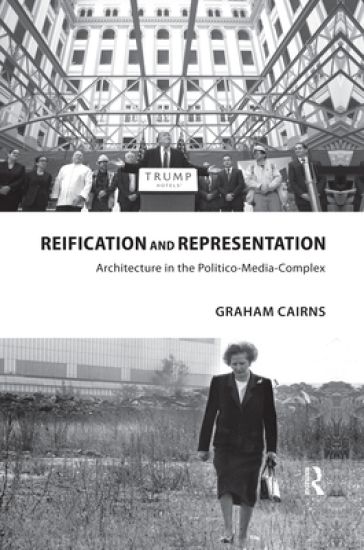
The relationship between politics and the public relations industry is controversial and, at times, polemic. However, one component of this relationship that has yet to be investigated is the role of architecture. Arguing for a fundamental reconfiguration of our understanding of ‘political architecture’, this book suggests it is not only a question of constructed buildings, but equally a case of mediated imagery. Considered through examples of architecture as a backdrop for photo shoots by politicians in the democracies of the United States and the United Kingdom, this book suggests these images give us both a better understanding of recent developments in the Western political economy and the architectural and urban developments of the late 20th and early 21st Centuries.Using case studies of Margaret Thatcher, Tony Blair, David Cameron, Barack Obama, George W. Bush and Donald Trump, this book represents a ground-breaking triangular analysis that will be essential reading for scholars in architecture, politics, media and communication studies.
It has been over thirty years since the founding crises that birthed legal ethics as both a field of study and a discrete field of law. In that time thinking about the ethical dimension of legal practice has taken several turns: from justifications of zealous advocacy, to questions of process and connections to specifically legal values, to more recently consideration of legal conduct as part of a wider field of virtue. Parallel to this dynamism of thought, there has also been significant changes in how legal professions, especially within those that possess a common law heritage, have been regulated and the values and conceptions of legitimate conduct that has informed this regulation.This volume represents an opportunity for a comprehensive review of legal ethics as an international movement. Contributors include many of the key participants to the legal ethics field from the United States, United Kingdom, Canada, Australia, New Zealand and South Africa, including David Luban and Deborah Rhode, as well as many of the recognised emerging thinkers. The theme of the book is taking stock of the last thirty years of legal ethics practice and scholarship and also a forum for new ideas and new thinking regarding the conduct of lawyers and the moral and social responsibility of the legal profession. The contributions also consider the topic of dynamism. Over the last decade significant developments in both the expectations of professional conduct and the regulation of the profession has been experienced in all jurisdictions, which has seen traditional, and once sacred, conceptions of lawyering challenged and re-evaluated. The contributors also look at the theme of affirmation. Within an increasingly complex environment of change and dynamism, this volume reaffirms that there is value within the field of legal ethics. That is the project of reflecting on the unique ethical and conduct requirements of lawyering can not be submerged into a broader field of applied philosophy, management or regulatory studies. While this volume does not deny the opportunities that exist for interdisciplinary engagement with philosophy, social science or politics, it affirms legal ethics as a legitimate and highly relevant field of inquiry.
It has been over thirty years since the founding crises that birthed legal ethics as both a field of study and a discrete field of law. In that time thinking about the ethical dimension of legal practice has taken several turns: from justifications of zealous advocacy, to questions of process and connections to specifically legal values, to more recently consideration of legal conduct as part of a wider field of virtue. Parallel to this dynamism of thought, there has also been significant changes in how legal professions, especially within those that possess a common law heritage, have been regulated and the values and conceptions of legitimate conduct that has informed this regulation.This volume represents an opportunity for a comprehensive review of legal ethics as an international movement. Contributors include many of the key participants to the legal ethics field from the United States, United Kingdom, Canada, Australia, New Zealand and South Africa, including David Luban and Deborah Rhode, as well as many of the recognised emerging thinkers. The theme of the book is taking stock of the last thirty years of legal ethics practice and scholarship and also a forum for new ideas and new thinking regarding the conduct of lawyers and the moral and social responsibility of the legal profession. The contributions also consider the topic of dynamism. Over the last decade significant developments in both the expectations of professional conduct and the regulation of the profession has been experienced in all jurisdictions, which has seen traditional, and once sacred, conceptions of lawyering challenged and re-evaluated. The contributors also look at the theme of affirmation. Within an increasingly complex environment of change and dynamism, this volume reaffirms that there is value within the field of legal ethics. That is the project of reflecting on the unique ethical and conduct requirements of lawyering can not be submerged into a broader field of applied philosophy, management or regulatory studies. While this volume does not deny the opportunities that exist for interdisciplinary engagement with philosophy, social science or politics, it affirms legal ethics as a legitimate and highly relevant field of inquiry.