Kirjahaku
Etsi kirjoja tekijän nimen, kirjan nimen tai ISBN:n perusteella.
1000 tulosta hakusanalla Richard J. Walter
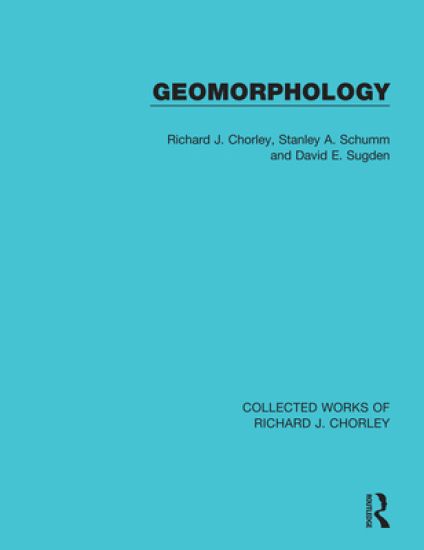
Originally published in 1984. This major text covers the whole discipline of geomorphology, presenting a clear and comprehensive overview of the field, drawing on the full range of modern research. Landforms and their formative processes are treated on a broad spectrum of spatial scales, and examples are drawn from the major geological, climatic and biotic environments. The book is divided conveniently into some 170 clearly defined sections to allow readers to make the most efficient use of those parts of the text relevant to their particular needs. After introducing the basic concepts such as systems analysis, morphologic and cascading systems, the historical-evolutionary approach and process-response geomorphology, the book moves on to the geological background to geomorphology and then the extensive third part deals with the geomorphic processes and responding landforms. Part four examines climatic geomorphology and the appendix touches on applied geomorphology, especially fluvial processes.
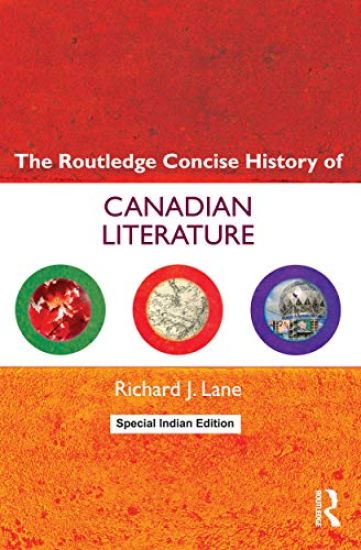
The Routledge Concise History of Canadian Literature introduces the fiction, poetry and drama of Canada in its historical, political and cultural contexts.
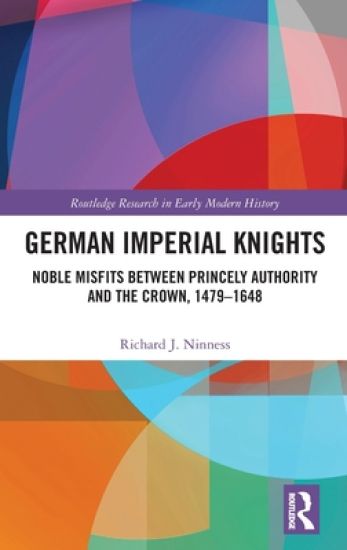
The German imperial knights were branded disobedient, criminal, or treasonous, but instead of finding themselves on the wrong side of history, they resisted marginalization and adapted through a combination of conservative and progressive strategies. The knights tried to turn the elite world on its head through their constant challenges to the princes in the realms of both culture and governance. They held their own chivalric tournaments from 1479-1487, and defied the emperor and powerful princes in refusing to obey laws that violated custom. But their resistance led to a series of disasters in the 1520s: their leaders were hunted down and their castles destroyed. Having failed on their own, they turned to Emperor Charles V in the 1540s and the imperial knighthood was formed. This new status stabilized their position and provided them with important rights, including the choice between Lutheranism and Catholicism. During the Reformation era (1517-1648), no other German group embraced diversity in religion like the imperial knights. Despite the popularity of Protestantism in the group, they stood up to their princely adversaries, now Protestant, becoming champions of the Catholic Church and proved themselves just as staunch defenders of the Church as the Habsburg and Wittelsbach dynasties.
Originally published in 1990. Research into the provison made for the 30 million Americans, aged sixty-five and up, whom society calls "old."
Solar Energy And The U.s. Economy
Richard J Goettle Iv; Christopher Pleatsikas; Edward A. Hudson
Routledge
2020
sidottu
First published 1982. Twice during the 1970s -- the Arab Oil Embargo of 1973-74 and the tight oil market of 1978-79 associated with the political upheaval in Iran -- the U.S. economy experienced severe shocks as a result of massive price increases for imported oil. By 1980 the price for imported crude oil had increased to nearly twenty times the price in 1970. This book seeks to provide a basis for determining the macroeconomic effects of solar energy investments over the 1980 to 2000 time period. It structures its analysis in a multidimensional form, specifying variations in • conventional energy costs; • solar market penetration; • solar technology costs.
Originally published in 1990. Research into the provison made for the 30 million Americans, aged sixty-five and up, whom society calls "old."
Solar Energy And The U.s. Economy
Richard J Goettle Iv; Christopher Pleatsikas; Edward A. Hudson
TAYLOR FRANCIS LTD
2022
nidottu
This book investigates the economic effects of investing in solar energy technologies, given assumptions about the cost of the technologies, and the amount of solar energy that can be supplied. It makes long-range projections of economic growth and capital investment in the 1980-2000 period.
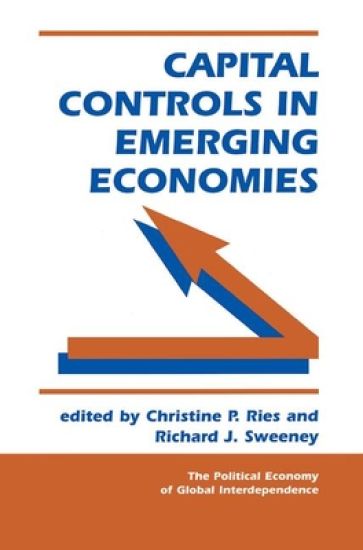
Capital Controls In Emerging Economies
Richard J Swe P Ries; Richard J Sweeney
Routledge
2019
sidottu
As a growing number of nations usher in market economies, policymakers must grapple with key decisions regarding capital controls and capital account liberalization. In this ambitious volume, distinguished economists evaluate these choices within the context of economic efficiency, economic structure, and political consequences in an increasingly g
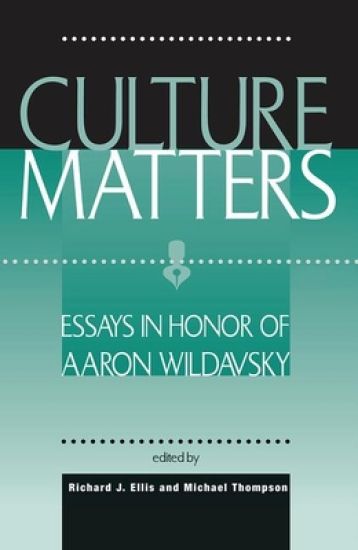
Culture Matters explores the role of political culture studies as one of the major investigative fields in contemporary political science. Culture theory was the focal point of the late Aaron Wildavsky's teaching and research for the last decade of his life, a life that profoundly affected many fields of political science from the study of the pres
In this book, the author leads a journey through the depths of authentic sorrow, longing, and despair. Daring us to face death unflinchingly, the author imparts courage to spin in the vortex of personal and collective grief.
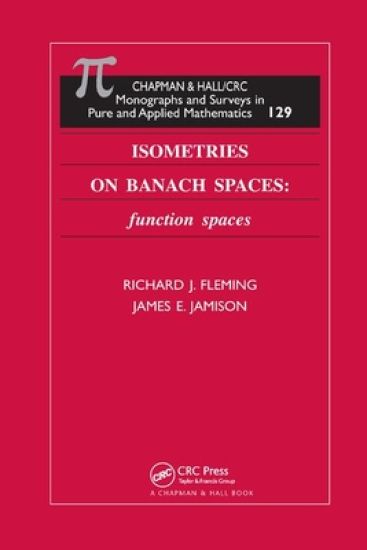
Fundamental to the study of any mathematical structure is an understanding of its symmetries. In the class of Banach spaces, this leads naturally to a study of isometries-the linear transformations that preserve distances. In his foundational treatise, Banach showed that every linear isometry on the space of continuous functions on a compact metric space must transform a continuous function x into a continuous function y satisfying y(t) = h(t)x(p(t)), where p is a homeomorphism and |h| is identically one. Isometries on Banach Spaces: Function Spaces is the first of two planned volumes that survey investigations of Banach-space isometries. This volume emphasizes the characterization of isometries and focuses on establishing the type of explicit, canonical form given above in a variety of settings. After an introductory discussion of isometries in general, four chapters are devoted to describing the isometries on classical function spaces. The final chapter explores isometries on Banach algebras. This treatment provides a clear account of historically important results, exposes the principal methods of attack, and includes some results that are more recent and some that are lesser known. Unique in its focus, this book will prove useful for experts as well as beginners in the field and for those who simply want to acquaint themselves with this area of Banach space theory.
Fluid Power Maintenance Basics and Troubleshooting
Richard J. Mitchell; John J. Pippenger
CRC Press
2019
nidottu
This unique single-source reference-the first book of its kind to address systematically the problems involved in the field-offers comprehensive coverage of hydraulic system troubleshooting and encourages change in the trial-and-error methods common in rectifying problems and restoring system downtime, furnishing a new paradigm for troubleshooting methodology.Covering typical circuitry found in industrial, agricultural, construction, transportations, utilities maintenance, and fire-fighting equipment as well as heavy presses, Fluid Power Maintenance Basics and Troubleshooting:Supplies the tools needed to investigate problems, including hydraulic component symbol identification Provides an understanding of the function of components in relation to the system Shows how to interpret the hydraulic system diagram Demonstrates how components within circuit diagrams interact to achieve machine performance Presents flow charts and operating descriptions for several types of machines Delineates the logical steps of problem analysis And much moreLavishly illustrated with nearly 400 drawings and photographs and written by two widely experienced authorities, Fluid Power Maintenance Basics and Troubleshooting is an indispensable day-to-day resource for mechanical, hydraulic, plant, control, maintenance, manufacturing, system and machine design, pneumatic, industrial, chemical, electrical and electronics, lubrication, plastics processing, automotive, and power system engineers; manufacturers of hydraulic and pneumatic machinery; systems maintenance personnel; machinery service and repair companies; and upper-level undergraduate, graduate, and continuing-education students in these disciplines.
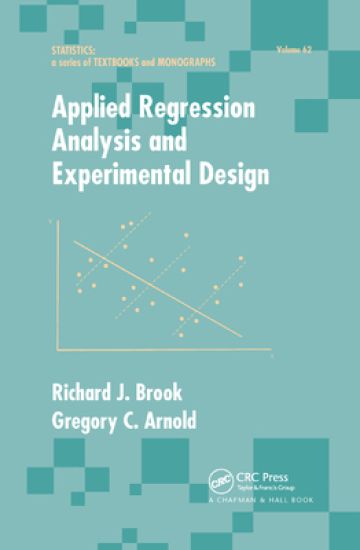
Applied Regression Analysis and Experimental Design
Richard J. Brook; Gregory C. Arnold
CRC Press
2019
nidottu
For a solid foundation of important statistical methods, the concise, single-source text unites linear regression with analysis of experiments and provides students with the practical understanding needed to apply theory in real data analysis problems.Stressing principles while keeping computational and theoretical details at a manageable level, Applied Regression Analysis and Experimental Design features an emphasis on vector geometry and least squares to unify and provide an intuitive basis for most topics covered… abundant examples and exercises using real-life data sets clearly illustrating practical of data analysis…essential exposure to MINITAB and GENSTAT computer packages , including computer printouts…and important background material such as vector and matrix properties and the distributional properties of quadratic forms.Designed to make theory work for students, this clearly written, easy-to-understand work serves as the ideal texts for courses Regression, Experimental Design, and Linear Models in a broad range of disciplines. Moreover, applied statisticians will find the book a useful reference for the general application of the linear model.
Just Enough R! An Interactive Approach to Machine Learning and Analytics presents just enough of the R language, machine learning algorithms, statistical methodology, and analytics for the reader to learn how to find interesting structure in data. The approach might be called "seeing then doing" as it first gives step-by-step explanations using simple, understandable examples of how the various machine learning algorithms work independent of any programming language. This is followed by detailed scripts written in R that apply the algorithms to solve nontrivial problems with real data. The script code is provided, allowing the reader to execute the scripts as they study the explanations given in the text.Features Gets you quickly using R as a problem-solving tool Uses RStudio’s integrated development environment Shows how to interface R with SQLite Includes examples using R’s Rattle graphical user interface Requires no prior knowledge of R, machine learning, or computer programming Offers over 50 scripts written in R, including several problem-solving templates that, with slight modification, can be used again and again Covers the most popular machine learning techniques, including ensemble-based methods and logistic regression Includes end-of-chapter exercises, many of which can be solved by modifying existing scripts Includes datasets from several areas, including business, health and medicine, and science About the AuthorRichard J. Roiger is a professor emeritus at Minnesota State University, Mankato, where he taught and performed research in the Computer and Information Science Department for over 30 years.
This book demonstrates how numbers open up new ways of thinking about problems and addresses current issues for which statistics has practical applications. The articles are classified according to probability, condensing data, testing, estimation, experimental design, prediction, and modelling.
Challenges of Mapping the Classical World collects together in one volume fourteen varied items written by Richard Talbert over the past thirty years. They cohere around the theme of mapping the classical world since the nineteenth century. All were originally prompted by Talbert’s commission in the late 1980s to produce a definitive classical atlas after more than a century of failed attempts by the Kieperts and others. These he evaluates, as well as probing the Smith/Grove atlas, a successful twenty-year initiative launched in the mid-1850s, with a cartographic approach that departs radically from established practice. Talbert’s initial vision for the international collaborative project that resulted in the Barrington Atlas of the Greek and Roman World (2000) is presented, and the successive twice-yearly reports on its progress from 1991 through to completion are published here for the first time. A further item reflects retrospectively on the project’s cartographic challenges and on how developments in digital map production were decisive in overcoming them. This volume will be invaluable to anyone with an interest in the development and growing impact of mapping the classical world.
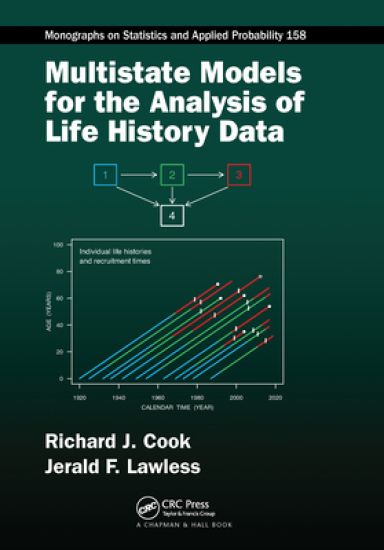
Multistate Models for the Analysis of Life History Data
Richard J Cook; Jerald F. Lawless
CRC Press
2020
nidottu
Multistate Models for the Analysis of Life History Data provides the first comprehensive treatment of multistate modeling and analysis, including parametric, nonparametric and semiparametric methods applicable to many types of life history data. Special models such as illness-death, competing risks and progressive processes are considered, as well as more complex models. The book provides both theoretical development and illustrations of analysis based on data from randomized trials and observational cohort studies in health research. It features: Discusses a wide range of applications of multistate models, Presents methods for both continuously and intermittently observed life history processes, Gives a thorough discussion of conditionally independent censoring and observation processes, Discusses models with random effects and joint models for two or more multistate processes, Discusses and illustrates software for multistate analysis that is available in R, Target audience includes those engaged in research and applications involving multistate models.
The German imperial knights were branded disobedient, criminal, or treasonous, but instead of finding themselves on the wrong side of history, they resisted marginalization and adapted through a combination of conservative and progressive strategies. The knights tried to turn the elite world on its head through their constant challenges to the princes in the realms of both culture and governance. They held their own chivalric tournaments from 1479-1487, and defied the emperor and powerful princes in refusing to obey laws that violated custom. But their resistance led to a series of disasters in the 1520s: their leaders were hunted down and their castles destroyed. Having failed on their own, they turned to Emperor Charles V in the 1540s and the imperial knighthood was formed. This new status stabilized their position and provided them with important rights, including the choice between Lutheranism and Catholicism. During the Reformation era (1517-1648), no other German group embraced diversity in religion like the imperial knights. Despite the popularity of Protestantism in the group, they stood up to their princely adversaries, now Protestant, becoming champions of the Catholic Church and proved themselves just as staunch defenders of the Church as the Habsburg and Wittelsbach dynasties.