

Kirjahaku
Etsi kirjoja tekijän nimen, kirjan nimen tai ISBN:n perusteella.
1000 tulosta hakusanalla Richard J. Perry
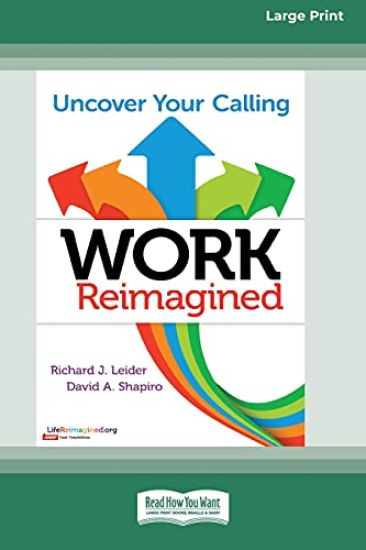
DISCOVER WHAT YOU'RE HERE TO DO. It's the end of work as we know it. Career paths look nothing like they did in the days before phones got smart. We work more hours at more jobs for more years than ever before. So it's vital that we know how to find work that allows us to remain true to who we are in the deepest sense, work that connects us to something larger than ourselves - in short, our ''calling.'' We all have one, and bestselling authors Richard Leider and David Shapiro can help you uncover yours. Through a unique Calling Card exercise that features a guided exploration of fifty - two ''natural preferences'' (such as Advancing Ideas, Doing the Numbers, Building Relationships, and Performing Events), Leider and Shapiro give us a new way to uncover our gifts, passions, and values and find work that expresses them. Along the way, they mix in dozens of inspiring true stories about people who have found, or are in the process of finding, their own callings. Uncovering your calling enables you to experience fulfillment in all aspects and phases of your life. And here's the even better news: you'll never have to work again. When you choose to do what you are called to do, you're always doing what you want to do. Work Reimagined offers an enlightening, effective, and entertaining approach to discovering what you were born to do, no matter your age or stage of life.

The Statistical Analysis of Recurrent Events
Richard J. Cook; Jerald Lawless
Springer-Verlag New York Inc.
2007
sidottu
Recurrent event data arise in diverse fields such as medicine, public health, insurance, social science, economics, manufacturing and reliability. The purpose of this book is to present models and statistical methods for the analysis of recurrent event data. No single comprehensive treatment of these areas currently exists. The authors provide broad but detailed coverage of the major approaches to analysis, while also emphasizing the modeling assumptions that they are based on. Thus, they consider important models such as Poisson and renewal processes, with extensions to incorporate covariates or random effects. More general intensity-based models are also considered, as well as simpler models that focus on rate or mean functions. Parametric, nonparametric and semiparametric methodologies are all covered, with clear descriptions of procedures for estimation, testing and model checking. Important practical topics such as observation schemes and selection of individuals for study, the planning of randomized experiments, events of several types, and the prediction of future events are considered. Methods of modeling and analysis are illustrated through many examples taken from health research and industry. The objectives and interpretations of different analyses are discussed in detail, and issues of robustness are addressed. Statistical analysis of the examples is carried out with S-PLUS software and code is given for some examples. This book is directed at graduate students, researchers, and applied statisticians working in industry, government or academia. Some familiarity with survival analysis is beneficial since survival software is used to carry out many of the analyses considered. This book can be used as a textbook for a graduate course on the analysis of recurrent events or as a reference for a more general course on event history analysis. Problems are given at the end of chapters to reinforce the material presented and to provide additional background or extensions to certain topics.
An Introduction to Programming with Mathematica®
Richard J. Gaylord; Samuel N. Kamin; Paul R. Wellin
Springer-Verlag New York Inc.
1995
sidottu
Accompanying the book, as with all TELOS sponsored publications, is an electronic component. In this case it is a DOS-Diskette produced by one of the coauthors, Paul Wellin. This diskette consists of Mathematica notebooks and packages which contain the codes for all examples and exercises in the book, as well as additional materials intended to extend many ideas covered in the text. It is of great value to teachers, students, and others using this book to learn how to effectively program with Mathematica .
This is the first volume in a suite of short, inexpensive, paperbound volumes intended for student usage as textbooks, or course supplements, and for purchase as single-copy reference works for professionals in specific disciplines, and, in some cases, for interdisciplinary use. This title focuses on cellular automata simulations while using Mathematica, thus its audience is a generally broad one, although physicists, life scientists and engineers will find this title to be of particular interest. Those familiar with Gaylord's previous book, coauthored with Paul Wellin, "Computer Simulations with Mathematica - Explorations in Complex Biological and Physical Systems", also published by TELOS, will find this new title to be an in-depth extension of some topics dealt with in that book. Modeling Nature: Cellular Automata Simulations with Mathematica, however, contains simulations not found in the Gaylord-Wellin volume. This book will have a DOS-diskette packaged with it, enabling cross-platform access to the code. These data files will also be made accessible online via the Internet at telospub.com FTP and WWW sites.
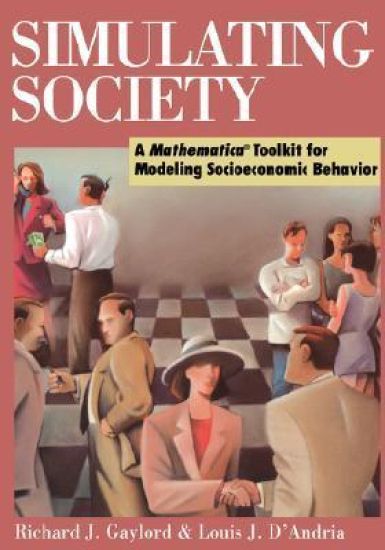
In "Simulating Scoiety", the authors explore the basis for social and economic behavior. Using the methodology of computer simulation, specifically cellular automata, they model various factors that are involved in a system of individuals (or agents) who interact socially and economically with one another. The usefulness of computer simulations in the social sciences is that it provides a laboratory in which qualitative ideas about social and economic interations can be tested. This brings a new dimension to the social sciences where 'explanations' abound, but are rarely subject to much experimental testing. Mathematica is used as the programming language for implementing these models as cellular automata simulations. The authors have chosen this language because it has a number of features which make it uniquely qualified to be used by social scientists, especially those without expertise in computer programming. Users can easily access the various 3.0 Mathematica notebooks, and readily interact with them, the full text of the printed book, itself, and other data contained on www.telospub.com.

This short volume selects and describes the main facts about the 'facts of life' and discusses their significance to man. It is only natural that it includes much information gleaned from mammalian reproductive patterns. It was their investigation that historically gave the clues to understanding what happens in human reproduction.

The battle of Britain pitted the Hurricanes and Spitfires of the Royal Air Force against the Messerschmitts of Hitler's Luftwaffe in the skies over England in 1940. It was immortalized in Churchill's words, "Never in the field of human conflict was so much owed by so many to so few," but it has since been debunked by revisionists as an inconclusive and even strategically flawed encounter for the British. In this assessment of the battle, Richard Overy restores the historical balance. He delivers shrewd judgments on the critical elements for both sides, from strategy to leadership, command organization, communications, and training to the technology of fighters, bombers, and radar. Overy shows that even if the popular myth overshoots the mark, the significance of the battle remains undiminished in the light of realistic judgments. A necessary battle, it marked the end of Germany's string of victories, forestalled a German invasion, and kept Britain in the war.

Offers a wide-angle view that expands our perspective on Illinois history. This book treats Illinois as a microcosm of the nation, arguing that its history exhibits basic conflicts that had much to do with shaping American society in general.

Case Studies in Cancer
Richard J. Lee; Jeremy S. Abramson; Richard A. Goldsby
WW Norton Co
2018
nidottu
Cancer is the focus of intense clinical and scientific interest. This research increasingly leverages our understanding of molecular biology for the development of targeted therapeutics. Well-selected case studies provide an opportunity to explain specific examples of cancers and their management in the context of engaging, patient-centered cases. This text is a clinical companion for Weinberg’s The Biology of Cancer. However, it includes sufficient background and explanatory detail to be used on its own.
Mental Health Professionals in Medical Settings
Richard J. Bischoff; Richard L. Heinrich; Jo Ellen Patterson; C.J. Peek; Joseph Scherger
WW Norton Co
2002
sidottu
One of the most significant events in the history of health care is the development of separate and parallel systems for mental health and medical care. Patients, however, want health care that is better coordinated, more personalized, more accessible, more timely, and less cumbersome to receive. These patient-wants reinforce what we know about patient needs for better integrated care and more collaborative health care, as shown by the following data: 50% of mental health care is delivered by primary care physicians.67% of all psychopharmacological drugs are prescribed by primary care physicians.50-70% of all primary care visits are for psychosocial concerns. This book illustrates the importance of taking an integrated approach to health care and outlines the skills that a mental health professional needs for working in a medical setting. The authors, trained in health psychology, psychiatry, family medicine, and marriage and family therapy, build a persuasive case for their holistic, biopsychosocial approach to the traditionally fragmented fields of primary care and mental health care.This is a primer for mental health professionals working in a medical setting. Part I discusses health care settings. Chapters 1 and 2 describe the specific cultures of primary care, specialty care, and mental health care, and Chapter 3 discusses ways to balance the clinical, operational, and financial perspectives of health care. Part II provides information on how to build collaborative medical care, including getting started (Chapter 4), expanding the therapist's identity and role in medical clinics (Chapter 5), working within the medical system's organizational framework (Chapter 6), working with the common problems that patients present in primary care (Chapter 7), and ways to promote healthy behavior change (Chapter 8). The book concludes by highlighting some of the opportunities that exist for therapists who want to be part of this important shift in how health care is provided.
Explaining Auschwitz and Hiroshima explores the way in which the main combatant societies of the Second World War have historicised that experience. Since 1945, debates in Germany about `the past that would not fade away' have been reasonably well-known. But in this book, Richard Bosworth maintains that Germany is not unique. He argues that in Britain, France, Italy, the USSR and Japan, as well as in Germany the traumatic history of the `long Second World War' has remained crucial to the culture and the politics of post-war societies. Each has felt a compelling need to interpret this past event and thus to `explain' `Auschwitz' and `Hiroshima'. Bosworth explores the bitter controversies that have developed around a particular interpretation of the war, such as disputes over A.J.P. Taylor's, Origins of the Second World War , Marcel Ophul's film, The Sorrow and the Pity , Renzo De Felice's biography of Mussolini in the 1970s or in post- Glasnost debates about the historiographies of the Commonwealth of Independent States. Richard Bosworth's book is a wide-ranging and thoughtful excursion into comparative history.
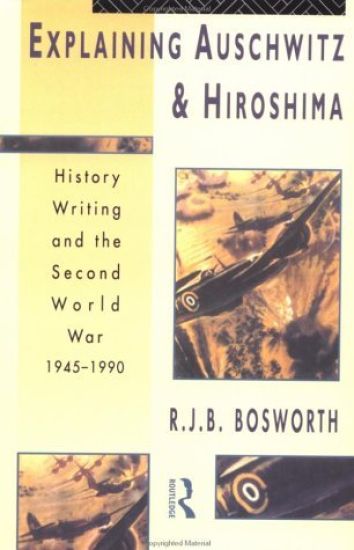
Explaining Auschwitz and Hiroshima explores the way in which the main combatant societies of the Second World War have historicised that experience. Since 1945, debates in Germany about `the past that would not fade away' have been reasonably well-known. But in this book, Richard Bosworth maintains that Germany is not unique. He argues that in Britain, France, Italy, the USSR and Japan, as well as in Germany the traumatic history of the `long Second World War' has remained crucial to the culture and the politics of post-war societies. Each has felt a compelling need to interpret this past event and thus to `explain' `Auschwitz' and `Hiroshima'. Bosworth explores the bitter controversies that have developed around a particular interpretation of the war, such as disputes over A.J.P. Taylor's, Origins of the Second World War , Marcel Ophul's film, The Sorrow and the Pity , Renzo De Felice's biography of Mussolini in the 1970s or in post- Glasnost debates about the historiographies of the Commonwealth of Independent States. Richard Bosworth's book is a wide-ranging and thoughtful excursion into comparative history.

In the Western world, cities have arguably never been more anxious: practical anxieties about personal safety and metaphysical anxieties about the uncertain place of the city in culture are the small change of journalism and political debate. Cities have long been regarded as problems, in need of drastic solutions. In this context, the contemporary revival of city centres is remarkable. But in a culture that largely fears the urban, how can the contemporary city be imagined? How is it supposed to be used or inhabited? What does it mean? Taking England since WWII as its principal focus, this provocative and original book considers the Western city at a critical moment in its history.
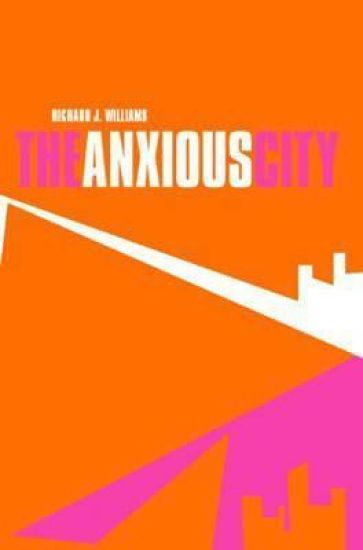
In the Western world, cities have arguably never been more anxious: practical anxieties about personal safety and metaphysical anxieties about the uncertain place of the city in culture are the small change of journalism and political debate. Cities have long been regarded as problems, in need of drastic solutions. In this context, the contemporary revival of city centres is remarkable. But in a culture that largely fears the urban, how can the contemporary city be imagined? How is it supposed to be used or inhabited? What does it mean? Taking England since WWII as its principal focus, this provocative and original book considers the Western city at a critical moment in its history.

Covering over a century's worth of debate, thinking and writing about literature, this is a unique guide to the lives and works of fifty theorists who have left an indelible mark on literary studies.Featuring theorists such as Judith Butler, Jacques Derrida, Sigmund Freud and Edward Said, this accessible guide includes:a glossary of terms full cross-referencing for maximum ease of useauthoritative guides to further reading on and by each theorist.An essential resource for all students of literature, Fifty Key Literary Theorists explores the gamut of critical debate, from the New Critics to the Deconstructionists, and from post-colonialism to post-Marxism and more.

Covering over a century's worth of debate, thinking and writing about literature, this is a unique guide to the lives and works of fifty theorists who have left an indelible mark on literary studies.Featuring theorists such as Judith Butler, Jacques Derrida, Sigmund Freud and Edward Said, this accessible guide includes:a glossary of terms full cross-referencing for maximum ease of useauthoritative guides to further reading on and by each theorist.An essential resource for all students of literature, Fifty Key Literary Theorists explores the gamut of critical debate, from the New Critics to the Deconstructionists, and from post-colonialism to post-Marxism and more.

German Disarmament After World War I examines the Allied disarmament of Germany and the challenges that such an enormous task presented to international efforts in enforcing the Treaty of Versailles.In the twenty-first century, disarmament remains a critical issue for the International community. This new book focuses on three key areas and lessons of Allied disarmament operations from 1920-31: the role and experience of international arms inspectors working amidst an embittered German populace the ramifications of the divergent disarmament priorities of the leaders of the disarmament coalitionthe effectiveness of united Allied policies backed by sanctions. These major issues are examined within the overall context of the assessment of Allied disarmament operations in Germany. While some historians perceive German disarmament as a failure, this book argues that arms inspectors successfully destroyed Germany’s ability to pose a military threat to European security.This new study shows how the destructive legacy of war convinced the victorious nations, especially Britain and France, of the importance in minimizing German military strength. French post-war security concerns, however, were often faced with the unwillingness of Britain to enforce the totality of the military articles of the treaty. German obstruction also influenced Allied disarmament policies. German Disarmament After World War I examines the initial effectiveness of Allied disarmament efforts in Germany and explains how they ultimately disappeared through diverging conceptions of a post-war world.This book will be of great interest to all students of disarmament, the interwar period and of military history, modern European history and security studies.

The Routledge Concise History of Canadian Literature introduces the fiction, poetry and drama of Canada in its historical, political and cultural contexts. In this clear and structured volume, Richard Lane outlines: the history of Canadian literature from colonial times to the present key texts for Canadian First Peoples and the literature of Quebec the impact of English translation, and the Canadian immigrant experience critical themes such as landscape, ethnicity, orality, textuality, war and nationhood contemporary debate on the canon, feminism, postcoloniality, queer theory, and cultural and ethnic diversity the work of canonical and lesser-known writers from Catherine Parr Traill and Susanna Moodie to Robert Service, Maria Campbell and Douglas Coupland. Written in an engaging and accessible style and offering a glossary, maps and further reading sections, this guidebook is a crucial resource for students working in the field of Canadian Literature.