Reproduction of the original. The publishing house Megali specialises in reproducing historical works in large print to make reading easier for people with impaired vision.
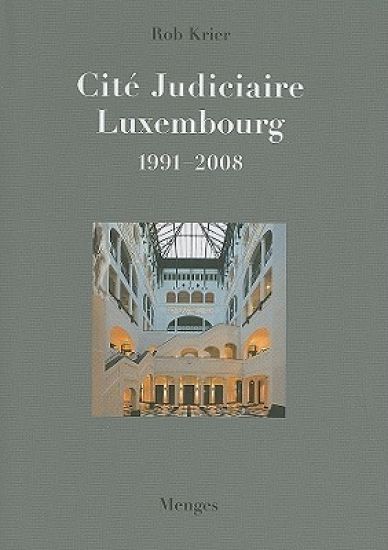
Text in English & German. Rob Krier, perhaps the only urban-planning artist among Germany's architects, has, for the first time in 30 years, completed a major urban project in his home country of Luxembourg. With regard to its authorship, this is a true "family project". With the significant contribution of his brother Léon to the masterplan for the site, which is situated opposite his parental home, Krier has, in his own words, fulfilled a "youthful dream". Krier's son-in-law and office partner, Christoph Kohl was involved in the execution, as was his distant relation and Luxembourgian contact architect, Jean Herr. The concept reaches far beyond Luxembourg's borders in its significance, as Krier's crew has formulated something of a manifesto for classical European urban architecture. Rather than a further high-rise for this European city, an entire quarter has been created with public roads, lanes and squares in which the various judicial departments are distributed across eight buildings. The plot structure, small-sized units and traditional plasterwork façades with their three-dimensional sculpted details all enhance the quarter's vitality, as does the masterful treatment of spatial divisions. This new approach is decisive in solving an ever more complex construction problem in contemporary urban planning: the integration of major administration complexes into the existing make-up of the city. In Luxembourg, the Kriers have succeeded in providing model evidence that, even today, this task can be achieved by means of top-quality architecture, without having to forfeit anything in terms of the modernity of equipment, the parsimony of economical execution, the reduction of energy consumption, or in the basic demands of public proximity. With this publication, Rob Krier has created a novelty in architectural literature. It is the first volume in sketchbook format of a series which document the design process from the first hand-drawn sketches, right through to realisation. Here, the entire spectrum of the creative process and its irrepressible joy for variation are revealed.
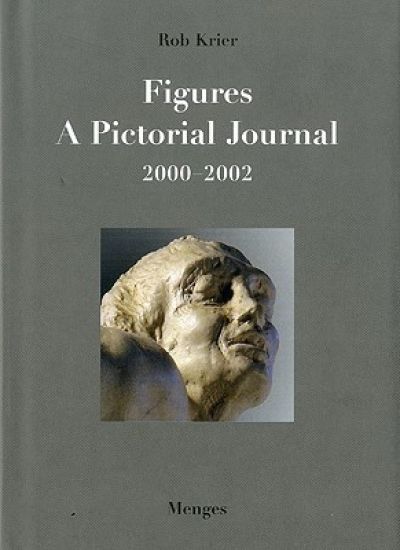
Text in German & English. The architect is at all times also an artist. How otherwise would he be able to tame the three-dimensionality of space and subdue the urges of physics and structural mechanics with the creations of his fantasy? This creativity is however mostly restricted purely to its own field. In this respect, Rob Krier, born in 1938 in Grevenmacher, Luxembourg, is indeed the proverbial exception that proves the rule. Besides his actual profession, which demands his daily attention, Krier has for years also made a vocation of his love of art, one which he nurtures parallel to his work. Fine art could stand in dialogue with architecture and it is Krier's ambition to have iconographic themes brought into the latter, so that they might speak equally to both the occupants of a building and to bystanders and move them to thoughtful reflection. In the works of Mies van der Rohe it is not rare that one finds naturalistic figures from, for example, Aristide Maillol or Wilhelm Lehmbruck -- as an anthropomorphic contrast to the strict geometry of the architecture, notes Rob Krier in the comments on his journal. If one is already aware of the realisation of his masterful architectural accomplishments through projects such as Potsdam-Kirchsteigfeld (1991 to 1997), De Resident in The Hague (1993-2001), Noorderhof in Amsterdam (1994-99), Veste Brandevoort near Helmond (since 1995), Citadel Broekpolder near Beverwijk (2000-04), or the Cité Judiciaire in Luxembourg (1992-2008) -- be assured, Krier's artistic skills are in no way inferior to his architectural work. Quite the contrary: as a sculptor and illustrator, too, Rob Krier brings together extraordinarily musical qualities and incorporates them into his work: his bronze The Jumper was erected in Montpellier in 2004, the Cowering Woman ten years earlier on Berlin's Friedrichstraße, the four metre-high duo Bosch i Alsina and Papasseit on Moll de la Fusta in Barcelona in 1992.
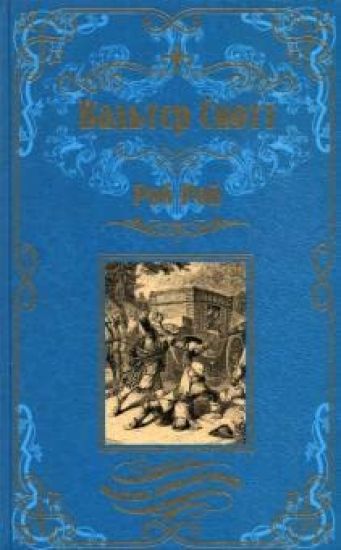
Pylkij nrav, izviliny sudby i dorogi zavodjat anglichanina Frensisa Osbaldistona v dikie zemli gornoj Shotlandii. Govorjat, v etikh mestakh oruduet shajka svirepejshego grabitelja i razbojnika Rob Roja, objavivshego vojnu vsem anglichanam. No vybirat ne prikhoditsja - koltso intrig za spinoj i vokrug Frenka szhimaetsja vse silnee. V ocherednoj tom "Masterov prikljuchenij" vkhodit znamenityj roman Valtera Skotta "Rob Roj" - istorija ljubvi, predatelstva i mesti na fone borby za britanskij prestol ocherednogo Jakova Stjuarta Shotlandskogo i prishlogo Georga I Gannoverskogo.Perevodchik: Volpin Nadezhda Davydovna
This book has been considered by academicians and scholars of great significance and value to literature. This forms a part of the knowledge base for future generations. So that the book is never forgotten we have represented this book in a print format as the same form as it was originally first published. Hence any marks or annotations seen are left intentionally to preserve its true nature.
""Rob Roy"", penned by Sir Walter Scott in 1817, is a historical novel set in the early 18th century Scotland. The narrative follows the journey of Frank Osbaldistone, intricately entangled in the Jacobite rebellion and the tumultuous life of the Scottish outlaw, Rob Roy MacGregor. Through vivid storytelling, Scott captures the societal and political upheavals of the era, skillfully interweaving historical events with imaginative plotlines. The novel immerses readers in the rugged beauty of the Scottish landscape, while exploring themes of loyalty, honor, and betrayal. With its richly drawn characters and intricate narrative, ""Rob Roy"" stands as a testament to Scott's prowess in blending history and fiction. It serves as a mirror reflecting the cultural resilience and spirit of the Scottish people, leaving a lasting impression of the tumultuous times and the enduring legacy of a celebrated historical figure.
Rob Gibson, a smart boy living in Lost Angeles, California was the center of bullying in school due to his strange skin disease. Added to that was a haunting dream of an unknown place devastated by a giant dragon and a monster snake. A boy and a girl kept asking for his help. With unavoidable fate, he discovered his lightning power while trying to save his brother from gangsters. Together with his best friend Bench, a Filipino foreign exchange student, Rob was destined to search for other teens who, like them, were power-holders. They would form a team needed to stop the force of Oydimon, king of evil, in invading the world. Would their friendship and powers be enough to stop the invasion?
One of the Waverley books by Walter Scott is the historical fiction Rob Roy (1817). The novel, which is most likely set in 1715, the year of the first Jacobite revolt, makes significant use of the social and economic context of that event while avoiding a direct treatment of it. There are two Rob Roy, which shows how little the character Rob Roy resembles a real-life person. One was alive and bred. The second is a compelling historical tale that is well-written. Although both may be regarded as "legitimate," they serve various needs and interests. The narrative is told by Frank Osbaldistone. He is the son of an English businessman who left his home in the north of England, close to the Scottish border, when he was a young man because he did not share the same religious beliefs as his father or his younger brother and also did not get along well with them. When Frank declines to join his father's prosperous business, his father sends him to live in the long-unseen family home with his uncle and his male cousins. Frank's cousin Rashleigh is given employment by his father in exchange.
Paris nouveau et Paris futur, un livre classique et rare qui a t consid r comme essentiel tout au long de l'histoire de l'humanit , pour que cet ouvrage ne soit jamais oubli , nous chez Alpha Editions avons fait des efforts pour sa pr servation en r ditant ce livre dans un format moderne pour les g n rations pr sentes et futures. Tout ce livre a t reformat , retap et con u. Ces livres ne sont pas constitu s de copies num ris es de leur oeuvre originale et le texte est donc clair et lisible.
Mr. Incoul's Misadventure, a classical book, has been considered important throughout the human history, and so that this work is never forgotten we at Alpha Editions have made efforts in its preservation by republishing this book in a modern format for present and future generations. This whole book has been reformatted, retyped and designed. These books are not made of scanned copies of their original work and hence the text is clear and readable.
Mr. Isaacs, A Tale of Modern India, a classical book, has been considered important throughout the human history, and so that this work is never forgotten we at Alpha Editions have made efforts in its preservation by republishing this book in a modern format for present and future generations. This whole book has been reformatted, retyped and designed. These books are not made of scanned copies of their original work and hence the text is clear and readable.
Ce livre classique a t initialement publi il y a des d cennies sous le titre "Many Cargoes" . Il a maintenant t traduit par Writat en langue fran aise pour leurs lecteurs francophones. Chez Writat, nous sommes passionn s par la pr servation du patrimoine litt raire du pass . Nous avons traduit ce livre en fran ais afin que les g n rations pr sentes et futures puissent le lire et le conserver.
Ce livre classique a t initialement publi il y a des d cennies sous le titre ""Manual of Parliamentary Practice Rules of Proceeding and Debate in Deliberative Assemblies"" . Il a maintenant t traduit par Writat en langue fran aise pour leurs lecteurs francophones. Chez Writat, nous sommes passionn s par la pr servation du patrimoine litt raire du pass . Nous avons traduit ce livre en fran ais afin que les g n rations pr sentes et futures puissent le lire et le conserver.