
Kirjahaku
Etsi kirjoja tekijän nimen, kirjan nimen tai ISBN:n perusteella.
1000 tulosta hakusanalla Robbin Alston

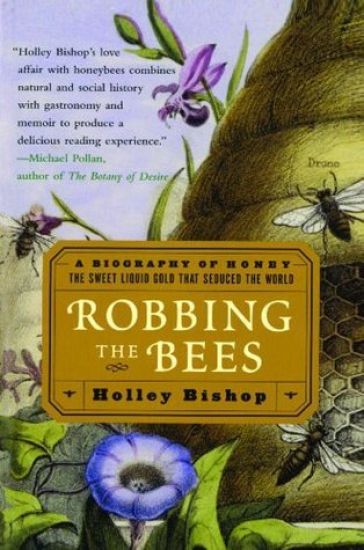
Robbing the Bees: A Biography of Honey-The Sweet Liquid That Seduced the World
Holley Bishop
The Free Press
2006
pokkari
Honey has been waiting almost ten million years for a good biography. Bees have been making this prized food - for centuries the world's only sweetener - for millennia, but we humans started recording our fascination with it only in the past few thousand years. Part history, part love letter, Robbing the Bees is a celebration of bees and their magical produce, revealing the varied roles of bees and honey in nature, world civilization, business, and gastronomy. To help navigate the worlds and cultures of honey, Bishop - beekeeper, writer, and honey aficionado - apprentices herself to Donald Smiley, a professional beekeeper who harvests tupelo honey in Florida. She intersperses the lively lore and science of honey with lyrical reflections on her own and Smiley's beekeeping experiences. Its passionate research, rich detail, and fascinating anecdote and illustrations make Holley Bishop's Robbing the Bees a sumptuous look at the oldest, most delectable food in the world.
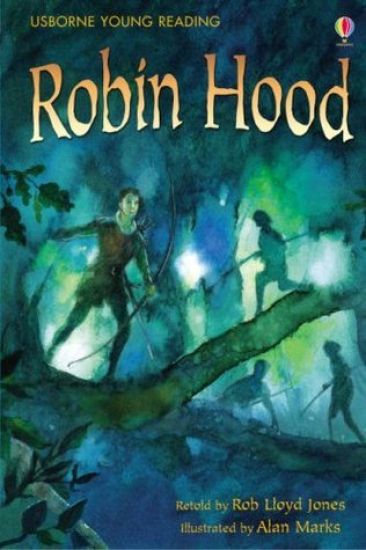
Robin Hood, along with his band of Merry Men, robs from the rich to give to the poor. But when the cruel Sheriff of Nottingham threatens the throne of King Richard, can Robin save the kingdom and win the heart of the fair Maid Marian?

First mentioned by William Langland in the late fourteenth century, Robin Hood comes down to us through ballads and folksongs, old chronicles and plays, medieval allusions, folklore and place names. Today Robin Hood folk songs are found in the USA as well as in England and Scotland, and place names and traditions are widely located in England. The earliest stories are centred on Barnsdale in Yorkshire, but later the emphasis shifts to Nottingham and Sherwood Forest. Originally a yeoman, Robin was upgraded to aristocrat in the sixteenth century, but he remains essentially a champion of the poor and oppressed and a social nonconformer. How far Robin Hood was based on a historical character and how far he is an archetypal outlaw or a Greenwood myth (who must withdraw from society and commune with nature) is the subject of the Doels' wide-ranging study.This new edition is complete with an updated gazetteer of Robin Hood sites and an annotated filmography. It includes almost 50 illustrations (including performances by present-day mummers).
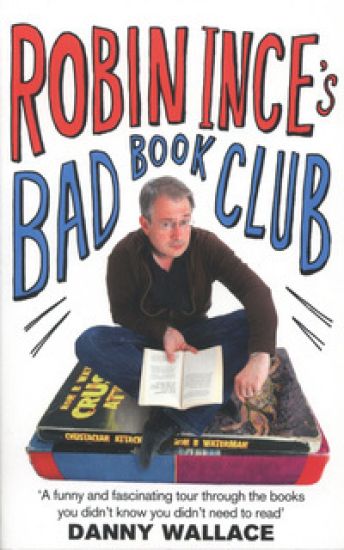
Is hideous prose and ghastly poetry more fabulous than great literature? Determined to find out, award-winning comedian Robin Ince has spent most of the 21st century rummaging through charity shops, jumble sales, and even the odd skip to compile the defining collection of the world's worst inadvertently hilarious books. This book will guide you through the hinterland of celebrity autobiography, unearthing underappreciated classics such as those by It Ain't Half Hot Mum's Don Estelle and the brother of a former PM (MAJOR MAJOR). It offers a detailed study of romance sub-genres, from the equine (DIAMOND STUD) to the gynaecological (SIGN OF THE SPECULUM). And it will prove invaluable to anyone who wants to know THE SECRETS OF PICKING UP SEXY GIRLS. Above all, the Book Club is a manual - almost a life guide - training you up for membership of the Grand Order of Curators of Books That Should Never Have Been. Join the club.
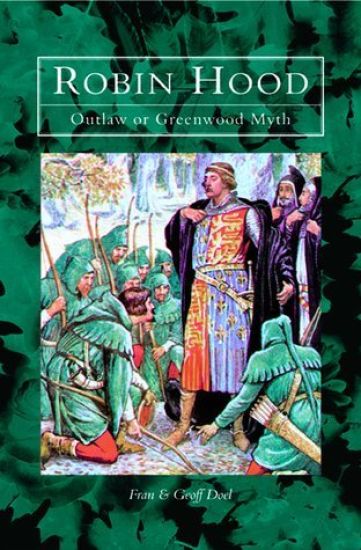
Outlaw or Greenwood myth.
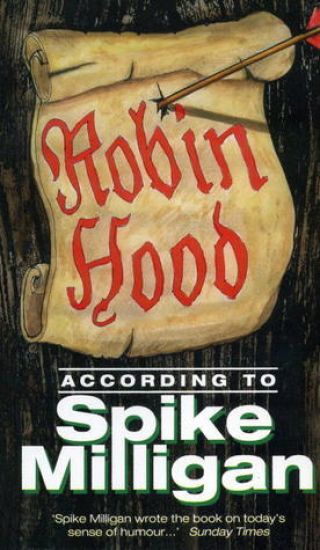
This version of Robin Hood has Robin and his merry men when the King's deer manage to evade their arrows, dining out at McDonald's, Kentucky Fried Chicken and eating jam sandwiches, Nevertheless, they are still more than willing to do battle with Robin's arch enemy Sir Guy de Custard Gisborne.
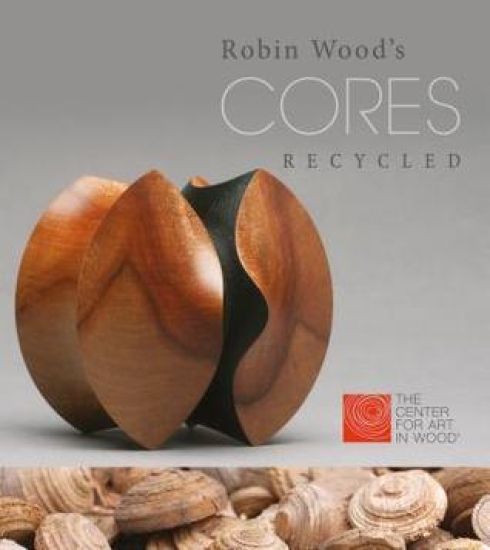
Robin Wood's CORES Recycled
Schiffer Publishing Ltd
2015
nidottu
Initially, they were the waste product of wooden bowls turned in an ancient technique by Robin Wood of the United Kingdom, an expert pole-lathe turner and author. Known for his historical and functional objects made on a foot-powered lathe, Wood keeps the tradition of pole turning alive. The leg-powered process Wood uses results in thousands of solid, round chunks – Cores – that get broken out of the center of the bowl at the last moment. Wood donated 100 Cores, which ranged in size from 2 x 2” to 3 x 4” to The Center for Art in Wood in Philadelphia. The Center sent Cores to two-score artists who agreed to the challenge of reworking them into new pieces of art. These works, shown here in more than 240 color photos, formed the exhibition – Robin Wood’s CORES Recycled – by The Center for Art in Wood.
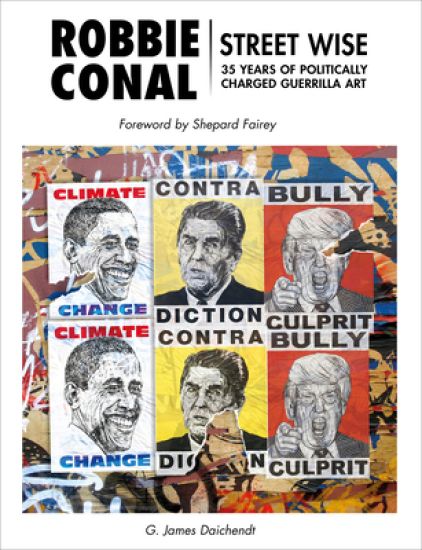
The politically charged art of Robbie Conal is gnarled, gut retching, and emotionally laden. Featuring every image in Robbie Conal’s storied poster campaigns, this is the definitive history of “America’s foremost street artist” (Washington Post). A foreword by Shepard Fairey, American contemporary street artist, graphic designer, and activist, sets the scene. Conal's satirical posters of political figures are given richer context as his life story is insightfully joined with art criticism by expert Daichendt. Today honored by museums and arts organizations around the world, Conal hit high speed during the Reagan administration in 1986, when he began turning his grotesque portraits into street posters. We see Conal's life come together at a critical moment to attack issues of censorship, war, social injustice, and the environment.
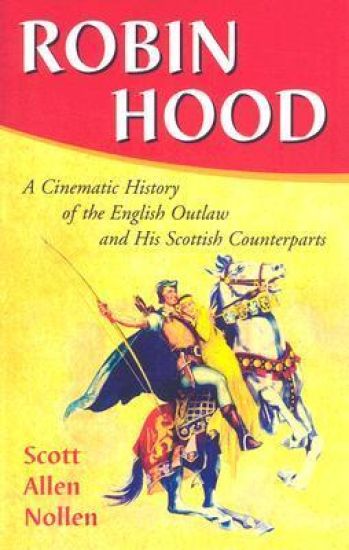
From Errol Flynn to Kevin Costner to Daffy Duck, the bandit of Sherwood Forest has gone through a variety of incarnations on the way to becoming a cinematic staple. The historic Robin Hood--actually an amalgam of several outlaws of medieval England--was eventually transformed into the romantic and deadly archer-swordsman who "robbed from the rich to give to the poor." This image was reinforced by popular literature, song--and film. This volume provides in-depth information on each film based on the immortal hero. In addition, other historical figures such as Scottish rebel-outlaws Rob Roy MacGregor and William Wallace are examined. Nollen also explores nontraditional representations of the legend, such as Frank Sinatra's Robin and the Seven Hoods and Westerns featuring the Robin Hood motif. A filmography is provided, including production information. The text is highlighted by rare photographs, advertisements, and illustrations.

Robin Hood
CORNELL UNIVERSITY PRESS
2003
sidottu
One of the world's foremost authorities on the only mythical person in the Dictionary of National Biography delves deeply into the Robin Hood story, probing ballads, epitaphs on old gravestones, and Disney films in search of the man behind the legend. (Mythology & Folklore)

"The mythical character of Robin Hood has become an icon through his presence in popular culture for the last 600 years.... Knight is extremely knowledgeable about his subject."-Library Journal The only figure in the Dictionary of National Biography who is said never to have existed, Robin Hood has taken on an air of reality few historical figures achieve. His image in various guises has been put to use as a subject of ballads, nationalist rallying point, Disney cartoon fox, greenclad figure of farce, tabloid fodder, and template for petty criminals and progressive political candidates alike. In this engaging and deeply informed book Stephen Knight looks at the different manifestations of Robin Hood at different times and places in a mythic biography with a thematic structure. The best way to get at the essence of the Robin Hood myth, Knight believes, is in terms not of chronological and generic progression but of the purposes served by heroes. Each of the book's four central chapters identifies a particular model of the hero, mythic or biographic, which dominated in certain periods and in certain genres, and explores their interrelations, their implications, and their historical and sociopolitical contexts.
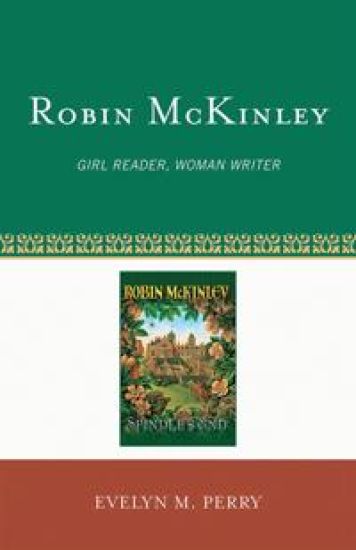
Since her first book, Beauty: A Retelling of the Story of Beauty and the Beast, was published in 1978, Robin McKinley has enchanted young adult readers for more than thirty years. This study is the first in-depth analysis of McKinley's works, including her award-winning books The Blue Sword (Newbery Honor, 1983) and The Hero and the Crown (Newberry Medal, 1985). In Robin McKinley: Girl Reader, Woman Writer, Evelyn Perry examines McKinley's novels and short stories as grouped into three categories: those set in Damar, which introduce and develop the rich geographic, social, political, and linguistic history of McKinley's secondary world; the retellings of folk and fairy tales, which reveal not only McKinley's encyclopedic knowledge of source stories but her respectful and highly literate approach to their contemporary adaptation; and her other works, less easily categorized but generally most recent, written for more mature readers, and featuring a diverse set of influences from vampires to homeopathy. Perry also explores the feminist articulation of character and social settings that are dominant themes running through McKinley's works. Anyone interested in Robin McKinley and her work, including secondary and post-secondary students, faculty, and librarians, will find Robin McKinley: Girl Reader, Woman Writer a valuable resource.
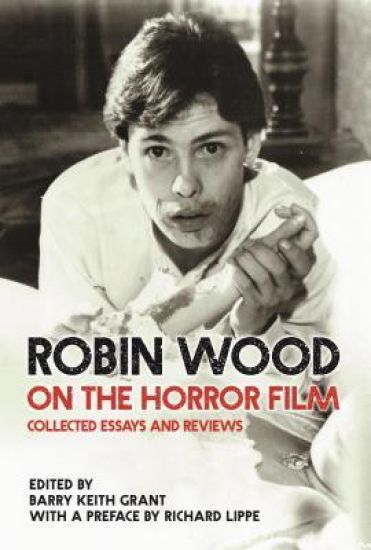
Robin Wood’s writing on the horror film, published over five decades, collected in one volume.Robin Wood—one of the foremost critics of cinema—has laid the groundwork for anyone writing about the horror film in the last half-century. Wood’s interest in horror spanned his entire career and was a form of popular cinema to which he devoted unwavering attention. Robin Wood on the Horror Film: Collected Essays and Reviews compiles over fifty years of his groundbreaking critiques.In September 1979, Wood and Richard Lippe programmed an extensive series of horror films for the Toronto International Film Festival and edited a companion piece: The American Nightmare: Essays on the Horror Film - the first serious collection of critical writing on the horror genre. Robin Wood onthe Horror Film now contains all of Wood’s writings from The American Nightmare and nearly everything else he wrote over the years on horror—published in a range of journals and magazines—gathered together for the first time. It begins with the first essay Wood ever published, ""Psychoanalysis of Psycho,"" which appeared in1960 and already anticipated many of the ideas explored later in his touchstone book, Hitchcock’s Films. The volume ends, fittingly, with, ""What Lies Beneath?"", written almost five decades later, an essay in which Wood reflects on the state of the horror film and criticism since the genre's renaissance in the 1970s. Wood's prose iseloquent, lucid, and convincing as he brings together his parallel interests in genre, authorship, and ideology.Deftly combining Marxist, Freudian, and feminist theory, Wood’s prolonged attention to classic and contemporary horror films explains much about the genre's meanings and cultural functions. Robin Wood on the Horror Film will be an essential addition to the library of anyone interested in horror, science fiction, and film genre.
Robin Wood’s writing on the horror film, published over five decades, collected in one volume.Robin Wood—one of the foremost critics of cinema—has laid the groundwork for anyone writing about the horror film in the last half-century. Wood’s interest in horror spanned his entire career and was a form of popular cinema to which he devoted unwavering attention. Robin Wood on the Horror Film: Collected Essays and Reviews compiles over fifty years of his groundbreaking critiques.In September 1979, Wood and Richard Lippe programmed an extensive series of horror films for the Toronto International Film Festival and edited a companion piece: The American Nightmare: Essays on the Horror Film - the first serious collection of critical writing on the horror genre. Robin Wood onthe Horror Film now contains all of Wood’s writings from The American Nightmare and nearly everything else he wrote over the years on horror—published in a range of journals and magazines—gathered together for the first time. It begins with the first essay Wood ever published, ""Psychoanalysis of Psycho,"" which appeared in1960 and already anticipated many of the ideas explored later in his touchstone book, Hitchcock’s Films. The volume ends, fittingly, with, ""What Lies Beneath?"", written almost five decades later, an essay in which Wood reflects on the state of the horror film and criticism since the genre's renaissance in the 1970s. Wood's prose iseloquent, lucid, and convincing as he brings together his parallel interests in genre, authorship, and ideology.Deftly combining Marxist, Freudian, and feminist theory, Wood’s prolonged attention to classic and contemporary horror films explains much about the genre's meanings and cultural functions. Robin Wood on the Horror Film will be an essential addition to the library of anyone interested in horror, science fiction, and film genre.
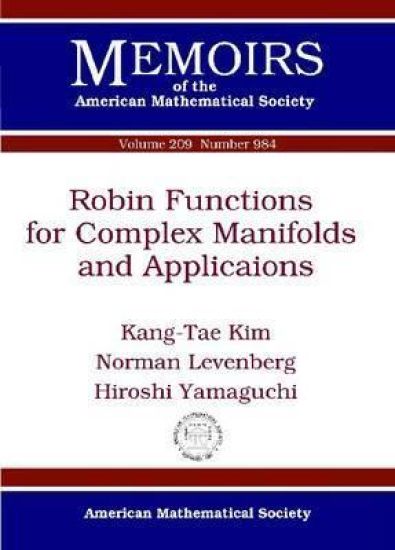
Robin Functions for Complex Manifolds and Applications
Kang-Tae Kim; Norman Levenberg; Hiroshi Yamaguchi
American Mathematical Society
2011
nidottu
In a previous Memoirs (Vol. 92, No. 448), Levenberg and Yamaguchi analysed the second variation of the Robin function $-\lambda(t)$ associated to a smooth variation of domains in $\mathbb{C}^n$ for $n\geq 2$. In the current work, the authors study a generalisation of this second variation formula to complex manifolds $M$ equipped with a Hermitian metric $ds^2$ and a smooth, nonnegative function $c$.
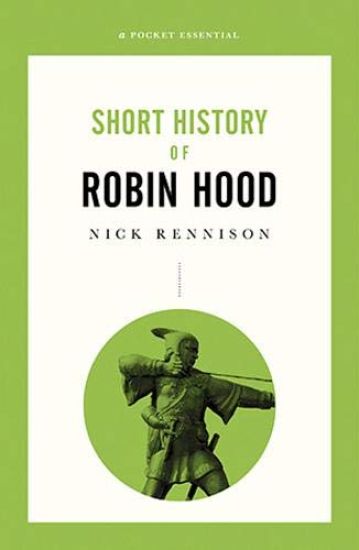
Robin Hood is England's greatest folk hero. Everyone knows the story of the outlaw who robbed from the rich and gave to the poor. Nick Rennison's highly entertaining book begins with the search for the historical Robin. Was there ever a real Robin Hood? Rennison looks at the candidates who have been proposed over the years, from petty thieves to Knights Templar, before moving on to examine the many ways in which Robin Hood has been portrayed in literature and on the screen. He began as the hero of dozens of late medieval ballads. He appeared in plays by contemporaries of Shakespeare. In the Romantic era Robin was reinvented by Walter Scott as a Saxon champion in the struggle against the Normans. During the nineteenth century, he emerged as a hero in children's literature. More recently he has been portrayed as everything from proto-socialist man of the people to anarchist thug. In the cinema he put in an appearance as early as 1908 and Douglas Fairbanks and then Errol Flynn turned him into the typical hero of Hollywood swashbucklers. In the last twenty years, Kevin Costner and Russell Crowe have provided their own very different interpretations of the character. On the small screen, Robin has been the hero of half-a-dozen TV shows from the 1950s series starring Richard Greene, which used many writers blacklisted by Hollywood, via the well-remembered Robin of Sherwood in the 1980s to the recent BBC series. As the twenty-first century nears the end of its second decade, Robin Hood is still very much with us. He is the subject of graphic novels and computer games and films, including the new Lionsgate release in November 2018.