Kirjojen hintavertailu. Mukana 12 398 867 kirjaa ja 12 kauppaa.

Kirjahaku

Etsi kirjoja tekijän nimen, kirjan nimen tai ISBN:n perusteella.

1000 tulosta hakusanalla Robert B Read

The Road Ahead for America's Colleges and Universities

The Road Ahead for America's Colleges and Universities

Robert B. Archibald; David H. Feldman

Oxford University Press Inc
2017
sidottu
The US higher education system is on the verge of a revolution, so some observers claim. Archibald and Feldman, leading analysts, provide an incisive overview of the challenges facing and possibilities for America's universities and colleges in their training future generations. And they demonstrate that our higher education system is resilient and adaptable enough to weather the internal, external, and technological threats without changing campuses beyond recognition. The Road Ahead examines the threats posed to the current health of higher education by rising tuition and falling government support, as well as from new digital technologies rippling through the entire economy. Some predict disaster, pointing to high costs, exploding debt, and a digital tsunami that supposedly will combine to disrupt and sweep away many of the nation's higher education institutions, or change them beyond recognition. Archibald and Feldman provide a more nuanced view. They argue that the bundle of services that four-year colleges and universities provide will retain its value for the traditional age range of college students. Less certain, Archibald and Feldman argue, is whether the system will continue to be a force for social and economic opportunity. The threats are most dire at schools that disproportionately serve America's most underprivileged students. At the same time, growing income inequality reduces the ability of many students and their families to pay for higher education. Archibald and Feldman suggest a range of policy options at the state and federal level that will help America's higher education system continue to fulfill its promise.
The Economics of American Art

The Economics of American Art

Robert B. Ekelund; John D. Jackson; Robert D. Tollison

Oxford University Press Inc
2017
sidottu
The rapidly changing and evolving art market might appear to be chaotic to the casual observer, with new highs, potential lows, and tastes and fashions changing season to season. Economists, however, view the actions of buyers and sellers as constituting an identifiable market. They have, for some decades, studied such issues as artistic productivity and "death effects" on prices, investment returns, and on the basis of the behavior and estimated prices in auction markets. The Economics of American Art analyzes the most pervasive economic issues facing the art world, applied to the whole spectrum of American art. The book begins by looking at how a market for American art developed, how the politics of the post-war era shaped, at least in large part, the direction of American art, and how this legacy continues into contemporary art today. The book then tackles several salient, integral questions animating the American art world: Are age and "type" of artist (i.e. traditional or "innovative") related and, if so, how might they be related to productivity? Is investment in American art a remunerative endeavor compared to other investment possibilities? Do economic insights provide understanding of fakes, fraud and theft of art, particularly American art, and is it possible to prevent art crime? Is there is a boom (or a bust) in the market for contemporary American art as might be found in other markets? The ongoing evolution of American art is attended by a massive number of influences, and the economic concepts employed in this volume will complement other critical and important cultural studies of art. Both practical and accessible, The Economics of American Art will be essential for collectors, auction houses, American art experts of all kinds, museums, gallery owners and, not least, by economists with continuing scholarly interests in these matters.
Overdoing Democracy

Overdoing Democracy

Robert B. Talisse

Oxford University Press Inc
2019
sidottu
We live in an age of political polarization. As political beliefs on the left and the right have been pulled closer to the extremes, so have our social environments: we seldom interact with those with whom we don't see eye to eye. Making matters worse, we are being appealed to--by companies, products, and teams, for example--based on our deep-seated, polarized beliefs. Our choice of Starbucks or Dunkin' Donuts, Costco or Sam's Club, soccer or football, New York Times vs. Wall Street Journal is an expression of our beliefs and a reinforcement of our choice to stay within the confines of our self-selected political community, making us even more polarized. Letting it bleed into these choices in every corner of our lives, we take democracy too far and it ends up keeping us apart. We overdo democracy. When we overdo democracy, we allow it to undermine and crowd out many of the most important social goods that democracy is meant to deliver. What's more, in overdoing democracy, we spoil certain social goods that democracy needs in order to flourish. A thriving democracy needs citizens to reserve space in their social lives for collective activities that are not structured by political allegiances. To ensure the health and the future of democracy, we need to forge civic friendships by working together in social contexts in which political affiliations and party loyalties are not merely suppressed, but utterly beside the point. Drawing on his extensive research, Talisse sheds light on just how deeply entrenched our political polarization has become and opens our eyes to how often we allow politics to dictate the way we see almost everything. By limiting our interactions with others and our experience of the world so that we only encounter the politically like-minded, we are actually damaging the thing that democracy is meant to preserve in the first place: the more fundamental good of recognizing and respecting each other's standing as equals.
Pragmatism and Idealism

Pragmatism and Idealism

Robert B. Brandom

Oxford University Press
2022
nidottu
In this short book, based upon his Spinoza Lectures at the University of Amsterdam, Robert B. Brandom offers a pragmatist approach to representation and reality, drawing on Richard Rorty and Hegel. During the last decade of his life, Rorty emphasized the anti-authoritarian credentials of his pragmatism. He came to see pragmatism as the fighting faith of a second phase of the Enlightenment. The first stage, as Rorty construed it, concerned our emancipation from nonhuman authority in practical matters: issues of what we ought to do and how things ought to be. The envisaged second stage addresses rather our emancipation from nonhuman authority in theoretical matters. Brandom shows how pragmatism moves beyond the traditional model of reality as authoritative over our cognitive representations of it in language and thought, to a new conception of how discursive practices help us cope with the vicissitudes of life. Hegel anticipates the challenge to the very idea of objective reality as providing norms for thought which Rorty believed required us to enact a second phase of the Enlightenment. Unlike Rorty, Hegel presents a detailed, constructive, anti-authoritarian, non-fetishistic, social pragmatist account of the representational dimension of conceptual content. At its heart is an account of the social dimension of discursive normativity in terms of reciprocal recognition, and an account of the historical dimension of discursive normativity in terms of a distinctive new conception of reason: the recollective rationality that turns a past into a tradition. His idealism thereby offers a concrete pragmatist alternative to Rorty's global semantic and epistemological anti-representationalism.
Morality and Moral Theory

Morality and Moral Theory

Robert B. Louden

Oxford University Press Inc
1992
nidottu
Contemporary philosophers have grown increasingly sceptical toward both morality and moral theory. Some argue that moral theory is a radically misguided enterprise which does not illuminate moral practice, while others simply deny the value of morality in human life. In this book, Robert Louden attempts to respond to the arguments of both 'anti-morality' and 'anti-theory' sceptics. In Part One, he develops and defends an alternative conception of morality. On Louden's model, morality is primarily a matter of what one does to oneself, rather than what one does or does not do to others. This model eliminates the gulf that many anti-morality critics say exists between morality's demands and the personal point of view. Louden further argues that morality's primary focus should be on agents and their lives, rather than on right actions, and that it is always better to be morally better - ie it is impossible to be 'too moral'. Part Two presents Louden's alternative conception of moral theory. He reaffirms the necessity and importance of moral theory in human life, and shows that moral theories fulfill a variety of genuine and indispensable human needs.
From Abdullah to Hussein

From Abdullah to Hussein

Robert B. Satloff

Oxford University Press Inc
1994
sidottu
This book studies the six-year period in modern Jordanian political history when the Hashemite kingdom was in crisis. Based on exclusive interviews and newly-released archival resources, this stylish political history is the first scholarly study of the early years of King Hussein's rule when power rested in the hands of the King's advisers.
Sacred Trust

Sacred Trust

Robert B. Ekelund; Robert F. Hébert; Robert D. Tollison; Gary M. Anderson; Audrey B. Davidson

Oxford University Press Inc
1997
sidottu
The Church dominated society in the Middle Ages and functioned as a quasi-government, providing public and private goods. This book is the first to examine specific institutions in the Church in the Middle Ages in economic terms. Other books have argued generally that the Church either had a positive or negative effect on economic development. The authors of this book look more closely at the actual Church institutions and practices and describe how each functioned as a part of the larger economy of the time. They focus especially on marriage, usury, heresy, the crusades, and the monasteries. It is not their purpose to reject or impugn religious motives that may be advanced by theologians and historians. Their goal is to bring a fresh perspective to the role of institutions of the medieval Church in economic development.
Windows into the Earth

Windows into the Earth

Robert B. Smith; Lee J. Siegel

Oxford University Press Inc
2000
nidottu
Millions of years ago, the North American continent was dragged over the world's largest continental hotspot (a hug column of molten rock rising from the earth's interior), tracing a 5 mile wide, 500 mile long path northeastward across Idaho and generating huge volcanic eruptions and earthquakes. The hotspot lifted the Yellowstone Plateau to more than 7000 feet and pushed the Northern Rockies to new heights. This book is the story of those events and how the landscape of the two great national parks was shaped by earthquakes, volcanoes, geysers and, in the uplifted Rocky Mountains, mountain glaciers. The story is also a 'window' into the earth's interior, revealing the dynamic processes within.
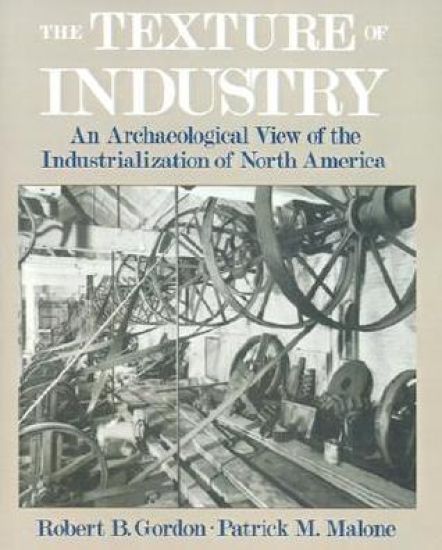
The Texture of Industry

The Texture of Industry

Robert B. Gordon; Patrick M. Malone

Oxford University Press Inc
1997
nidottu
While historians have given ample attention to stories of entrepreneurship, invention, and labor conflict, they have told us little about actual work-places and how people worked. Workers seldom wrote about their daily employment. However, they did leave behind their tools, products, shops, and factories as well as the surrounding industrial landscapes and communities. In this book, Gordon and Malone look at the industrialization of North America fro the perspective of the industrial archaeologist. Using material evidence from such varied sites as Indian steatite quarries, automobile plants, and coal mines, they examine manufacturing technology, transportation systems, and the effects of industrialization on the land. Their research greatly expands our understanding of industry and focuses attention on the contributions of anonymous artisans whose skills shaped our industrial heritage.
A Landscape Transformed

A Landscape Transformed

Robert B. Gordon

Oxford University Press Inc
2000
sidottu
This book examines the industrial ecology of 200 years of ironmaking with renewal energy resources in northwestern Connecticut. It focuses on the cultural context of people's decisions about technology and the environment, and the gradual transition they effected in their land from industrial landscape to pastoral countryside.
Kant's Impure Ethics

Kant's Impure Ethics

Robert B. Louden

Oxford University Press Inc
2000
sidottu
This is the first book-length study in any language to examine in detail and critically assess the second part of Kant's ethics--an empirical, impure part, which determines how best to apply pure principles to the human situation. Drawing attention to Kant's under-explored impure ethics, this revealing investigation refutes the common and long-standing misperception that Kant's ethics advocates empty formalism. Making detailed use of a variety of Kantian texts never before translated into English, author Robert B. Louden reassesses the strengths and weaknesses of Kantian ethics as a whole, once the second part is re-admitted to its rightful place within Kant's practical philosophy.
Kant's Impure Ethics

Kant's Impure Ethics

Robert B. Louden

Oxford University Press Inc
2002
nidottu
This is the first book-length study in any language to examine in detail and critically assess the second part of Kant's ethics--an empirical, impure part, which determines how best to apply pure principles to the human situation. Drawing attention to Kant's under-explored impure ethics, this revealing investigation refutes the common and long-standing misperception that Kants ethics advocates empty formalism. Making detailed use of a variety of Kantian texts never before translated into English, author Robert B. Louden reassesses the strengths and weaknesses of Kantian ethics as a whole, once the second part is re-admitted to its rightful place within Kant's practical philosophy.
Reaction Mechanisms of Inorganic and Organometallic Systems

Reaction Mechanisms of Inorganic and Organometallic Systems

Robert B. Jordan

Oxford University Press Inc
2007
sidottu
This third edition retains the general level and scope of earlier editions, but has been substantially updated with over 900 new references covering the literature through 2005, and 140 more pages of text than the previous edition. In addition to the general updating of materials, there is new or greatly expanded coverage of topics such as Curtin-Hammett conditions, pressure effects, metal hydrides and asymmetric hydrogenation catalysts, the inverted electron-transfer region, intervalence electron transfer, photochemistry of metal carbonyls, methyl transferase and nitric oxide synthase. The new chapter on heterogeneous systems introduces the basic background to this industrially important area. The emphasis is on inorganic examples of gas/liquid and gas/liquid/solid systems and methods of determining heterogeneity.
The ABCs of Classic Hollywood

The ABCs of Classic Hollywood

Robert B. Ray

Oxford University Press Inc
2008
sidottu
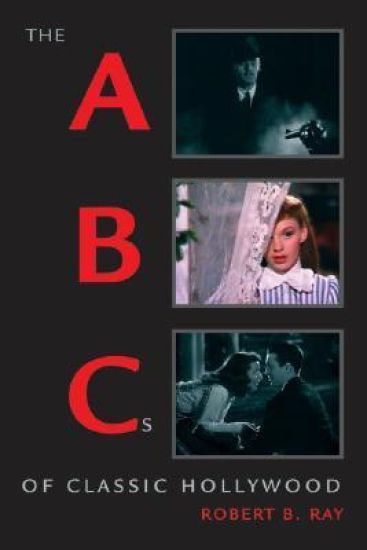
Speaking about the kind of filmmaking now known as Classic Hollywood, the most popular and influential cinema ever invented, Vincente Minnelli once gave away its secret: "I feel that a picture that stays with you is made up of a hundred or more hidden things. They're things that the audience is not conscious of, but that accumulate." How would we go about finding those things? What method would enable us to retrieve them, and by doing so, to understand better how Hollywood films got made? The ABCs of Classic Hollywood attempts to answer those questions by looking closely at four movies from the 1930-1945 period when the American Studio System reached the peak of its economic and cultural power: Grand Hotel, The Philadelphia Story, The Maltese Falcon, and Meet Me in St. Louis. To avoid the predictable generalizations that have plagued film studies, Ray works with the movies' details, treated as initially mysterious, but promising, clues: e.g., Grand Hotel's coffin and room assignments; The Philadelphia Story's diving board and license plate PA55; The Maltese Falcon's clocks and missing bed; Meet Me in St. Louis's violinist and ribboned cat. By producing at least 26 entries for each of these films (one for every letter of the alphabet), Ray demonstrates that a movie's details contain the record of the work and ideas that produced them, the endless negotiation between commercial efficiency and seductive enchantment. In our unconscious memories, we recognize something in the movies, something tantalizing and just out of reach. This book unlocks those memories, making them conscious and explicit, so that they will help us understand the most powerful and important storytelling system ever designed.
The ABCs of Classic Hollywood

The ABCs of Classic Hollywood

Robert B. Ray

Oxford University Press Inc
2008
nidottu
Speaking about the kind of filmmaking now known as Classic Hollywood, the most popular and influential cinema ever invented, Vincente Minnelli once gave away its secret: "I feel that a picture that stays with you is made up of a hundred or more hidden things. They're things that the audience is not conscious of, but that accumulate." How would we go about finding those things? What method would enable us to retrieve them, and by doing so, to understand better how Hollywood films got made? The ABCs of Classic Hollywood attempts to answer those questions by looking closely at four movies from the 1930-1945 period when the American Studio System reached the peak of its economic and cultural power: Grand Hotel, The Philadelphia Story, The Maltese Falcon, and Meet Me in St. Louis. To avoid the predictable generalizations that have plagued Film Studies, Ray works with the movies' details, treated as initially mysterious, but promising, clues: e.g., Grand Hotel's coffin and room assignments; The Philadelphia Story's diving board and license plate PA55; The Maltese Falcon's clocks and missing bed; Meet Me in St. Louis's violinist and ribboned cat. By producing at least 26 entries for each of these films (one for every letter of the alphabet), Ray demonstrates that a movie's details contain the record of the work and ideas that produced them, the endless negotiation between commercial efficiency and seductive enchantment. In our unconscious memories, we recognize something in the movies, something tantalizing and just out of reach. This book unlocks those memories, making them conscious and explicit, so that they will help us understand the most powerful and important storytelling system ever designed.
Sustaining Democracy

Sustaining Democracy

Robert B. Talisse

Oxford University Press Inc
2021
sidottu
Democracy is not easy. Citizens who disagree sharply about politics must nonetheless work together as equal partners in the enterprise of collective self-government. Ideally, this work would be conducted under conditions of mutual civility, with opposed citizens nonetheless recognizing one another's standing as political equals. But when the political stakes are high, and the opposition seems to us severely mistaken, why not drop the democratic pretences of civil partnership, and simply play to win? Why seek to uphold properly democratic relations with those who embrace political ideas that are flawed, irresponsible, and out of step with justice? Why sustain democracy with political foes? Drawing on extensive social science research concerning political polarization and partisan identity, Robert B. Talisse argues that when we break off civil interactions with our political opponents, we imperil relations with our political allies. In the absence of engagement with our political critics, our alliances grow increasingly homogeneous, conformist, and hierarchical. Moreover, they fracture and devolve amidst internal conflicts. In the end, our political aims suffer because our coalitions shrink and grow ineffective. Why sustain democracy with our foes? Because we need them if we are going to sustain democracy with our allies and friends.
Overdoing Democracy

Overdoing Democracy

Robert B. Talisse

OXFORD UNIVERSITY PRESS INC
2021
nidottu
We live in an age of political polarization. As political beliefs on the left and the right have been pulled closer to the extremes, so have our social environments: we seldom interact with those with whom we don't see eye to eye. Making matters worse, we are being appealed to--by companies, products, and teams, for example--based on our deep-seated, polarized beliefs. Our choice of Starbucks or Dunkin' Donuts, Costco or Sam's Club, soccer or football, New York Times vs. Wall Street Journal is an expression of our beliefs and a reinforcement of our choice to stay within the confines of our self-selected political community, making us even more polarized. Letting it bleed into these choices in every corner of our lives, we take democracy too far and it ends up keeping us apart. We overdo democracy. When we overdo democracy, we allow it to undermine and crowd out many of the most important social goods that democracy is meant to deliver. What's more, in overdoing democracy, we spoil certain social goods that democracy needs in order to flourish. A thriving democracy needs citizens to reserve space in their social lives for collective activities that are not structured by political allegiances. To ensure the health and the future of democracy, we need to forge civic friendships by working together in social contexts in which political affiliations and party loyalties are not merely suppressed, but utterly beside the point. Drawing on his extensive research, Talisse sheds light on just how deeply entrenched our political polarization has become and opens our eyes to how often we allow politics to dictate the way we see almost everything. By limiting our interactions with others and our experience of the world so that we only encounter the politically like-minded, we are actually damaging the thing that democracy is meant to preserve in the first place: the more fundamental good of recognizing and respecting each other's standing equals.
Civic Solitude

Civic Solitude

Robert B. Talisse

OXFORD UNIVERSITY PRESS INC
2025
sidottu
An internet search of the phrase "this is what democracy looks like" returns thousands of images of people assembled in public for the purpose of collective action. But is group collaboration truly the defining feature of effective democracy? Robert B. Talisse suggests that while group action is essential to democracy, action without reflection can present insidious challenges, as individuals' perspectives can be distorted by group dynamics. The culprit is a cognitive dynamic called belief polarization. As we interact with our political allies, we are exposed to forces that render us more radical in our beliefs and increasingly hostile to those who do not share them. What's more, the social environments we inhabit in our day-to-day lives are sorted along partisan lines. We are surrounded by triggers of political extremity and animosity. Thus, our ordinary activities encourage the attitude that democracy is possible only when everyone agrees--a profoundly antidemocratic stance. Drawing on extensive research about polarization and partisanship, Talisse argues that certain core democratic capacities can be cultivated only at a distance from the political fray. If we are to meet the responsibilities of democratic citizenship, we must occasionally step away from our allies and opponents alike. We can perform this self-work only in secluded settings where we can engage in civic reflection that is not prepackaged in the idiom of our political divides, allowing us to contemplate political circumstances that are not our own.
The Cuckoos

The Cuckoos

Robert B. Payne

Oxford University Press
2005
sidottu
The cuckoos are the most variable birds in social behavior and parental care: a few cuckoos are among the most social of all birds and rear their young in a common nest; most cuckoos are caring parents that rear their own young with some females laying a few eggs in the nests of others; while many cuckoo species are brood parasites who leave their eggs in the nests of other birds to rear, with their young maturing to kill their foster nestmates. In The Cuckoos, Robert B. Payne presents a new evolutionary history of the family based on molecular genetics, and uses the family tree to explore the origins and diversity of their behaviour. He traces details of the cuckoos' biology to their original sources, includes descriptions of previously unpublished field observations, and reveals new comparisons of songs showing previously overlooked cuckoo species. Lavishly illustrated with specially commissioned colour plates and numerous maps, halftones, and line drawings, The Cuckoos provides the most comprehensive and up-to-date account of this family yet available.