Kirjojen hintavertailu. Mukana 11 244 527 kirjaa ja 12 kauppaa.

Kirjahaku

Etsi kirjoja tekijän nimen, kirjan nimen tai ISBN:n perusteella.

1000 tulosta hakusanalla Robert Cornforth

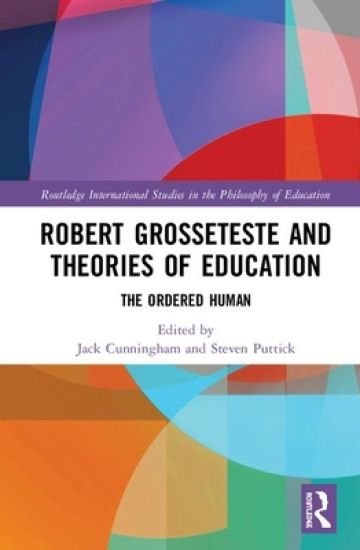
Robert Grosseteste and Theories of Education
This book examines Robert Grosseteste’s often underrepresented ideas on education. It uniquely brings together academics from the fields of medieval history, modern science and contemporary education to shed new light on a fascinating medieval figure whose work has an enormous amount to offer anyone with an interest in our educational processes.The book locates Grosseteste as a key figure in the intellectual history of medieval Europe and positions him as an important thinker who concerned himself with the science of education and set out to elucidate the processes and purposes of learning. This book offers an important practical contribution to the discussion of the contemporary nature and purpose of many aspects of our education processes.This book will be of interest to students, researchers and academics in the disciplines of educational philosophy, medieval history, philosophy and theology.
Robert E. Sherwood and the Classical Tradition
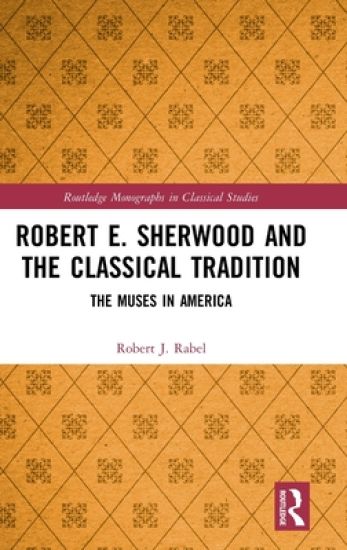
This volume explores the reception of the classical past in the works of twentieth-century American dramatist Robert E. Sherwood and his use of the ancient world to critique key events and trends in American history. It explores his comedies and the influence of both Greek Old and New Comedy, as well as his mediation of his experiences in World War I through Livy’s account of the war with Carthage. During the 1930s, Sherwood used the Peloponnesian War as a template for bringing to the attention of an unaware public the danger of an impending war between the forces of democracy and the totalitarianism represented by Nazi Germany, and post-war he raised awareness of the dangers of nuclear war through the lens of the Greek gods. As well as looking at his use of the classical past in his work, since Sherwood wrote drama deeply concerned with the major social and political events of his day, his plays open windows onto the major social and political challenges facing the United States and the world from the outbreak of World War I until the beginning of the nuclear age. This volume will be of interest to anyone working on the Classical Tradition and Classical Reception, as well as to students of twentieth-century American literature, drama, history, and politics.
Robert E. Sherwood and the Classical Tradition

Robert E. Sherwood and the Classical Tradition

Robert J. Rabel

TAYLOR FRANCIS LTD
2023
nidottu
This volume explores the reception of the classical past in the works of twentieth-century American dramatist Robert E. Sherwood and his use of the ancient world to critique key events and trends in American history. It explores his comedies and the influence of both Greek Old and New Comedy, as well as his mediation of his experiences in World War I through Livy’s account of the war with Carthage. During the 1930s, Sherwood used the Peloponnesian War as a template for bringing to the attention of an unaware public the danger of an impending war between the forces of democracy and the totalitarianism represented by Nazi Germany, and post-war he raised awareness of the dangers of nuclear war through the lens of the Greek gods. As well as looking at his use of the classical past in his work, since Sherwood wrote drama deeply concerned with the major social and political events of his day, his plays open windows onto the major social and political challenges facing the United States and the world from the outbreak of World War I until the beginning of the nuclear age. This volume will be of interest to anyone working on the Classical Tradition and Classical Reception, as well as to students of twentieth-century American literature, drama, history, and politics.
Robert Motherwell, Abstraction, and Philosophy

Robert Motherwell, Abstraction, and Philosophy

Robert Hobbs

TAYLOR FRANCIS LTD
2024
nidottu
Employing an interdisciplinary approach, this book breaks new ground by considering how Robert Motherwell’s abstract expressionist art is indebted to Alfred North Whitehead’s highly original process metaphysics. Motherwell first encountered Whitehead and his work as a philosophy graduate student at Harvard University, and he continued to espouse Whitehead’s processist theories as germane to his art throughout his life. This book examines how Whitehead’s process philosophy—inspired by quantum theory and focusing on the ongoing ingenuity of dynamic forces of energy rather than traditional views of inert substances—set the stage for Motherwell’s future art. This book will be of interest to scholars in twentieth-century modern art, philosophy of art and aesthetics, and art history.
Robert Chambers of Edinburgh

Robert Chambers of Edinburgh

Iris Macfarlane

Routledge
2020
sidottu
This is a book on the life and times of Robert Chambers, founder of W. & R. Chambers publishers. Although there are now books based on some of his letters and on the impact of one of his books, The Vestiges of Natural Creation, there are no books on the whole man and his life. Written by Iris Macfarlane with Alan Macfarlane, the book weaves together three strands. At one level, it is a biography of Chambers and his family; the portrait of a rise from absolute poverty to great wealth and influence. At the second it provides the context of his life by the way of a portrait of nineteenth century Edinburgh as seen through his eyes. At the third it explores the intellectual and organisational revolutions embodied in his life, the explorations in history, folklore, geology, publishing, education and many other fields which made him one of the most exciting thinkers of his age. It is based on extensive archival research among the Chambers’ archives in Edinburgh and conversations with his descendants.Please note: This title is co-published with Social Science Press, New Delhi. Taylor & Francis does not sell or distribute the Hardback in India, Pakistan, Nepal, Bhutan, Bangladesh and Sri Lanka.
Robert Seymour and Nineteenth-Century Print Culture
Robert Seymour and Nineteenth-Century Print Culture is the first book-length study of the original illustrator of Dickens’s Pickwick Papers. Discussion of the range and importance of Seymour’s work as a jobbing illustrator in the 1820s and 1830s is at the centre of the book. A bibliographical study of his prolific output of illustrations in many different print genres is combined with a wide-ranging account of his major publications. Seymour’s extended work for The Comic Magazine, New Readings of Old Authors and Humorous Sketches, all described in detail, are of particular importance in locating the dialogue between image and text at the moment when the Victorian illustrated novel was coming into being.
Robert Burns and the Philosophers

Robert Burns and the Philosophers

J Walter McGinty

Routledge
2021
nidottu
This volume expounds the influence of Robert Burns’s reading of Philosophyon his life and work, supplementing this with his personal encounterswith those philosophers he met. The work begins with theHomespun Philosophy of his early years under the tutelage of WilliamBurnes and John Murdoch, then examines in detail some of the texts ofJohn Locke, Adam Smith and Francis Hutcheson, including other writerswho reflect Hutcheson’s thinking. Further chapters include the explorationon Thomas Reid, Dugald Stewart, Archibald Alison and WilliamGreenfield. Robert Burns and the Philosophers does not purport to be awork of philosophy but rather to show the poet’s reaction to the subjectand the development of his understanding. This work opens up a subjectthat hitherto has been almost unexplored.
Robert Louis Stevenson and the Pictorial Text
Robert Louis Stevenson and the Pictorial Text explores the genesis, production and the critical appreciation of the illustrations to the fiction of Robert Louis Stevenson. Stevenson is one of the most copied and interpreted authors of the late nineteenth century, especially his novels Treasure Island and Strange Case of Dr Jekyll and Mr Hyde. These interpretations began with the illustration of his texts in their early editions, often with Stevenson’s express consent, and this book traces Stevenson’s understanding and critical responses to the artists employed to illustrate his texts. In doing so, it attempts to position Stevenson as an important thinker and writer on the subject of illustrated literature, and on the marriage of literature and visual arts, at a moment preceding the dawn of cinema, and the rejection of such popular tropes by modernist writers of the early twentieth century.
Robert Burton and the Transformative Powers of Melancholy
Few English books are as widely known, underread, and underappreciated as Robert Burton’s The Anatomy of Melancholy. Stephanie Shirilan laments that modern scholars often treat the Anatomy as an unmediated repository of early modern views on melancholy, overlooking the fact that Burton is writing a cento - an ancient form of satire that quotes and misquotes authoritative texts in often subversive ways - and that his express intent in so doing is to offer his readers literary therapy for melancholy. This book explores the ways in which the Anatomy dispenses both direct physic and more systemic medicine by encouraging readers to think of melancholy as a privileged mental and spiritual acuity that requires cultivation and management rather than cure. Refuting the prevailing historiography of anxious early modern embodiment that cites Burton as a key witness, Shirilan submits that the Anatomy rejects contemporary Neostoic and Puritan approaches to melancholy. She reads Burton’s erraticism, opacity, and theatricality as modes of resistance against demands for constancy, transparency, and plainness in the popular literature of spiritual and moral hygiene of his day. She shows how Burton draws on rhetorical, theological, and philosophical traditions that privilege the transformative powers of the imagination in order to celebrate melancholic impressionability for its capacity to inspire and engender empathy, charity, and faith.
Robert Armin and Shakespeare's Performed Songs
After Robert Armin joined the Chamberlain's Men, singing in Shakespeare's dramas catapulted from 1.25 songs and 9.95 lines of singing per play to 3.44 songs and 29.75 lines of singing, a virtually unnoticed phenomenon. In addition, many of the songs became seemingly improvisatory—similar to Armin's personal style as an author and solo comedian. In order to study Armin's collaborative impact, this interdisciplinary book investigates the songs that have Renaissance music that could have been heard on Shakespeare's stage. They occur in some of Shakespeare's most famous plays, including Much Ado About Nothing, Twelfth Night, Hamlet, and The Tempest. In fact, Shakespeare's plays, as we have them, are not complete. They are missing the music that could have accompanied the plays’ songs. Significantly, Renaissance vocal music, far beyond just providing entertainment, was believed to alter the bodies and souls of both performers and auditors to agree with its characteristics, directly inciting passions from love to melancholy. By collaborating with early modern music editor and performing artist Lawrence Lipnik, Catherine Henze is able to provide new performance editions of seventeen songs, including spoken interruptions and cuts and rearrangement of the music to accommodate the dramatist's words. Next, Henze analyzes the complete songs, words and music, according to Renaissance literary and music primary sources, and applies the new information to interpretations of characters and scenes, frequently challenging commonly held literary assessments. The book is organized according to Armin's involvement with the plays, before, during, and after the comic actor joined Shakespeare's company. It offers readers the tools to interpret not only these songs, but also vocal music in dramas by other Renaissance playwrights. Moreover, Robert Armin and Shakespeare's Performed Songs, written with non-specialized terminology, provides a
Robert Louis Stevenson and the Great Affair
In his travel narrative Travels with a Donkey in the Cevennes (1879), Robert Louis Stevenson declares, "I travel not to go anywhere, but to go. I travel for travel's sake. The great affair is to move." Taking up the concepts of time, place, and memory, the contributors to this collection explore in what ways the dynamic view of life suggested by this quotation permeates Stevenson's work. The essays adopt a wide variety of critical approaches, including post-colonial theory, post-structuralism, new historicism, art history, and philosophy, making use of the vast array of literary materials that Stevenson left across a global journey that began in Scotland in 1850 and ended in Samoa in 1894. These range from travel journals, letters, and classic literary staples such as Treasure Island and The Strange Case of Dr. Jekyll and Mr. Hyde, to rarely read masterpieces such as The Master of Ballantrae or The Ebb-Tide. While much recent scholarship on Stevenson foregrounds geography, the present volume also examines the theme of movement across memory, time, and generic boundaries. Taken together, the essays offer a view of Stevenson that demonstrates how the protean nature of his literary output reflects the radical developments in science, technology, and culture that characterized the age in which he lived.
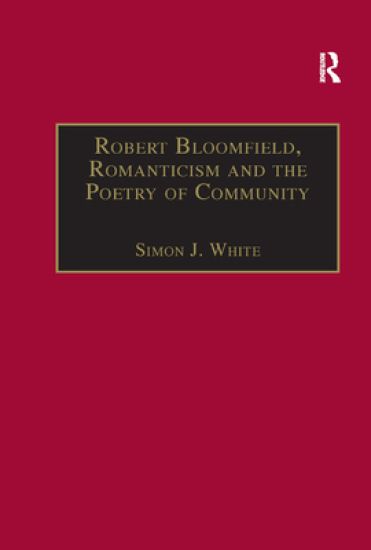
Robert Bloomfield, Romanticism and the Poetry of Community
Robert Bloomfield, whom John Clare described as 'the most original poet of the age,' was a widely read and critically acclaimed poet throughout the first decade of the nineteenth century, and remained popular until the beginning of the twentieth century. Yet until now, no modern critic has undertaken a full-length study of his poetry and its contexts. Simon J. White considers the relationship between Bloomfield's poetry and that of other Romantic poets. For example, her argues that Wordsworth's poetics of rural life was in some respects a response to Bloomfield's The Farmer's Boy. White considers Bloomfield's emphasis on the importance of local tradition and community in the lives of labouring people. In challenging the idea that the formal and rhetorical innovation of Wordsworth and Coleridge was principally responsible for the emergence of a new kind of poetry at the turn of the eighteenth century, he also shows that it is impossible to understand how the lyric and the literary ballad evolved during the Romantic period without considering Bloomfield's poetry. White's authoritative study demonstrates that, on the contrary, Bloomfield's poetry was pivotal in the development of Romanticism.
Robert's Rules of Order

Robert's Rules of Order

Henry M Robert

Blurb
2024
pokkari
Robert's Rules of Order Newly Revised, commonly referred to as Robert's Rules of Order, RONR, or simply Robert's Rules, is the most widely used manual of parliamentary procedure in the United States. It governs the meetings of a diverse range of organizations-including church groups, county commissions, homeowners associations, nonprofit associations, professional societies, school boards, and trade unions-that have adopted it as their parliamentary authority.
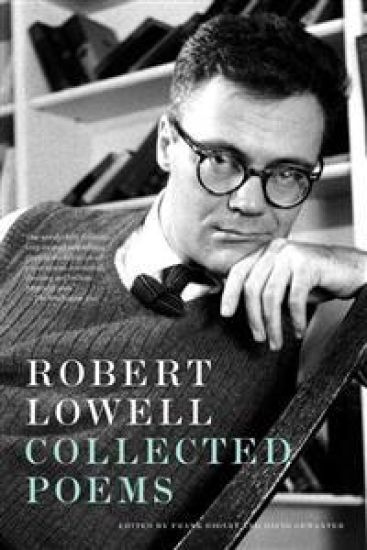
Robert Lowell Collected Poems

Robert Lowell Collected Poems

Robert Lowell

Farrar, Straus and Giroux
2007
nidottu
The first full collection of Robert Lowell's work introduces readers to the literary genius of the nation's most important postwar poet, including several never-before-anthologized poems, with works frorm Land of Unlikeness, the Pulitzer Prize-winning Lord Weary's Castle, and Day by Day, his final book, among others. Reprint.
The Letters of Robert Lowell

The Letters of Robert Lowell

Robert Lowell

Farrar, Straus and Giroux
2007
nidottu
One of the most influential poets of the twentieth century, Robert Lowell was also a prolific letter writer who corresponded with many of the remarkable writers and thinkers of his day, including Elizabeth Bishop, Ezra Pound, Hannah Arendt, William Carlos Williams, T. S. Eliot, Robert Frost, and Edmund Wilson. These letters, conversations in writing, document the evolution of Lowell's work and illuminate another side of the intimate life that was the subject of so many of his poems: his deep friendships with other writers; the manic-depressive illness he struggled to endure and understand; his marriages to three prose writers; and his engagement with politics and the antiwar movement of the 1960s. The Letters of Robert Lowell shows us, in many cases for the first time, the private thoughts and passions of a figure unrivaled in his influence on American letters.
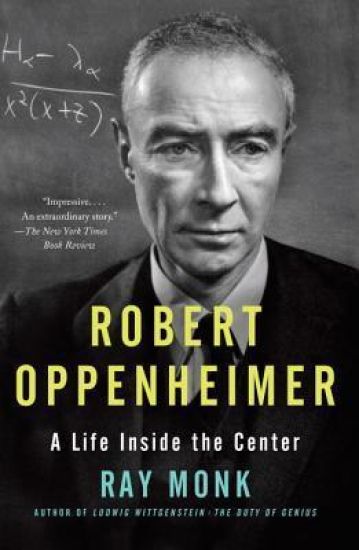
Robert Oppenheimer: A Life Inside the Center
An unforgettable story of discovery and unimaginable destruction and a major biography of one of America's most brilliant--and most divisive--scientists, Robert Oppenheimer: A Life Inside the Center vividly illuminates the man who would go down in history as "the father of the atomic bomb." "Impressive. . . . An extraordinary story."--The New York Times Book Review "Judicious, comprehensive and reliable. . . . By far the most thorough survey yet written of Oppenheimer's physics."--Washington Post Oppenheimer's talent and drive secured him a place in the pantheon of great physicists and carried him to the laboratories where the secrets of the universe revealed themselves. But they also led him to contribute to the development of the deadliest weapon on earth, a discovery he soon came to fear. His attempts to resist the escalation of the Cold War arms race--coupled with political leanings at odds with post-war America--led many to question his loyalties, and brought down upon him the full force of McCarthyite anti-communism. Digging deeply into Oppenheimer's past to solve the enigma of his motivations and his complex personality, Ray Monk uncovers the extraordinary, charming, tortured man--and the remarkable mind--who fundamentally reshaped the world.