Kirjojen hintavertailu. Mukana 11 244 527 kirjaa ja 12 kauppaa.

Kirjahaku

Etsi kirjoja tekijän nimen, kirjan nimen tai ISBN:n perusteella.

1000 tulosta hakusanalla Rodney Timms

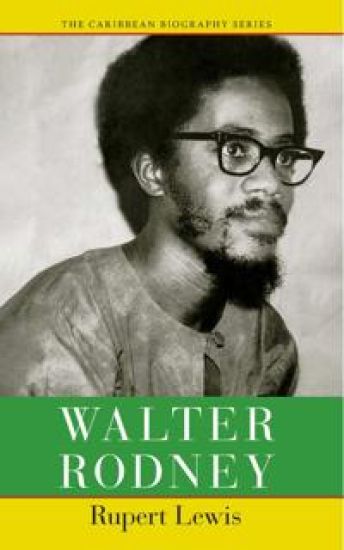
Walter Rodney

Walter Rodney

Rupert Lewis

University of the West Indies Press
2024
nidottu
Among the critical questions that Rodney dealt with whether he was in Tanzania, Jamaica or his native Guyana (formerly British Guiana) was the character of the postcolonial state and its relationship with the working people. It is his engagement with politics that guided his research into African and Caribbean history. In the post-World War II era the colonial powers had regrouped and were rebuilding Europe with the strong financial and political support of the capitalist United States. The Soviet Union, one of the victors over German fascism, was the other power on the world scene. It was communist, and engaged in a Cold War with the United States, the dominant global power. China under Mao Tse Tung was the other communist state that had emerged after the 1949 revolution with a huge rural population, much poverty and a low level of industrialization. Capitalist and socialist powers vied for the hearts and minds of the peoples of Asia, Africa and the Caribbean that were shaking off the shackles of colonialism. Latin American countries which had achieved their political independence in the nineteenth century were caught up in this nationalist surge as they battled with neo-colonialism. They battled with Spain their colonial overlord, but also with the United States which regarded Latin America and the Caribbean as its backyard and intervened as it saw fit to pursue its strategic military, political and economic goals. The Garvey and labor movements of the 1920s and 1930s in the Caribbean as well as communist and national liberation movements in the twentieth century helped to shape Walter Rodney’s political awareness. His parents’ generation was actively involved in the anti-colonial movement in British Guiana in the 1940s and 1950s, and in the 1960s and 1970s Rodney himself helped to shape the ideas around African and Caribbean decolonization, Pan-Africanism, and Marxism.
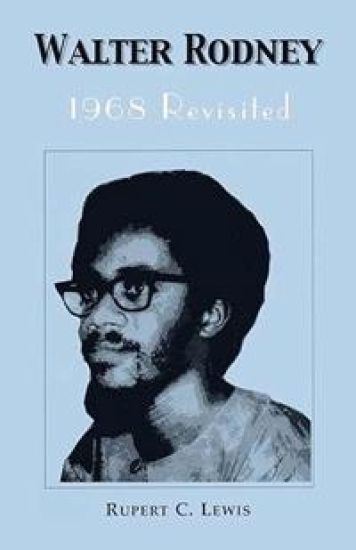
Walter Rodney

Walter Rodney

Rupert C. Lewis

University of the West Indies Press
1998
pokkari
Walter Rodney, a leading historian of Africa, a political activist and Caribbean intellectual before his untimely death in 1980, taught African History in Jamaica at the University of the West Indies Mona Campus in the late 1960s. Lewis’ article revisits Rodney’s political activism during this period within the context of pre-existing social movement among the urban poor and Rastafarian brethren. Rodney was expelled from the island in 1968 by the Jamaican government. Lewis argues that his expulsion was based on the fear that Rodney’s interactions with the urban poor and Rastafarian brethren could lead to the emergence of a radical political ideology which would pose a threat to the Jamaican political system and its power structure. This republication, along with Walter Rodney’s Intellectual and Political Thought (The Press UWI 1998), also by the same author, is timely as it marks the 30th anniversary of Rodney’s expulsion from Jamaica on 16 October 1968.
The Legacy of Walter Rodney in Guyana and the Caribbean

The Legacy of Walter Rodney in Guyana and the Caribbean

Arnold Gibbons

University Press of America
2010
nidottu
Walter Rodney claimed developing countries were heirs to uneven development and ethnic disequilibrium, including continued forms of oppression from the capitalist countries and their own leaders. In Guyana, ethnic chauvinism persisted before and after independence from Britain. Rodney was disturbed by the inability of intellectuals to share common cause with the masses, thus ensuring that they would be unable to contribute to uplifting their talents or participate in the growth of the nation. Guyana and the Caribbean were subject to sugar and slave traffic that constituted cheap labor for the plantations and buttressed the capitalist-industrial system. A significant byproduct of that system was the master-slave relationship; a no-less iniquitous consequence was an active racism. Thus, social inequality became the heritage of Guyanese and Caribbean history. These social evils have influenced all of the social, economic, and political institutions in Guyana. Race, class, and color became the determinants of social value and how the various racial groups responded to them is both the triumph and the tragedy of Guyanese nationalism. Rodney belongs in that pantheon of philosophers whose names adorn the history of the Caribbean and elsewhere. He has sought to lift the Caribbean people from the victimization of history and the poverty of material circumstance.
The Book of Rodney

The Book of Rodney

Angelica Asher

Benjamin Ross Lane
2020
pokkari
What would it be like if you could see angels and demons? For Rodney, a hilariously uncoordinated teenager with a large mop of curly red hair, it's pretty weird. It's hard enough getting through biology class without having to try to ignore everyone's guardian angel-much less his own, who by the way, sounds like a throwback to the Elizabethan era. Just when Rodney convinced his own angel to talk like a person from this century, Satan showed up. It would have been terrifying if the angel of darkness didn't look exactly like Jude Law, and if he weren't holding a box of Sprinkles cupcakes. Fans of Pastor Joseph Prince and his preaching will love this book.
Make Room for Rodney, Comedy in One Act

Make Room for Rodney, Comedy in One Act

Marion Holbrook

Hassell Street Press
2021
nidottu
This work has been selected by scholars as being culturally important and is part of the knowledge base of civilization as we know it.This work is in the public domain in the United States of America, and possibly other nations. Within the United States, you may freely copy and distribute this work, as no entity (individual or corporate) has a copyright on the body of the work.Scholars believe, and we concur, that this work is important enough to be preserved, reproduced, and made generally available to the public. To ensure a quality reading experience, this work has been proofread and republished using a format that seamlessly blends the original graphical elements with text in an easy-to-read typeface.We appreciate your support of the preservation process, and thank you for being an important part of keeping this knowledge alive and relevant.
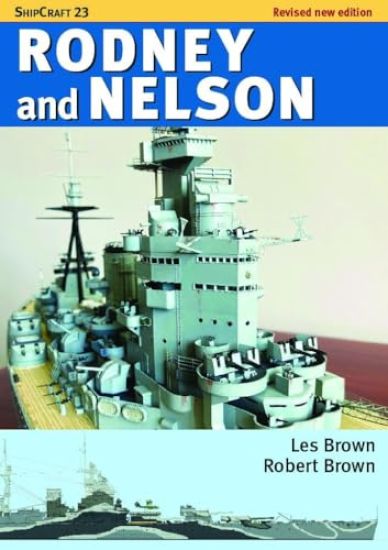
ShipCraft 23: Rodney and Nelson - Revised Edition

ShipCraft 23: Rodney and Nelson - Revised Edition

Les Brown; Robert Brown

PEN SWORD BOOKS LTD
2025
nidottu
The 'ShipCraft' series provides in-depth information about building and modifying model kits of famous warship types. Lavishly illustrated, each book takes the modeller through a brief history of the subject class, highlighting differences between sisterships and changes in their appearance over their careers. This includes paint schemes and camouflage, featuring colour profiles and highly-detailed line drawings and scale plans. The modelling section reviews the strengths and weaknesses of available kits, lists commercial accessory sets for super-detailing of the ships, and provides hints on modifying and improving the basic kit. This is followed by an extensive photographic survey of selected high-quality models in a variety of scales, and the book concludes with a section on research references - books, monographs, large-scale plans and relevant websites. The two ships covered in this volume were the only capital ships designed and built between the wars - a special concession of the Washington Treatys ban on new battleships - and they were unlike anything before them, with the superstructure three-quarters aft and all main armament turrets forward of the bridge. During the war Nelson survived mine and torpedo damage, while Rodney played a major part in the destruction of the Bismarck, both surviving to be broken up post-war. LES BROWN is a leading light in the Small Warships Group of the IPMS and the editor of their newsletter. He is the author of a number of titles in the ShipCraft series, including two on British destroyers, and, with John Lambert, he produced two larger works, one on ‘Flower’ class corvettes and another on Allied torpedo boats. He also wrote the volume on Black Swan Class Sloops in Seaforth’s ‘Original Builders’ Plans’ series. ROBERT BROWN is a Canadian ship modeller, who has contributed a number of volumes in the ShipCraft series, the most recent being British Aircraft Carriers published in 2024. He is also the author of Battleship Warspite, the first in a new series based on original builder’s plans.