
Kirjahaku
Etsi kirjoja tekijän nimen, kirjan nimen tai ISBN:n perusteella.
1000 tulosta hakusanalla S. Englander
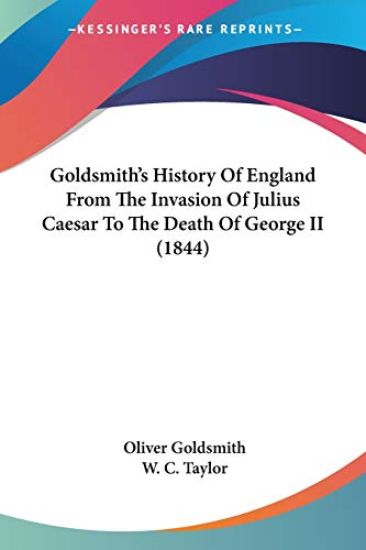
Goldsmith's History Of England From The Invasion Of Julius Caesar To The Death Of George II (1844)
Oliver Goldsmith
KESSINGER PUBLISHING, LLC
2009
pokkari
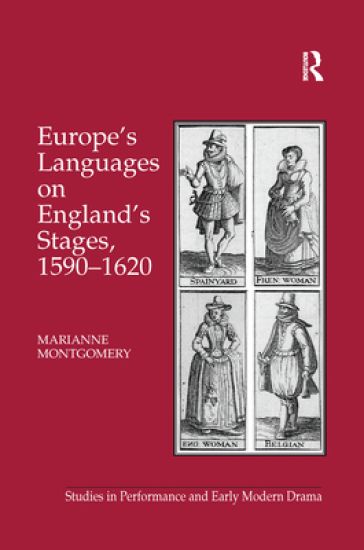
Though representations of alien languages on the early modern stage have usually been read as mocking, xenophobic, or at the very least extremely anxious, listening closely to these languages in the drama of Shakespeare and his contemporaries, Marianne Montgomery discerns a more complex reality. She argues instead that the drama of the early modern period holds up linguistic variety as a source of strength and offers playgoers a cosmopolitan engagement with the foreign that, while still sometimes anxious, complicates easy national distinctions. The study surveys six of the European languages heard on London's commercial stages during the three decades between 1590 and 1620-Welsh, French, Dutch, Spanish, Irish and Latin-and the distinct sets of cultural issues that they made audible. Exploring issues of culture and performance raised by representations of European languages on the stage, this book joins and advances two critical conversations on early modern drama. It both works to recover English relations with alien cultures in the period by looking at how such encounters were staged, and treats sound and performance as essential to understanding what Europe's languages meant in the theater. Europe's Languages on England's Stages, 1590-1620 contributes to our emerging sense of how local identities and global knowledge in early modern England were necessarily shaped by encounters with nearby lands, particularly encounters staged for aural consumption.
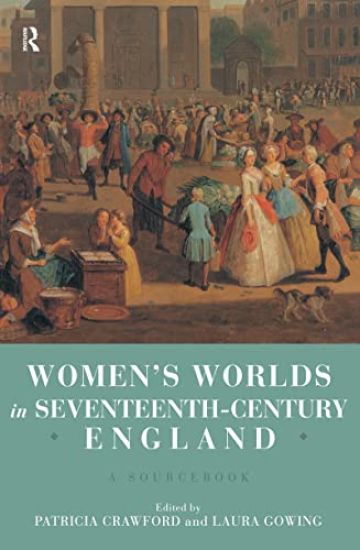
Women's Worlds in Seventeenth Century England
Routledge
2015
sidottu
Women's Worlds in England presents a unique collection of source materials on women's lives in sixteenth and seventeenth century England. The book introduces a wonderfully diverse group of women and a series of voices that have rarely been heard in history, from Deborah Brackley, a poor Devon servant, to Katharine Whitstone, Oliver Cromwell's sister, and Queen Anne. Drawing on unpublished, archival materials, Women's Worlds explores the everyday lives of ordinary early modern women, including their:* experiences of work, sex, marriage and motherhood* beliefs and spirituality* political activities* relationships* mental worldsIn a time when few women could write, this book reveals the multitude of ways in which their voices and experiences leave traces in the written record, and deepens and challenges our understanding of womens lives in the past.
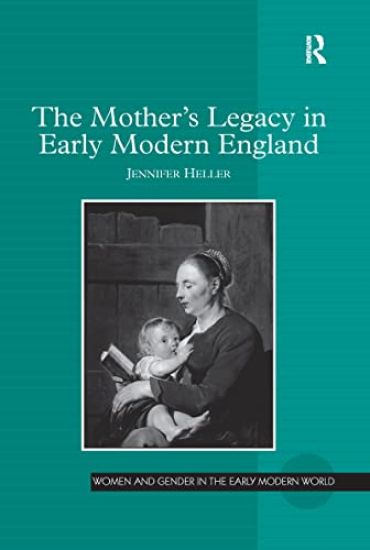
Using printed and manuscript texts composed between 1575 and 1672, Jennifer Heller defines the genre of the mother's legacy as a distinct branch of the advice tradition in early modern England that takes the form of a dying mother's pious counsel to her children. Reading these texts in light of specific cultural contexts, social trends, and historical events, Heller explores how legacy writers used the genre to secure personal and family status, to shape their children's beliefs and behaviors, and to intervene in the period's tumultuous religious and political debates. The author's attention to the fine details of the period's religious and political swings, drawn from sources such as royal proclamations, sermons, and first-hand accounts of book-burnings, creates a fuller context for her analysis of the legacies. Similarly, Heller explains the appeal of the genre by connecting it to social factors including mortality rates and inheritance practices. Analyses of related genres, such as conduct books and fathers' legacies, highlight the unique features and functions of mothers' legacies. Heller also attends to the personal side of the genre, demonstrating that a writer's education, marriages, children, and turns of fortune affect her work within the genre.
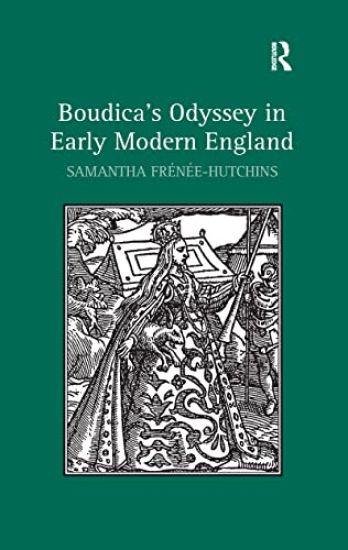
This diachronic study of Boudica serves as a sourcebook of references to Boudica in the early modern period and gives an overview of the ways in which her story was processed and exploited by the different players of the times who wanted to give credence and support to their own belief systems. The author examines the different apparatus of state ideology which processed the social, religious and political representations of Boudica for public absorption and helped form the popular myth we have of Boudica today. By exploring images of the Briton warrior queen across two reigns which witnessed an act of political union and a move from English female rule (under Elizabeth I) to British/Scottish masculine rule (under James VI & I) the author conducts a critical cartography of the ways in which gender, colonialism and nationalism crystallised around this crucial historical figure. Concentrating on the original transmission and reception of the ancient texts the author analyses the historical works of Hector Boece, Raphael Holinshed and William Camden as well as the canonical literary figures of Edmund Spenser, William Shakespeare and John Fletcher. She also looks at aspects of other primary sources not covered in previous scholarship, such as Humphrey Llwyd’s Breuiary of Britayne (1573), Petruccio Ubaldini’s Le Vite delle donne illustri, del regno d’Inghilterra, e del regno di Scotia (1588) and Edmund Bolton’s Nero Caesar (1624). Furthermore, she incorporates archaeological research relating to Boudica.
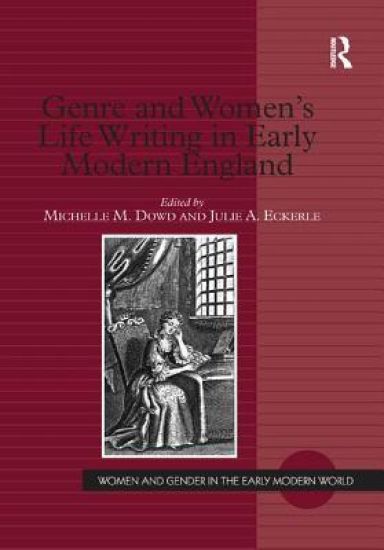
Genre and Women's Life Writing in Early Modern England
Routledge
2016
nidottu
By taking account of the ways in which early modern women made use of formal and generic structures to constitute themselves in writing, the essays collected here interrogate the discursive contours of gendered identity in sixteenth- and seventeenth-century England. The contributors explore how generic choice, mixture, and revision influence narrative constructions of the female self in early modern England. Collectively they situate women's life writings within the broader textual culture of early modern England while maintaining a focus on the particular rhetorical devices and narrative structures that comprise individual texts. Reconsidering women's life writing in light of recent critical trends-most notably historical formalism-this volume produces both new readings of early modern texts (such as Margaret Cavendish's autobiography and the diary of Anne Clifford) and a new understanding of the complex relationships between literary forms and early modern women's 'selves'. This volume engages with new critical methods to make innovative connections between canonical and non-canonical writing; in so doing, it helps to shape the future of scholarship on early modern women.
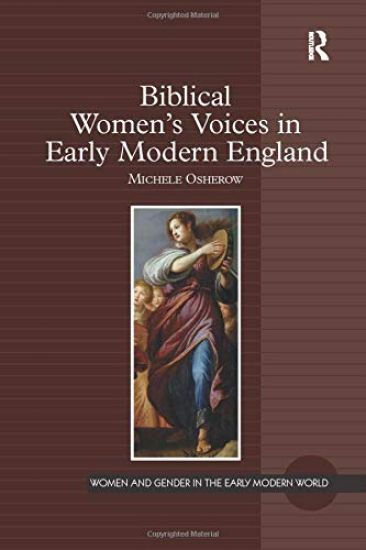
Biblical Women's Voices in Early Modern England documents the extent to which portrayals of women writers, rulers, and leaders in the Hebrew Bible scripted the lives of women in early modern England. Attending to a broad range of writing by Protestant men and women, including John Donne, Mary Sidney, John Milton, Rachel Speght, and Aemilia Lanyer, the author investigates how the cultural requirement for feminine silence informs early modern readings of biblical women's stories, and furthermore, how these biblical characters were used to counteract cultural constraints on women's speech. Bringing to bear a commanding knowledge of Hebrew Scripture, Michele Osherow presents a series of case studies on biblical heroines, juxtaposing Old Testament stories with early modern writers and texts. The case studies include an investigation of references to Miriam in Lady Mary Sidney's psalm translations; an unpacking of comparisons between Deborah and Elizabeth I; and, importantly, a consideration of the feminization of King David through analysis of his appropriation as a model for early modern women in writings by both male and female authors. In deciphering the abundance of biblical characters, citations, and allusions in early modern texts, Osherow simultaneously demonstrates how biblical stories of powerful women challenged the Renaissance notion that women should be silent, and explores the complexities and contradictions surrounding early modern women, their speech, and their power.
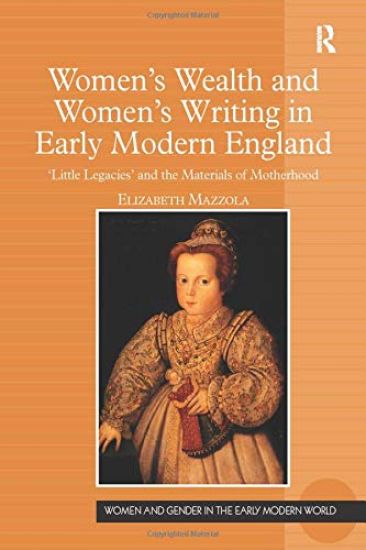
Focusing on both literary and material networks in early modern England, this book examines the nature of women's wealth, its peculiar laws of transmission and accumulation, and how a world of goods and favors, mothers and daughters was transformed by market culture. Drawing on the long and troubled relationship between Elizabeth Tudor, Mary Stuart, Bess of Hardwick, and Arbella Stuart, Elizabeth Mazzola more broadly explores what early modern women might exchange with or leave to each other, including jewels and cloth, needlework, combs, and candlesticks. Women's writings take their place in this circulation of material things, and Mazzola argues that their poems and prayers, letters and wills are particularly designed with the aim of substantiating female ties. This book is an interdisciplinary one, making use of archival research, literary criticism, social history, feminist theory, and anthropological studies of gift exchange to propose that early modern women - whatever their class, educational background or marital status - were key economic players, actively pursuing favors, trading services, and exchanging goods.
![Hume's History of England, Abridged, from the Invasion of Julius C]sar, to the Revolution in 1688. for the Use of Schools and Young Gentlemen. by George Buist, V.D.M.](/covers/9781140714293.jpg)
Hume's History of England, Abridged, from the Invasion of Julius C]sar, to the Revolution in 1688. for the Use of Schools and Young Gentlemen. by George Buist, V.D.M.
David Hume
Gale Ecco, Print Editions
2010
pokkari
Dodd's Church History of England from the Commencement of the Sixteenth Century to the Revolution in 1688, Volume 5
Charles Dodd
Nabu Press
2010
pokkari
Dodd's Church History of England from the Commencement of the Sixteenth Century to the Revolution in 1688, Volume 1
Charles Dodd
Nabu Press
2010
pokkari
The Jesuit's Memorial for the Intended Reformation of England Under Their First Popish Prince
Robert Parsons
KESSINGER PUBLISHING, LLC
2010
sidottu
Winkles's Architectural And Picturesque Illustrations Of The Cathedral Churches Of England And Wales V2 (1860)
B. Winkles
KESSINGER PUBLISHING, LLC
2010
sidottu
Questions On White's Landmarks Of The History Of England
KESSINGER PUBLISHING, LLC
2010
sidottu
Collins's Peerage Of England V3
Arthur Collins; Egerton Brydges
KESSINGER PUBLISHING, LLC
2010
sidottu