Kirjojen hintavertailu. Mukana 12 390 323 kirjaa ja 12 kauppaa.

Kirjahaku

Etsi kirjoja tekijän nimen, kirjan nimen tai ISBN:n perusteella.

1000 tulosta hakusanalla Sabine Mercer

A Thousand Screenplays

A Thousand Screenplays

Sabine Chalvon-Demersay

University of Chicago Press
1999
sidottu
In 1991, French public television held an amateur screenwriting contest. When Sabine Chalvon-Demersay, a French sociologist, examined the roughly 1000 entries, she had hoped to analyze their differences. What she found, however, surprised her. Although the entrants covered nearly every social demographic, their screenplays presented similar characters in similar situations confronting similar problems. The time of crisis presented by the amateur writers was not one of war, famine, or disease - it was the millennial dilemma of representation. In a world plagued by alienation, individualization, and a lack of mobility, how can members of a society combat their declining senses of self? Although the contestants wrote about life in France, their concerns and struggles have a distinctly universal ring. Chalvon-Demersay offers a clear, if still developing, photograph of the contemporary imagination.
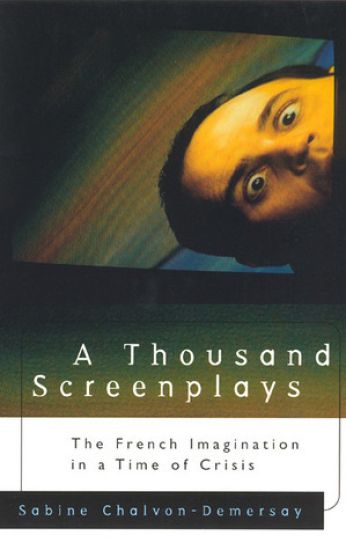
A Thousand Screenplays

A Thousand Screenplays

Sabine Chalvon-Demersay

University of Chicago Press
1999
nidottu
In 1991, French public television held an amateur screenwriting contest. When Sabine Chalvon-Demersay, a French sociologist, examined the roughly 1000 entries, she had hoped to analyze their differences. What she found, however, surprised her. Although the entrants covered nearly every social demographic, their screenplays presented similar characters in similar situations confronting similar problems. The time of crisis presented by the amateur writers was not one of war, famine, or disease - it was the millennial dilemma of representation. In a world plagued by alienation, individualization and a lack of mobility, how can members of a society combat their declining senses of self? Although the contestants wrote about life in France, their concerns and struggles have a distinctly universal ring. Chalvon-Demersay offers a clear, if still developing, photograph of the contemporary imagination.
On Hysteria

On Hysteria

Sabine Arnaud

University of Chicago Press
2015
sidottu
These days, hysteria is known as a discredited diagnosis that was used to group and pathologize a wide range of conditions and behaviors in women. But for a long time, it was seen as a legitimate category of medical problem-and one that, originally, was applied to men as often as to women. In On Hysteria, Sabine Arnaud traces the creation and rise of hysteria, from its invention in the eighteenth century through nineteenth-century therapeutic practice. Hysteria took shape, she shows, as a predominantly aristocratic malady, only beginning to cross class boundaries (and be limited to women) during the French Revolution. Unlike most studies of the role and status of medicine and its categories in this period, On Hysteria focuses not on institutions but on narrative strategies and writing-the ways that texts in a wide range of genres helped to build knowledge through misinterpretation and recontextualized citation. Powerfully interdisciplinary, and offering access to rare historical material for the first time in English, On Hysteria will speak to scholars in a wide range of fields, including the history of science, French studies, and comparative literature.
Theoretical Approaches to European Integration

Theoretical Approaches to European Integration

Sabine Saurugger

Red Globe Press
2013
sidottu
This major new text provides a uniquely broad ranging introduction to, and assessment of the contribution of, the whole range of theoretical approaches that have been applied to the analysis of European integration. It provides tools for understanding the underlying logic behind the political and economic debates that take place in the EU today.
Theoretical Approaches to European Integration

Theoretical Approaches to European Integration

Sabine Saurugger

Red Globe Press
2013
nidottu
This major new text provides a uniquely broad ranging introduction to, and assessment of the contribution of, the whole range of theoretical approaches that have been applied to the analysis of European integration. It provides tools for understanding the underlying logic behind the political and economic debates that take place in the EU today.
We Are What We Drink

We Are What We Drink

Sabine N Meyer

University of Illinois Press
2018
nidottu
Sabine N. Meyer eschews the generalities of other temperance histories to provide a close-grained story about the connections between alcohol consumption and identity in the upper Midwest. Meyer examines the ever-shifting ways that ethnicity, gender, class, religion, and place interacted with each other during the long temperance battle in Minnesota. Her deconstruction of Irish and German ethnic positioning with respect to temperance activism provides a rare interethnic history of the movement. At the same time, she shows how women engaged in temperance work as a way to form public identities and reforges the largely neglected, yet vital link between female temperance and suffrage activism. Relatedly, Meyer reflects on the continuities and changes between how the movement functioned to construct identity in the heartland versus the movement's more often studied roles in the East. She also gives a nuanced portrait of the culture clash between a comparatively reform-minded Minneapolis and dynamic anti-temperance forces in whiskey-soaked St. Paul--forces supported by government, community, and business institutions heavily invested in keeping the city wet.
Gods of the Andes

Gods of the Andes

Sabine Hyland

Pennsylvania State University Press
2011
pokkari
Gods of the Andes provides the first English translation of the earliest lengthy description of Inca religion, An Account of the Ancient Customs of the Natives of Peru (1594). The Account is part of a Jesuit tradition of ecumenical works on religion that encompasses the more famous writings of Matteo Ricci in China and Roberto de Nobili in India. It includes original descriptions of many different aspects of Inca religion, including human sacrifice, the use of hallucinogens, mummification rituals, the existence of transgendered priests in the ancient Andes, divination rituals based on animal entrails, oracles, burials, and confession. In her introductory chapters, Sabine Hyland presents the controversial life of the ascribed author, Blas Valera, a Jesuit who was ultimately imprisoned and exiled by the Jesuits for his “heretical” belief that the Incas worshipped the same creator god the Christians did; examines the Account in the light of other colonial writings about the Incas; and outlines what we know about Inca religion through other sources, comparing Valera’s version to those of other writers.
The Chankas and the Priest

The Chankas and the Priest

Sabine Hyland

Pennsylvania State University Press
2016
sidottu
How does society deal with a serial killer in its midst? What if the murderer is a Catholic priest living among native villagers in colonial Peru?In The Chankas and the Priest, Sabine Hyland chronicles the horrifying story of Father Juan Bautista de Albadán, a Spanish priest to the Chanka people of Pampachiri in Peru from 1601 to 1611. During his reign of terror over his Andean parish, Albadán was guilty of murder, sexual abuse, sadistic torture, and theft from his parishioners, amassing a personal fortune at their expense. For ten years, he escaped punishment for these crimes by deceiving and outwitting his superiors in the colonial government and church administration.Drawing on a remarkable collection of documents found in archives in the Americas and Europe, including a rare cache of Albadán’s candid family letters, Hyland reveals what life was like for the Chankas under this corrupt and brutal priest, and how his actions sparked the instability that would characterize Chanka political and social history for the next 123 years. Through this tale, she vividly portrays the colonial church and state of Peru as well as the history of Chanka ethnicity, the nature of Spanish colonialism, and the changing nature of Chanka politics and kinship from the fifteenth to the eighteenth century.
The Chankas and the Priest

The Chankas and the Priest

Sabine Hyland

Pennsylvania State University Press
2017
pokkari
How does society deal with a serial killer in its midst? What if the murderer is a Catholic priest living among native villagers in colonial Peru?In The Chankas and the Priest, Sabine Hyland chronicles the horrifying story of Father Juan Bautista de Albadán, a Spanish priest to the Chanka people of Pampachiri in Peru from 1601 to 1611. During his reign of terror over his Andean parish, Albadán was guilty of murder, sexual abuse, sadistic torture, and theft from his parishioners, amassing a personal fortune at their expense. For ten years, he escaped punishment for these crimes by deceiving and outwitting his superiors in the colonial government and church administration.Drawing on a remarkable collection of documents found in archives in the Americas and Europe, including a rare cache of Albadán’s candid family letters, Hyland reveals what life was like for the Chankas under this corrupt and brutal priest, and how his actions sparked the instability that would characterize Chanka political and social history for the next 123 years. Through this tale, she vividly portrays the colonial church and state of Peru as well as the history of Chanka ethnicity, the nature of Spanish colonialism, and the changing nature of Chanka politics and kinship from the fifteenth to the eighteenth century.
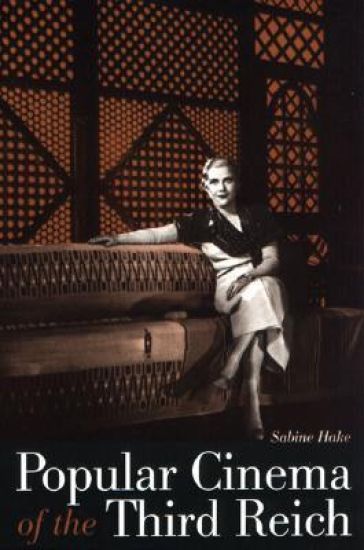
Popular Cinema of the Third Reich

Popular Cinema of the Third Reich

Sabine Hake

University of Texas Press
2002
pokkari
Too often dismissed as escapist entertainment or vilified as mass manipulation, popular cinema in the Third Reich was in fact sustained by well-established generic conventions, cultural traditions, aesthetic sensibilities, social practices, and a highly developed star system-not unlike its Hollywood counterpart in the 1930s. This pathfinding study contributes to the ongoing reassessment of Third Reich cinema by examining it as a social, cultural, economic, and political practice that often conflicted with, contradicted, and compromised the intentions of the Propaganda Ministry. Nevertheless, by providing the illusion of a public sphere presumably free of politics, popular cinema helped to sustain the Nazi regime, especially during the war years. Rather than examining Third Reich cinema through overdetermined categories such as propaganda, ideology, or fascist aesthetics, Sabine Hake concentrates on the constituent elements shared by most popular cinemas: famous stars, directors, and studios; movie audiences and exhibition practices; popular genres and new trends in set design; the reception of foreign films; the role of film criticism; and the representation of women. She pays special attention to the forced coordination of the industry in 1933, the changing demands on cinema during the war years, and the various ways of coming to terms with these filmic legacies after the war. Throughout, Hake's findings underscore the continuities among Weimar, Third Reich, and post-1945 West German cinema. They also emphasize the codevelopment of German and other national cinemas, especially the dominant Hollywood model.
Men as Women, Women as Men

Men as Women, Women as Men

Sabine Lang

University of Texas Press
1998
pokkari
As contemporary Native and non-Native Americans explore various forms of "gender bending" and gay and lesbian identities, interest has grown in "berdaches," the womanly men and manly women who existed in many Native American tribal cultures. Yet attempts to find current role models in these historical figures sometimes distort and oversimplify the historical realities.This book provides an objective, comprehensive study of Native American women-men and men-women across many tribal cultures and an extended time span. Sabine Lang explores such topics as their religious and secular roles; the relation of the roles of women-men and men-women to the roles of women and men in their respective societies; the ways in which gender-role change was carried out, legitimized, and explained in Native American cultures; the widely differing attitudes toward women-men and men-women in tribal cultures; and the role of these figures in Native mythology. Lang's findings challenge the apparent gender equality of the "berdache" institution, as well as the supposed universality of concepts such as homosexuality.
Screen Nazis

Screen Nazis

Sabine Hake

University of Wisconsin Press
2012
nidottu
From the late 1930s to the early twenty-first century, European and American filmmakers have displayed an enduring fascination with Nazi leaders, rituals, and symbols, making scores of films from Confessions of a Nazi Spy (1939) and Watch on the Rhine (1943) through Des Teufels General (The Devil's General, 1955) and Pasqualino settebellezze (Seven Beauties, 1975), up to Der Untergang (Downfall, 2004), Inglourious Basterds Probing the emotional sources and effects of this fascination, Sabine Hake looks at the historical relationship between film and fascism and its far-reaching implications for mass culture, media society, and political life. In confronting the spectre and spectacle of fascist power, these films not only depict historical figures and events but also demand emotional responses from their audiences, infusing the abstract ideals of democracy, liberalism, and pluralism with new meaning and relevance. Hake underscores her argument with a comprehensive discussion of films, including perspectives on production history, film authorship, reception history, and questions of performance, spectatorship, and intertextuality. Chapters focus on the Hollywood anti-Nazi films of the 1940s, the West German anti-Nazi films of the 1950s, the East German anti-fascist films of the 1960s, the Italian 'Naziploitation' films of the 1970s, and issues related to fascist aesthetics, the ethics of resistance, and questions of historicisation in films of the 1980s-2000s from the United States and numerous European countries.
James Ensor and Stillife in Belgium: 1830-1930

James Ensor and Stillife in Belgium: 1830-1930

Sabine Taevernier; Bart Verschaffel

YALE UNIVERSITY PRESS
2024
pokkari
A unique journey with James Ensor through the history of still life in Belgium in the nineteenth and twentieth centuries Still life played an important role within the work of Belgian expressionist and symbolist painter James Ensor (1860–1949). The quality and significance of his intriguingly complex still lifes become clear when placed within the broader development of the genre in Belgium between 1830 and 1930. The book offers an overview of the nineteenth-century Belgian academic tradition of decorative painting, with intriguing work by lesser-known painters such as Jean Robie, Hubert Bellis, Frans Mortelmans, and Henri De Braekeleer, as well as forgotten female artists such as Berthe Art and Alice Ronner. In the early twentieth century, artists such as Louis Thevenet continued to develop the genre of still life in a traditional manner, while innovators such as the late James Ensor, Léon Spilliaert, Marthe Donas, Walter Vaes, and Gustave Van de Woestyne created highly personal interpretations. This book is published on the first exhibition ever entirely devoted to James Ensor's still lifes at Mu.ZEE (Ostend). Distributed for Mercatorfonds Exhibition Schedule: Mu.ZEE, Ostend, Belgium (December 16, 2023–April 14, 2024)
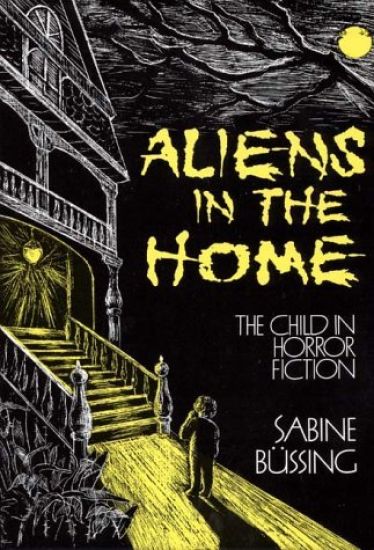
Aliens in the Home

Aliens in the Home

Sabine Bussing

Praeger Publishers Inc
1987
sidottu
Within the broad field of contemporary literature, horror fiction has only recently developed into a genre which modern scholars may legitimately regard as being worthy of critical attention. This comparative study provides ample proof that horror fiction can be more profound and revealing than many literary critics imagined. The only study of its kind, this book offers detailed critical analysis of the child in horror fiction, with special emphasis on themes relating to the child's social position within the family and its war against parents or authority figures, as well as its various functions as victim, evil innocent, and monster. Special attention is given to the child's consistent, stylized portrayal in horror fiction, which forms a sharp contrast to the appearance of children both in other genres and in real life.
The Book of Werewolves

The Book of Werewolves

Sabine Baring-Gould

Lulu.com
2018
sidottu
Baring-Gould's eye-opening history of lycanthropy - the werewolf curse - delves deep into the lore, unearthing various historical cases, several of which date back to Ancient or Medieval times. The concept of a human transforming into a wolf has ancient origins, with several Greek and Roman authors such as Virgil, Ovid, Herodotus and Pliny raising the concept in their poetry and other writings. Rumors of sorcery that could induce a human to change was attributed to magicians in far off places such as Scythia, and such beliefs were widely held. Later, the Norse civilization's mythology introduced lycanthropy and other kinds of transformation. Humans as wolves, bears, birds and other beasts were said to appear in the northern wilds; the Norse God Odin took the form of a bird on regular occasions. Berserker warriors would clad themselves in wolf skins; Bj rn, son of Ulfheoin, was famed for his ability to shift between human and wolf forms.
The Book of Werewolves

The Book of Werewolves

Sabine Baring-Gould

Lulu.com
2018
pokkari
Baring-Gould's eye-opening history of lycanthropy - the werewolf curse - delves deep into the lore, unearthing various historical cases, several of which date back to Ancient or Medieval times. The concept of a human transforming into a wolf has ancient origins, with several Greek and Roman authors such as Virgil, Ovid, Herodotus and Pliny raising the concept in their poetry and other writings. Rumors of sorcery that could induce a human to change was attributed to magicians in far off places such as Scythia, and such beliefs were widely held. Later, the Norse civilization's mythology introduced lycanthropy and other kinds of transformation. Humans as wolves, bears, birds and other beasts were said to appear in the northern wilds; the Norse God Odin took the form of a bird on regular occasions. Berserker warriors would clad themselves in wolf skins; Bj rn, son of Ulfheoin, was famed for his ability to shift between human and wolf forms.
Birth Of New Land

Birth Of New Land

Sabine Metscher

Lulu.com
2018
pokkari
This book gives watercolors to show how early sea fare adventurers set out.What they used in material and tools, what they may have seen when they arrived.There is a hint of what their beliefs were and that they lived with rules.The core title idea is represented by how molten lava makes new land. The power in the earth and the way we humans connected to it in the past and how we learn about resources today is mentioned.Life in the water, on islands and how other living beings move between land and ocean is in the stories.Part of this book tells of the way humans refine their handcrafts and how we change in our time to help sustainability for future generations to discover
Dirt in Victorian Literature and Culture

Dirt in Victorian Literature and Culture

Sabine Schülting

Routledge
2019
nidottu
Addressing the Victorian obsession with the sordid materiality of modern life, this book studies dirt in nineteenth-century English literature and the Victorian cultural imagination. Dirt litters Victorian writing – industrial novels, literature about the city, slum fiction, bluebooks, and the reports of sanitary reformers. It seems to be "matter out of place," challenging traditional concepts of art and disregarding the concern with hygiene, deodorization, and purification at the center of the "civilizing process." Drawing upon Material Cultural Studies for an analysis of the complex relationships between dirt and textuality, the study adds a new perspective to scholarship on both the Victorian sanitation movement and Victorian fiction. The chapters focus on Victorian commodity culture as a backdrop to narratives about refuse and rubbish; on the impact of waste and ordure on life stories; on the production and circulation of affective responses to filth in realist novels and slum travelogues; and on the function of dirt for both colonial discourse and its deconstruction in postcolonial writing. They address questions as to how texts about dirt create the effect of materiality, how dirt constructs or deconstructs meaning, and how the project of writing dirt attempts to contain its excessive materiality. Schülting discusses representations of dirt in a variety of texts by Charles Dickens, E. M. Forster, Elizabeth Gaskell, George Gissing, James Greenwood, Henry James, Charles Kingsley, Henry Mayhew, George Moore, Arthur Morrison, and others. In addition, she offers a sustained analysis of the impact of dirt on writing strategies and genre conventions, and pays particular attention to those moments when dirt is recycled and becomes the source of literary creation.
Risk, Technology, and Moral Emotions
Risks arising from technologies raise important ethical issues. Although technologies such as nanotechnology, biotechnology, ICT, and nuclear energy can improve human well-being, they may also convey risks for our well-being due to, for example, abuse, unintended side-effects, accidents, and pollution. As a consequence, technologies can trigger emotions, including fear and indignation, which often leads to conflicts between stakeholders. How should we deal with such emotions in decision making about risky technologies?This book offers a new philosophical theory of risk emotions, arguing why and how moral emotions should play an important role in decisions surrounding risky technologies. Emotions are usually met with suspicion in debates about risky technologies because they are seen as contrary to rational decision making. However, Roeser argues that moral emotions can play an important role in judging ethical aspects of technological risks, such as justice, fairness, and autonomy. This book provides a novel theoretical approach while at the same time offering concrete recommendations for decision making about risky technologies. It will be of interest to those working in different areas of philosophy—such as ethics, decision theory, philosophy of science, and philosophy of technology—as well as scholars in the fields of psychology, public policy, science and technology studies, environmental ethics, and bioethics.