Kirjojen hintavertailu. Mukana 11 244 527 kirjaa ja 12 kauppaa.

Kirjahaku

Etsi kirjoja tekijän nimen, kirjan nimen tai ISBN:n perusteella.

1000 tulosta hakusanalla Sam Copeland

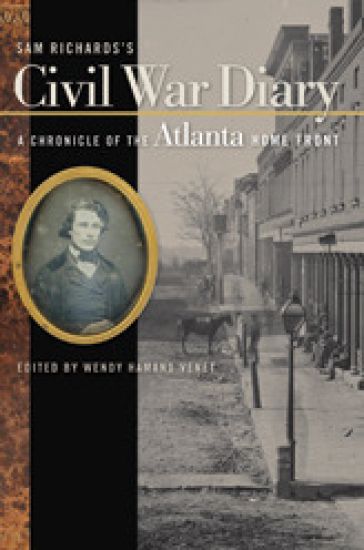
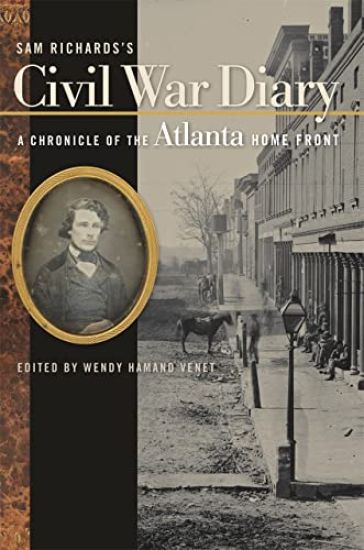
Sam Richards's Civil War Diary

Sam Richards's Civil War Diary

University of Georgia Press
2009
sidottu
This previously unpublished diary is the best-surviving firsthand account of life in Civil War-era Atlanta. Bookseller Samuel Pearce Richards (1824-1910) kept a diary for sixty-seven years. This volume excerpts the diary from October 1860, just before the presidential election of Abraham Lincoln, through August 1865, when the Richards family returned to Atlanta after being forced out by Sherman's troops and spending a period of exile in New York City. The Richardses were among the last Confederate loyalists to leave Atlanta. Sam's recollections of the Union bombardment, the evacuation of the city, the looting of his store, and the influx of Yankee forces are riveting.Sam was a Unionist until 1860, when his sentiments shifted in favor of the Confederacy. However, as he wrote in early 1862, he had "no ambition to acquire military renown and glory." Likewise, Sam chafed at financial setbacks caused by the war and at Confederate policies that seemed to limit his freedom. Such conflicted attitudes come through even as Sam writes about civic celebrations, benefit concerts, and the chaotic optimism of life in a strategically critical rebel stronghold. He also reflects with soberness on hospitals filled with wounded soldiers, the threat of epidemics, inflation, and food shortages. A man of deep faith who liked to attend churches all over town, Sam often commments on Atlanta's religious life and grounds his defense of slavery and secession in the Bible. Sam owned and rented slaves, and his diary is a window into race relations at a time when the end of slavery was no longer unthinkable.Perhaps most important, the diary conveys the tenor of Sam's family life. Both Sam and his wife, Sallie, came from families divided politically and geographically by war. They feared for their children's health and mourned for relatives wounded and killed in battle. The figures in Sam Richards's Civil War Diary emerge as real people; the intimate experience of the Civil War home front is conveyed with great power.
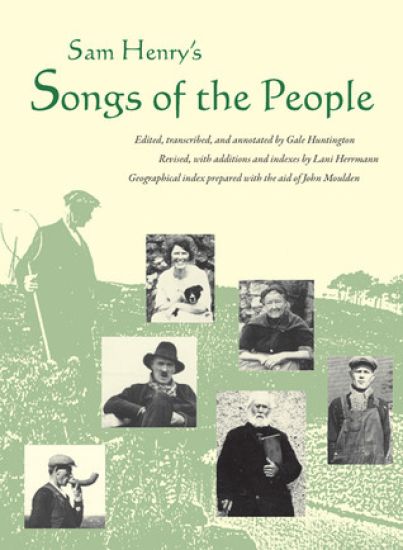
Sam Henry's "Songs of the People"

Sam Henry's "Songs of the People"

Sam Henry

University of Georgia Press
2010
pokkari
The story of Ireland—its graces and shortcomings, triumphs and sorrows—is told by ballads, dirges, and humorous songs of its common people. Music is a direct and powerful expression of Irish folk culture and an aspect of Irish life beloved throughout the rest of the world.Incredibly, the largest single gathering of Irish folk songs had been almost inaccessible because, originally newspaper based, it was available in only three libraries, in Belfast, Dublin, and Washington D.C. Sam Henry’s “Songs of the People” makes the music available to a wider audience than the collector ever imagined. Comprising nearly 690 selections, this thoroughly annotated and indexed collection is a treasure for anyone who performs, composes, studies, collects, or simply enjoys folk music. It is valuable as an outstanding record of Irish folk songs before World War II, demonstrating the historical ties between Irish and Southern folk culture and the tremendous Irish influence on American folk music.In addition to the songs themselves and their original commentary, Sam Henry’s “Songs of the People” includes a glossary, bibliography, discography, index of titles and first lines, melodic index, index of the original sources of the songs and information about them, geographical index of sources, and three appendixes related to the original song series in the Northern Constitution.
Sam Richards's Civil War Diary

Sam Richards's Civil War Diary

UNIVERSITY OF GEORGIA PRESS
2025
nidottu
This previously unpublished diary is the best-surviving firsthand account of life in Civil War-era Atlanta. Bookseller Samuel Pearce Richards (1824-1910) kept a diary for sixty-seven years. This volume excerpts the diary from October 1860, just before the presidential election of Abraham Lincoln, through August 1865, when the Richards family returned to Atlanta after being forced out by Sherman's troops and spending a period of exile in New York City. The Richardses were among the last Confederate loyalists to leave Atlanta. Sam's recollections of the Union bombardment, the evacuation of the city, the looting of his store, and the influx of Yankee forces are riveting. Sam was a Unionist until 1860, when his sentiments shifted in favor of the Confederacy. However, as he wrote in early 1862, he had "no ambition to acquire military renown and glory." Likewise, Sam chafed at financial setbacks caused by the war and at Confederate policies that seemed to limit his freedom. Such conflicted attitudes come through even as Sam writes about civic celebrations, benefit concerts, and the chaotic optimism of life in a strategically critical rebel stronghold. He also reflects with soberness on hospitals filled with wounded soldiers, the threat of epidemics, inflation, and food shortages. A man of deep faith who liked to attend churches all over town, Sam often commments on Atlanta's religious life and grounds his defense of slavery and secession in the Bible. Sam owned and rented slaves, and his diary is a window into race relations at a time when the end of slavery was no longer unthinkable. Perhaps most important, the diary conveys the tenor of Sam's family life. Both Sam and his wife, Sallie, came from families divided politically and geographically by war. They feared for their children's health and mourned for relatives wounded and killed in battle. The figures in Sam Richards's Civil War Diary emerge as real people; the intimate experience of the Civil War home front is conveyed with great power.
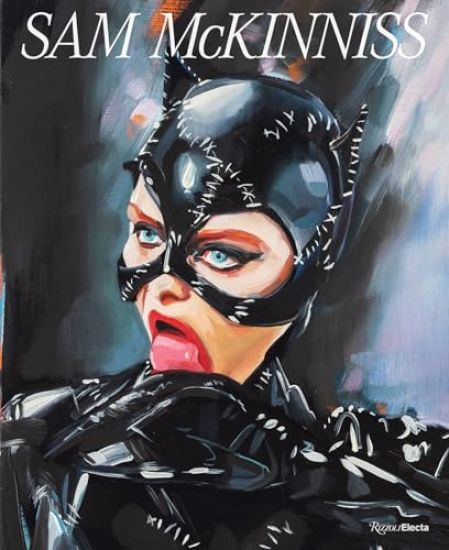
Sam Mckinniss

Sam Mckinniss

Natasha Stagg; Jarrett Earnest

RIZZOLI INTERNATIONAL PUBLICATIONS
2025
sidottu
Drawing inspiration from iconic figures and imagery from popular media, press photos, and other artworks, Sam McKinniss transforms familiar images into striking original works. By reinterpreting snapshots of celebrities and working with images with an inbuilt cultural power, McKinniss infuses them with a new layer of depth and significance making them more powerful, expressive, and ambiguous. His portraits are not mere copies but rather captured moments of collective memory, heightened with emotion and drama. Transitioning from painting friends to internet-sourced imagery, McKinniss taps into emotional wells sublimated within the drama of entertainment, theater, pageantry, presentation, fashion, and glamour in his work. Investing recognizable faces with emotion, he invites viewers to reflect on their own relationship with these cultural icons and the broader societal forces that shape them. Oscillating between being a fan and an idol, McKinniss illustrates complex roles and identities existing in his art. In this volume, the artist s first monograph, writers Natasha Stagg, Jarrett Earnest, and Drew Sawyer identify key works and exhibitions and detail McKinniss s artistic trajectory.
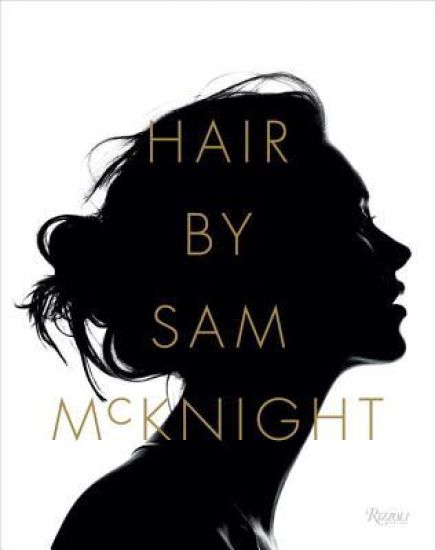
Hair by Sam McKnight

Hair by Sam McKnight

Sam McKnight

RIZZOLI INTERNATIONAL PUBLICATIONS
2016
sidottu
A bounty of hairstyles, from nostalgic to androgynous, that have transformed women throughout the past forty years, from the legendary Sam McKnight, one of fashion s leading hairstylists.
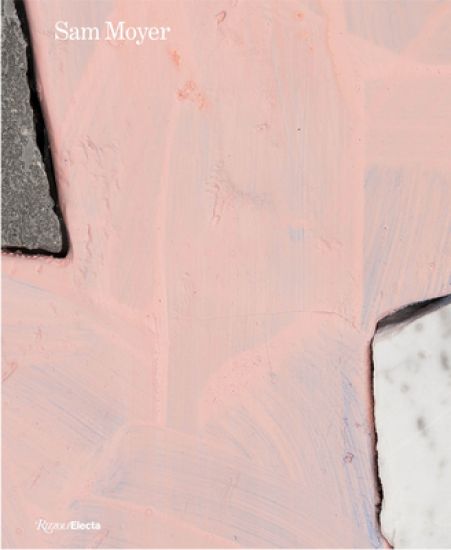
Sam Moyer

Sam Moyer

Renaud Proch; Ross Simonini

RIZZOLI INTERNATIONAL PUBLICATIONS
2023
sidottu
Sam Moyer has developed a distinctive language of abstraction, creating paintings, structures, and sculptural objects that draw inspiration from architectural space and natural materials. Recognized for a diverse practice in which she unites found textures and objects in innovative ways, Moyer crafts compelling hybrids, often combining hand-painted fabrics with repurposed marble, slate, and stone that carry textural imperfections reflecting industrial design processes. Her practice has evolved from its more conceptual and process-based origins to address formal and theoretical issues regarding the construct of painting. In all her productions, issues of scale and space remain critical. Moyer is particularly interested in the way architecture functions in tandem with her objects to create dynamic visual experiences. In this volume, the artist s first monograph, curator Renaud Proch contributes the first extended critical essay on the artist s art and career, identifying key works and exhibitions of the last ten years and detailing her artistic trajectory. Artist and writer Ross Simonini, who has known Moyer for a decade, contributes an in-depth interview with the artist, and noted novelist Kaitlyn Greenidge offers a creative response to Moyer s work.
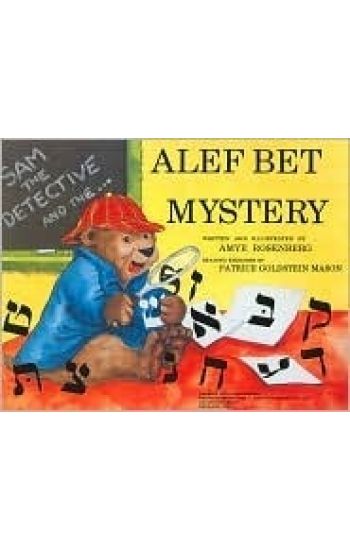
Sam the Detective and the Alef Bet Mystery

Sam the Detective and the Alef Bet Mystery

Behrman House

Behrman House Inc.,U.S.
1979
pokkari
Learning the Hebrew alphabet becomes a page-turning adventure as Sam the Detective takes students through an alef bet sleuthing escapade.Mem sounds like M. This mad mouse magician makes magic and mischief into his mini-monster machine. Color the mem monsters he made. With Sam as their guide, students will:Color in pictures to reveal the Hebrew letters hidden withinFirst trace, then print the lettersLearn the vowelsRecognize the letters and vowels in simple syllables and wordsAnd the best part is that children will laugh and play the whole way through.
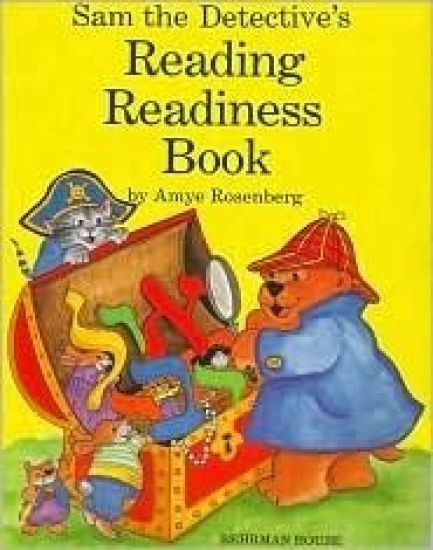
Sam the Detective's Reading Readiness

Sam the Detective's Reading Readiness

Behrman House

Behrman House Inc.,U.S.
1982
pokkari
Young children make friends with the Hebrew alphabet in this charming best-seller.In these easy, fun-filled steps, children learn to recognize all 22 Hebrew letters--what they look like, what they sound like, how to tell them apart, and how to get used to scanning a page from right to left. A generation of students has already learned the alef bet from Sam the Detective's Reading Readiness Book.
Sam Peckinpah's West

Sam Peckinpah's West

Engel Leonard

University of Utah Press,U.S.
2003
nidottu
"I use violence as it is. It's ugly, brutalizing, and bloody...awful." Vilified for his violent vision of the American West as presented in films such as The Wild Bunch and Pat Garrett and Billy the Kid, the artistry of Sam Peckinpah's work was largely overlooked in his lifetime. Dismissed by critics, he was essentially ignored in the decade following his untimely death in 1984 at the age of fifty-nine. However, with the publication of a biography in 1994 and Warner Bros.' theatrical re-release of The Wild Bunch in 1995, Peckinpah reemerged as a distinctive voice in American film.In Sam Peckinpah's West eleven scholars approach the director's oeuvre with an eye toward his minor films, touching on themes and characters previously overlooked and linking his vision to America's literary and historical traditions. These insightful essays assure us that Peckinpah's work will not be forgotten again, nor the vibrancy of his characters who go out "not with a whimper, nor even a bang, but a cinematic explosion that rocked Hollywood and riveted us in a way we'll never forget."
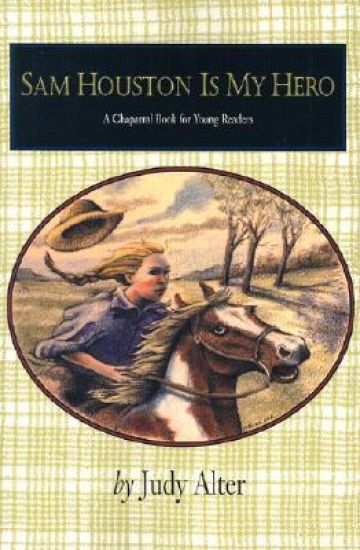
Sam Houston Is My Hero

Sam Houston Is My Hero

Judy Alter

Texas Christian University Press,U.S.
2003
nidottu
Fourteen-year-old Cat Jennings lives—and works—on a hardscrabble farm outside Bastrop, Texas, with her parents, an older brother Charlie, and three younger children—Holly, Benjie, and Susanna. But her father has gone to fight at the Alamo, and Charlie has left to join him. When Cat learns that the Alamo has fallen with no survivors, she takes off on horseback to ride across South Texas and urge volunteers to join Sam Houston’s army. She soon runs into Johnny Jenkins, who is both her nemesis and her first love. Johnny is on his way to join Houston, even though Cat tells him he’s too young. As she rides from cabin to cabin, Cat meets fascinating characters, like the gentle widow Polly who won’t believe that her son died at the Alamo. And she has near misses with a Mexican brigade and roughnecks who try to kidnap her. Disguised as a boy, she runs into the Texian army—only to find that they are retreating! She also finds Charlie and Johnny with Houston, but when she wants to leave for home, General Houston won’t allow it. So Cat joins the Runaway Scrape and follows Houston and his army to San Jacinto, arguing all the way with Johnny and Charlie, who think Houston is a coward for retreating and cruel for burning the towns he marches through. Cat argues that he is the hero who will save Texas. According to her great-granddaughter, the real Catherine Jennings did make such a ride after her father, Gordon Jennings, was killed at the Alamo. The rest of this story is fiction based on historical research.
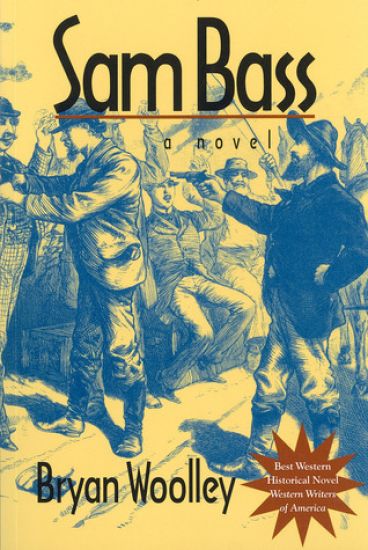
Sam Bass

Sam Bass

Bryan Woolley; Fred Erisman

Texas Christian University Press,U.S.
2004
nidottu
The story of Sam Bass, both outlaw and romantic figure, has become a familiar part of Texas folldore and is well documented in nonfiction. But in this novel, Bryan Woolley creates a compelling story by giving the antihero fictional life. Woolley brings Bass alive through six alternating voices - Maude, the whore who was Bass's lover; Mary Matson; the African American who took him in and tended him as he lay dying; Dad Egan, the lawman who was once a father-figure to young Sam Bass but feels compelled to capture the outlaw, Frank Johnson, who rode with Bass but left the outlaw life to reappear as a small-town doctor; and Jim Murphy, the well-meaning saloonkeeper who makes a bargain with the law and brings down Sam Bass. In shaping the Bass story, Woolley explores the themes of youth and age, impulse and wisdom. An outlaw, for many of us, is not a villain or a criminal but someone who, by choice or circumstance, finds himself at odds with society. We see the outlaw life as one of carefree freedom without responsibilities and full of infinite possibilities. Frank Jackson says it best as he recalls riding with Sam Bass. ""I felt like an outlaw but not like a criminal, and the beauty of the day and its freedom filled me.
Sam Chamberlain's Mexican War

Sam Chamberlain's Mexican War

Goetzmann

Texas State Historical Association,U.S.
1994
sidottu
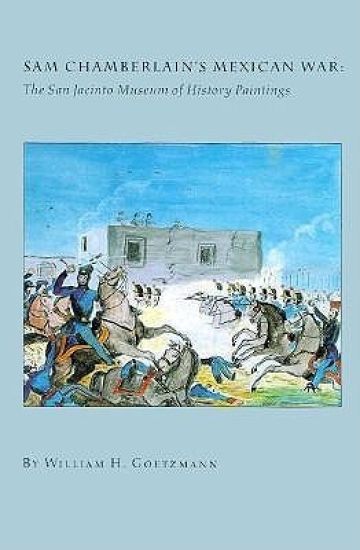
This striking full-color collection of over 160 paintings, with text by Pulitzer Prize-winning historian William H. Goetzmann, is a book of uncommon visual pleasure and historical importance. Sam Chamberlain was a fascinating character, a writer, artist, and adventurer whose ribald life story rivals those of Jack Crabb in Little Big Man and Harry Flashman in the Flashman novels. Private Sam Chamberlain was the most prolific artist of the war with Mexico of 1846-1848. In hundreds of lively watercolors, he provided upclose views of the battles, marches, atrocities, massacres, seductions, and tall tales of the Mexican War. No official account has ever matched the immediacy of his portrayals - in watercolor and in prose - of this critical event in the history of the U.S. and Mexico. This widely researched volume marks a major event in Mexican War history, and provides insight into the colorful imagination of one of that war's most notable rogues. Based largely on the collection of 147 watercolors now owned by the San Jacinto Museum of History, the book reproduces these treasures for the first time in color. Readers will greatly enjoy Sam Chamberlain's vivid, occasionally humorous paintings, and will be fascinated by the story of his life and how he came to produce these wonderful scenes. The book represents an intriguing detective story that has not yielded the final word on the elusive Chamberlain, his adventures, and the whereabouts of his other works. This handsome volume includes over 160 pictures, maps, detailed picture captions, and quotes from Chamberlain's original manuscript, "My Confession: Recollections of a Rogue." Also included is an extensive introduction detailing SamChamberlain's life as a hero in both the Mexican and Civil wars.
Sam Mendes at the Donmar

Sam Mendes at the Donmar

Matt Wolf

Limelight Editions
2003
pokkari
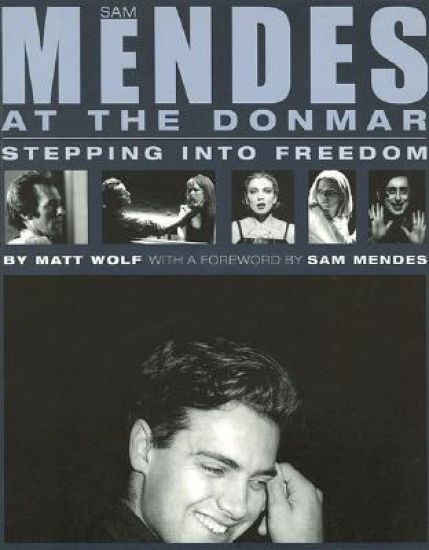
Matt Wolf's book chronicles ten amazing years for the Donmar and for Mendes, combining accounts of numerous productions and extensive interviews with Mendes himself and more than sixty Donmar alumni: Sondheim, Nicole Kidman, Gwyneth Paltrow, Alan Cumming, Helen Mirren, Stephen Dillane and Jennifer Ehle, to name but a few. This celebration of the Donmar's tenth anniversary is full of candid conversation, analyses of its successes as well as its failures, and trenchant behind-the-scenes reporting. It is also the Donmar's farewell to Sam Mendes, who is leaving the theatre to pursue other opportunities on the stage and screen. As director of American Beauty, for which he won an Academy Award, and Road to Perdition, his future is as bright as his past.
Sam Hughes

Sam Hughes

WILFRID LAURIER UNIVERSITY PRESS
1986
sidottu
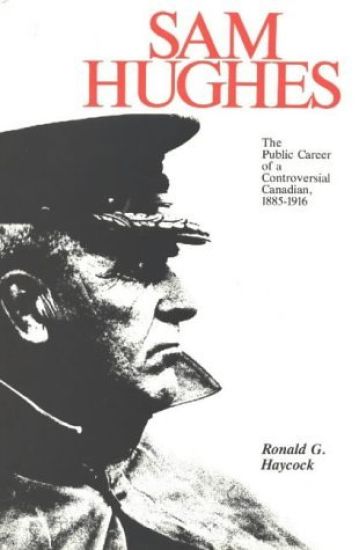
This book is based on the public career of a highly controversial Canadian, Sam Hughes 1885-1916. He is one of the most colourful, even bizarre, figures in Canadian history. Though he died in 1921, his name can still conjure up controversy and not a little misunderstanding. His long career--in so many respects the quintessential story of a poor backwoods Ontario farm boy who made good by his own efforts--continues to exert a fascination that few other Canadian political figures could duplicate. Even though there has never been a major scholarly study of Sam Hughes, historians and other writers have developed definite opinions about him, and they are held nearly as vigorously as those of his contemporaries. These vary from insisting that Hughes was mentally unbalanced to proclaiming him a genius. Hughes' defenders have rarely been professional historians. Neither side have not produced an extensive or definitive literature on Hughes in proportion to other figures of a similar public stature. Whatever side the studies have taken, the assessments are still incomplete because they have not examined the entirety of Sam Hughes' public life. To a large extent these limitations have allowed the folk image of him to persist. But Hughes had fibre and substance beyond this. Since historical figures must be explained in terms of their environment, this study tries to redress the previous imbalances by examining Hughes' public career. It is the only way his historical significance can be explained and reasonable judgments made.
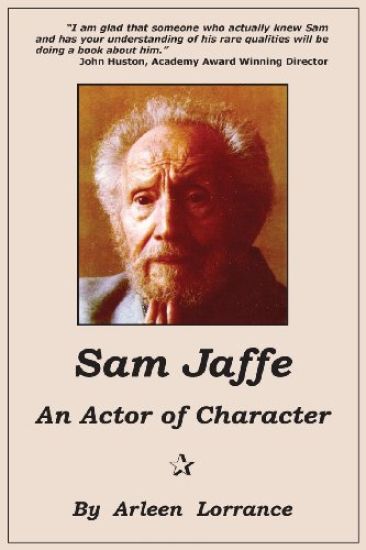
Sam Jaffe

Sam Jaffe

Arleen Lorrance

L P Publications
2013
pokkari
This life story of actor Sam Jaffe is extensively researched, including 150 personally conducted celebrity interviews, and colorfully told by writer Arleen Lorrance who was also his good friend. This is more than the story of a man who was admired and held in great esteem by the likes of John Huston, Zero Mostel, Karl Malden, Jack Lemmon, Julie Harris and Robert Wise. This is a 20th century history of theatre, film, and early television, not to mention life in New York City and Hollywood, lived passionately for 93 exciting and thoughtful years. Sam Jaffe created the classic film roles of Gunga Din, the high lama in Lost Horizon, and Doc Erwin Riedenschneider in The Asphalt Jungle (for which he received an Oscar nomination.) On television he was well known as Dr. Zorba in Ben Casey. His uniqueness enabled people to recognize him wherever he went. Jaffe was more than an actor. He was a man of integrity and conviction who was instrumental in starting Actor's Equity, as well as creating The Equity Library Theatre which kick-started hundreds of careers. Jaffe was a political activist who survived being falsely targeted by the House Un-American Activities Committee which damaged hundreds of professionals and destroyed many lives.
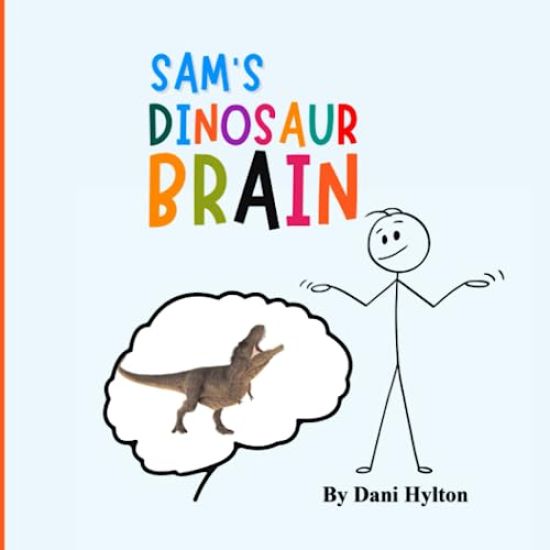
Sam's Dinosaur Brain

Sam's Dinosaur Brain

Dani Hylton

Educare Press
2023
pokkari
Any child can be in a Freeze, Fight, Flight, or Fawn reactive state. It is a fact of existence - these Four F's are part of our daily lives. Our brains are designed for a different era - a time long ago when grass was tall and cats were big. The trouble is that we do not live in that time. Any child's brain can Anticipate, Ruminate and Perseverate on issues that might (or might not) be real - there are no tigers in the house today. Sam's Dinosaur focuses on the brain's Amygdala.We each have two amygdalae - one in each hemisphere - that regulate how we handle stressful situations.The word Amygdala is simply Latin for Almond, because early neuroscientists realized that the anatomical likeness was to an almond nut.The Amygdala is the center of emotional reaction like fear and frustration, anxiety and sadness.When our emotional wellbeing feels overloaded we will sometimes react in a way that causes people to question our behavior.Sometimes we react without thinking and are unaware at the time of the damage we are doing. We might say to ourselves afterwords: What was I thinking?How could I have said (or done) those terrible things to people I love?In Sam's Dinosaur Brain, we describe the ancient remnant of an evolutionary brain that was designed to keep us safe from tigers in the wild, or unexpected attack. We bring the amygdala into today's social context in playground or classroom and show the reader that we can be in charge of our dinosaur brain; that we can regulate our emotional state with simple strategies. Strategies are built on: Simple graphical representations of neuroscience knowledge about a child's brain.Colorful stick figures that enable every child see themselves in the action.Simple easy to understand choices that grow the reader's mental model concerning stress and remedies to overcoming stress.For the adult, teacher, guardian, or parent the book summarizes the solution with a clear and vivid description of how and when to use this simple method to help children overcome the stressful situation.The take away message is simple.It is like riding a bike. The child wasn't born able to ride a bike. Yet, when we taught the child how to become proficient on a bike, we built and strengthened (over time) primary neural (white matter) structures that stay for the child's life.Brain is malleable. Every day it changes and rewires itself in response to practice that the child undertakes alone or with friends, parents, teachers, so that white matter structures are strong and long lasting. By strengthening neuronal structures teachers contribute to life skills, which last throughout the child's life. First we co-regulate with the child in a safe psychological, co-created space and then we support the child's journey to self-regulation.The design and production is simple, gentle, and intended to not overwhelm any child's working memory or sensitivity to too much stimulation. Enjoy