Kirjojen hintavertailu. Mukana 12 390 323 kirjaa ja 12 kauppaa.

Kirjahaku

Etsi kirjoja tekijän nimen, kirjan nimen tai ISBN:n perusteella.

1000 tulosta hakusanalla Samuel Johnson

Letters of Samuel Johnson

Letters of Samuel Johnson

Samuel Johnson

Hansebooks
2017
pokkari
Letters of Samuel Johnson - In Two Volumes. Vol. I is an unchanged, high-quality reprint of the original edition of 1892. Hansebooks is editor of the literature on different topic areas such as research and science, travel and expeditions, cooking and nutrition, medicine, and other genres. As a publisher we focus on the preservation of historical literature. Many works of historical writers and scientists are available today as antiques only. Hansebooks newly publishes these books and contributes to the preservation of literature which has become rare and historical knowledge for the future.
Samuel Johnson

Samuel Johnson

Ruth McEnery Stuart

Alpha Editions
2023
nidottu
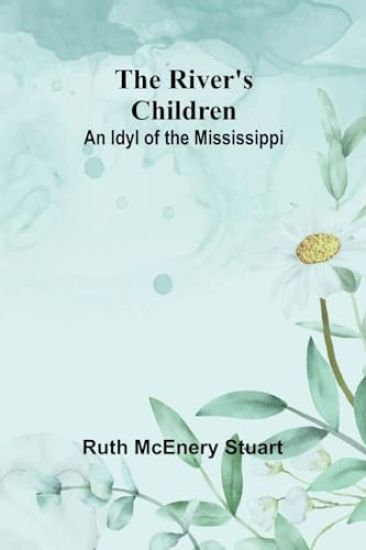
The River's Children: An Idyl of the Mississippi, a classical and rare book that has been considered essential throughout human history, so that this work is never forgotten, we at Alpha Editions have made efforts in its preservation by republishing this book in a modern format for present and future generations. This whole book has been reformatted, retyped and designed. These books are not made of scanned copies of their original work and hence the text is clear and readable.
Samuel Johnson

Samuel Johnson

Counterpoint
2009
nidottu
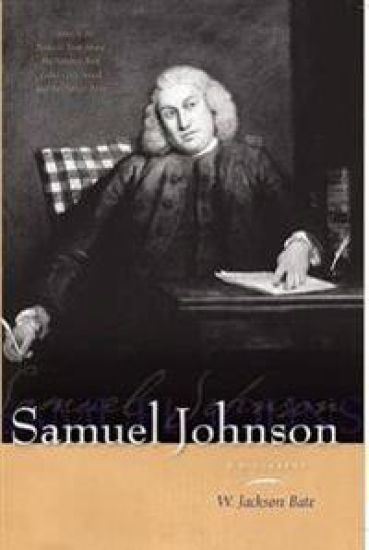
Samuel Johnson is a writer of such significance that his era -- the second half of the 18th century -- is known as the Age of Johnson. Starting out as a Grub Street journalist, he made his mark on history as a poet, author, moralist, literary critic, political commentator, and lexiconographer. We, as moderns, need to know this man, and W. Jackson Bate's formidable biography, with its uncanny depth and empathy, is the book that makes that happen. Professor W. Jackson Bate is a lyrical writer who deftly explains the effect Johnson has had on scholars, critics, and readers of all kinds through the past 200 years: "The reason Johnson has always fascinated so many people of different kinds," Bate writes, "is not simply that [he] is so vividly picturesque and quotable . . . The deeper secret of his hypnotic attraction, especially during our own generation, lies in the immense reassurance he gives to human nature." Bate delves deep into the character that formed Johnson's intellect and fueled his prodigious contribution to literature, religion, politics, and our understanding of the nature of humankind, revealing the fascinating nature -- both odd and adored -- of this literary luminary.
The Works of Samuel Johnson, Vol 1

The Works of Samuel Johnson, Vol 1

Samuel Johnson

Yale University Press
1958
sidottu
Autobiographical writings, including a previously unpublished diary, comprise first volume of Works of Samuel Johnson Although Samuel Johnson is recognized as the central English literary figure of the second half of the eighteenth century, and the period is often referred to as the Age of Johnson, no consequential edition of his works has appeared since 1825, and no edition at any time has exercised the care in presenting the complete and accurate text of his works that modern readers require. Now, Yale University is sponsoring a new edition of the works of Samuel Johnson, to include writings identified as his during the last twenty-five years and not printed in any previous collection of his works. The complete Yale edition is expected to occupy at least twelve volumes. It will be guided by a distinguished committee made up of Herman W. Liebert (Yale) as chairman; Allen T. Hazen (Columbia) as general editor; Robert F. Metzdorf (Yale) as secretary; Walter J. Bate (Harvard); Bertrand H. Bronson (California); R. W. Chapman (Oxford); James L. Clifford (Columbia); Robert Halsband (Hunter); Frederick W. Hilles (Yale); Arthur A. Houghton, Jr., of New York City; Mr. and Mrs. Donald F. Hyde, of Somerville, N.J.; William R. Keast (Cornell); Edward L. McAdam, Jr. (New York); L. F. Powell (Oxford); S. C. Roberts (Cambridge); and D. Nichol Smith (Oxford). The inaugural volume in The Works of Samuel Johnson prints, for the first time completely and together, all of his autobiographical writings, including an unpublished diary for 1765–84, the longest and fullest of any of Johnson’s diaries now known. Here are Johnson’s own records of day-to-day events, of his mental process and spiritual life, of his readings, his travels, and his physical condition presented in chronological succession. The editors have provided an extensive running commentary that illuminates and interprets Johnson’s account and constitutes a continuing narrative based on other sources and on detailed original research.
Samuel Johnson and Eighteenth-Century Thought

Samuel Johnson and Eighteenth-Century Thought

Nicholas Hudson

Clarendon Press
1990
nidottu
Although there are many books on Johnson's moral and religious thought, none has provided a detailed analysis of his relationship with the ethics and theology of the eighteenth century. This study fills the gap, examining the background to Johnson's views on a wide range of issues debated by the philosophers and divines of his age. Avoiding deceptive generalizations concerning the overall character of the century, Nicholas Hudson emphasizes the ambivalence and contradiction inherent in the orthodoxy which Johnson espoused. Yet this book also challenges the assumption that Johnson's religious beliefs were unstable and filled with anxiety. Whatever the weakness of his positions, he gleaned strength and confidence from the belief that he upheld an eminent tradition in Christian philosophy.
Samuel Johnson and the Politics of Hanoverian England
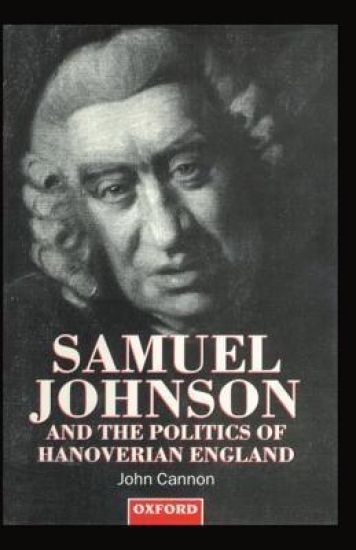
This is a lively and readable reinterpretation of the Georgian political order. Samuel Johnson's life (1709-1784) spans most of the eighteenth cetnury. His contacts in the literary and cultural, scholarly, and political worlds were wide, including Gibbon, Goldsmith, Fox, Burke, Reynolds, Adam Smith, and many others. This book uses Johnson's remarkable career as a point of entry into Hanoverian England. John Cannon explores major contemporary issues, such as education, the poor, capital punishment, the colonies, and Toryism. He challenges many assumptions about Johnson's own attitudes, and offers a substantial modification to the traditional picture of Johnson and the political world of the eighteenth century.
Samuel Johnson and the Journey into Words

Samuel Johnson and the Journey into Words

Lynda Mugglestone

Oxford University Press
2018
nidottu
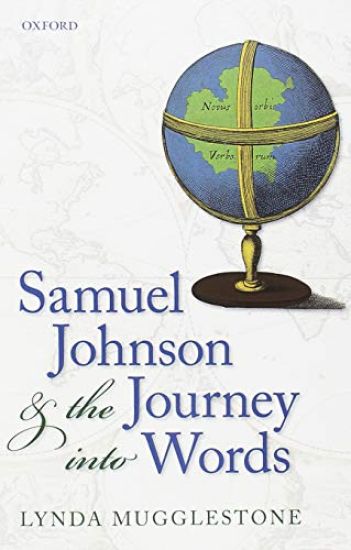
Popular readings of Johnson as a dictionary-maker often see him as a writer who both laments and attempts to control the state of the language. Lynda Mugglestone looks at the range of Johnson's writings on, and the complexity of his thinking about, language and lexicography. She shows how these reveal him probing problems not just of meaning and use but what he considered the related issues of control, obedience, and justice, as well as the difficulties of power when exerted over the 'sea of words'. She examines his attitudes to language change, loan words, spelling, history, and authority, describing, too, the evolution of his ideas about the nature, purpose, and methods of lexicography, and shows how these reflect his own wider thinking about politics, culture, and society. The book offers a careful reassessment of Johnson's lexicographical practice, examining in detail his commitment to evidence, and the uses to which this might be put. Dictionary-making, for Johnson, came to be seen as a long and difficult voyage round the world of the English language. While such images play their own role in lexicographical tradition, Johnson would, as this volume explores, also make them very much his own in a range of distinctive, and illuminating, ways. Johnson's metaphors invite us to consider-and reconsider-the processes by which a dictionary might be made and the kind of destination it might seek, as well as the state of language that might be reached by such endeavours. For Johnson, where the dictionary-maker might go, and what should be accomplished along the way, can often seem to raise pertinent and perhaps troubling questions. Lynda Mugglestone's generous, wide-ranging account casts new light on Johnson's life in language and provides an engaging reassessment of his impact on English culture, the making of dictionaries, and their role in a nation's identity.