

Kirjahaku
Etsi kirjoja tekijän nimen, kirjan nimen tai ISBN:n perusteella.
1000 tulosta hakusanalla Satya



Colonial Caregivers offers a compelling cultural and social history of ayahs (nannies/maids), by exploring domestic intimacy and exploitation in colonial South Asia. Working for British imperial families from the mid-1700s to the mid-1900s, South Asian ayahs, as Chakraborty shows, not only provided domestic labor, but also provided important moral labor for the British Empire. The desexualized racialized ayah archetype upheld British imperial whiteness and sexual purity, and later Indian elite 'upper' caste domestic modernity. Chakraborty argues that the pervasive cultural sentimentalization of the ayah morally legitimized British colonialism, while obscuring the vulnerabilities of caregivers in real-life. Using an archive of petitions and letters from ayahs, fairytales they told to British children, court cases, and vernacular sources, Chakraborty foregrounds the precarious lives, voices, and perspectives of these women. By placing care labor at the center of colonial history, the book decolonizes the history of South Asia and the British Empire.

Inequality, Depolarization, and Tax Progressivity
Satya R. Chakravarty; Palash Sarkar
Cambridge University Press
2025
nidottu

Inequality, Depolarization, and Tax Progressivity
Satya R. Chakravarty; Palash Sarkar
Cambridge University Press
2025
sidottu



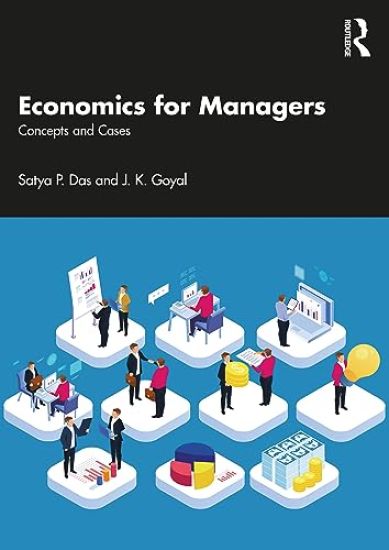
This book will sharpen the core decision-making skills of budding managers and entrepreneurs through the concepts, logic, and principles of microeconomics used in the book with suitable examples and cases from multiple industries from across the world. By placing strong emphasis on the fundamental theories, concepts, and their application in real-life business scenarios, the book presents chapters infused with relevant case-lets, snippets, and exercises. Written in simple and engaging conversational style, this book makes complex topics easily comprehensible to the readers who have virtually no background in economics.This book will be useful to students, researchers, and teachers from the field of economics, applied economics, and business studies. Additionally, this book would also be an invaluable companion to aspiring business managers and corporate leaders.
This book will sharpen the core decision-making skills of budding managers and entrepreneurs through the concepts, logic, and principles of microeconomics used in the book with suitable examples and cases from multiple industries from across the world. By placing strong emphasis on the fundamental theories, concepts, and their application in real-life business scenarios, the book presents chapters infused with relevant case-lets, snippets, and exercises. Written in simple and engaging conversational style, this book makes complex topics easily comprehensible to the readers who have virtually no background in economics.This book will be useful to students, researchers, and teachers from the field of economics, applied economics, and business studies. Additionally, this book would also be an invaluable companion to aspiring business managers and corporate leaders.
This book is intended as a guide to personal growth, through contemplation, introspection, and meditation. Helping you become aware of the negative emotions and thinking patterns that are holding you back in life, as it assists you in relaxation, and living in the present moment.

Where Ocean Meets the Sky: Meditation Through Mahamantra
Satya Bonda
Independently Published
2019
nidottu
WHERE OCEAN MEETS THE SKY - MEDITATION THROUGH MAHAMANTRA I am extremely delighted to present you with "Where Ocean Meets the Sky - Meditation through Mahamantra"The mind is always busy, restless, cluttered with mixed thoughts and cannot be stopped. Meditation and yoga help us rise above the mind's chatter. What we meditate on now creates our future life.Mantra meditation involves the repetition of a mantra (sacred Vedic sound in Sanskrit) in prayer, meditation, or incantation and concentrating the mind on that sound vibration.There are many mantras, but of all, the Hare Krishna Mahamantra is particularly recommended as a means of deliverance for this age.Hare krsna hare krsna krsna krsna hare hareHare rama hare rama rama rama hare hareHare - the beautiful energy of the LordKrishna - the all attractive oneRama - the one who gives happiness to allLife is full of material desires, challenges and illusions; and as human beings, we're faced with a wave of these illusions that sometimes throw us off balance. In the middle of this is a place of connection and devotion, a 'place where the ocean meets the sky', a place of divine connection with the Lord. Here Is A Preview Of What You'll Learn... MEDITATION - INNER DILEMMA INTRODUCTION THROUGH MAHAMANTRA LORD KRISHNA: THE SUPREME GOD -TAKING SHELTER OF THE LORD THROUGH MAHA MANTRA SELFLESS ACTION: PERFORMING AN ACTION WITHOUT A SELFISH MOTIVE. KARMA: PATH OF ACTION MEDITATION: ULTIMATE BLISS MEDITATION: ULTIMATE BLISSLEADERSHIP THROUGH BHAGAVAD GITATHE SUPREME SELFOVERCOMING WORLDLY DESIRES BY ESTABLISHING CONNECTION WITH LORD KRISHNA THROUGH MAHA MANTRALIBERATION: WISDOM IN ACTION- FREEDOM THROUGH KNOWLEDGEAnd Much, much more Download your copy today Get this Amazon bestseller for just 0.99 $ today Read on your PC, Mac, smart phone, tablet or Kindle device.

A Course on Cooperative Game Theory
Satya R. Chakravarty; Manipushpak Mitra; Palash Sarkar
Cambridge University Press
2015
sidottu
Cooperative game theory deals with situations where objectives of participants of the game are partially cooperative and partially conflicting. It is in the interest of participants to cooperate in the sense of making binding agreements to achieve the maximum possible benefit. When it comes to distribution of benefit/payoffs, participants have conflicting interests. Such situations are usually modelled as cooperative games. While the book mainly discusses transferable utility games, there is also a brief analysis of non-transferable utility games. Alternative solution concepts to cooperative game theoretic problems are presented in chapters 1-9 and the next four chapters present issues related to computations of solutions discussed in the earlier chapters. The proofs of all results presented in the book are quite explicit. Additionally the mathematical techniques employed in demonstrating the results will be helpful to those who wish to learn application of mathematics for solving problems in game theory.

A Course on Cooperative Game Theory
Satya R. Chakravarty; Manipushpak Mitra; Palash Sarkar
Cambridge University Press
2014
pokkari
Cooperative game theory deals with situations where objectives of participants of the game are partially cooperative and partially conflicting. It is in the interest of participants to cooperate in the sense of making binding agreements to achieve the maximum possible benefit. When it comes to distribution of benefit/payoffs, participants have conflicting interests. Such situations are usually modelled as cooperative games. While the book mainly discusses transferable utility games, there is also a brief analysis of non-transferable utility games. Alternative solution concepts to cooperative game theoretic problems are presented in chapters 1-9 and the next four chapters present issues related to computations of solutions discussed in the earlier chapters. The proofs of all results presented in the book are quite explicit. Additionally the mathematical techniques employed in demonstrating the results will be helpful to those who wish to learn application of mathematics for solving problems in game theory.
Social Aggregations and Distributional Ethics
Satya R. Chakravarty; Manipushpak Mitra; Suresh Mutuswami
Cambridge University Press
2023
sidottu
This book analyzes the following four distinct, although not dissimilar, areas of social choice theory and welfare economics: nonstrategic choice, Harsanyi's aggregation theorems, distributional ethics and strategic choice. While for aggregation of individual ranking of social states, whether the persons behave strategically or non-strategically, the decision making takes place under complete certainty; in the Harsanyi framework uncertainty has a significant role in the decision making process. Another ingenious characteristic of the book is the discussion of ethical approaches to evaluation of inequality arising from unequal distributions of achievements in the different dimensions of human well-being. Given its wide coverage, combined with newly added materials, end-chapter problems and bibliographical notes, the book will be helpful material for students and researchers interested in this frontline area research. Its lucid exposition, along with non-technical and graphical illustration of the concepts, use of numerical examples, makes the book a useful text.
Social Aggregations and Distributional Ethics
Satya R. Chakravarty; Manipushpak Mitra; Suresh Mutuswami
Cambridge University Press
2023
pokkari
This book analyzes the following four distinct, although not dissimilar, areas of social choice theory and welfare economics: nonstrategic choice, Harsanyi's aggregation theorems, distributional ethics and strategic choice. While for aggregation of individual ranking of social states, whether the persons behave strategically or non-strategically, the decision making takes place under complete certainty; in the Harsanyi framework uncertainty has a significant role in the decision making process. Another ingenious characteristic of the book is the discussion of ethical approaches to evaluation of inequality arising from unequal distributions of achievements in the different dimensions of human well-being. Given its wide coverage, combined with newly added materials, end-chapter problems and bibliographical notes, the book will be helpful material for students and researchers interested in this frontline area research. Its lucid exposition, along with non-technical and graphical illustration of the concepts, use of numerical examples, makes the book a useful text.
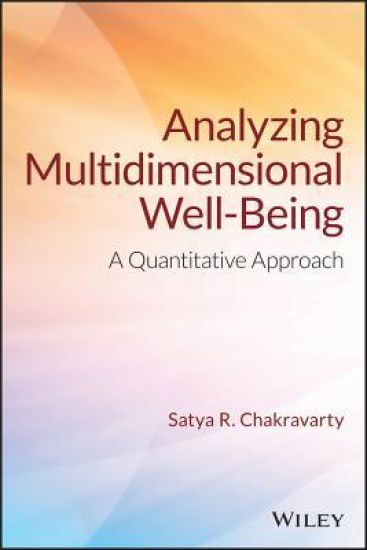
“An indispensable reference for all researchers interested in the measurement of social welfare. . .” —François Bourguignon, Emeritus Professor at Paris School of Economics, Former Chief Economist of the World Bank. “. . .a detailed, insightful, and pedagogical presentation of the theoretical grounds of multidimensional well-being, inequality, and poverty measurement. Any student, researcher, and practitioner interested in the multidimensional approach should begin their journey into such a fascinating theme with this wonderful book.” —François Maniquet, Professor, Catholic University of Louvain, Belgium. A Review of the Multidimensional Approaches to the Measurement of Welfare, Inequality, and Poverty Analyzing Multidimensional Well-Being: A Quantitative Approach offers a comprehensive approach to the measurement of well-being that includes characteristics such as income, health, literacy, and housing. The author presents a systematic comparison of the alternative approaches to the measurement of multidimensional welfare, inequality, poverty, and vulnerability. The text contains real-life applications of some multidimensional aggregations (most of which have been designed by international organizations such as the United Nations Development Program and the Organization for Economic Co-operation and Development) that help to judge the performance of a country in the various dimensions of well-being. The text offers an evaluation of how well a society is doing with respect to achievements of all the individuals in the dimensions considered and clearly investigates how achievements in the dimensions can be evaluated from different perspectives. The author includes a detailed scrutiny of alternative techniques for setting weights to individual dimensional metrics and offers an extensive analysis into both the descriptive and welfare theoretical approaches to the concerned multi-attribute measurement and related issues. This important resource: • Contains a synthesis of multidimensional welfare, inequality, poverty, and vulnerability analysis • Examines aggregations of achievement levels in the concerned dimensions of well-being from various standpoints • Shows how to measure poverty using panel data instead of restricting attention to a single period and when we have imprecise information on dimensional achievements • Argues that multidimensional analysis is intrinsically different from marginal distributions-based analysis Written for students, teachers, researchers, and scholars, Analyzing Multidimensional Well-Being: A Quantitative Approach puts the focus on various approaches to the measurementof the many aspects of well-being and quality of life. Satya R. Chakravarty is a Professor of Economics at the Indian Statistical Institute, Kolkata, India. He is an Editor of Social Choice and Welfare and a member of the Editorial Board of Journal of Economic Inequality.

Pocketbook of Environmental/Safety Compliance-Abbreviation, Acronyms, Elements of Calculation, Regulations and Websites
Satya R. Chatterjee
AuthorHouse
2003
pokkari

Pro Android is the first book to include coverage of Google Android 1.5 SDK (including the branch formerly called Cupcake). This essential book covers the fundamentals of building applications for embedded devices thru through to advanced concepts, such as custom 3D components. Takes a pragmatic approach to developing Google Android applications. Examines the Android Virtual Device; the Input-Method Framework, special development considerations for touch screen vs. keyboard/traditional input, Voice Recognition, and Live Folders, Covers the Android media APIs (media APIs, Wi-Fi APIs, etc), including the new simplified OpenGL, improved media framework and more. With Android 1.5 and this book that includes Android 1.5 coverage, developers should will be able to build leading-edge mobile applications ranging from games to Google Apps like add-ons to Google Docs and more—no matter the device interface. Extend and run APIs of the Google Chrome browser/WebOS on G1, G2 and other forthcoming next-generation Google phones and other Android-enabled devices and netbooks.

Pro Android 4 shows you how to build real-world and fun mobile apps using the new Android SDK 4 (Ice Cream Sandwich), which unifies Gingerbread for smartphones, Honeycomb for tablets and augments further with Google TV and more. This Android 4 book updates the best selling Pro Android 3 and covers everything from the fundamentals of building apps for embedded devices, smartphones, and tablets to advanced concepts such as custom 3D components, multi-tasking, sensors/augmented reality, better accessories support and much more. Using the tutorials and expert advice, you'll quickly be able to build cool mobile apps and run them on dozens of Android-based smartphones. You'll explore and use the Android APIs, including those for media and sensors. And you'll check out what's new with Android 4, including the improved user interface across all Android platforms, integration with services, and more. After reading thisdefinitive tutorial and reference, you gain the knowledge and experience to create stunning, cutting-edge Android 4 apps that can make you money, while keeping you agile enough to respond to changes in the future.