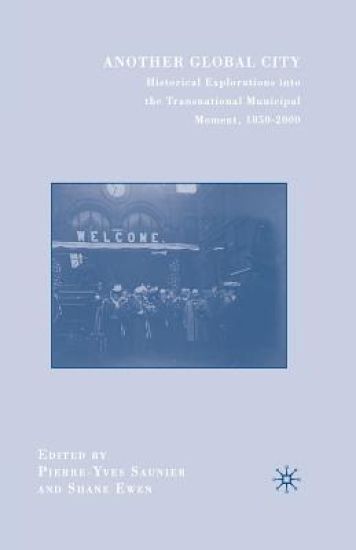
This collection uses the transnational activities of municipal urban governments to historicize the origins and development of the global city, focusing on how urban problems were addressed with concepts that emerged from the "world in between" nations and cities.
This unique dictionary and introduction to Global Environmental Governance (GEG), written and compiled by two veterans of the international stage, provides a compilation of over 5500 terms, organizations and acronyms, drawn from hundreds of official sources. An introductory essay frames the major issues in GEG and outlines the pitfalls of talking past one another when discussing the most critical of issues facing the planet. It challenges those who are concerned with the management of our planet and its inhabitants to understand and accept a vocabulary common to the often-opposing objectives sought in the many GEG instruments. The result is a practical tool that should find a central place on the desk of anyone involved in environmental management, development or sustainability issues anywhere in the world, including the United Nations, government policy makers, NGOs and other stakeholder groups, the business community, and students and professionals. This fully revised and updated edition contains over 500 new entries and acronyms on global environmental governance as well a new introductory section on global water governance, one of the most pressing environmental issues in our era of climate change, growing populations and food shortages. Praise for the first edition:
This unique dictionary and introduction to Global Environmental Governance (GEG), written and compiled by two veterans of the international stage, provides a compilation of over 5500 terms, organizations and acronyms, drawn from hundreds of official sources. An introductory essay frames the major issues in GEG and outlines the pitfalls of talking past one another when discussing the most critical of issues facing the planet. It challenges those who are concerned with the management of our planet and its inhabitants to understand and accept a vocabulary common to the often-opposing objectives sought in the many GEG instruments. The result is a practical tool that should find a central place on the desk of anyone involved in environmental management, development or sustainability issues anywhere in the world, including the United Nations, government policy makers, NGOs and other stakeholder groups, the business community, and students and professionals. This fully revised and updated edition contains over 500 new entries and acronyms on global environmental governance as well a new introductory section on global water governance, one of the most pressing environmental issues in our era of climate change, growing populations and food shortages. Praise for the first edition:
La haute autorit de sant (H.A.S.) recommande la r habilitation respiratoire dans le cadre de la bronchopneumopathie chronique obstructive (B.P.C.O.). Peu utilis e dans les programmes de r habilitation, la m thode du H.I.I.T. (high intensity interval training) a montr des b n fices importants. L'objectif de cette tude prospective est d'observer les capacit s physiques et l' tat psychologique de la m thode HIIT sur tapis de marche et sur cyclo- ergom tre.A la fin de cette tude, il semblerait que tous les patients tirent des b n fices des deux programmes propos s. En effet, les r sultats sur le TDM6 montrent une augmentation de 4,4% en moyenne sur groupe intervention vis vis du groupe control (soit 34 m tres suppl mentaires). La force maximale, quant elle, indique une am lioration de 7% plus importante sur le groupe control (soit 7 kilogrammes suppl mentaires). Concernant le questionnaire Saint-Georges, il pr sente une diminution de 8 points en moyenne dans chaque groupe. En revanche, on ne note aucune diff rence significative entre les deux groupes sur la dyspn e. Selon la litt rature, l'efficacit de la m thode H.I.I.T. semble prometteurs.