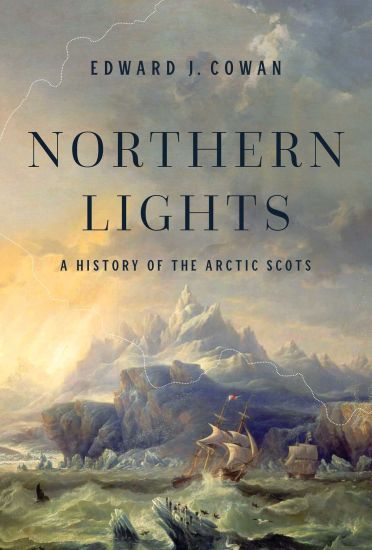
In the tradition of Arthur Herman's How the Scots Invented the Modern World comes a narrative that charts the remarkable--yet often overlooked or misidentified--Scottish contribution to Arctic exploration The search for the Northwest Passage is filled with stories of tragedy, adventure, courage, and endurance. It was one of the great maritime challenges of the era. It was not until the 1850's that the first one-way partial transit of the passage was made. Previous attempts had all failed, and some, like the ill-fated attempted by Sir John Franklin in 1845 ended in tragedy with the loss of the entire expedition, which was comprised of two ships and 129 men. Northern Lights reveals Scotland's previously unsung role in the remarkable history of Arctic exploration. There was the intrepid John Ross, an eccentric hell-raiser from Stranraer and a veteran of three Arctic expeditions; his nephew, James Clark Ross, the most experienced explorer of his generation and discoverer of the Magnetic North Pole; Dr. John Richardson of Dumfries, who became an accidental cannibal and deliberate executionaer of a murderer as well as an engaging natural historian; and Orcadian John Rae, the man who first discovered evidence of Sir John Franklin and his crew's demise. Northern Lights also pays tribute and reveals other overlooked stories in this fascinating era of history: the Scotch Irish, the whalers, and especially the Inuit, whose unparalleled knowledge of the Arctic environment was often indispensible. For anyone fascinated by Scottish history or hungry for tales of Arctic adventure, Northern Lights is a vivid new addition to the rich tradition of polar narratives.
This work has been selected by scholars as being culturally important, and is part of the knowledge base of civilization as we know it. This work was reproduced from the original artifact, and remains as true to the original work as possible. Therefore, you will see the original copyright references, library stamps (as most of these works have been housed in our most important libraries around the world), and other notations in the work.This work is in the public domain in the United States of America, and possibly other nations. Within the United States, you may freely copy and distribute this work, as no entity (individual or corporate) has a copyright on the body of the work.As a reproduction of a historical artifact, this work may contain missing or blurred pages, poor pictures, errant marks, etc. Scholars believe, and we concur, that this work is important enough to be preserved, reproduced, and made generally available to the public. We appreciate your support of the preservation process, and thank you for being an important part of keeping this knowledge alive and relevant.
Crowds are among the most visible expressions of democracy—whether in celebration, protest, or tragedy—but they are also moments of tension, where rights, safety, and authority collide. This book explores how societies manage these critical encounters. Drawing on dramatic case studies from Britain, Europe, and the United States, it reveals how crowd psychology and policing intersect, why disorder spreads, and how legitimacy can be won or lost in the space of a single decision. Policing the Crowd is the first comprehensive account of how crowd psychology has transformed policing. What makes the book distinctive is the depth of its embedded research: written from inside the process, it offers unmatched insight into how evidence has directly shaped policing practice and policy reform. Some of the key features of the book are as follows: Traces the history of public order policing from nineteenth-century Britain to the English riots of 2011 and the Black Lives Matter protests of 2020 Explains how ideas about crowds evolved—from classical theories to the social identity approach Presents how these theories were tested in practice across diverse settings: in football stadiums, on city streets, and in moments of national crisis Provides comparative analysis across the UK, US, and Europe Reveals how embedded research partnerships translated theory into practical operational strategies Emphasizes legitimacy, dialogue, and facilitation as critical elements in conflict prevention Combining compelling case studies with theoretical clarity, it provides scholars, practitioners, and policymakers with a powerful framework for understanding and managing one of democracy’s greatest challenges.
Crowds are among the most visible expressions of democracy—whether in celebration, protest, or tragedy—but they are also moments of tension, where rights, safety, and authority collide. This book explores how societies manage these critical encounters. Drawing on dramatic case studies from Britain, Europe, and the United States, it reveals how crowd psychology and policing intersect, why disorder spreads, and how legitimacy can be won or lost in the space of a single decision. Policing the Crowd is the first comprehensive account of how crowd psychology has transformed policing. What makes the book distinctive is the depth of its embedded research: written from inside the process, it offers unmatched insight into how evidence has directly shaped policing practice and policy reform. Some of the key features of the book are as follows: Traces the history of public order policing from nineteenth-century Britain to the English riots of 2011 and the Black Lives Matter protests of 2020 Explains how ideas about crowds evolved—from classical theories to the social identity approach Presents how these theories were tested in practice across diverse settings: in football stadiums, on city streets, and in moments of national crisis Provides comparative analysis across the UK, US, and Europe Reveals how embedded research partnerships translated theory into practical operational strategies Emphasizes legitimacy, dialogue, and facilitation as critical elements in conflict prevention Combining compelling case studies with theoretical clarity, it provides scholars, practitioners, and policymakers with a powerful framework for understanding and managing one of democracy’s greatest challenges.
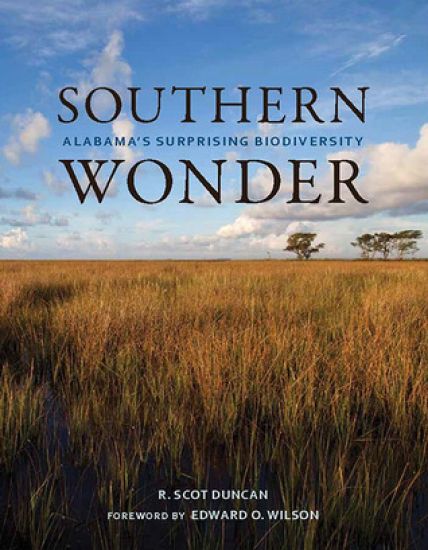
Southern Wonder explores Alabama’s amazing biological diversity, the reasons for the large number of species in the state, and the importance of their preservation.Alabama ranks fifth in the nation in number of species of plants and animals found in the state, surpassed only by the much larger western states of California,Texas, Arizona, and New Mexico. When all the species of birds, trees, mammals, reptiles, amphibians, fishes, wildflowers, dragonflies, tiger beetles, and ants are tallied, Alabama harbors more species than 90 percent of the other states in the United States. Alabamais particularly rich in aquatic biodiversity, leading the nation in species of freshwater fishes, turtles, mussels, crayfish, snails, damselflies, and carnivorous plants. The state also hosts an exceptional number of endemic species?those not found beyond its borders?ranking seventh in the nation with 144 species. The state’s 4,533 species, with more being inventoried and discovered each year, are supported by no less than 64 distinct ecological systems?each a unique blend of soil, water, sunlight, heat, and natural disturbance regimes. Habitats include dry forests, moist forests, swamp forests, sunny prairies, grassy barrens, scorching glades, rolling dunes, and bogs filled with pitcher plants and sundews. The state also includes a region of subterranean ecosystems that are more elaborate and species rich than any other place on the continent.Although Alabama is teeming with life, the state’s prominence as a refuge for plants and animals is poorly appreciated. Even among Alabama’s citizens, few outside a small circle of biologists, advocates, and other naturalists understand the special quality of the state’s natural heritage. R. Scot Duncan rectifies this situation in Southern Wonder by providing a well-written, comprehensive overview that the general public, policy makers, and teachers can understand and use. Readers are taken on an exploratory journey of the state’s varied landscapes?from the Tennessee River Valley to the coastal dunes?and are introduced to remarkable species, such as the cave salamander and the beach mouse. By interweaving the disciplines of ecology, evolution, meteorology, and geology into an accessible whole, Duncan explains clearly why Alabama is so biotically rich and champions efforts for its careful preservation.Published in Cooperation with The Nature Conservancy.