

Kirjahaku
Etsi kirjoja tekijän nimen, kirjan nimen tai ISBN:n perusteella.
1000 tulosta hakusanalla Silvia Strassi
GOOD MORNING AMERICA BOOK CLUB PICK - A young woman wins the role of a lifetime in a film about a legendary heroine--but the real drama is behind the scenes in this sumptuous historical epic from the New York Times bestselling author of Mexican Gothic. "Whenever I want to read a book I know will be good, I go to Silvia Moreno-Garcia."--Taylor Jenkins Reid, author of The Seven Husbands of Evelyn Hugo A BEST BOOK OF THE YEAR: The Washington Post, NPR, BookPage, CrimeReads1950s Hollywood: Every actress wants to play Salome, the star-making role in a big-budget movie about the legendary woman whose story has inspired artists since ancient times. So when the film's mercurial director casts Vera Larios, an unknown Mexican ingenue, in the lead role, she quickly becomes the talk of the town. Vera also becomes an object of envy for Nancy Hartley, a bit player whose career has stalled and who will do anything to win the fame she believes she richly deserves. Two actresses, both determined to make it to the top in Golden Age Hollywood--a city overflowing with gossip, scandal, and intrigue--make for a sizzling combination. But this is the tale of three women, for it is also the story of the princess Salome herself, consumed with desire for the fiery prophet who foretells the doom of her stepfather, Herod: a woman torn between the decree of duty and the yearning of her heart. Before the curtain comes down, there will be tears and tragedy aplenty in this sexy Technicolor saga.


Beyond the Clinic: Transforming your practice with video consultations
Silvia Pfeiffer
SJ Publishing
2018
nidottu
In ancient Greece, the spoken word connoted power, whether in the free speech accorded to citizens or in the voice of the poet, whose song was thought to know no earthly bounds. But how did silence fit into the mental framework of a society that valued speech so highly? Here Silvia Montiglio provides the first comprehensive investigation into silence as a distinctive and meaningful phenomenon in archaic and classical Greece. Arguing that the notion of silence is not a universal given but is rather situated in a complex network of associations and values, Montiglio seeks to establish general principles for understanding silence through analyses of cultural practices, including religion, literature, and law. Unlike the silence of a Christian before an ineffable God, which signifies the uselessness of words, silence in Greek religion paradoxically expresses the power of logos--for example, during prayer and sacrifice, it serves as a shield against words that could offend the gods. Montiglio goes on to explore silence in the world of the epic hero, where words are equated with action and their absence signals paralysis or tension in power relationships. Her other examples include oratory, a practice in which citizens must balance their words with silence in very complex ways in order to show that they do not abuse their right to speak. Inquiries into lyric poetry, drama, medical writings, and historiography round out this unprecedented study, revealing silence as a force in its own right.

A vivid look at China’s shifting place in the global political economy of technology production How did China’s mass manufacturing and “copycat” production become transformed, in the global tech imagination, from something holding the nation back to one of its key assets? Prototype Nation offers a rich transnational analysis of how the promise of democratized innovation and entrepreneurial life has shaped China’s governance and global image. With historical precision and ethnographic detail, Silvia Lindtner reveals how a growing distrust in Western models of progress and development, including Silicon Valley and the tech industry after the financial crisis of 2007–8, shaped the rise of the global maker movement and the vision of China as a “new frontier” of innovation.Lindtner’s investigations draw on more than a decade of research in experimental work spaces—makerspaces, coworking spaces, innovation hubs, hackathons, and startup weekends—in China, the United States, Africa, Europe, Taiwan, and Singapore, as well as in key sites of technology investment and industrial production—tech incubators, corporate offices, and factories. She examines how the ideals of the maker movement, to intervene in social and economic structures, served the technopolitical project of prototyping a “new” optimistic, assertive, and global China. In doing so, Lindtner demonstrates that entrepreneurial living influences governance, education, policy, investment, and urban redesign in ways that normalize the persistence of sexism, racism, colonialism, and labor exploitation.Prototype Nation shows that by attending to the bodies and sites that nurture entrepreneurial life, technology can be extricated from the seemingly endless cycle of promise and violence.Cover image: Courtesy of Cao Fei, Vitamin Creative Space and Spru¨th Magers

A vivid look at China’s shifting place in the global political economy of technology production How did China’s mass manufacturing and “copycat” production become transformed, in the global tech imagination, from something holding the nation back to one of its key assets? Prototype Nation offers a rich transnational analysis of how the promise of democratized innovation and entrepreneurial life has shaped China’s governance and global image. With historical precision and ethnographic detail, Silvia Lindtner reveals how a growing distrust in Western models of progress and development, including Silicon Valley and the tech industry after the financial crisis of 2007–8, shaped the rise of the global maker movement and the vision of China as a “new frontier” of innovation.Lindtner’s investigations draw on more than a decade of research in experimental work spaces—makerspaces, coworking spaces, innovation hubs, hackathons, and startup weekends—in China, the United States, Africa, Europe, Taiwan, and Singapore, as well as in key sites of technology investment and industrial production—tech incubators, corporate offices, and factories. She examines how the ideals of the maker movement, to intervene in social and economic structures, served the technopolitical project of prototyping a “new” optimistic, assertive, and global China. In doing so, Lindtner demonstrates that entrepreneurial living influences governance, education, policy, investment, and urban redesign in ways that normalize the persistence of sexism, racism, colonialism, and labor exploitation.Prototype Nation shows that by attending to the bodies and sites that nurture entrepreneurial life, technology can be extricated from the seemingly endless cycle of promise and violence.Cover image: Courtesy of Cao Fei, Vitamin Creative Space and Spru¨th Magers

The Influence of the European Culture on Hemingway’s Fiction
Silvia Ammary
Lexington Books
2015
sidottu
The Influence of the European Culture on Hemingway’s Fiction is an essential companion to all those who study Hemingway. The study deals with how Hemingway depicts Europe in his fiction, not necessarily from a biographical point of view, as most critical books have dealt with, but how he assimilates to the culture of Europe, how he portrays the different aspects of that culture in food, music, customs, architecture, and literature. This study views Hemingway’s stories and novels through a new lens by applying new critical developments, emergent approaches, and transnational studies to aid in a fuller understanding of Hemingway. Europe for Hemingway was a land of discovery, and one cannot study his major novels without analyzing this passion for these lands. The Europe that Hemingway experienced and recorded in his writing serves as an important element in his fiction, becoming “the other,” an alien culture that was sufficiently different from his American roots. Yet this otherness serves first to fulfill his psychological needs to learn and become one of the initiated through suffering—whether it involves himself or the loss of other people around him.
International Communications Strategy is about the cross-cultural challenges currently facing PR practitioners. Offshoring, globalisation and the rise of China and India have been triggering unprecedented change in the communication sector. New channels of global communications are also being opened up by social media tools, bringing different cultures across the world together instantaneously online. Understanding cross-cultural aspects of PR includes understanding the culture of different societies, online culture itself and cross-border uses of social media. Communication is seen less and less as an operational function. While in the past organizations seemed to need communication practitioners only for colourful brochures and press releases, you are now expected to provide strategic advice and help senior executives to engage effectively with stakeholders in various parts of the world. At the same time, you are required to be knowledgeable about social media and internet cultures and to be able to link on-line and off-line PR work successfully. By providing information on alternative approaches as well as containing cross-cultural case-studies and examples, the book will give you points of reference and ideas that you will be able to use every time you are asked to provide strategic communication guidance to senior management/clients.

When the young Tunisian street vendor, Muhammad Bou Azizi, set himself alight in December 2010, he ignited a movement that in three weeks toppled the twenty-three year old dictatorship of President Ben Ali. Tunisia’s 2011 uprising took experts by surprise. Few in the West looked to Tunisia’s history of dissent and rebellion as a way to understand the present moment. However, in the country itself, headlines read “2011 revives the memory of 1864”. This is the first work in English to address the significance of Tunisia’s 1864 rebellion for understanding Tunisia’s 2011 experience, and its reverberation across the Arab world. Using a variety of sources - from state archives and scholarly monographs, to poetry festivals, theater productions, radio and TV programs - the book reveals a documented history of political manipulation and popular resistance to it. Power and Protest in Tunisia traces the battle for the memory of the original anti-tax, anti-centre rebellion of 1864 that brought Tunisia’s tribes into a fragile but year-long alliance with coastal town populations. It uniquely places the recent revolution in the context of past social struggles emerging from the same interior regions. The book demonstrates how and why various regimes used the 1864 revolt to justify political agendas across the longue durée, from the liberal ‘reform’ era of the beys (Ottoman provincial governors) to the postcolonial present. Successive regimes have used this history to instill fear and suppress dissent, but this book shows that popular memory has preserved the event as a powerful symbolic example of collective mobilization against injustice and corruption—one that nearly toppled a dynasty.

When the young Tunisian street vendor, Muhammad Bou Azizi, set himself alight in December 2010, he ignited a movement that in three weeks toppled the twenty-three year old dictatorship of President Ben Ali. Tunisia’s 2011 uprising took experts by surprise. Few in the West looked to Tunisia’s history of dissent and rebellion as a way to understand the present moment. However, in the country itself, headlines read “2011 revives the memory of 1864”. This is the first work in English to address the significance of Tunisia’s 1864 rebellion for understanding Tunisia’s 2011 experience, and its reverberation across the Arab world. Using a variety of sources - from state archives and scholarly monographs, to poetry festivals, theater productions, radio and TV programs - the book reveals a documented history of political manipulation and popular resistance to it. Power and Protest in Tunisia traces the battle for the memory of the original anti-tax, anti-centre rebellion of 1864 that brought Tunisia’s tribes into a fragile but year-long alliance with coastal town populations. It uniquely places the recent revolution in the context of past social struggles emerging from the same interior regions. The book demonstrates how and why various regimes used the 1864 revolt to justify political agendas across the longue durée, from the liberal ‘reform’ era of the beys (Ottoman provincial governors) to the postcolonial present. Successive regimes have used this history to instill fear and suppress dissent, but this book shows that popular memory has preserved the event as a powerful symbolic example of collective mobilization against injustice and corruption—one that nearly toppled a dynasty.



The White Book: A Minibombo Book
Silvia Borando; Elisabetta Pica; Lorenzo Clerici
Candlewick Press (MA)
2015
sidottu
No words are needed--and unexpected things can happen--when a boy, some bold paint, an active imagination, and a white wall come together. Roller in hand, a boy starts to paint a blank wall. First it's a plain coat of pink. Then six birds emerge, perched on a branch. . . . Wait, they were there a minute ago Then he tries the blue paint, and it happens again: fourteen fish swimming in formation, until green paint reveals a giant dinosaur with big teeth and a mind of its own. Whether gray, yellow, purple, or orange, each spread draws on visual humor and an array of unpredictable animals to yield a bigger surprise, right up to the warm and rewarding finale.

When you look in the mirror in the morning, you see your outer appearance. Now you can use your inner mirror to recognize invisible and hidden truths to bring them to light. These 36 captivating Lenormand cards with accompanying guidebook offer simplicity with truly inspirational and astounding accuracy. Each card has its own meanings and keywords, and in connection with several cards, it will give answers to your day-to-day and significant questions. They combine precise traditional symbolism, intuitive interpretation, and modern art images that incorporate fractals—all of which create a whole new type of image that literally pulls you in. Look inside these mirror cards to bring your unconscious self to the surface!

The symbolic order of gender in organizations - how gender relations are culturally and discursively produced and reproduced, and how they might be `done' differently, are explored in this book. Silvia Gherardi focuses on the relationship between gender, power and culture in organizations and on the need to come to grips with the pervasive, elusive and ambiguous nature of gender in work settings. She introduces two key metaphors. The first is of the sexual contract, which centres on the sexuality of organizations and `static' gender difference. The second, of the alchemic wedding, highlights a plurality of cultural models of femaleness and of women/work relationships, and processes of dynamic difference, transformation and transcendence. Gherardi continues her examination of the construction of gender relations in the workplace through a series of rich and illuminating stories which also draw on various symbolic archetypes as powerful forms of cultural expression. The final section of the book looks at possibilities for change, developing in particular a concept of different forms of gender citizenship of organizations.
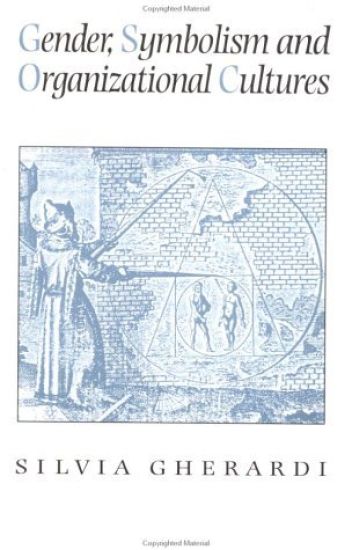
The symbolic order of gender in organizations - how gender relations are culturally and discursively produced and reproduced, and how they might be `done' differently, are explored in this book. Silvia Gherardi focuses on the relationship between gender, power and culture in organizations and on the need to come to grips with the pervasive, elusive and ambiguous nature of gender in work settings. She introduces two key metaphors. The first is of the sexual contract, which centres on the sexuality of organizations and `static' gender difference. The second, of the alchemic wedding, highlights a plurality of cultural models of femaleness and of women/work relationships, and processes of dynamic difference, transformation and transcendence. Gherardi continues her examination of the construction of gender relations in the workplace through a series of rich and illuminating stories which also draw on various symbolic archetypes as powerful forms of cultural expression. The final section of the book looks at possibilities for change, developing in particular a concept of different forms of gender citizenship of organizations.

A Stanford University Press classic.

Choice and Preference in Media Use
Silvia Knobloch-Westerwick
Routledge Member of the Taylor and Francis Group
2014
sidottu
Mediated messages flood our daily lives, through virtually endless choices of media channels, genres, and content. However, selectivity determines what media messages we attend to and focus on. The present book examines the factors that influence this selectivity.Seminal books on selective media exposure were published in 1960 by Klapper and in 1985 by Zillmann and Bryant. But an integrated update on this research field is much needed, as rigorous selective exposure research has flourished in the new millennium. In the contexts of political communication, health communication, Internet use, entertainment consumption, and electronic games, the crucial question of how individuals choose what content they consume has garnered much attention. The present book integrates theories and empirical evidence from these domains and discusses the related research methodologies. In light of the ever-increasing abundance of media channels and messages, selective exposure has become more important than ever for media impacts. This monograph provides a comprehensive review of the research on selective exposure to media messages, which is at the heart of communication science and media effects. It is required reading for media scholars and researchers, and promises to influence and inspire future research.

Winner, 2018 Gwen P. Reichert Gold Medal for Children's Literature, Florida Book Award Meili, who is six years old and adopted from China, learns that her parents are going to adopt a baby from Haiti. She's not happy. Why do they need a new baby? Their family is just right as it is. As Meili learns more about her new sibling and the importance of being a big sister, will she realize that a new addition can be just right for their family too?