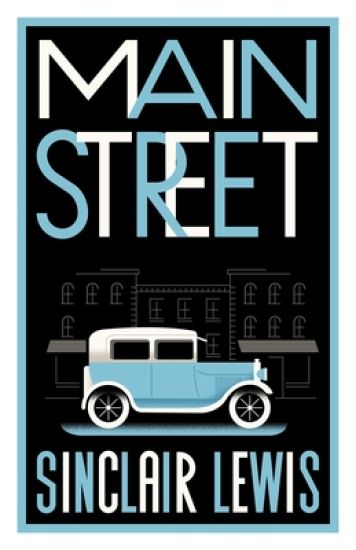
In this classic, Sinclair Lewis shattered the sentimental American myth of happy small-town life with its satire. Main Street attacks the conformity and dullness of early 20th Century mid western village life in the story of Carol Milford, the city girl who marries the town doctor. Her efforts to bring culture to the prairie village are met by a wall of gossip, greed, and petty small-minded bigotry.
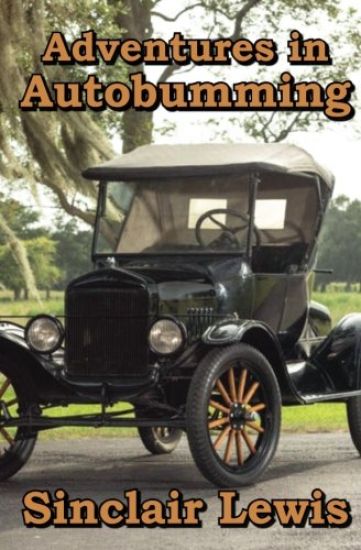
"This cheerful little road novel, published in 1919, is about Claire Boltwood, who, in the early days of the 20th century, travels by automobile from New York City to the Pacific Northwest, where she falls in love with a nice, down-to-earth young man and gives up her snobbish Estate." (From the Book Stub) From a critical perspective, Free Air is consistent with Sinclair Lewis's lean towards egalitarian politics, which he displays in his other works (most notably in It Can't Happen Here). Examples of his politics in Free Air are found in Lewis's emphasis on the heroic role played by the book's protagonist, Milt Dagget, a working class everyman type. Conversely, Lewis presents nearly every upper-class character in Claire Boltwood's world (including her railroad-mogul father) as snobby elitists. The story also champions the democratic nature of the automobile versus the more aristocratic railroad travel. Lewis's emphasis on the freedom which automobiles would eventually give the working and middle classes bolsters the egalitarian, democratic aesthetic. Free Air is one of the first novels about the road trip, a subject around which the Beats (most notably Jack Kerouac) would build a cult following in the mid-20th century. Composer Ferde Grofe used the novel as the basis for the music to his adventurous composition Free Air. In the HBO series Boardwalk Empire, set initially in 1920, Jimmy and his girlfriend Pearl are reading Free Air. The 18-year-old Chicago prostitute Pearl hopes to head West like the heroine, along with Jimmy.
Sinclair Lewis (February 7, 1885 - January 10, 1951) was an American novelist, short-story writer, and playwright. In 1930 he became the first American to be awarded the Nobel Prize in Literature, "for his vigorous and graphic art of description and his ability to create, with wit and humour, new types of characters." His works are known for their insightful and critical views of American society and capitalist values. His style is at times droll, satirical, and yet sympathetic.
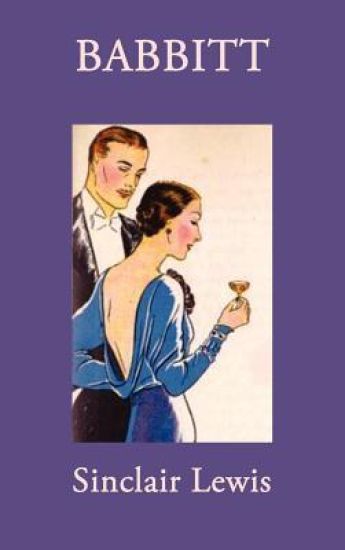
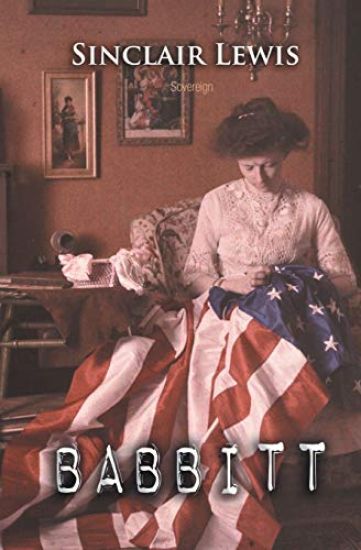
A satiric look at American society following the First World War, Babbitt is one of Sinclair Lewis's best-known works. Real estate agent George Babbitt says all the right things, has all the right friends, and belongs to all the right clubs. Though he's a man on the rise, Babbitt finds his days empty and yearns for romance and an escape from his tightly ordered life.
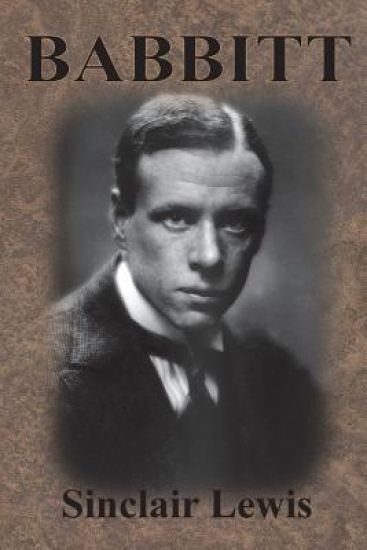
Rare edition with unique illustrations and elegant classic cream paper. Babbitt, first published in 1922, is a novel by Sinclair Lewis. Largely a satire of American culture, society, and behavior, it critiques the vacuity of middle-class American life and its pressure toward conformity. An immediate and controversial bestseller, Babbitt was influential in the decision to award Lewis the Nobel Prize in literature in 1930. Includes vintage illustration
If this were a ponderous work of realism, such as the author has attempted to write, and will doubtless essay again, it would be perilous to dedicate it to the splendid assembly of young British writers, lest the critics search for Influences and Imitations. But since this is a flagrant excursion, a tale for people who still read Dickens and clip out spring poetry and love old people and children, it may safely confess the writer's strident admiration for Compton Mackenzie, Hugh Walpole, Oliver Onions, D. H. Lawrence, J. D. Beresford, Gilbert Cannan, Patrick MacGill, and their peers, whose novels are the histories of our contemporaneous Golden Age. Nor may these be mentioned without a yet more enthusiastic tribute to their master and teacher (he probably abominates being called either a master or a teacher) - H. G. Wells
Three years before the civic-minded Carol Kennicott came to life in Main Street, Una Golden was confronting the male dinosaurs of business. Like Carol, the heroine of The Job is one of Sinclair Lewis's most fully realized creations and was his first controversial novel. A "working girl" in New York City, Una Golden-caught in the dilemmas of marriage or career, husband or office, birth control or motherhood-is the prototype of the businesswoman of popular and literary culture.
The story is set in the small town of Gopher Prairie, Minnesota, a fictionalised version of Sauk Centre, Minnesota, Lewis' hometown. It relates the life and struggles of Carol Milford Kennicott as she comes into conflict with the small-town mentality of the residents of Gopher Prairie. The novel takes place in the 1910s, with references to the start of World War I, the United States' entry into the war, and the years following the end of the war, including the start of Prohibition.Main Street was initially awarded the 1921 Pulitzer Prize for literature, but the board of trustees overturned the jury's decision. The prize instead went to Edith Wharton for The Age of Innocence. In 1926, Lewis refused the Pulitzer when he was awarded it for his novel Arrowsmith. In 1930, Lewis was the first American ever awarded the Nobel Prize in Literature. In the Nobel committee's presentation speech, both Main Street and Arrowsmith were cited. The prize was awarded "... for his vigorous and graphic art of description and his ability to create, with wit and humour, new types of characters."This case laminate collector's edition includes a Victorian-inspired dust jacket.
Babbitt, first published in 1922, is a satirical novel by Sinclair Lewis. Largely a critique of American culture, society, and behaviour, it challenges conformity and "the American Dream". Middle-aged George F. Babbitt, a property developer is a leading citizen in the town of Zenith. He is lovingly married to his wife Myra, with whom he has three children. Despite all his professional success and nice family, Babbitt believes he is living a dull, staid, middle-class life. He starts searching for a greater purpose but his life is poised on a slippery slope. His journey raises thought-provoking questions which were as relevant then as they are today.
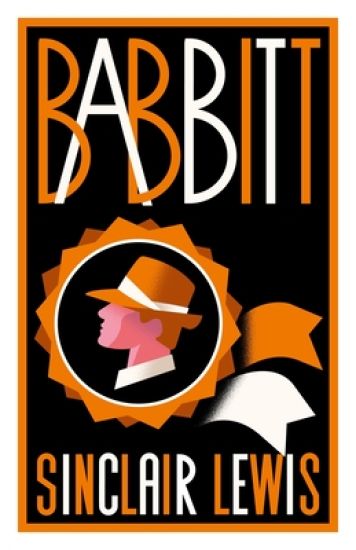
Satirical novel about American culture, society, and middle-class pressure toward conformity. An immediate and controversial bestseller, Babbitt was influential in the decision to award Lewis the Nobel Prize in literature. The word 'Babbitt' entered the English language as a person and especially a business or professional man who conforms unthinkingly to prevailing middle-class dogmas.
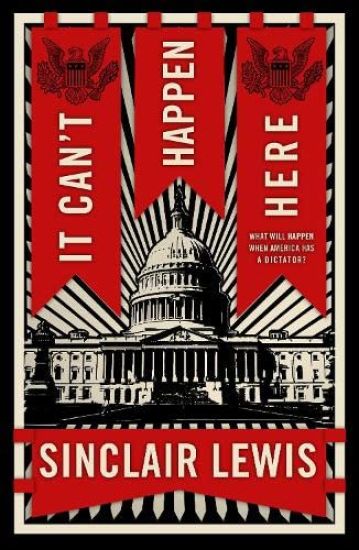
Published during the heyday of fascism in Europe, It Can't Happen Here is a chilling cautionary tale by one of the greatest American writers of the twentieth century, which is still startlingly relevant almost a century later.
A trenchant satire on consumeristic society Babbitt is the crowning achievement of Sinclair Lewis, winner of the 1930 Nobel Prize in Literature. This edition contains notes and extra material.
Young college graduate Carol Kennicott moves from a big city to Gopher Prairie, Minnesota, the small town from which her new husband hails. Imbued with ideals of urban improvement, she dreams of redesigning her adopted village, but her efforts are thwarted by the narrow-mindedness, pettiness and conventionality of the locals, who conspire against her and deride all her endeavours.An enormous commercial and critical success on its first publication in 1920, Main Street – regarded by many as Sinclair Lewis’s best novel – delivers a scathing satire on the American dream, and is invaluable as a document of pre-Prohibition Middle America.
Martin Arrowsmith, a young medical student at the University of Winnemac, is driven by a sincere passion and a desire to make a positive contribution to the world. But events get in the way, and a series of personal vicissitudes, love interests and societal pressures threaten to lead him away from the path of pure science - until he is forced, in the face of a humanitarian crisis, to decide between scientific rigour and compassion, between maintaining his medical principles and saving lives. First published in 1925 to great critical acclaim, Arrowsmith is the third major novel by Sinclair Lewis, author of Main Street and Babbitt, and arguably his most ambitious work. Awarded the Pulitzer Prize for Fiction in 1926 - which the author famously declined - it contributed to Lewis's growing reputation as a master storyteller, social commentator and the unsurpassed satirist of his time.
Arrowsmith is a novel by American author Sinclair Lewis, first published in 1925. It won the 1926 Pulitzer Prize (which Lewis declined). Lewis was greatly assisted in its preparation by science writer Paul de Kruif, who received 25% of the royalties on sales, although Lewis was listed as the sole author. Arrowsmith is an early major novel dealing with the culture of science. It was written in the period after the reforms of medical education flowing from the Flexner Report on Medical Education in the United States and Canada: A Report to the Carnegie Foundation for the Advancement of Teaching, 1910, which had called on medical schools in the United States to adhere to mainstream science in their teaching and research.The book contains considerable social commentary on the state and prospects of medicine in the United States in the 1920s. Arrowsmith is a progressive, even something of a rebel, and often challenges the existing state of things when he finds it wanting.This novel has been inspirational for several generations of pre-medical and medical students. There is much agonizing along the way concerning career and life decisions. While detailing Arrowsmith's pursuit of the noble ideals of medical research for the benefit of mankind and of selfless devotion to the care of patients, Lewis throws many less noble temptations and self-deceptions in Arrowsmith's path. The attractions of financial security, recognition, even wealth and power distract Arrowsmith from his original plan to follow in the footsteps of his first mentor, Max Gottlieb, a brilliant but abrasive bacteriologist.