Kirjojen hintavertailu. Mukana 11 377 305 kirjaa ja 12 kauppaa.

Kirjahaku

Etsi kirjoja tekijän nimen, kirjan nimen tai ISBN:n perusteella.

340 tulosta hakusanalla Sriyam

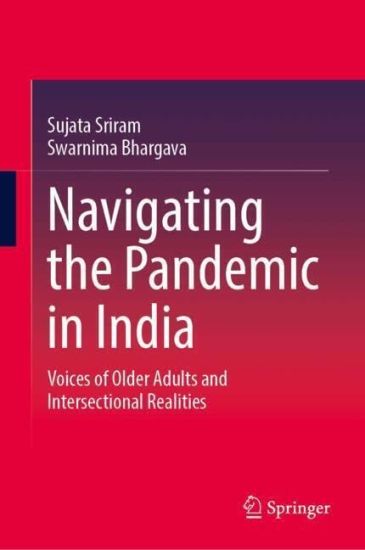
Navigating the Pandemic in India

Navigating the Pandemic in India

Sujata Sriram; Swarnima Bhargava

SPRINGER VERLAG, SINGAPORE
2024
sidottu
This book weaves together intersectional threads that underlie the experiences of older men and women in India during the Covid-19 pandemic. The intersectional lens used in the book highlights the differential impacts of poverty, (dis)ability, gender, civil status, and health status on the experiences of older adults during the pandemic.
Globalizing Justice for Mass Atrocities

Globalizing Justice for Mass Atrocities

Chandra Lekha Sriram

Routledge
2005
sidottu
This major new study examines the developing practice of universal jurisdiction, as well as the broader phenomenon of "globalizing" justice, and its ramifications.With a detailed overview of the contemporary practice of universal jurisdiction, it discerns three trends at work: pure universal jurisdiction, universal jurisdiction "plus", and non-use. It also argues that these disparities in practice should raise serious concerns as to the legitimacy and perceived legitimacy of such globalized justice. It then turns to a further consideration, that of globalized justice, precisely because it takes place far from the locus of the crime, and is therefore "externalized" and may fail to achieve many of its putative goals. In addition, this is a key assessment of civil accountability, through the use of the Alien Tort Claims Act in the United States. It details how the use of civil penalties may offer new avenues for redress, particularly with relation to group accountability, whether that of armed groups or of corporations. However, it balances this approach to accountability with recognition of certain flaws within externalized criminal accountability.This study also focuses on mixed tribunals, or other methods of internationalized justice as viable alternatives, which may avoid some of the problems with external justice, but are themselves far from perfect. Mixed or hybrid tribunals in East Timor and Sierra Leone represent different models of hybrid justice and provide the reader with excellent examples of these new forms of justice in action.This book will be of great interest to all students and scholars of human rights international law and political science.
Confronting Past Human Rights Violations

Confronting Past Human Rights Violations

Chandra Lekha Sriram

Routledge
2006
nidottu
This book examines what makes accountability for previous violations more or less possible for transitional regimes to achieve. It closely examines the other vital goals of such regimes against which accountability is often balanced. The options available are not simply prosecution or pardon, as the most heated polemics of the debate over transitional justice suggest, but a range of options from complete amnesty through truth commissions and lustration or purification to prosecutions. The question, then, is not whether or not accountability can be achieved, but what degree of accountability can be achieved by a given country. The focus of the book is on the politics of transition: what makes accountability more or less feasible and what strategies are deployed by regimes to achieve greater accountability (or alternatively, greater reform). The result is a more nuanced understanding of the different conditions and possibilities that countries face, and the lesson that there is no one-size-fits-all prescription that can be handed to transitional regimes.
Globalizing Justice for Mass Atrocities

Globalizing Justice for Mass Atrocities

Chandra Lekha Sriram

Routledge
2010
nidottu
This major new study examines the developing practice of universal jurisdiction, as well as the broader phenomenon of "globalizing" justice, and its ramifications.With a detailed overview of the contemporary practice of universal jurisdiction, it discerns three trends at work: pure universal jurisdiction, universal jurisdiction "plus", and non-use. It also argues that these disparities in practice should raise serious concerns as to the legitimacy and perceived legitimacy of such globalized justice. It then turns to a further consideration, that of globalized justice, precisely because it takes place far from the locus of the crime, and is therefore "externalized" and may fail to achieve many of its putative goals. In addition, this is a key assessment of civil accountability, through the use of the Alien Tort Claims Act in the United States. It details how the use of civil penalties may offer new avenues for redress, particularly with relation to group accountability, whether that of armed groups or of corporations. However, it balances this approach to accountability with recognition of certain flaws within externalized criminal accountability.This study also focuses on mixed tribunals, or other methods of internationalized justice as viable alternatives, which may avoid some of the problems with external justice, but are themselves far from perfect. Mixed or hybrid tribunals in East Timor and Sierra Leone represent different models of hybrid justice and provide the reader with excellent examples of these new forms of justice in action.This book will be of great interest to all students and scholars of human rights international law and political science.
Confronting Past Human Rights Violations

Confronting Past Human Rights Violations

Chandra Lekha Sriram

Routledge
2004
sidottu
This book examines what makes accountability for previous violations more or less possible for transitional regimes to achieve. It closely examines the other vital goals of such regimes against which accountability is often balanced. The options available are not simply prosecution or pardon, as the most heated polemics of the debate over transitional justice suggest, but a range of options from complete amnesty through truth commissions and lustration or purification to prosecutions. The question, then, is not whether or not accountability can be achieved, but what degree of accountability can be achieved by a given country. The focus of the book is on the politics of transition: what makes accountability more or less feasible and what strategies are deployed by regimes to achieve greater accountability (or alternatively, greater reform). The result is a more nuanced understanding of the different conditions and possibilities that countries face, and the lesson that there is no one-size-fits-all prescription that can be handed to transitional regimes.
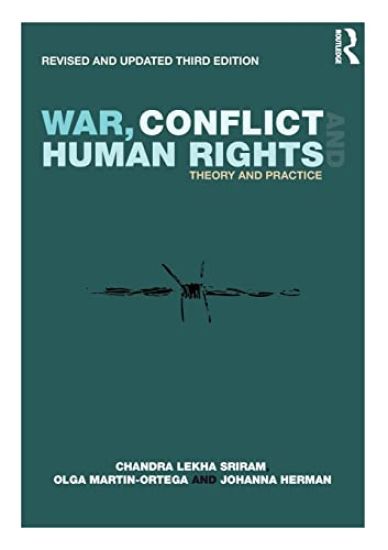
War, Conflict and Human Rights

War, Conflict and Human Rights

Chandra Lekha Sriram; Olga Martin-Ortega; Johanna Herman

Routledge
2017
sidottu
War, Conflict and Human Rights is an innovative inter-disciplinary textbook, combining aspects of law, politics and conflict analysis to examine the relationship between human rights and armed conflict. This third edition has been fully revised and updated, and contains a completely new chapter on business, conflict and human rights. Making use of both theoretical and practical approaches, the authors: examine the tensions and complementarities between protection of human rights and resolution of conflict – the competing political demands and the challenges posed by internal armed conflict and the increasing role of nonstate actors, including corporations, in armed conflicts; explore the scope and effects of human rights violations in contemporary armed conflicts, such as in Sierra Leone, Sudan, South Sudan, the Democratic Republic of Congo and the former Yugoslavia; assess the legal and institutional accountability mechanisms developed in the wake of armed conflict to punish violations of human rights law and international humanitarian law such as the ad hoc tribunals for the former Yugoslavia and Rwanda, hybrid or internationalized tribunals and the International Criminal Court; discuss continuing and emergent global trends and challenges in the fields of human rights and conflict analysis. This volume will be essential reading for students of war and conflict studies, human rights and international humanitarian law, and highly recommended for students of conflict resolution, peacebuilding, international security, transitional justice and international relations generally.
War, Conflict and Human Rights

War, Conflict and Human Rights

Chandra Lekha Sriram; Olga Martin-Ortega; Johanna Herman

Routledge
2017
nidottu
War, Conflict and Human Rights is an innovative inter-disciplinary textbook, combining aspects of law, politics and conflict analysis to examine the relationship between human rights and armed conflict. This third edition has been fully revised and updated, and contains a completely new chapter on business, conflict and human rights. Making use of both theoretical and practical approaches, the authors: examine the tensions and complementarities between protection of human rights and resolution of conflict – the competing political demands and the challenges posed by internal armed conflict and the increasing role of nonstate actors, including corporations, in armed conflicts; explore the scope and effects of human rights violations in contemporary armed conflicts, such as in Sierra Leone, Sudan, South Sudan, the Democratic Republic of Congo and the former Yugoslavia; assess the legal and institutional accountability mechanisms developed in the wake of armed conflict to punish violations of human rights law and international humanitarian law such as the ad hoc tribunals for the former Yugoslavia and Rwanda, hybrid or internationalized tribunals and the International Criminal Court; discuss continuing and emergent global trends and challenges in the fields of human rights and conflict analysis. This volume will be essential reading for students of war and conflict studies, human rights and international humanitarian law, and highly recommended for students of conflict resolution, peacebuilding, international security, transitional justice and international relations generally.