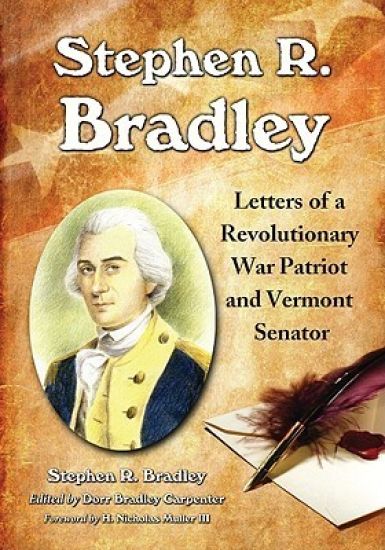
Stephen R. Bradley was a Revolutionary War commander and U.S. Senator credited with writing the Twelfth Amendment and advocating a banning of the slave trade. This collection of Bradley's letters and personal papers provides a range of rare and significant material. This previously unpublished correspondence with presidents and the country's founders reflect Bradley's influence and diversity of interests as well as the political and cultural climate of the era. The book features transcriptions of 550 letters, 25 illustrations, and a catalog of Bradley's documents.
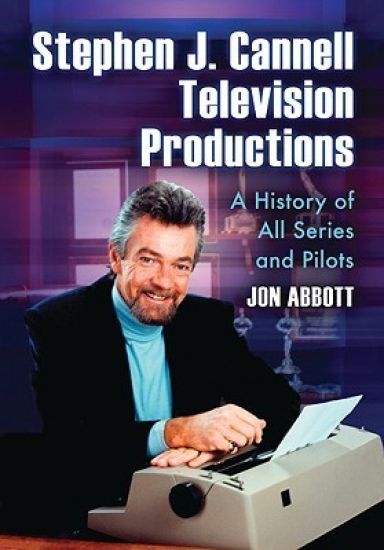
The face of 1980s television was shaped by a man who stayed behind the scenes. Stephen Cannell's reluctant white knights--put-upon private eye James Rockford, World War II fly-boys the Black Sheep Squadron, hapless superhero Ralph Hinckley, fugitive mercenaries the A-Team, and maverick cop Hunter--traversed the television landscape from the 1970s to the 1990s. Cannell changed the face of the action-adventure genre, updating the crime-show format with a hybrid of rebellious morality, juvenile wit, intelligent sarcasm, and radical conservatism. This book discusses in detail the programs of the writer-producer and lists every episode of his award-winning productions from the early 1970s to the early '90s. The book features publicity photos and descriptions of unsold pilots.
This critical study analyzes Stephen R. Donaldson's role as a modern writer who uses the fantasy genre to discuss situations and predicaments germane to the modern world. Donaldson reclaims an epic vision in his Thomas Covenant novels that is lacking in most modern literature. Chapters demonstrate how this use of epic heroism helps solve seemingly insurmountable problems and provides more meaning and purpose for individuals. As Donaldson's characters learn to transcend their world, the reader is engaged in a serious, enlightened discussion about the need for imagination, responsibility and acceptance to resolve such problems as alienation, pollution, disease and despair.
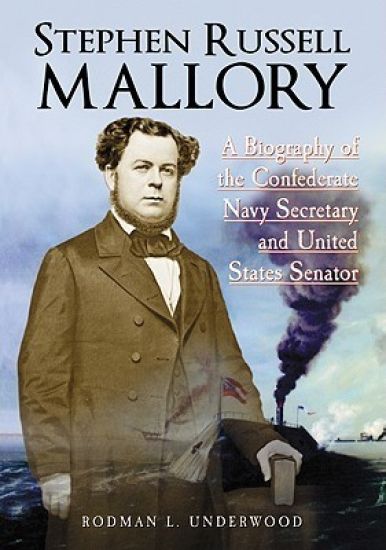
Just as Confederate naval action is commonly overshadowed by the land battles of the Civil War, the navy's originator, Stephen Mallory, is often overlooked in favor of more famous leaders. Mallory had served as one of Florida's U.S. senators for ten years before becoming navy secretary in the Confederate government, challenged to create a valid military force where none had existed. This biography chronicles Mallory's formative years in Key West, his decades of public service, and his declining days. It discusses his career in the United States Senate, where he chaired the Committee for Naval Affairs, helping to strengthen--in an ironic twist of fate--the very navy he would later attempt to defeat. The work also examines the challenges and obstacles Mallory faced in creating a navy for the South. Special attention is given to Mallory's family relationships. Primary sources include autobiographical documents and archival records.
This companion provides a two-part introduction to best-selling author Stephen King, whose enormous popularity over the years has gained him an audience well beyond readers of horror fiction, the genre with which he is most often associated. Part I considers the reception of King's work, the film adaptations that they gave rise to, the fictional worlds in which some of his novels are set, and the more useful approaches to King's varied corpus. Part II consists of entries for each series, novel, story, screenplay and even poem, including works never published or produced, as well as characters and settings.
North Carolina artist Stephen Shoemaker and writer Janet Pittard have teamed up to present a selection of Shoemaker's paintings and drawings and the stories behind them. Known for his dramatic railroad paintings and scenes of life in the Blue Ridge mountains, Shoemaker shares the thought processes involved in creating his artwork, reveals his sources of inspiration (which often include events in local history or personal experiences) and points out clues and symbols appearing in his art. Together with 48 images, several of which were created especially for this publication, and occasional short poems by Pittard, the lively storytelling sheds light on an artist's development as well as the unique culture and history of the mountain region served by the train called the Virginia Creeper, which ran from Abingdon, Virginia, to Elkland, North Carolina (now Todd), from the early 1900s through the mid-1970s.
As Stephen King has continued to publish numerous works beyond one of the many high points of his career, in the 1980s, scholarship has not always kept up with his output. This volume presents 13 essays (12 brand new) on many of King's recent writings that have not received the critical attention of his earlier works. This collection is grouped into three categories--"King in the World Around Us," "Spotlight on The Dark Tower" and "Writing into the Millennium"; each examines an aspect of King's contemporary canon that has yet to be analyzed.
When newly elected Illinois State Representative Abraham Lincoln first saw his diminutive colleague Stephen A. Douglas, he sized him up as ""the least man I ever saw."" With the introduction of Douglas' first bill in 1834, Lincoln soon thought differently. The General Assembly not only passed the bill, it appointed the 21-year old Douglas State's Attorney of Illinois' largest judicial district, replacing John J. Hardin, one of Lincoln's most powerful political allies.It was the first of many Douglas-Lincoln contests in the decade ahead. Struggles over banking, internal improvements, party organizations, the seat of government and slavery--even romantic rivalry--put them on opposing sides long before the 1860 presidential election. These battles were Douglas' political apprenticeship and he would use what he learned to obstruct Lincoln--his friend and nemesis--while becoming the most powerful Democrat in the nation.
Major Stephen H. Long of the United States Army was the most important government-sponsored explorer in the decade after the War of 1812. He led three major and several minor expeditions up the Mississippi, Missouri, and Arkansas rivers and the Red River of the north, as well as exploring the central and southern Plains, the Front Range of the Rocky Mountains, and the Great Lakes. His campanions included engineers, cartographers, Naturalists, ethnologists, and artists, and they gathered a wealth of scientific, military, and artistic data about the interior of North America. For years Long's expeditions have been overlooked or misunderstood; here for the first time they are placed in the context of American scientific development.
Stephen Sayre's career was far more remarkable for its diversity than for its success. At one time or another, Sayre was a soldier, merchant, banker, shipbuilder, politician, speculator, propagandist, diplomat, and inventor. He was also considered by some, as John Alden relates, ""a wicked schemer, a fool, a madman, an embezzler, and a traitor.""Following the dizzying course of Sayre's career, this biography reveals a vast panorama of life, both high and low, in the era of the American Revolution. Sayre frequented the polite society of England, Europe, and New York; twice married into a wealthy English family; and was elected for a term as sheriff of London. He also consorted with the actress Sophia Baddeley, one of the most notorious women of the time; was arrested and confined in the Tower of London for allegedly plotting to kidnap the king; and spent twenty months in a debtors' prison.If there was one constant in Sayre's life, it was his involvement in revolutionary politics. He was a fearless advocate of colonial rights in England, and after the outbreak of war in America he traveled to Prussia, Denmark, Sweden, and Russia to seek support for the revolution. Years later, he was an enthusiastic supporter of France's revolution. Working as an agent for the new French regime, he tried to secure it financial aid, promoted a scheme to purchase American weapons for the French army, argued for a French attack on Spanish Louisiana, and was active in diplomatic efforts to stave off war between Britain and France.Eventually, the turmoil of events in Paris drove away even as devoted a supporter as Sayre. He returned to America, where he continued to argue the cause of the French Revolution and quickly gained a reputation as an extremist. Engaging in the politics of the new American republic, Sayre assailed conservative forces in the nation, in particular the emerging Federalist party. He devoted much of his energy in later years to a persistent but unrewarded attempt to secure a post within the federal government and to somewhat more successful attempts to obtain payment for his past services to his country. In time he moved to Virginia to live with his stepson; he died there in 1818.From the beginning of his career, Stephen Sayre aspired to wealth, social position, and political influence. At various points in his life he achieved each of these goals, but finally they all eluded him. An outstanding patriot, Sayre was far too erratic in his behavior, far too mercurial a personality ever to be counted as a father of his country. He is better remembered as a kind of principled rogue, an adventurer in the service of his own ambitions and those of his country.
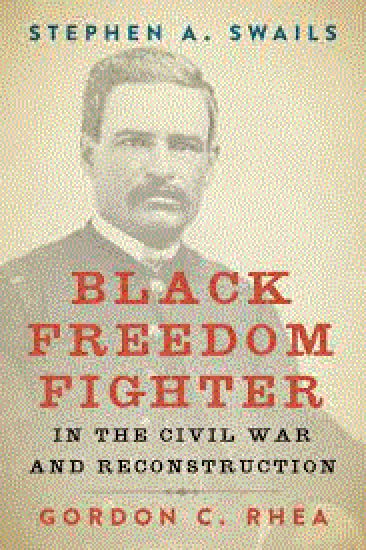
Stephen Atkins Swails is a forgotten American hero. A free Black in the North before the Civil War began, Swails exhibited such exemplary service in the 54th Massachusetts Infantry that he became the first African American commissioned as a combat officer in the United States military. After the war, Swails remained in South Carolina, where he held important positions in the Freedmen's Bureau, helped draft a progressive state constitution, served in the state senate, and secured legislation benefiting newly liberated Black citizens. Swails remained active in South Carolina politics after Reconstruction until violent Redeemers drove him from the state. After Swails died in 1900, state and local leaders erased him from the historical narrative. Gordon C. Rhea's biography, one of only a handful for any of the nearly 200,000 African Americans who fought in the Civil War or figured prominently in Reconstruction, restores Swails's remarkable legacy. Swails's life story is a saga of an indomitable human being who confronted deep-seated racial prejudice in various institutions but nevertheless reached significant milestones in the fight for racial equality, especially within the military. His is an inspiring story that is especially timely today.
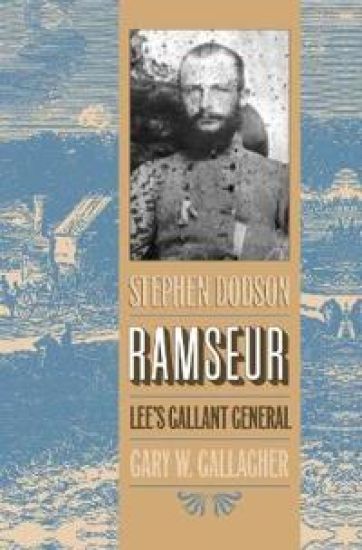
Stephen Dodson Ramseur, born in Lincolnton, North Carolina, in 1837, compiled an enviable record as a brigadier in the Army of Northern Virginia. Commissioned major general the day after his twenty-seventh birthday, he was the youngest West Pointer to achieve that rank in the Confederate army. He later showed great skill as a divisional leader in the 1864 Shenandoah Valley campaigns before he was fatally wounded at Cedar Creek on 19 October of that year. Based on Ramseur's extensive personal papers as well as on other sources, this absorbing biography examines the life of one of the South's most talented commanders and brings into sharper focus some of the crosscurrents of this turbulent period. |One of the principal aims of the Sandinista government in Nicaragua was to end the exploitation of the rural poor. But its attempts to promote balanced economic development and redistribute agricultural resources created labor shortages that threatened th
This early version of A Portrait of the Artist as a Young Man in which Stephen Daedalus rebels against church, country and family, is taken from an incomplete manuscript and is supported by literary and bibliographical notes
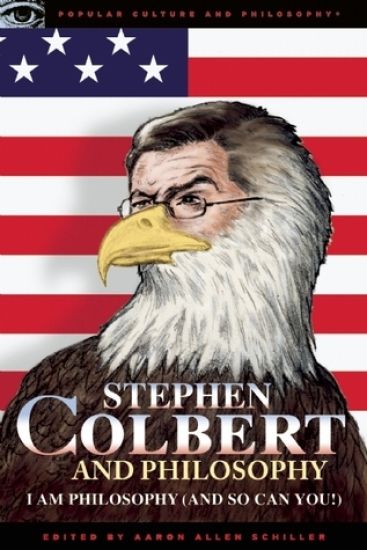
At the head of The Colbert Report, one of the most popular shows on television, Stephen Colbert is a pop culture phenomenon. More than one million people backed his fake candidacy in the 2008 U.S. presidential election on Facebook, a testament to the particularly rich set of issues and emotions Colbert brings to mind. Stephen Colbert and Philosophy is crammed with thoughtful and amusing chapters, each written by a philosopher and all focused on Colbert's inimitable reality -- from his word creations (truthiness, wikiality, freem, and others) to his position as a faux-pundit who openly mocks Fox News and CNN. Although most of the discussion is centered around The Colbert Report, this collection does not neglect either his best-selling book, I Am America (And So Can You!), or his public performances, including his incendiary 2006 White House Press Correspondents' Dinner speech.
Stephen Sondheim is an artist with many contradictory facets: he is an avant-garde composer and lyricist working in the populist art form, an apparently dry and acerbic critic who captures all the ambivalent pain of passion, an intellectual whose work contains some of the funniest bawdy lines on the Broadway stage. He has chosen to confront an audience that is usually looking for escapist literature with the very issues it has fled to the theatre to avoid. This collection of original essays takes particular pains to present Sondheim's diversity in a chronological plan that illustrates how each new work grew out of the previous one. Some of the topics covered are the evolution of Sondheim's female characters, who take us far beyond the usual sweet ingenues; the Roman farce antecedents of A Funny Thing Happened on the Way to the Forum and the resemblances between Sondheim's chorus and the chorus in ancient Greek drama; Sondheim and the concept musical; and Sondheim's maturing philosophy. All students of the modern theatre and the modern musical will want to read this book.
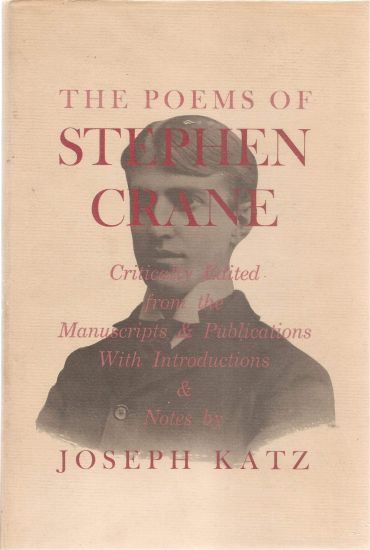
Written by a Pulitzer Prize- and National Book Award-winning American poet and critic, this is the finest and most insightful study available about the life and literary achievements of Stephen Crane (1871-1900), poet and author of the masterpiece, The Red Badge of Courage. In addition to providing a complete (and exciting) picture of Crane's life, Berryman gives a focused assessment of Crane's poetry, prose, and journalism, discussing how critics have regarded these writings over the course of a century.
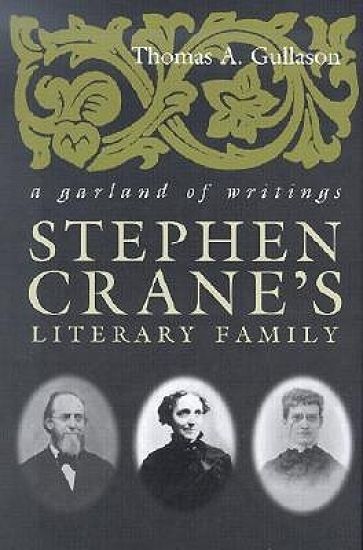
Little-known writings show how a rich family literory heritage influenced Stephen Crane's formative years, brief maturity, and artistry. Stephen Crane was a prodigious American author whose bohemian ways seemed to contradict his conscientious upbringing. Drawing on little-known and unpublished documents by Crane's father, mother, and sister, and preeminent scholar Thomas A. Gullason shows how their vitality and versatility galvanized Crane's imagination, spurred his literary career, and affected his lifestyle. The Cranes emerge as a spirited and serious lot who were passionately concerned with social and cultural issues of the day. Newly discovered papers - from reflections on the Civil War to a funeral oration for Lincoln - paint Crane's pastor father as a man of sardonic wit whose obsession with alcohol would be mirrored in his son's work. Crane's mother is revealed to have had an eye for politics and an ear for dialogue that would vastly inform Crane's masterpiece, The Red Badge of Courage. His sister Agnes rounds out the portrait with recently recovered stories and poems. Replete with rare works and keen insights, this edition is a crucial reference for students of nineteenth-century American literature and devotees of Stephen Crane.
Stephen Crane - American Writers 76 was first published in 1969. Minnesota Archive Editions uses digital technology to make long-unavailable books once again accessible, and are published unaltered from the original University of Minnesota Press editions.
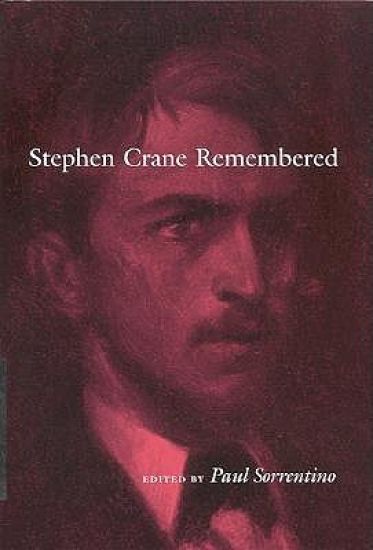
This book collects reminiscences by contemporaries, friends, and associates of Stephen Crane that illuminate the life of this often misunderstood and misrepresented writer. Although Crane is widely regarded as a major American author, conclusions about his life, work, and thought remain obscure due to the difficulties in separating fact from fiction. His first biographer recorded mostly vague impressions and, to mythologize his subject, invented a multitude of the episodes and letters used in his account of Crane's life. Subsequent biographies were either cursory summations or compendiums of verifiable facts. Crane himself was both reclusive and mercurial, protective of his inner life while projecting a variety of personae to suit others. A flamboyant personality and close friend of writers such as William Dean Howells, Henry James, and Joseph Conrad, Crane made telling impressions on his contemporaries. They often constitute the best assessments of Crane's own personality and work. The 75 reminiscences gathered here offer a much-needed account of Crane's life from a variety of viewpoints, as well as important information about the contributors themselves.