Kirjojen hintavertailu. Mukana 11 342 296 kirjaa ja 12 kauppaa.

Kirjahaku

Etsi kirjoja tekijän nimen, kirjan nimen tai ISBN:n perusteella.

1000 tulosta hakusanalla Stephen G Perry

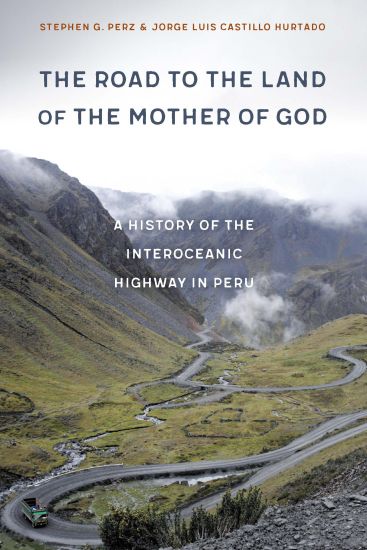
The Road to the Land of the Mother of God

The Road to the Land of the Mother of God

Stephen G. Perz; Jorge Luis Castillo Hurtado

University of Nebraska Press
2023
sidottu
The Interoceanic Highway is many things to many people: an emblematic project during a period focused on integration, a dream realized for an isolated region, a symbol of the profound fragility of state institutions, a key cause of political corruption, and a major driver of ecological and cultural devastation. This highway links the Andean highlands with the Amazonian lowlands in southern Peru, offering an outlet for Brazil’s emergent economy. While it finally brought an end to the isolation of Madre de Dios and other parts of southern Peru and the western Amazon, it was made possible by political corruption revealed in the Lava Jato scandal, and it permitted the spread of criminal business activities. But the Interoceanic Highway’s deeper history must be appreciated in order to fully understand why it was built and the impacts it has generated.The Road to the Land of the Mother of God explores more than five hundred years of the history of Peru’s Interoceanic Highway, showing how the purposes, portrayals, and importance of roads change fundamentally over time, and thus how roads bring significantly more impacts and costs than their advocates and critics generally anticipate. By taking a deeper look at infrastructure history, Stephen G. Perz and Jorge Luis Castillo Hurtado portray infrastructure as an integrative optic for understanding changes in local livelihoods, regional development, and social conflicts.
Fractal Evolution = Profit Revolution!: Diversified Liquidity & the Fractal Signature; Revolutionary Technical Analysis Concepts that allow you to Eva
Did you know that the common shares of small cap, junior and "penny" stocks actually EVOLVE? This groundbreaking work breathes new life into the field of technical analysis, enabling novice investors and seasoned analysts alike to pick the winners and avoid the losers from among the many thousands of junior and small cap stocks trading on world exchanges. Stephen Kirk's concepts of Diversified Liquidity, Fractalism and his development of the Fractal and Dynamic Signatures will allow you to reveal and identify only those low priced, public company stocks that have true growth potential and the possibility to become tomorrow's market leaders New and veteran Metastock users will find Mr. Kirk's technical indicators and analysis systems easily understood and immediately profitable. The book explains and demonstrates exactly how anyone can profit from these innovative techniques including: Cascading Metastock Exploration Filters - instantly identify high growth potential, low priced junior and small cap stocks. The Fractal Signature - Indexes and Aspects of Fractalism within equities, rank the leaders on any global exchange. The Dynamic Signature - identify stocks having specific trading dynamics for accurate trading system back testing. Congruent Incident Modeling - use the Metastock commentary to write your own incredibly accurate custom indicators. How to use super accurate support and resistance price levels - know where any trend is likely to stall or brake. Portfolio risk control techniques - understand the true volatility of any stock and protect your investment capital. How to use a tried and true, step-by-step method to evaluate and assess any security.
Crossing Boundaries for Collaboration

Crossing Boundaries for Collaboration

Stephen G. Perz

Lexington Books
2016
sidottu
Many societal challenges defy simple solutions within the grasp of one academic discipline, a single type of organization, or a country acting alone. Such “wicked problems” require collaboration that crosses social, political, or geographic boundaries. Collaboration across boundaries is increasingly seen as a necessary way forward, whether for the cases of education, health care, community policing, or international trade. At the same time, collaboration poses its own challenges, and what is more, so too does crossing boundaries. Regardless of the skill set required to achieve a particular goal, collaboration and crossing boundaries make their own demands. Crossing Boundaries for Collaboration brings together multiple bodies of work on collaboration across different kinds of boundaries. It highlights the promise of “collaborative advantage,” while featuring detailed discussions of the challenges involved. It provides a framework for thinking about collaboration in terms of a suite of issues, each with particular tasks and challenges that can be addressed via strategic practices. This book also features an extensive discussion of the importance of boundaries for collaboration, which recognizes that while crossing boundaries complicates collaboration, spanning divides can also magnify collaborative advantage. To illustrate the joys and travails of collaboration across boundaries, this book takes up the case of conservation and development in the Amazon. Well-known for its biological resources, the basin is changing rapidly, and Amazonian societies increasingly demand inclusive approaches to conservation and development. This book draws on firsthand experiences from direct participation in several complicated conservation and development projects that spanned disciplinary, organizational, and national boundaries. While the projects permitted achievement of goals beyond the reach of individual partners, the challenges along the way were daunting. This book focuses on issues of particular salience when collaborating across boundaries: politics and inequality, uncertainty and surprise, and collaboration and the self. It also underscores the strategic importance of investing in collaborative practice and the experience of crossing boundaries, even if an initial effort fails. In light of growing need to address complex problems, this book provides a clarion call to collaborate across boundaries, recognizing the difficulties in order to achieve the advantages.
The Whisper In Your Heart: An Ancient Secret for Modern Survival and Prosperity

The Whisper In Your Heart: An Ancient Secret for Modern Survival and Prosperity

Stephen G. Scalese Msw

Createspace Independent Publishing Platform
2014
nidottu
We live in a frenetic, increasingly fast-paced world, where terrorism lurks around every corner and dangerous diseases are just a plane ride away. It's no wonder that so many of us live in chaos, our brains clogged by fear. But what if fear is actually the real danger? What if it's all an illusion, a systematic blockage by too much thinking that keeps us from unlocking an amazing, life-saving ability within our brain? You may know this power as intuition, or a gut feeling, or that still, small voice deep inside. Though it's called many names, this survival intelligence is present in each and every one of us. And though as old as time itself, it is still deeply misunderstood. Through The Whisper In Your Heart, with almost five decades of experience, psychotherapist Stephen G. Scalese, MSW, has created a revolutionary roadmap for accessing this special ability after using it to help Nancy cure herself of terminal cancer-and changing his life forever. Using simple science-based techniques, this enlightening guide guarantees to show you just how close you are to living the life you've always wanted and how accessing this natural power of the mind can bring on a more positive future for us all. BONUS: A very special gift--An mp3 recording that trains your brain to automatically keep you calm.
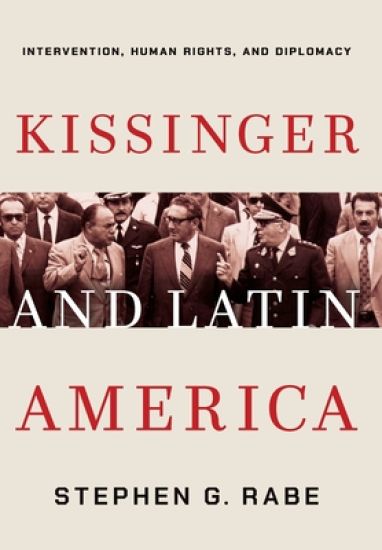
Kissinger and Latin America

Kissinger and Latin America

Stephen G. Rabe

Cornell University Press
2020
sidottu
In Kissinger and Latin America, Stephen G. Rabe analyzes U.S. policies toward Latin America during a critical period of the Cold War. Except for the issue of Chile under Salvador Allende, historians have largely ignored inter-American relations during the presidencies of Richard M. Nixon and Gerald R. Ford. Rabe also offers a way of adding to and challenging the prevailing historiography on one of the most preeminent policymakers in the history of U.S. foreign relations. Scholarly studies on Henry Kissinger and his policies between 1969 and 1977 have tended to survey Kissinger's approach to the world, with an emphasis on initiatives toward the Soviet Union and the People's Republic of China and the struggle to extricate the United States from the Vietnam conflict. Kissinger and Latin America offers something new—analyzing U.S. policies toward a distinct region of the world during Kissinger's career as national security adviser and secretary of state. Rabe further challenges the notion that Henry Kissinger dismissed relations with the southern neighbors. The energetic Kissinger devoted more time and effort to Latin America than any of his predecessors—or successors—who served as the national security adviser or secretary of state during the Cold War era. He waged war against Salvador Allende and successfully destabilized a government in Bolivia. He resolved nettlesome issues with Mexico, Peru, Ecuador, and Venezuela. He launched critical initiatives with Panama and Cuba. Kissinger also bolstered and coddled murderous military dictators who trampled on basic human rights. South American military dictators whom Kissinger favored committed international terrorism in Europe and the Western Hemisphere.