Kirjojen hintavertailu. Mukana 11 234 096 kirjaa ja 12 kauppaa.

Kirjahaku

Etsi kirjoja tekijän nimen, kirjan nimen tai ISBN:n perusteella.

1000 tulosta hakusanalla Stuart Howarth

Collected Works of John Stuart Mill

Collected Works of John Stuart Mill

John Stuart Mill

Routledge
1996
sidottu
The Collected Works of John Stuart Mill took thirty years to complete and is acknowledged as the definitive edition of J.S. Mill and as one of the finest works editions ever completed. Mill's contributions to philosophy, economics, and history, and in the roles of scholar, politician and journalist can hardly be overstated and this edition remains the only reliable version of the full range of Mill's writings. Each volume contains extensive notes, a new introduction and an index. Many of the volumes have been unavailable for some time, but the Works are now again available, both as a complete set and as individual volumes.
John Stuart Mill and Freedom of Expression
The arguments advanced in the second chapter of On Liberty (1859) have become the touchstone for practically every discussion of freedom of speech, yet the broader development of John Stuart Mill's ideas concerning intellectual liberty has generally been neglected. This work attempts to fill that lacuna by looking beyond On Liberty, in order to understand the evolution of Mill's ideas concerning freedom of thought and discussion.
John Stuart Mill

John Stuart Mill

R J Halliday; R. J. Halliday

Routledge
2003
sidottu
First published in 1976, this volume offers a significant new interpretation of Mill's political thought, Mill's ambivalent attitude to democracy is carefully examined. The implications for modern democracy of Mill's views on consensus and leadership, bureaucracy and participation, equality and liberty emerge from a deep understanding of Mill's place in 19th century ideas.
John Stuart Mill

John Stuart Mill

R J Halliday; R. J. Halliday

Routledge
2007
nidottu
First published in 1976, this volume offers a significant new interpretation of Mill's political thought, Mill's ambivalent attitude to democracy is carefully examined. The implications for modern democracy of Mill's views on consensus and leadership, bureaucracy and participation, equality and liberty emerge from a deep understanding of Mill's place in 19th century ideas.
John Stuart Mill - Thought and Influence
More than two hundred years after his birth, and 150 years after the publication of his most famous essay On Liberty, John Stuart Mill remains one of the towering intellectual figures of the Western tradition. This book combines an up-to-date assessment of the philosophical legacy of Mill’s arguments, his complex version of liberalism and his account of the relationship between character and ethical and political commitment. Bringing together key international and interdisciplinary scholars, including Martha Nussbaum and Peter Singer, this book combines the latest insights of Mill scholarship with a long-term appraisal of the ways in which Mill’s work has been received and interpreted from the time of his death in 1873 to today.The book offers compelling insights into Mill’s posthumous fate and reputation; his youthful political and intellectual activism; his views on the formation of character; the development of his thought on logic; his differences from his father and Bentham; his astonishingly prescient, environmentally sensitive and ‘green’ thought; his relation to virtue ethics; his conception of higher pleasures and its relation to his understanding of justice; his feminist thought and its place in contemporary debates and feminist discourses; his defence of free speech and its fundamental significance for his liberalism; and his continued contemporary relevance on a number of major issues. This book will be of interest to students and scholars of Politics, Political Theory, Philosophy, History, English, Psychology, and also Cultural Studies, Empire studies, nationalism and ethnicity studies.
John Stuart Mill on Economic Theory and Method
This book, the third in the series of Samuel Hollander's essays, covers twelve key studies on the economic theory and method of John Stuart Mill. This volume provides an accessible sourcebook on Mill's relationship with David Ricardo, and the 'Classical School', as well as confirming his relevance for modern economics and for the place of economics within the social sciences.
John Stuart Mill and Freedom of Expression
The arguments advanced in the second chapter of On Liberty (1859) have become the touchstone for practically every discussion of freedom of speech, yet the broader development of John Stuart Mill's ideas concerning intellectual liberty has generally been neglected. This work attempts to fill that lacuna by looking beyond On Liberty, in order to understand the evolution of Mill's ideas concerning freedom of thought and discussion.
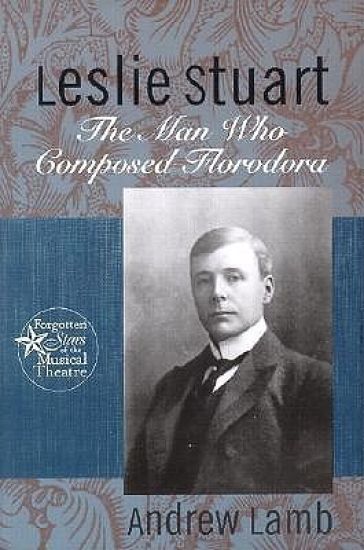
Leslie Stuart

Leslie Stuart

Andrew Lamb

Routledge
2002
sidottu
Leslie Stuart (1864-1928) was a British songwriter best remembered as the composer of the hit show, Florodora. He began writing popular songs as a teenager, first for blackface and vaudeville performers, and eventually for more "legitimate" shows and revues. Florodora (1899), written in collaboration with London's most fashionable librettist, Owen Hall, was a musical-comedy sensation. Its combination of the traditional slow love ballads and waltzes with more rhythmic and long-lined numbers made it a worldwide success. He continued to compose through the first decade of the 20th century, laying the groundwork for the coming innovations in British and American musical theater.
Tasha Stuart Interviews ...

Tasha Stuart Interviews ...

Jennifer Manson

Jennifer Manson
2010
nidottu
Inspiring Fiction from New Zealand author Being a professional interviewer is Tasha Stuart's dream job, giving her a backstage pass to the world of rock stars, celebrity chefs and criminal masterminds. The only problem is that people don't always tell the truth about themselves, and being responsible for the image they present to the world has the potential to backfire. Add to this the necessity of single-handedly financing home and family while her husband takes time out for his mid-life crisis, and Tasha's ingenuity is stretched beyond all previous limits.
The Stuart Constitution, 1603–1688

The Stuart Constitution, 1603–1688

J. P. Kenyon

Cambridge University Press
1986
pokkari
Published in 1966, The Stuart Constitution at once established itself as the standard documentary textbook for courses in English seventeenth-century history in schools (A-level), polytechnics, and universities, and one which at the same time offered an individual revisionist outlook on many of the problems involved. For the second edition Professor Kenyon has entirely rewritten his commentary to take account of the latest research in this field; he has thoroughly revised the structure of the book, and he has also strengthened the documentation in several important areas, notably the Interregnum, 1649–1660. The book is divided into four parts, the first three of which are devoted to the periods 1603–1640, 1640–1660 and 1660–1688 respectively. The fourth part deals with some of the general issues of government, at both central and local level, throughout the seventeenth century. One hundred and forty-six documents are included in all, and to aid the student reader speling and punctuation have been modernised. This volume forms a companion to the second edition of Professor Elton's The Tudor Constitution, and is likewise available in both hard and paper covers.
The Stuart Court and Europe

The Stuart Court and Europe

Cambridge University Press
1996
sidottu
This interdisciplinary collection examines the multiple ties that connected the Stuart court to Europe, and the ways in which these shaped English politics and political culture. Together, the essays demonstrate that even the domestic history of the period can only be understood fully by taking into account the international horizons, concerns and affiliations of the British ruling elite. The opening essays by Jonathan Scott develop a provocative overview of the whole period. The remaining contributions examine topics such as the European roots of common law thought; the nature of national identity; the use of visual display in conveying the grandeur of kingship; the religion of Charles II; and the role of Charles’s French mistress, the duchess of Portsmouth, in English and international politics. A concluding chapter by Geoffrey Parker suggests several new avenues for placing the British Isles within a European perspective.
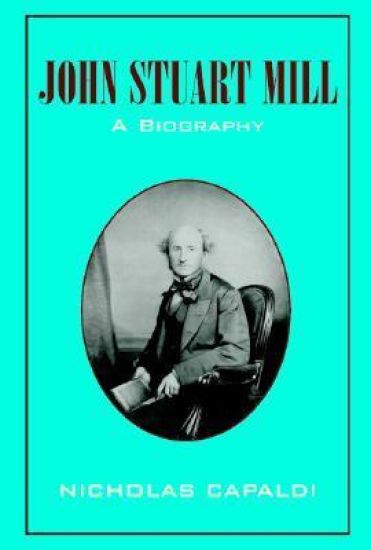
John Stuart Mill

John Stuart Mill

Nicholas Capaldi

Cambridge University Press
2004
sidottu
Nicholas Capaldi’s biography of John Stuart Mill traces the ways in which Mill’s many endeavours are related and explores the significance of Mill’s contribution to metaphysics, epistemology, ethics, social and political philosophy, the philosophy of religion, and the philosophy of education. He shows how Mill was groomed for his life by both his father James Mill, and Jeremy Bentham, the two most prominent philosophical radicals of the early nineteenth century. Yet Mill revolted against this education and developed friendships with both Thomas Carlyle and Samuel Taylor Coleridge who introduced him to Romanticism and political conservatism. A special feature of this biography is the attention devoted to his relationship with Harriet Taylor. No one exerted a greater influence than the woman he was eventually to marry. Nicholas Capaldi reveals just how deep her impact was on Mill’s thinking about the emancipation of women.
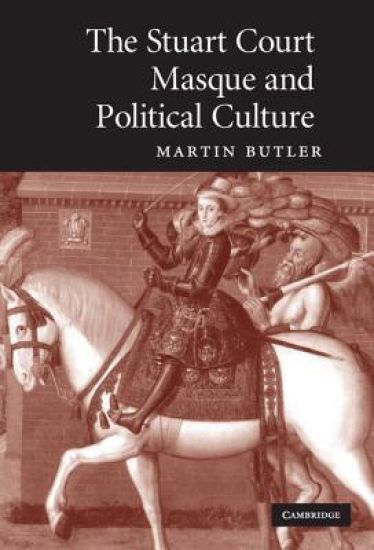
The Stuart Court Masque and Political Culture

The Stuart Court Masque and Political Culture

Martin Butler

Cambridge University Press
2009
sidottu
Court masques were multi-media entertainments, with song, dance, theatre, and changeable scenery, staged annually at the English court to celebrate the Stuart dynasty. They have typically been regarded as frivolous and expensive entertainments. This book dispels this notion, emphasizing instead that they were embedded in the politics of the moment, and spoke in complex ways to the different audiences who viewed them. Covering the whole period from Queen Anne's first masque at Winchester in 1603 to Salmacida Spolia in 1640, Butler looks in depth at the political functions of state festivity. The book contextualizes masque performances in intricate detail, and analyzes how they shaped, managed, and influenced the public face of the Stuart kingship. Butler presents the masques as a vehicle through which we can read the early Stuart court's political aspirations and the changing functions of royal culture in a period of often radical instability.