Kirjojen hintavertailu. Mukana 11 244 527 kirjaa ja 12 kauppaa.

Kirjahaku

Etsi kirjoja tekijän nimen, kirjan nimen tai ISBN:n perusteella.

1000 tulosta hakusanalla Stuart Nicholson

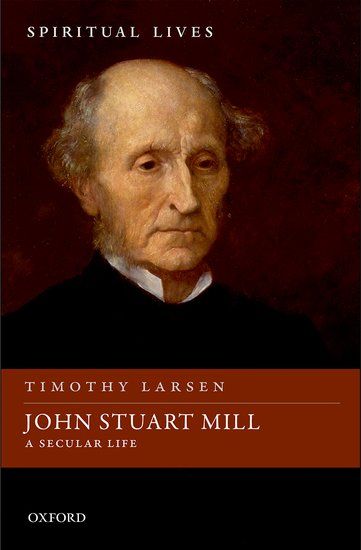
John Stuart Mill

John Stuart Mill

Timothy Larsen

Oxford University Press
2018
sidottu
John Stuart Mill observed in his Autobiography that he was a rare case in nineteenth-century Britain because he had not lost his religion but never had any. He was a freethinker from beginning to end. What is not often realized, however, is that Mill's life was nevertheless impinged upon by religion at every turn. This is true both of the close relationships that shaped him and of his own, internal thoughts. Mill was a religious sceptic, but not the kind of person which that term usually conjures up. The unexpected presence and prominence of spirituality is not only there in Mill's late, startling essay, 'Theism', in which he makes the case for hope in God and in Christ. It is everywhere--in his immediate family, his best friends, and his vision for the future. It is even there in such a seemingly unlikely place as his Logic, which repeatedly addresses religious themes. John Stuart Mill: A Secular Life is a biography which follows one of Britain's most well-respected intellectuals through all of the key moments in his life from falling in love to sitting in Parliament and beyond. It also explores his classic works including, On Liberty, Principles of Political Economy, Utilitarianism, and The Subjection of Women. In this well-researched study which offers original findings and insights, Timothy Larsen presents the Mill you never knew. The Mill that even some of his closest disciples never knew. This is John Stuart Mill, the Saint of Rationalism--a secular life and a spiritual life.
Elizabeth Stuart, Queen of Hearts

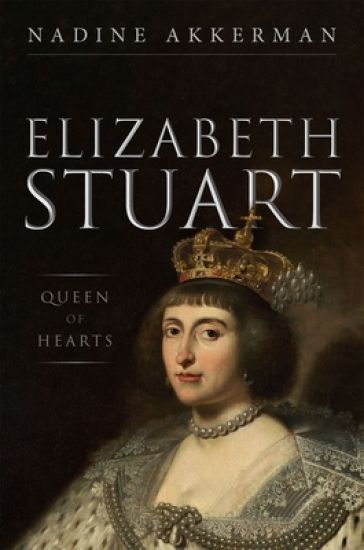
Elizabeth Stuart, Queen of Hearts

Nadine Akkerman

Oxford University Press
2021
sidottu
The dazzling new biography of one of history's most misunderstood queens Elizabeth Stuart is one the most misrepresented - and underestimated - figures of the seventeenth century. Labelled a spendthrift more interested in the theatre and her pet monkeys than politics or her children, and long pitied as 'The Winter Queen', the direct ancestor of Elizabeth II was widely misunderstood. Nadine Akkerman's biography reveals an altogether different woman, painting a vivid picture of a queen forged in the white heat of European conflict. Elizabeth Stuart, daughter of James VI and I, was married to Frederick V, Elector Palatine in 1613. The couple were crowned King and Queen of Bohemia in 1619, only to be deposed and exiled to the Dutch Republic in 1620. Elizabeth then found herself at the epicentre of the Thirty Years' War and the Civil Wars, political and military struggles that defined seventeenth-century Europe. Following her husband's death in 1632, Elizabeth fostered a cult of widowhood, dressing herself and her apartments in black, and conducted a long and fierce political campaign to regain her children's birthright - by force, if possible - wielding her pen with the same deft precision with which she once speared boars from horseback. Through deep immersion in the archives and masterful detective work, Akkerman overturns the received view of Elizabeth Stuart, showing her to be a patron of the arts and canny stateswoman with a sharp wit and a long memory. On returning to England in 1661, Elizabeth Stuart found a country whose people still considered her their 'Queen of Hearts'. Akkerman's biography reveals the impact Elizabeth Stuart had on both England and Europe, demonstrating that she was more than just the grandmother of George I.
John Stuart Mill and the Art of Life

John Stuart Mill and the Art of Life

Oxford University Press Inc
2012
nidottu
The "Art of Life" is John Stuart Mill's name for his account of practical reason. In this volume, eleven leading scholars elucidate this fundamental, but widely neglected, element of Mill's thought. Mill divides the Art of Life into three "departments": "Morality, Prudence or Policy, and Aesthetics." In the volume's first section, Rex Martin, David Weinstein, Ben Eggleston, and Dale E. Miller investigate the relation between the departments of morality and prudence. Their papers ask whether Mill is a rule utilitarian and, if so, whether his practical philosophy must be incoherent. The second section contains papers by Jonathan Riley and Wendy Donner, who explore the relation between the departments of morality and aesthetics. They discuss issues ranging from supererogation to aesthetic pleasure and humanity's relationship with nature. The papers in the third section consider the Art of Life's axiological first principle, the principle of utility. Elijah Millgram contends that Mill's own life refutes his claim that the Art of Life has a single axiological first principle. Philip Kitcher maintains that Mill has a dynamic axiology requiring us to continually refine our conception of the good. In the final section, three papers address what it means to put the Art of Life into practice. Robert Haraldsson locates an 'Art of Ethics' in On Liberty that is in tension with the Art of Life. Nadia Urbinati plumbs the classical roots of Mill's view of the good life. Finally, Colin Heydt develops Mill's suggestion that we regard our own lives as works of art.
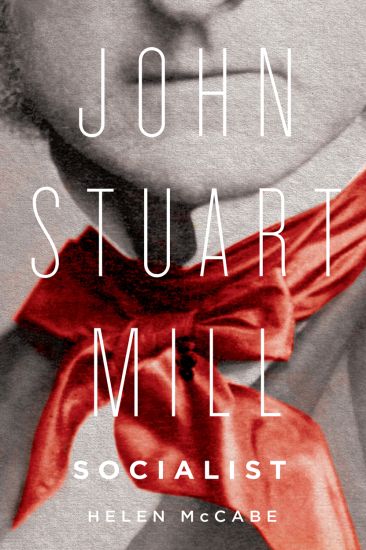
John Stuart Mill, Socialist

John Stuart Mill, Socialist

Helen McCabe

McGill-Queen's University Press
2021
sidottu
Best known as the author of On Liberty, John Stuart Mill remains a canonical figure in liberalism today. Yet according to his autobiography, by the mid-1840s he placed himself "under the general designation of Socialist." Taking this self-description seriously, John Stuart Mill, Socialist reinterprets Mill's work in its light.Helen McCabe explores the nineteenth-century political economist's core commitments to egalitarianism, social justice, social harmony, and a socialist utopia of cooperation, fairness, and human flourishing. Uncovering Mill's changing relationship with the radicalism of his youth and his excitement about the revolutionary events of 1848, McCabe argues that he saw liberal reforms as solutions to contemporary problems, while socialism was the path to a better future. In so doing, she casts new light on his political theory, including his theory of social progress; his support for democracy; his feminism; his concept of utility; his understanding of individuality; and his account of "the permanent interests of man as a progressive being," which is so central to his famous harm principle.As we look to rebuild the world in the wake of financial crises, climate change, and a global pandemic, John Stuart Mill, Socialist offers a radical rereading of the philosopher and a fresh perspective on contemporary meanings of socialism.
John Stuart Mill, Socialist

John Stuart Mill, Socialist

Helen McCabe

McGill-Queen's University Press
2021
nidottu
Best known as the author of On Liberty, John Stuart Mill remains a canonical figure in liberalism today. Yet according to his autobiography, by the mid-1840s he placed himself "under the general designation of Socialist." Taking this self-description seriously, John Stuart Mill, Socialist reinterprets Mill's work in its light.Helen McCabe explores the nineteenth-century political economist's core commitments to egalitarianism, social justice, social harmony, and a socialist utopia of cooperation, fairness, and human flourishing. Uncovering Mill's changing relationship with the radicalism of his youth and his excitement about the revolutionary events of 1848, McCabe argues that he saw liberal reforms as solutions to contemporary problems, while socialism was the path to a better future. In so doing, she casts new light on his political theory, including his theory of social progress; his support for democracy; his feminism; his concept of utility; his understanding of individuality; and his account of "the permanent interests of man as a progressive being," which is so central to his famous harm principle.As we look to rebuild the world in the wake of financial crises, climate change, and a global pandemic, John Stuart Mill, Socialist offers a radical rereading of the philosopher and a fresh perspective on contemporary meanings of socialism.
John Stuart Mill

John Stuart Mill

Palgrave Macmillan
2013
sidottu
This edited collection highlights the inquisitive and synthetic aspects of John Stuart Mill's mode of philosophising while exploring various aspects of Mill's thought, intellectual development and influence. The contributors to this volume discuss a number of Mill's ideas including those on political participation, democracy, liberty and justice.
Becoming Stuart

Becoming Stuart

Morris William

Lulu.com
2019
nidottu
Growing up on an Edinburgh council estate in the 1970s, Stu didn't realise that he had limited options for his life ahead. BECOMING STUART takes a journey from the young life of Stu and the difficulties he faced with a broken home life, through domestic abuse and on to dealing with and understanding his friendship with punk rocker Johnny. Set around the turn of the 21st century, this is a story that explores the unexpected and shows how one young man deals with physical and mental abuse at the hand of his girlfriend. It also deals with male bonding and the difficulties he suffered trying to understand things that are still relatively taboo in society. Can Stu finally shake his past and move into a wonderful future? Will he ever be able to become Stuart? Contains adult themes and some Edinburgh dialect.
Imaging Stuart Family Politics

Imaging Stuart Family Politics

Catriona Murray

Routledge
2020
nidottu
From conception onwards, Stuart offspring were presented to their subjects through texts, images and public celebrations. Audiences were exhorted to share in their development, establishing affective bonds with the royal family and its latest additions. Yet inviting the public into Stuart domestic affairs exposed them to intense scrutiny and private interactions were endowed with public dimensions. Images of royal children had the potential both to support and to undermine dynastic messages. In Imaging Stuart Family Politics, Catriona Murray explores the promotion of Stuart familial propaganda through the figure of the royal child. Bringing together royal ritual, court portraiture and popular prints, she offers a distinctive perspective on this crucial dimension of seventeenth-century political culture, exploring the fashioning and dismantling of reproductive imagery, as well as the vital role of visual display within these dialogues. This wide-ranging study will appeal to scholars of Stuart cultural, political and social history.
The Basic Writings of John Stuart Mill

The Basic Writings of John Stuart Mill

John Stuart Mill

Modern Library Inc
2002
pokkari
The writings of John Stuart Mill have become the cornerstone of political liberalism. Collected for the first time in this volume are Mill’s three seminal and most widely read works: On Liberty, The Subjection of Women, and Utilitarianism. A brilliant defense of individual rights versus the power of the state, On Liberty is essential reading for anyone interested in political thought and theory. As Bertrand Russell reflected, “On Liberty remains a classic . . . the present world would be better than it is, if [Mill’s] principles were more respected.”This Modern Library Paperback Classics edition includes newly commissioned endnotes and commentary by Dale E. Miller, and an index.
John Stuart Mill's Social and Political Thought
This collection covers the breadth of Mill's work in social theory and political economy, including his ethics, liberalism, theory of government, methodology and feminism. It represents the most important scholarly and philosophical criticism of this century, illustrating the development of modern Mill scholarship and the influence of changing social conditions and philosophical trends upon it. In a general introduction the editor describes the social and intellectual context of Mill criticism, and provides a linking commentary to the material in each volume. The material in the collection displays the breadth and depth of high-quality scholarly and philosophical criticism of Mill's social thought. * Volume One covers Social Ethics * Volume Two covers Freedom * Volume Three covers Politics and Government * Volume Four covers Method, Life, Feminism and Culture
John Stuart Mill on Economic Theory and Method
This book, the third in the series of Samuel Hollander's essays, covers twelve key studies on the economic theory and method of John Stuart Mill. This volume provides an accessible sourcebook on Mill's relationship with David Ricardo, and the 'Classical School', as well as confirming his relevance for modern economics and for the place of economics within the social sciences.
Collected Works of John Stuart Mill

Collected Works of John Stuart Mill

John Stuart Mill

Routledge
1996
sidottu
The Collected Works of John Stuart Mill took thirty years to complete and is acknowledged as the definitive edition of J.S. Mill and as one of the finest works editions ever completed. Mill's contributions to philosophy, economics, and history, and in the roles of scholar, politician and journalist can hardly be overstated and this edition remains the only reliable version of the full range of Mill's writings. Each volume contains extensive notes, a new introduction and an index. Many of the volumes have been unavailable for some time, but the Works are now again available, both as a complete set and as individual volumes.
John Stuart Mill and Freedom of Expression
The arguments advanced in the second chapter of On Liberty (1859) have become the touchstone for practically every discussion of freedom of speech, yet the broader development of John Stuart Mill's ideas concerning intellectual liberty has generally been neglected. This work attempts to fill that lacuna by looking beyond On Liberty, in order to understand the evolution of Mill's ideas concerning freedom of thought and discussion.
John Stuart Mill

John Stuart Mill

R J Halliday; R. J. Halliday

Routledge
2003
sidottu
First published in 1976, this volume offers a significant new interpretation of Mill's political thought, Mill's ambivalent attitude to democracy is carefully examined. The implications for modern democracy of Mill's views on consensus and leadership, bureaucracy and participation, equality and liberty emerge from a deep understanding of Mill's place in 19th century ideas.
John Stuart Mill

John Stuart Mill

R J Halliday; R. J. Halliday

Routledge
2007
nidottu
First published in 1976, this volume offers a significant new interpretation of Mill's political thought, Mill's ambivalent attitude to democracy is carefully examined. The implications for modern democracy of Mill's views on consensus and leadership, bureaucracy and participation, equality and liberty emerge from a deep understanding of Mill's place in 19th century ideas.
John Stuart Mill - Thought and Influence
More than two hundred years after his birth, and 150 years after the publication of his most famous essay On Liberty, John Stuart Mill remains one of the towering intellectual figures of the Western tradition. This book combines an up-to-date assessment of the philosophical legacy of Mill’s arguments, his complex version of liberalism and his account of the relationship between character and ethical and political commitment. Bringing together key international and interdisciplinary scholars, including Martha Nussbaum and Peter Singer, this book combines the latest insights of Mill scholarship with a long-term appraisal of the ways in which Mill’s work has been received and interpreted from the time of his death in 1873 to today.The book offers compelling insights into Mill’s posthumous fate and reputation; his youthful political and intellectual activism; his views on the formation of character; the development of his thought on logic; his differences from his father and Bentham; his astonishingly prescient, environmentally sensitive and ‘green’ thought; his relation to virtue ethics; his conception of higher pleasures and its relation to his understanding of justice; his feminist thought and its place in contemporary debates and feminist discourses; his defence of free speech and its fundamental significance for his liberalism; and his continued contemporary relevance on a number of major issues. This book will be of interest to students and scholars of Politics, Political Theory, Philosophy, History, English, Psychology, and also Cultural Studies, Empire studies, nationalism and ethnicity studies.
John Stuart Mill on Economic Theory and Method
This book, the third in the series of Samuel Hollander's essays, covers twelve key studies on the economic theory and method of John Stuart Mill. This volume provides an accessible sourcebook on Mill's relationship with David Ricardo, and the 'Classical School', as well as confirming his relevance for modern economics and for the place of economics within the social sciences.
John Stuart Mill and Freedom of Expression
The arguments advanced in the second chapter of On Liberty (1859) have become the touchstone for practically every discussion of freedom of speech, yet the broader development of John Stuart Mill's ideas concerning intellectual liberty has generally been neglected. This work attempts to fill that lacuna by looking beyond On Liberty, in order to understand the evolution of Mill's ideas concerning freedom of thought and discussion.
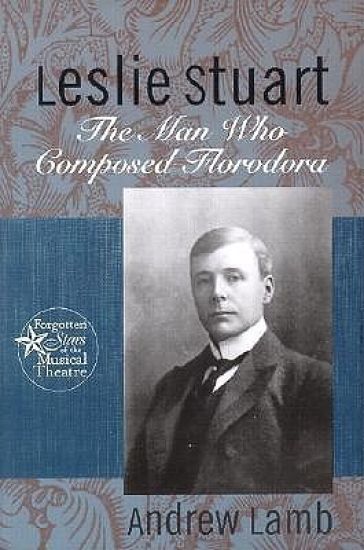
Leslie Stuart

Leslie Stuart

Andrew Lamb

Routledge
2002
sidottu
Leslie Stuart (1864-1928) was a British songwriter best remembered as the composer of the hit show, Florodora. He began writing popular songs as a teenager, first for blackface and vaudeville performers, and eventually for more "legitimate" shows and revues. Florodora (1899), written in collaboration with London's most fashionable librettist, Owen Hall, was a musical-comedy sensation. Its combination of the traditional slow love ballads and waltzes with more rhythmic and long-lined numbers made it a worldwide success. He continued to compose through the first decade of the 20th century, laying the groundwork for the coming innovations in British and American musical theater.