The ozone layer is threatened by chemical emissions, the climate is endangered from fossil fuels and deforestation, and global biodiversity is being lost by reason of thousands of years of habitat conversions. Global environmental problems arise out of the accumulated impacts from many years' and many countries' economic development. In order to address these problems the states of the world must cooperate to manage their development processes together - this is what international environmental agreements are designed to do. But can the world's countries cooperate successfully to manage global development? How should they manage it? Who should pay for the process, as well as for the underlying problems? This book presents an examination of both the problems and the processes underlying international environmental lawmaking: the recognition of international interdependence, the negotiation of international agreements and the evolution of international resource management. It examines the general problem of global resource management by means of general principles and case studies and by looking at how and why specific negotiations and agreements have failed to achieve their targets. The book, commissioned by UNCTAD to assist policymakers, especially in developing countries. It will also be of interest to practitioners in the areas of environmental economics and law and to scholars studying global environmental policy making and institution building.
Child poverty and the well-being of children is an important policy issue throughout the industrialised world. Some 47 million children in 'rich' countries live in families so poor that their health and well-being are at risk. The main themes addressed are: · the extent and trend of child poverty in industrialised nations; · outcomes for children - for example, the relationship between childhood experiences and children's health; · country studies and emerging issues; · child and family policies. All the contributions underline the urgent need for a comprehensive policy to reduce child poverty rates and to improve the well-being of children. Findings are clearly presented and key focus points identified for policy makers to consider.
Public education - and public school teachers in particular - have been on the receiving end of criticism and blame for quite some time for a host of ills, many of which are beyond their control. And yet, although there has been a plethora of "experts" proposing and selling their "fixes," the voice of the true experts on education-teachers-has been largely ignored.Let's stop the finger-pointing and look at public education for what it is-a complex system of components and influences that must be acknowledged and factored into any substantive plan for improvement.
The fear of public speaking is frequently cited as one of the most common fears that people face. With college students, this is certainly true. Many students admit that being called on to answer a question in class is one of the most anxiety producing experiences, yet many haven't yet found the best way to overcome this fear.Please, Don't Call On Me was written to provide the solution to this problem. It serves as a manual for proficiency in communication - both in public speaking and in interpersonal interactions. Each chapter arms students with the tools they need to answer and ask questions in class. It gives detailed recommendations for giving a speech or presentation. It gives students a template for starting a conversation with strangers and acing interviews. In addition, it provides practical action steps and summaries for each chapter.However, Please, Don't Call On Me isn't just a guide for learning communication; it's also a book dedicated to overcoming the fear of public speaking and interpersonal communication. Through real world examples, critical reasoning, and a bit of motivation, this book takes students to the next level Frequently today, those who are the most skilled in the field and art of communication are those who find the most opportunities in life. Learning how to become capable and confident as a communicator is invaluable for any student wishing to advance professionally and personally, and Please, Don't Call On Me is the best place to start
Timothy M Bonds; Michael J Mazarr; James Dobbins; Michael J Lostumbo; Michael Johnson; David A Shlapak; Jeffrey Martini; Scott Boston; Cristina L Garafola; John Gordon; Sonni Efron; Paul S Steinberg; Yvonne K Crane; Daniel M Norton
In order to defend itself and its national interests, and to maintain the trust of allies as a reliable security guarantor, the United States must match its national security policies with the resources available to support them. This report discusses the specific gaps between the stated strategic and defense policies of the United States and the resources and capabilities that would be required to implement those policies successfully.
Inspiring reflections and meditations to quiet the noise of our everyday lives and draw us closer to Jesus--from Cardinal Timothy Dolan, one of the most compelling Catholic leaders of our time In the Gospels, Jesus asks what may be the most important question of our lives: "Who do you say I am?" In our bustling world, this can be a difficult question to answer; often we are distracted or believe we lack the time or presence of mind to fully explore how we feel. But just a few minutes devoted to God each day can go a long way toward keeping us centered and focused on what really matters. In Who Do You Say I Am?, Cardinal Timothy Dolan, Archbishop of New York, offers beautiful insights on the importance of Jesus and the Church in our day-to-day lives. With short daily reflections crafted to inspire anyone seeking to appreciate and deepen their faith, Cardinal Dolan explores the lessons of Jesus and offers fresh new understandings of the saints, prayer, the Bible, beauty, and the pursuit of God, especially in light of the often turbulent nature of faith itself. Whether at the start of each day, before retiring to sleep each night, or anytime during the day, readers can build a deeper and more personal relationship with God through this step-by-step devotional.
Nora and Michael are two schoolchildren drawn into the magical and frightening world of Irish Faeries and monsters. Strange Irish-themed dreams and incidents begin to haunt them at their home in the Silicon Valley. The family moves to their new home in the Irish Wicklow Mountains where their father's experiments with virtual reality go horribly wrong. The children join forces with three Leprechauns in Training to battle the many terrible Irish beasts threatening the world. Irish Gaelic phrases and Irish and American slang definitions are footnoted on each page for clarity on both sides of the Atlantic.
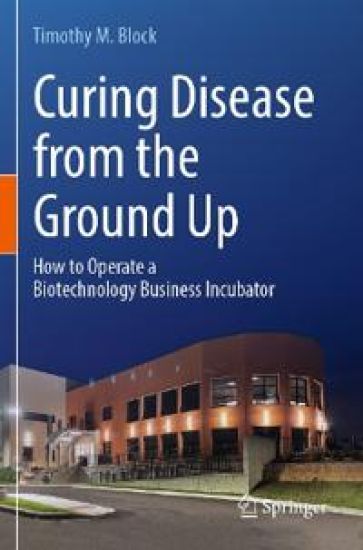
This operations manual offers an accessible, step-by-step guide to launching, running, and achieving success with a life science and biotechnology business incubator. Written by the founder and President Emeritus of the Pennsylvania Biotechnology Center (PABC), one of the most successful biotech and drug discovery incubators in the United States, it is designed to introduce researchers and funders to the broad considerations and minute details of managing an incubation program.As of 2023, there are more than 1100 business incubators in the United States alone, and more than 5000 worldwide. One of the fastest-growing industries of the "new economy," science business incubators are a tool for regional economic stimulation and commercial development for universities and research organizations. The PABC was founded in 2006 as a state-of-the-art research facility; its purpose and operation is unusual and its success has been remarkable. It was created by the nonprofit Hepatitis BFoundation and its research arm, the Baruch S. Blumberg Institute, to help their effort to find a cure for hepatitis B. But it has proved to be more than a source of funding for those nonprofits – it has become a major economic driver for its region and Pennsylvania, creating thousands of jobs and bringing in billions of dollars to the local economy. The PABC’s model has drawn attention from economists, legislators, and the research community. The strategy of bringing nonprofit research organizations and biotech startups under one roof was a founding principle, and has created powerful, lasting collaborations between scientific innovators, entrepreneurs and investors. The partnerships forged at the PABC have led to the discovery, testing, and FDA approval of new drugs for cancer and gastrointestinal diseases and medical devices, as well as multiple multimillion-dollar IPOs, and thousands of jobs. There are currently more than 50 startups housed in the Center's offices, ranging in focusfrom pharmaceuticals and diagnostics, to medical wearables and nanomedicine research.Curing Disease from the Ground Up: How to Operate a Biotechnology Business Incubator tells both a personal story about the ups and downs of leveraging a business incubator to fund and find a cure for a deadly disease, as well as providing a practical guide to running a business incubator. It is a first-hand, expert perspective for running a science business incubator, and explains how the success of the PABC can be learned and replicated. Whether it is developing a mission-focused framework, the practicalities of managing a scalable, business-savvy research nonprofit, identifying ideal tenant partners, or planning for the infrastructure needs of a large research facility, this manual is the first and last stop for entrepreneurial thinkers in this field.
Timothy Rucker demonstrates in this study that the temple was a key background for Shebna's position and offense in Isa 22:15-25, which opens a new door for reconsidering the allusions in Rev 3:7-13 and Matt 16:18-19. He uses intertextuality and critical spatiality in order to interpret these allusions and their potential implications for the conception of sacred space among some early Christ followers. The open door of Rev 3:8 is an opportunity to reclaim potential sacred space for God on earth, so that others may become God's sacred space as well. In Matt 16:18-19, Peter's key foundational role is to provide teaching that will lead to both Jesus' assembly manifesting the righteousness of the kingdom on earth and to other Jews following Jesus as the Messiah. Thus, the temple imagery of Isa 22:22 encourages missionary engagement in both New Testament contexts.
The existence of non-price rationing in credit markets is a subj ect, not only of paramount importance, but of considerable controversy, which is ultimately linked with our understanding, or lack thereof, of the basic nature of the banking firm. A recognition of this phenomenon is critical to the understanding of the banking firm in its major role as a financial intermediary. The banking firm serves as an intermediary in two important spheres, between borrower and lender, and between spenders and the monetary authorities. The basic economic formulation of borrower-lender behavior, the simple Fisherian consumption loan model, while beautiful in its simplicity, fail s to acknowledge any role for a non-neutral financial intermediary. The bank, in its second intermediary role, leads one to question the assumption of both neoclassical and Keynsian monetary theories that monetary changes are diffused across the economy (the proverbial monetary helicopter). Monetary policy effects on spending and investment will clearly be biased by the policies of the banks. The major focus of the present work is the development of a theory of credit rationing based upon the existence of risk reducing information technologies. Implicit in the analysis is a discussion of the role of the banking firm as something more than a tr·aditional financial intermediary. The present analysis will focus on the bank as an intermediary between borrower and lender. It will be shown that in .
1.1. Introduction Solving systems of nonlinear equations has since long been of great interest to researchers in the field of economics, mathematics, en gineering, and many other professions. Many problems such as finding an equilibrium, a zero point, or a fixed point, can be formulated as the problem of finding a solution to a system of nonlinear equations. There are many methods to solve the nonlinear system such as Newton's method, the homotopy method, and the simplicial method. In this monograph we mainly consider the simplicial method. Traditionally, the zero point and fixed point problem have been solved by iterative methods such as Newton's method and modifications thereof. Among the difficulties which may cause an iterative method to perform inefficiently or even fail are: the lack of good starting points, slow convergence, and the lack of smoothness of the underlying function. These difficulties have been partly overcome by the introduction of homo topy methods.
This book describes the representations of Lie superalgebras that are yielded by a graded version of Hudson-Parthasarathy quantum stochastic calculus. Quantum stochastic calculus and grading theory are given concise introductions, extending readership to mathematicians and physicists with a basic knowledge of algebra and infinite-dimensional Hilbert spaces. The develpment of an explicit formula for the chaotic expansion of a polynomial of quantum stochastic integrals is particularly interesting. The book aims to provide a self-contained exposition of what is known about Z_2-graded quantum stochastic calculus and to provide a framework for future research into this new and fertile area.
Alla som vill leva för och med Gud, ställs oundvikligen inför en stor mängd val där vi brottas med vad som är Guds vilja. Vill Gud att jag ska göra det ena eller det andra, välja det ena eller det andra, gå åt ett håll eller ett annat i livet. Om den ena vägen är destruktiv eller på annat sätt ond är valet kanske inte så svårt, men hur väljer man mellan två goda alternativ? Om jag inte hör Guds röst tydligt, hur ska jag då kunna veta vad Han vill, vad som är bäst för mig och för Hans rike? Detta är en återkommande fråga också inom själavården. Inom den katolska traditionen finns Ignatius av Loyola, som levde på 1500-talet. Han är en mästare i själavårdens pedagogik, men är inte alltid lätt att förstå vid första anblicken. I den här boken har ordensprästen och retreatledaren Timothy Gallagher OMD förklarat de regler som Ignatius gett oss, så att vi kan tillämpa dem i vårt vardagsliv. Han gör det med både värme och enkelhet, illustrerat med glimtar ur livsberättelser, både ur litteraturen och från hans egna möten inom själavården. Boken är en sann läsupplevelse, där de många människornas berättelser som finns återgivna blir ett oförglömligt minne. Gallaghers och Ignatius undervisning är en god reskamrat genom livet, en gåva till alla oss som vill leva i enlighet med Guds vilja. En grundbok i efterföljelse och själavård.
Ignatius av Loyola (1491 1556) är en av de mest inflytelserika andliga ledarna genom tiderna och hans andliga övningar har lästs och praktiserats av många. I den här lättillgängliga boken hjälper Timothy M. Gallagher läsaren att förstå dessa övningar och deras betydelse för andlig växt. Genom exempel från nutida vardagssituationer visar författaren tydligheten och avsikten i Ignatius regler, såväl som dess relevans för andligt liv i dag. Här kan vi upptäcka våra egna kamper, glädjeämnen och triumfer. Det här är en bok som riktar sig till alla som längtar efter en större medvetenhet om Guds agerande i sitt dagliga liv samt till reträttledare, präster och andliga rådgivare. Timothy M. Gallagher O.M.V. är en populär reträttledare och en ofta anlitad föreläsare. Artos och Norma bokförlag har tidigare givit ut Att urskilja Guds vilja (2019) som tjänar som ett komplement till den här boken.
This operations manual offers an accessible, step-by-step guide to launching, running, and achieving success with a life science and biotechnology business incubator. Written by the founder and President Emeritus of the Pennsylvania Biotechnology Center (PABC), one of the most successful biotech and drug discovery incubators in the United States, it is designed to introduce researchers and funders to the broad considerations and minute details of managing an incubation program. As of 2023, there are more than 1100 business incubators in the United States alone, and more than 5000 worldwide. One of the fastest-growing industries of the "new economy," science business incubators are a tool for regional economic stimulation and commercial development for universities and research organizations. The PABC was founded in 2006 as a state-of-the-art research facility; its purpose and operation is unusual and its success has been remarkable. It was created by the nonprofit Hepatitis BFoundation and its research arm, the Baruch S. Blumberg Institute, to help their effort to find a cure for hepatitis B. But it has proved to be more than a source of funding for those nonprofits – it has become a major economic driver for its region and Pennsylvania, creating thousands of jobs and bringing in billions of dollars to the local economy. The PABC’s model has drawn attention from economists, legislators, and the research community. The strategy of bringing nonprofit research organizations and biotech startups under one roof was a founding principle, and has created powerful, lasting collaborations between scientific innovators, entrepreneurs and investors. The partnerships forged at the PABC have led to the discovery, testing, and FDA approval of new drugs for cancer and gastrointestinal diseases and medical devices, as well as multiple multimillion-dollar IPOs, and thousands of jobs. There are currently more than 50 startups housed in the Center's offices, ranging in focusfrom pharmaceuticals and diagnostics, to medical wearables and nanomedicine research. Curing Disease from the Ground Up: How to Operate a Biotechnology Business Incubator tells both a personal story about the ups and downs of leveraging a business incubator to fund and find a cure for a deadly disease, as well as providing a practical guide to running a business incubator. It is a first-hand, expert perspective for running a science business incubator, and explains how the success of the PABC can be learned and replicated. Whether it is developing a mission-focused framework, the practicalities of managing a scalable, business-savvy research nonprofit, identifying ideal tenant partners, or planning for the infrastructure needs of a large research facility, this manual is the first and last stop for entrepreneurial thinkers in this field.
In Entombed Epigraphy and Commemorative Culture Timothy M. Davis presents a history of early muzhiming—the most versatile and persistent commemorative form employed in the elite burials of pre-modern China. While previous scholars have largely overlooked the contemporary religious, social, and cultural functions of these epigraphic objects, this study directly addresses these areas of concern, answering such basic questions as: Why were muzhiming buried in tombs? What distinguishes commemorative biography from dynastic history biography? And why did muzhiming develop into an essential commemorative genre esteemed by the upper classes? Furthermore, this study reveals how aspiring families used muzhiming to satisfy their obligations to deceased ancestors, establish a multi-generational sense of corporate identity, and strengthen their claims to elite status.
Provides a detailed examination and encouraging explanation of faith, hope, humility, love and chastity, human formation, patience, penance, joy, and obedience.