

Kirjahaku
Etsi kirjoja tekijän nimen, kirjan nimen tai ISBN:n perusteella.
654 tulosta hakusanalla Tito Perdue
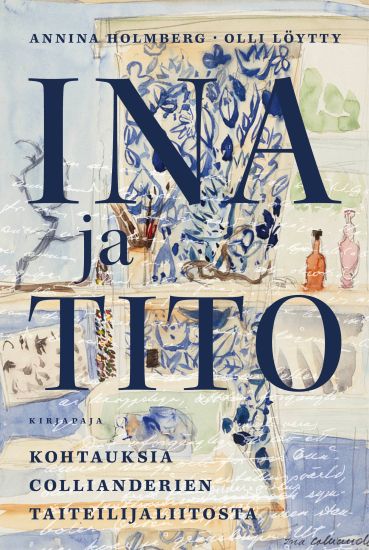
Ina Behrsen ja Tito Colliander kohtasivat 1920-luvun lopulla. He kumpikin olivat muuttaneet lapsuuden Pietarista vallankumouksen jaloista Suomeen. Kohtaamisesta alkoi pitkä yhteinen taival, taiteilijaliitto, jossa molemmat saattoivat toteuttaa omaa kutsumustaan, Ina kuvataiteilijana ja Tito ensi sijassa kirjailijana.Annina Holmbergin ja Olli Löytyn teos piirtää moniulotteisen kuvan Ina ja Tito Collianderin elämästä ja kumppanuudesta. Monen kulttuurin vaikutuspiirissä kasvaneet Collianderit olivat kosmopoliitteja, joiden maailmassa kielet ja kulttuurivaikutteet sekoittuivat. Myös ortodoksisella uskolla oli heille myöhemmässä elämässä suuri merkitys.Ina ja Tito on kirja taiteesta ja rakkaudesta, mutta myös perheestä, arjesta ja kumppanuudesta - kaikesta siitä, minkä keskellä taidetta tehdään. Annina Holmberg on kirjailija ja käsikirjoittaja. Olli Löytty on kirjallisuudentutkija ja tietokirjailija. He ovat mm. toimittaneet yhdessä Taina Westin kanssa teoksen Minun Valamoni - Tarinoita luostarista (2017).
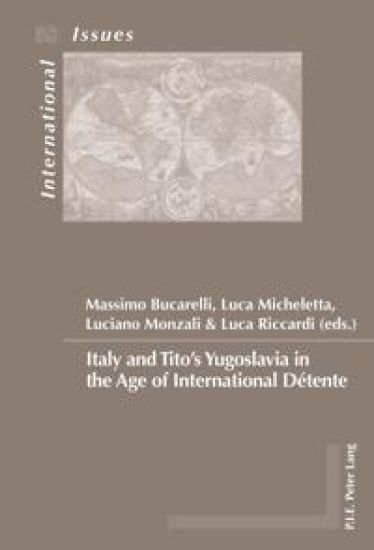
Italy and Tito’s Yugoslavia in the Age of International Détente
Peter Lang AG, Internationaler Verlag der Wissenschaften
2016
nidottu
World War II and East-West confrontation redefined borders between Italy and Yugoslavia, reshaped national frontiers and adversely affected political relations. As a result, major quarrels and disputes arose over territorial claims, demarcation of State boundaries, expulsion of national minorities, and diverging visions on international and domestic politics. It was only in the 1960s and 1970s, during the years of Détente, that rapprochement between Rome and Belgrade became possible and normalization of bilateral relations was attained. Long-lasting territorial disputes, such as the Trieste question, were solved and bilateral relationship greatly improved, so much so that Belgrade became an important asset in Italy’s Balkan and Adriatic strategy, while Rome was a sort of bridge between Socialist Yugoslavia and Western Europe. This book is intended to shed light on the process of Italian-Yugoslav normalization and rapprochement, which ultimately brought to the Adriatic Détente. Based on a wide collection of primary sources and documentary materials, it aims to contribute to a better understanding of the history of the Adriatic region, a conflicted European space that had been affected by territorial disputes and ethnic strife for decades during the 20th century.
Die "Clemenza di Tito" war die letzte Oper, die Wolfgang Amadeus Mozart wenige Monate vor seinem fruhen Tod komponierte. Hans-Joachim Fritz analysiert das Werk in seinem aktuellen Zeitbezug vor dem Hintergrund der Franzosischen Revolution und der historischen Ereignisse in Osterreich unter Kaiser Leopold II. So offnet er die Perspektive fur die aufklarerisch-humanitaren Visionen, die Mozart in seinem letzten Lebensjahr 1791 in sein Werk eingewoben hat. Der wie nie zuvor politisierte und freimaurerisch engagierte Komponist schuf mit ihr ein spates Meisterwerk, das lange Zeit zu Unrecht nur wenig Beachtung fand. Diese erste Monographie in deutscher Sprache zur "Clemenza" bietet eine kenntnisreiche Zusammenfassung des bisher uber viele Publikationen verstreuten Wissensbestandes zum Werk und seinem Umfeld.

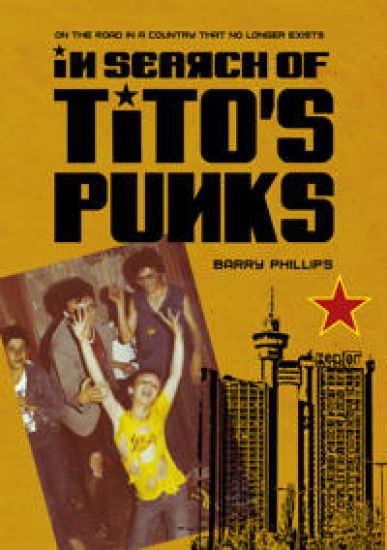
The book traces the story of how a song recorded in 1981 by a young punk rock band from a cultural backwater on the English-Welsh border, and released on a tiny independent record label, became famous in a Yugoslavia formed in the image of Marshall Tito? Why was it 30 years before the members of the band found out? How did this ‘socialist’ country have one of the most vibrant punk scenes in the world? Gloucester, England, 1981; multi-racial, teenage street-punk band, Demob, recorded and released what would become their best known and most enduring song, No Room For You. A rasping vocal told the story of the 1979 closure of a short-lived, punk rock venue at a disused motel on the edge of the provincial city. Depending on your mind-set, the lyrics were either a howl of rage at the injustice, a wail at the loss, or a love-song to an era. More than three decades later, the author – and Demob’s bass player in 1981 – set out to follow the song across a country that no longer exists. On the road he heard the life stories of the heroes of Yugoslavian punk and the punks themselves; from the Tito era, through the disintegration and wars, forced displacements and permanent exiles, to today’s turbulent ‘reconstruction. Who were ’Tito’s punks’ and who are they now? An unvarnished but also affectionate portrait of Yugoslavia in the years before its demise through to the present, seen through the unlikely lens of punk and punk rockers. Part travelogue, part history the book is both, and neither, of those things. Rather, it is a mural and soundtrack of a journey through a time and place which no longer exists. The latest addition to the Global Punk series from Intellect.
Josip Broz Tito
VDM Publishing House
2010
nidottu
Observera att förlaget som ger ut denna produkt baserar innehållet i sina produkter på fria källor som Wikipedia. Boken är med stor sannolikhet endast ett utdrag ur dessa informationskällor, alltså inte en vanlig bok i den bemärkelsen.
Ally Betrayed: The Uncensored Story of Tito and Mihailovich
David Martin; Rebecca West
Literary Licensing, LLC
2012
sidottu
Ally Betrayed: The Uncensored Story Of Tito And Mihailovich is a non-fiction book written by David Martin. The book provides a detailed account of the relationship between Josip Broz Tito and Draza Mihailovich during World War II. The author argues that Tito, who was the leader of the Yugoslav Partisans, betrayed Mihailovich, who was the leader of the Chetniks, by cooperating with the Germans and the Italians. The book is based on extensive research and interviews with surviving members of the Yugoslav Partisans and the Chetniks. It also includes previously unpublished documents and photographs. The book sheds light on a little-known aspect of World War II history and offers a fresh perspective on the conflict in Yugoslavia. Overall, Ally Betrayed is a compelling and thought-provoking read for anyone interested in the history of World War II or the Balkans.This scarce antiquarian book is a facsimile reprint of the old original and may contain some imperfections such as library marks and notations. Because we believe this work is culturally important, we have made it available as part of our commitment for protecting, preserving, and promoting the world's literature in affordable, high quality, modern editions, that are true to their original work.
Ally Betrayed: The Uncensored Story of Tito and Mihailovich
David Martin; Rebecca West
Literary Licensing, LLC
2012
nidottu

Discorsi sopra la prima Deca di Tito Livio
Niccolo Machiavelli
Createspace Independent Publishing Platform
2012
nidottu
Discorsi sopra la prima Deca di Tito Livio
Niccolo Machiavelli
Createspace Independent Publishing Platform
2015
nidottu
"Discorsi sopra la prima Deca di Tito Livio" from Niccol Machiavelli. Storico, scrittore, drammaturgo, politico e filosofo italiano (1469-1527).
Discursos sobre la primera década de Tito Livio
Nicolás Maquiavelo
Createspace Independent Publishing Platform
2017
nidottu
Los Discursos intentan explicar la estructura y los beneficios del gobierno republicano, una forma de gobierno fundada en el consenso y control popular. Dedic este trabajo a Zanobi Buondelmonti y Cosimo Rucellai, dos de los mejores exponentes del Orti Oricellari o Academia plat nica de Florencia, donde ense aban a arist cratas j venes a discutir sobre pol tica, arte y literatura. Maquiavelo comenz a escribir la obra en 1512 durante su retiro en Sant'Andrea in Percussina; all complet el primer libro, pero se detuvo ese mismo a o para escribir El Principe, seguramente con la esperanza de que Lorenzo II de M dici, a quien est dedicado ese op culo, lo sacara de su situaci n de arresto. Despu s retom y termin los Discursos en 1517 y se publicaron p stumamente en 1531.
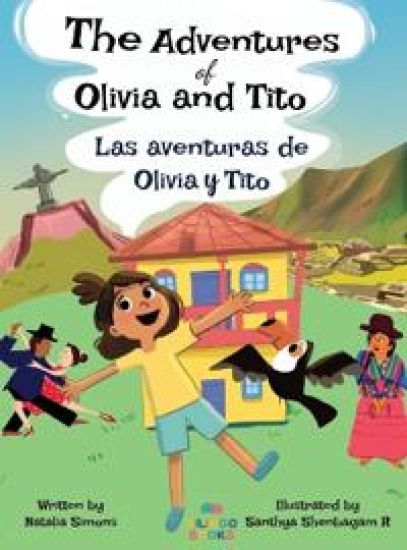
The Adventures of Olivia and Tito / Las aventuras de Olivia y Tito
Natalia Simons
Bilingo Books
2024
sidottu
Join Olivia and her pet toucan, Tito, on a thrilling quest through South America. As they search for their hometown, they encounter new cultures and beautiful landscapes. They explore bustling streets in Brazil, dance the tango in Argentina, witness the mystical landscapes of Bolivia, and discover Peru's ancient wonders. Along the way, they make new friends and learn all about coffee at a coffee farm in Colombia. Will Olivia and Tito find their hometown? Find out in this heart-warming tale of resilience, friendship, and the power of never giving up. Through colourful illustrations and engaging storytelling, readers will develop their curiosity, sense of adventure, and appreciation for cultures around the world. nete a Olivia y a Tito, su tuc n mascota, en una emocionante b squeda a trav s de Am rica del Sur. Mientras buscan su ciudad natal, encuentran nuevas culturas y hermosos paisajes. Exploran las bulliciosas calles de Brasil, bailan el tango en Argentina, son testigos de los paisajes m sticos de Bolivia y descubren las antiguas maravillas del Per . En el camino, hacen nuevos amigos y aprenden todo sobre el caf en una finca de caf en Colombia. Encontrar n Olivia y Tito su ciudad natal? Desc brelo en esta historia conmovedora de resistencia, amistad y el poder de nunca rendirse. A trav s de ilustraciones coloridas y narraciones atractivas, los lectores desarrollar n su curiosidad, el sentido de aventura y el aprecio por las culturas del mundo.
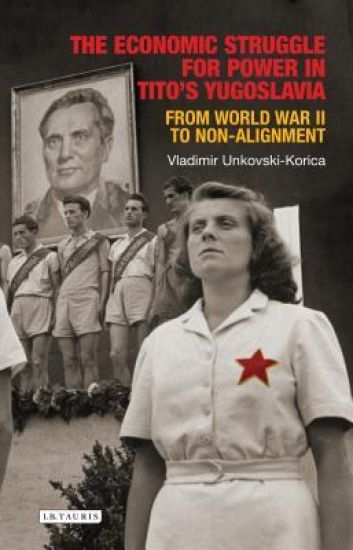
The Economic Struggle for Power in Tito’s Yugoslavia
Unkovski-Korica Vladimir
I.B. Tauris
2016
sidottu
Here, Vladimir Unkovski-Korica re-assesses the key episodes of Tito's rule - from the joint Stalin-Tito offensive of 1944, through to the Tito-Stalin split of 1948, the market reforms of the 1950s and the 'turn to the West' which led to Yugoslavia's non-alignment policy. For the first time, Unkovski-Korica also outlines Tito's internal battle with the Workers' Councils - empowered union bodies which emerged with the 'withering away of the party' in the early 1950s.The Economic Struggle for Power in Tito's Yugoslavia draws out the impact of the period economically and politically, and its long-term effects. A comprehensive history based on new archival research, this book will appeal to scholars and students of European Studies, International Relations and Politics, as well as to historians of the Balkans.
US-Yugoslav Relations during the Tito-Stalin Split and the "Informbiro Period". Do Democracies Promote Authoritarianism?
Aleksandar Ljubomirovic
GRIN Verlag
2023
nidottu
Mozart's 'La clemenza di Tito'
Stockholm University Press
2018
pokkari
"The essays in this book contribute ideas, facts and images that will draw the twenty-first-century reader closer to the events of Central Europe in the late eighteenth century, and these new facts and ideas will help peel off some of the transmitted accretions that may hinder a modern listener from enjoying and understanding the opera in all its fullness. In this sense the essays present the reappraisal promised in the title. Praise for Mozart’s La clemenza di Tito: A Reappraisal “[The monograph] supplies a wealth of information and thoughts about this opera, which has seldom been treated in such detail. It is a very welcome complement to John A. Rice’s 1991 monograph and to Emanuele Senici’s 1997 dissertation on the reception of La clemenza di Tito.” (Lorenzo Bianconi, Università di Bologna) "

Relazione Del Direttore Prof. Tito Poggi Alla Commissione Di Vigilanza Anno Ii. - 1900
Verona Cattedra Ambulant Agricoltura
Hutson Street Press
2025
sidottu

Relazione Del Direttore Prof. Tito Poggi Alla Commissione Di Vigilanza Anno Ii. - 1900
Verona Cattedra Ambulant Agricoltura
Hutson Street Press
2025
pokkari
Theological Anthropology in Mozart’s La clemenza di Tito
Steffen Lösel
TAYLOR FRANCIS LTD
2022
sidottu
This book asks what theological messages theologically educated Catholics in late-eighteenth-century Prague might have perceived in Mozart’s late opera seria La clemenza di Tito. The book’s thesis is two-fold: first, that Catholics might have heard the opera’s advocacy of enlightened absolutism as a celebration of a distinctly Catholic understanding of political governance; and second, that they might have found in the opera a metaphor for the relationship between a gracious God and humanity caught up in sin, expressed as sexual concupiscence, pride, and lust for power. The book develops its interpretation of the opera through narrative character analyses of the main protagonists, an examination of their dramatic development, and by paying attention to the biblical and theological associations they may have evoked in a Catholic audience. The book is geared towards academic readers interested in opera, theologians, historians, and those who work at the intersection of theology and the arts. It contributes to a better understanding of the theological implications of Mozart’s operatic work.