Kirjojen hintavertailu. Mukana 12 017 308 kirjaa ja 12 kauppaa.

Kirjahaku

Etsi kirjoja tekijän nimen, kirjan nimen tai ISBN:n perusteella.

1000 tulosta hakusanalla Virginia Woolf

Virginia Woolf and the Bloomsbury Avant-garde

Virginia Woolf and the Bloomsbury Avant-garde

Christine Froula

Columbia University Press
2007
pokkari
Virginia Woolf and the Bloomsbury Avant-Garde traces the dynamic emergence of Woolf's art and thought against Bloomsbury's public thinking about Europe's future in a period marked by two world wars and rising threats of totalitarianism. Educated informally in her father's library and in Bloomsbury's London extension of Cambridge, Virginia Woolf came of age in the prewar decades, when progressive political and social movements gave hope that Europe "might really be on the brink of becoming civilized," as Leonard Woolf put it. For pacifist Bloomsbury, heir to Europe's unfinished Enlightenment project of human rights, democratic self-governance, and world peace-and, in E. M. Forster's words, "the only genuine movement in English civilization"- the 1914 "civil war" exposed barbarities within Europe: belligerent nationalisms, rapacious racialized economic imperialism, oppressive class and sex/gender systems, a tragic and unnecessary war that mobilized sixty-five million and left thirty-seven million casualties. An avant-garde in the twentieth-century struggle against the violence within European civilization, Bloomsbury and Woolf contributed richly to interwar debates on Europe's future at a moment when democracy's triumph over fascism and communism was by no means assured. Woolf honed her public voice in dialogue with contemporaries in and beyond Bloomsbury- John Maynard Keynes and Roger Fry to Sigmund Freud (published by the Woolfs'Hogarth Press), Bertrand Russell, T. S. Eliot, E. M. Forster, Katherine Mansfield, and many others-and her works embody and illuminate the convergence of aesthetics and politics in post-Enlightenment thought. An ambitious history of her writings in relation to important currents in British intellectual life in the first half of the twentieth century, this book explores Virginia Woolf's narrative journey from her first novel, The Voyage Out, through her last, Between the Acts.
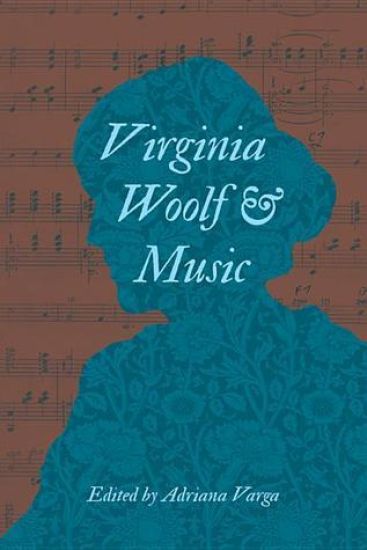
Virginia Woolf and Music

Virginia Woolf and Music

Adriana L. Varga

Indiana University Press
2014
sidottu
These essays explore music and its relationship to language, aesthetics, and culture in the life and work of the preeminent Modernist writer Virginia Woolf (Mrs. Dalloway, To the Lighthouse, Orlando, A Room of One's Own, and other works). Approaching Woolf from musicology, literary criticism, and gender studies, the collection examines her musical background; music in her fiction and critical writings; and the importance of music in the Bloomsbury milieu and its role within the larger framework of Modernism. Making use of Woolf's diaries, letters, fiction, and the testimony of her contemporaries, these essays illuminate the rich and deeply musical nature of Woolf's works.
Virginia Woolf and Music

Virginia Woolf and Music

Adriana L. Varga

Indiana University Press
2014
pokkari
These essays explore music and its relationship to language, aesthetics, and culture in the life and work of the preeminent Modernist writer Virginia Woolf (Mrs. Dalloway, To the Lighthouse, Orlando, A Room of One's Own, and other works). Approaching Woolf from musicology, literary criticism, and gender studies, the collection examines her musical background; music in her fiction and critical writings; and the importance of music in the Bloomsbury milieu and its role within the larger framework of Modernism. Making use of Woolf's diaries, letters, fiction, and the testimony of her contemporaries, these essays illuminate the rich and deeply musical nature of Woolf's works.
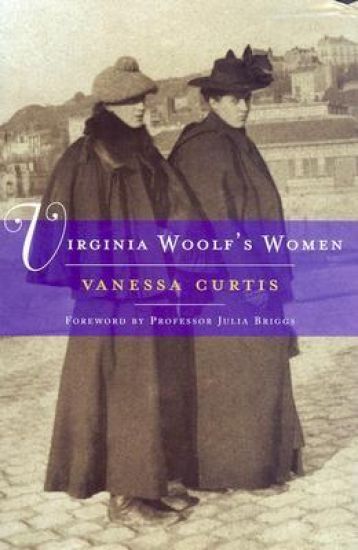
Virginia Woolf's Women

Virginia Woolf's Women

Vanessa Curtis

University of Wisconsin Press
2002
sidottu
This is the first biography to concentrate exclusively on Woolf's close and inspirational friendships with the key women in her life, including the caregivers of her Victorian childhood who instilled in her a lifelong battle between creativity and convention: her taciturn sister, Vanessa Bell; enigmatic artist Dora Carrington; complex writer Katherine Mansfield; aristocratic novelist Vita Sackville-West; and riotous, militant composer Ethel Smyth.
Virginia Woolf: Dramatic Novelist

Virginia Woolf: Dramatic Novelist

J. Wheare

Palgrave Macmillan
1989
sidottu
Jane Wheare concerns herself with Virginia Woolf's artistry in "The Voyage Out", "Night and Day" and "The Years", where Woolf exploited and developed the "realist" model, finding in it the most appropriate vehicle through which to put across obliquely her own ideas about women and society.
Virginia Woolf: The Frames of Art and Life

Virginia Woolf: The Frames of Art and Life

C. Ruth Miller

Palgrave Macmillan
1988
sidottu
An attempt to illuminate Virginia Woolf's aesthetic by providing an original thoery regarding her use of the random frames provided by life. Her novels are shown to use windows, thresholds, mirrors and, less directly, rooms to frame scenes which chart the border between life and art.
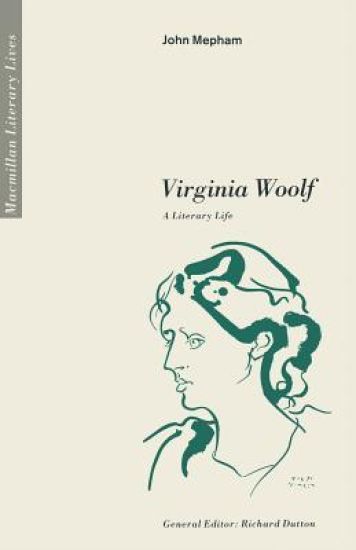
Virginia Woolf A Literary Life

Virginia Woolf A Literary Life

Mepham J.

Palgrave Macmillan
1991
nidottu
This book tells the story of Virginia Woolf's literary career. It emphasises the importance of her ownership of the Hogarth Press, whereby she gained the freedom to write as she pleased. This made possible a career of extraordinary formal innovations. Each of her books was unlike every other. Her career was a series of different choices, statements and masks. This book attempts to discover why, at each point in her career, she chose to write as she did.
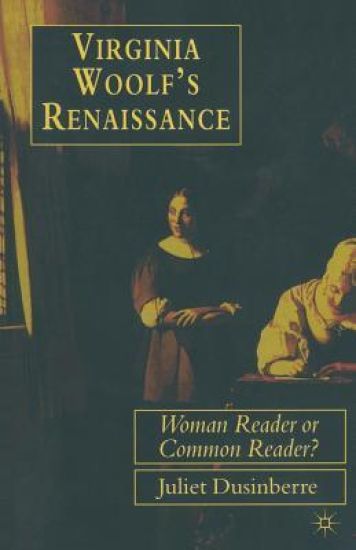
Virginia Woolf's Renaissance

Virginia Woolf's Renaissance

Juliet Dusinberre

Palgrave Macmillan
1997
nidottu
Dusinberre's book explores Woolf's search, in The Common Reader and other non-fictional writings, for an alternative literary tradition for women. Of equal interest to students of Virginia Woolf and of sixteenth- and seventeenth-century writing, it discusses Montaigne, Donne, Sir John Harington, Dorothy Osborne, Madame de Sevigne, Pepys and Bunyan, together with forms of writing, such as essays, letters and diaries, traditionally associated with women. Questions about printing, the body and the relation between amateurs and professionals create fascinating connections between the early modern period and Virginia Woolf.
Virginia Woolf: The Novels

Virginia Woolf: The Novels

Nicholas Marsh

Red Globe Press
1998
nidottu
At the beginning of this century, Virginia Woolf reacted against literary tradition, sought a new definition of fiction, applied her modern, post-freudian outlook and radically feminist ideas to the problem of writing novels and, in so doing, re-defined our concept of this literary form. The results can be seen in Mrs Dalloway, To The Lighthouse and The Waves, three novels of a flowing, impressionistic texture that are, at the same time, highly structured. Through detailed analysis of selected extracts from the novels, the reader is taught to explore the delicate and yet rich writing Woolf achieved and to inquire into the significance of her ironies and symbolic structures. This guide does not sidestep the complexity of her works, but challenges the reader to confront, examine and enjoy it.
Virginia Woolf's Essays

Virginia Woolf's Essays

E. Gualtieri

Palgrave Macmillan
2000
sidottu
Although marginal and often neglected genres, the sketch and the essay represented for Virginia Woolf the two forms of writing through which she articulated her understanding of the workings of literary history. In this innovative study, Elena Gualtieri analyses in detail the intersection between essays and sketches in Woolf's non-fiction as part of a far-reaching argument about the scopes and models of feminist criticism, its understanding of the historical process and its position in the panorama of twentieth-century intellectual history.
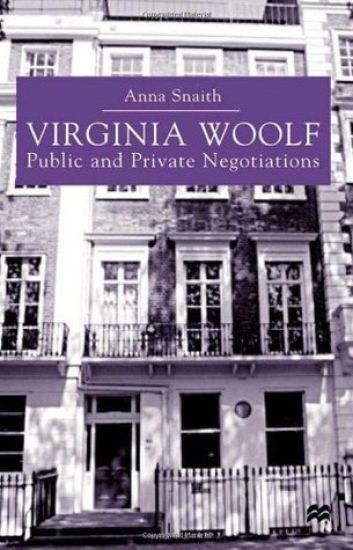
Virginia Woolf: Public and Private Negotiations
In Virginia Woolf: Public and Private Negotiations , Anna Snaith explores the centrality of ideas of public and private in Woolf's life and writing. The book offers a fresh understanding of Woolf's feminism, her narrative techniques, her attitudes to publication, and her role in public debate. It draws on new manuscript material and previously unexplored letters to Woolf from her reading public.
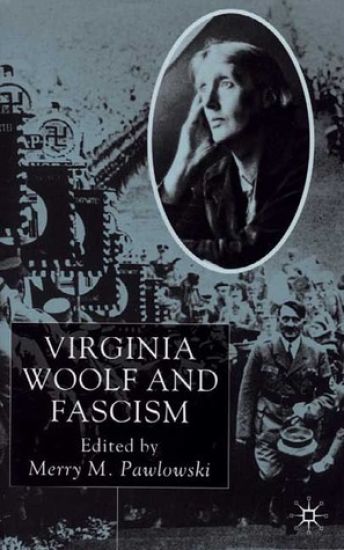
Virginia Woolf and Fascism

Virginia Woolf and Fascism

Merry Pawlowski

Palgrave Macmillan
2001
sidottu
This unique collection of essays, edited by leading Woolf scholar, brings together for the first time a serious consideration of Virginia Woolf's writing within the political context of fascism. Virginia Woolf and Fascism probes Woolf's fiction and non-fiction from Mrs. Dalloway in 1927 to Between the Acts , 1941, for her responses not only to the growing menaces of dictators abroad, but also to mounting evidence of fascist ideology at home in England. The essays present a portrait of Woolf as a woman writer who was politically engaged, and actively protesting against a worldview which aggressively targeted women for oppression.
Virginia Woolf’s Unwritten Histories
Virginia Woolf’s Unwritten Histories explores the interrelatedness of Woolf’s modernism, feminism and her understanding of history as a site of knowledge and a writing practice that enabled her to negotiate her heritage, to find her place among the moderns as a female artist and intellectual, and to elaborate her poetics of the "new": not as radical rupture but as the result of a process of unwriting and rewriting "traditional" historiographical orthodoxies. Its central argument is that unless we comprehend the genealogy of Woolf’s historical thought and the complexity of its lineage, we cannot fully grasp the innovative thrust of her attempt to "think back through our mothers." Bringing together canonical texts such as Orlando (1928), A Room of One’s Own (1929), Three Guineas (1938) or Between the Acts (1941) and under-researched ones — among which stand Woolf’s essays on historians and reviews of history books and her pieces on literary history and nineteenth-century women’s literature — this book argues that Woolf’s textual "conversations" with nineteenth-century writers, historians and critics, many of which remain unexplored, are interwoven with her historiographical poiesis and constitute the groundwork for her alternative histories and literary histories: "unwritten," open-textured, unacademic and polemical counter-narratives that keep track of the past and engage politically with the future.
Virginia Woolf’s Afterlives

Virginia Woolf’s Afterlives

Monica Latham

Routledge
2021
sidottu
This book explores Virginia Woolf’s afterlives in contemporary biographical novels and drama. It offers an extensive analysis of a wide array of literary productions in which Virginia Woolf appears as a fictional character or a dramatis persona. It examines how Woolf’s physical and psychological features, as well as the values she stood for, are magnified, reinforced or distorted to serve the authors’ specific agendas. Beyond general theoretical issues about this flourishing genre, this study raises specific questions about the literary and cultural relevance of Woolf’s fictional representations. These contemporary narratives inform us about Woolf’s iconicity, but they also mirror our current literary, cultural and political concerns. Based on a close examination of twenty-five works published between 1972 and 2019, the book surveys various portraits of Woolf as a feminist, pacifist, troubled genius, gifted innovative writer, treacherous, competitive sister and tragic, suicidal character, or, on the contrary, as a caricatural comic spirit, inspirational figure and perspicacious amateur sleuth. By resurrecting Virginia Woolf in contemporary biofiction, whether to enhance or debunk stereotypes about the historical figure, the authors studied here contribute to her continuous reinvention. Their diverse fictional portraits constitute a way to reinforce Woolf’s literary status, re-evaluate her work, rejuvenate critical interpretations and augment her cultural capital in the twenty-first century
Virginia Woolf’s Afterlives

Virginia Woolf’s Afterlives

Monica Latham

TAYLOR FRANCIS LTD
2023
nidottu
This book explores Virginia Woolf’s afterlives in contemporary biographical novels and drama. It offers an extensive analysis of a wide array of literary productions in which Virginia Woolf appears as a fictional character or a dramatis persona. It examines how Woolf’s physical and psychological features, as well as the values she stood for, are magnified, reinforced or distorted to serve the authors’ specific agendas. Beyond general theoretical issues about this flourishing genre, this study raises specific questions about the literary and cultural relevance of Woolf’s fictional representations. These contemporary narratives inform us about Woolf’s iconicity, but they also mirror our current literary, cultural and political concerns. Based on a close examination of twenty-five works published between 1972 and 2019, the book surveys various portraits of Woolf as a feminist, pacifist, troubled genius, gifted innovative writer, treacherous, competitive sister and tragic, suicidal character, or, on the contrary, as a caricatural comic spirit, inspirational figure and perspicacious amateur sleuth. By resurrecting Virginia Woolf in contemporary biofiction, whether to enhance or debunk stereotypes about the historical figure, the authors studied here contribute to her continuous reinvention. Their diverse fictional portraits constitute a way to reinforce Woolf’s literary status, re-evaluate her work, rejuvenate critical interpretations and augment her cultural capital in the twenty-first century
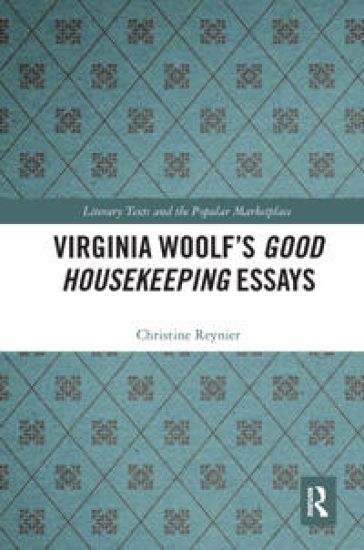
Virginia Woolf’s Good Housekeeping Essays
In the mid-twentieth century, Virginia Woolf published ‘Six Articles on London Life’ in Good Housekeeping magazine, a popular magazine where fashion, cookery and house decoration is largely featured. This first book-length study of what Woolf calls ‘little articles’ proposes to reassess the commissioned essays and read them in a chronological sequence in their original context as well as in the larger context of Woolf’s work. Drawing primarily on literary theory, intermedial studies, periodical studies and philosophy, this volume argues the essays which provided an original guided tour of London are creative and innovative works, combining several art forms while developing a photographic method. Further investigation examines the construct of Woolf’s essays as intermedial and as partaking both of theory and praxis; intermediality is closely connected here with her defense of a democratic ideal, itself grounded in a dialogue with her forebears. Far from being second-rate, the Good Housekeeping essays bring together aesthetic and political concerns and come out as playing a pivotal role: they redefine the essay as intermedial, signal Woolf’s turn to a more openly committed form of writing, and fit perfectly within Woolf’s essayistic and fictional oeuvre which they in turn illuminate.