Kirjojen hintavertailu. Mukana 11 342 296 kirjaa ja 12 kauppaa.

Kirjahaku

Etsi kirjoja tekijän nimen, kirjan nimen tai ISBN:n perusteella.

1000 tulosta hakusanalla Wauter Mannaert

Water Knife

Water Knife

Paolo Bacigalupi

Little Brown
2016
pokkari
From the international bestselling author of the Hugo and Nebula award-winning The Windup Girl, comes an electrifying thriller set in a world on the edge of collapse
Water Mirror Echo

Water Mirror Echo

Jeff Chang

HARPERCOLLINS PUBLISHERS INC
2025
sidottu
"Water Mirror Echo is a remarkable story of a man, the traditions and communities that created him, and the new worlds he made possible. Like Bruce Lee himself, Jeff Chang is blessed with the vision to see things we do not yet see, thinking and writing with a restless, chasm-crossing, almost prophetic ambition." — Hua Hsu, Pulitzer Prize-winning author of Stay True: A Memoir"This book is as celebratory as it is incisive, as it is, at times, heartbreaking. A massive achievement." — Hanif Abdurraqib, National Book Award-winning author of There’s Always This Year and A Little Devil in AmericaA cultural biography, both sweeping and intimate, of the legend Bruce Lee, set against the extraordinary, untold story of the rise of Asian America—from the author of the award-winning classic Can’t Stop Won’t Stop and one of the finest culture observers of our era.More than a half-century after his passing, Bruce Lee is as towering a figure to people around the world as ever. On his path to becoming a global icon, he popularized martial arts in the West, became a bridge to people and cultures from the East, and just as he was set to conquer Hollywood once and for all, he died of cerebral edema at age thirty-two. It’s no wonder that Bruce Lee’s legend has only bloomed in the decades since. Yet, in so many ways, the legend has eclipsed the man.Forgotten is the stark reality of the baby boy born in segregated San Francisco, who spent his youth in war-ravaged, fight-crazy Hong Kong. Forgotten is the curious teenager who found his way back to America, where he embraced West Coast counterculture and meshed it with the Asian worldviews and philosophies that reared him. Forgotten is the man whose very presence broke barriers and helped shape the idea of what being an Asian in America is, at the very dawn of Asian America.Water Mirror Echo—a title inspired by Bruce Lee’s own way of moving, being and responding to the world—is a page-turning and powerful reminder. At the helm is Jeff Chang, the award-winning author of Can’t Stop Won’t Stop, whose writing on culture, politics, the arts and music have made him one of the most acclaimed and distinctive voices of our time. In his hands, Bruce Lee’s story brims with authenticity.Now, based on in-depth interviews with Lee’s closest intimates, thousands of newly available personal documents, and featuring dozens of gorgeous photographs from the family’s archive, Chang achieves the nearly impossible. He reveals the man behind the enduring iconography and stirringly shows Lee’s growing fame ushering in something that’s turned out to be even more enduring: the creation of Asian America.
Water-Well Drilling Operations - (NTRP 4-04.2.13), (FM 3-34.469), (AFMAN 32-1072)
This publication provides general information for engineer personnel responsible for planning, designing, and drilling wells, focuses on techniques and procedures for installing wells, and includes expedient methods for digging shallow water wells, such as hand-dug wells. Summary. Military personnel assigned to well drilling teams must have a basic understanding of groundwater principles and well drilling mechanics and hydraulics to successfully install wells. A well driller enhances his skills primarily from experience in solving problems, overcoming obstacles in the field, and learning from failures. This publication reviews common experiences well drillers encounter in the field, including well installation and completion
Water Reuse Policies for Potable Use
As water demand has increased globally and resources have become more limited because of physical scarcity, over-exploitation and pollution, it has been necessary to develop more options for water supplies. These options include the production at large scale of high-quality reused water from municipal sources for potable uses. Their economic, social and environmental benefits have been many as they have addressed supply scarcity, efficient resource use and environmental and public health considerations.This book includes discussions on potable water reuse history; emerging contaminants and public health; public-private partnerships in the water reuse sector; regulatory frameworks for reused water in the United States and Europe; experiences in Australia, China in general and Beijing in particular, Singapore and Windhoek; narratives and public acceptance and perceptions of alternative water sources.The main constraints on implementation of water reuse projects in different parts of the world seem to have been lack of full public support due to perceived health hazards and environmental impacts. A main handicap has been that governments and water utilities have been slow to understand public concerns and perceptions. After several backlashes, public information, communication and awareness campaigns, broader participation and educational programmes have become integral parts of development policy and decision-making frameworks.
Water Resources and Economic Processes
Water exploitation has increased notably in the world during the last 250 years since the onset of industrialisation. The relationships between economic processes and water use are complex and include many interwoven drivers such as: technological development, dietary choices and food production, climate change, demographic change, and policy reforms, among others. Ensuring food, water, and energy for the growing population remains a common global challenge.Taking on a multi- and inter-disciplinary viewpoint, Water Resources and Economic Processes offers an up-to-date collection of contributions from leading scholars and works to gather research on important aspects of relevant fields and methodologies, including: Historical and long-term overview of the relations between income growth, water use, and technological development;Water markets and collaborative actions’ promise and threats in the fight against water stress;Impact of climate change on water productivity, including inter- and intra-annual variations;Urban reforms and surveys on the attitude of citizens towards private and public mitigation and preservation measures;Regional, national, and global comparative case-studies;International trade, migration, conf licts, and the globalisation of water;Methodological and empirical challenges of building future scenarios.This book is a key reference text for those studying water governance and management. It is suited to PhD students, national institutions, and NGO, as well as other professionals interested in understanding sustainable water use at the local, national, and international scales.
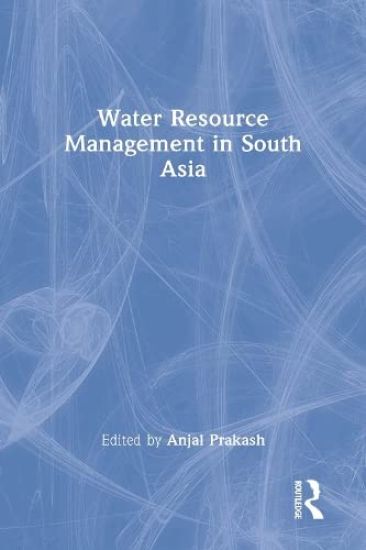
Water Resource Management in South Asia
This cluster of four books presents innovative and nuanced knowledge on water resources, based on detailed case studies from South Asia—India, Bangladesh, Bhutan, Nepal, Pakistan, and Sri Lanka. In providing comprehensive analyses of the existing economic, demographic and ideological contexts in which water policies are framed and implemented, the volumes argue for alternative, informed and integrated approaches towards efficient management and equitable distribution of water. These also explore the globalization of water governance in the region, particularly in relation to new paradigms of neoliberalism, civil society participation, integrated water resource management (IWRM), public–private partnerships, privatization, and gender mainstreaming.These volumes will be indispensable for scholars and students of development studies, environmental studies, natural resource management, governance and public administration, particularly those working on water resources in South Asia. They will also be useful for policymakers and governmental and non-governmental organizations.
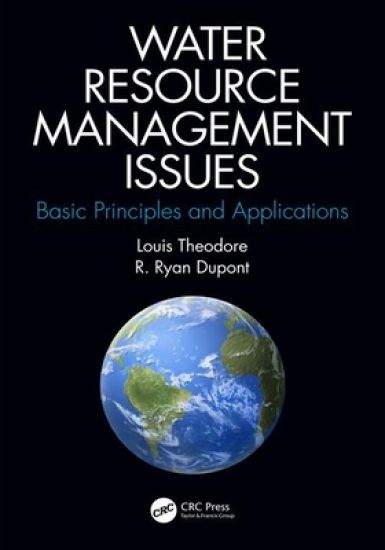
Water Resource Management Issues

Water Resource Management Issues

Louis Theodore; R. Ryan Dupont

CRC Press
2019
sidottu
Drinking Water Safety: Basic Principles and Applications, examines the technical and scientific, as well as regulatory, ethical, and emerging issues of pollution prevention, sustainability, and optimization for the production and management of safe drinking water to cope with environmental pollution, population growth, increasing demand, terrorist threats, and climate change pressures. It presents a summary of conventional water and wastewater treatment technologies, in addition to the latest processes.Features include: Provides a summary of current and future of global water resources and availability. Summarizes key U.S. regulatory programs designed to ensure protection of water quality and safe drinking water supplies, with details on modern approaches for water utility resilience. Examines the latest water treatment technologies and processes, including separate chapters on evaporation, crystallization, nanotechnology, membrane-based processes, and innovative desalination approaches. Reviews the specialized literature on pollution prevention, sustainability, and the role of optimization in water treatment and related areas, as well as references for further reading. Provides illustrative examples and case studies that complement the text throughout, as well as an appendix with sections on units and conversion constants.
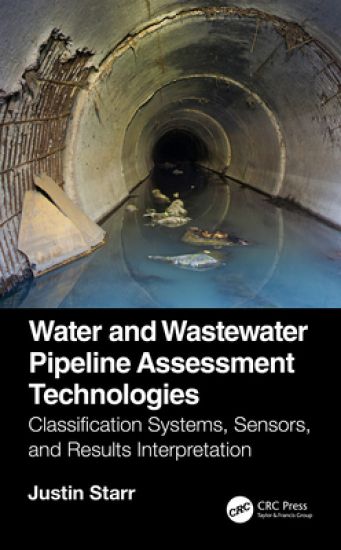
Water and Wastewater Pipeline Assessment Technologies
Water and wastewater infrastructure are a somewhat invisible, yet critical, part of modern life. Incredibly, many buried assets have been in service for 50-100 years and are still in good condition. Conversely, other systems fail well before their predicted design lives, causing property damage, injury, and even loss of life. In many cases, early detection could have prevented catastrophic failure, and understanding the state of underground infrastructure has become a key priority for many municipalities. Industry has responded with a number of new and innovative technologies for condition assessment, however, understanding these tools can be difficult, as many vendors treat their proprietary systems as trade secrets. Water and Wastewater Pipeline Assessment Technologies: Classification Systems, Sensors, and Results Interpretation provides a thorough guide to the technical workings of some of the most popular water and wastewater assessment technologies available, including CCTV crawlers, acoustic listening devices, laser sensors, 360° video cameras, pipe penetrating radar, and more. Features: Presents an overview of current technologies in CCTV inspection, including next generation video formats, high-definition resolution, and fisheye/sidescan technology. Provides helpful tips and tricks to cut through technical jargon and identify the technological specifications to compare between multiple vendors. Examines the pros and cons of competing technologies including laser and lidar, and provides an overview of unique approaches such as Pipe Penetrating Radar, Focused Electrode Leak Location, and more. Highlights the importance of coding standards, data management, and software tools that can be leveraged to create a successful asset management program.Water and Wastewater Pipeline Assessment Technologies: Classification Systems, Sensors, and Results Interpretation provides a mixture of theory and real-world, practical considerations ranging from deployment tips and data exchange formats to the technical limitations of different technologies. The book is a valuable resource for municipal employees, project engineers, and others involved in designing and implementing major inspection programs.
Walter Hawkesworth's Labyrinthus

Walter Hawkesworth's Labyrinthus

Walter Hawkesworth

Routledge
2019
sidottu
Originally compiled and published in 1988, this vole contains the full text and translation of Walter Hawkesworth's Labyrinthus, alongside textual and critical notes, including essays on the author, the staging and the style and language. This is the first of two volumes.
Walter Hawkesworth's Labyrinthus

Walter Hawkesworth's Labyrinthus

Walter Hawkesworth

Routledge
2020
nidottu
Originally compiled and published in 1988, this vole contains the full text and translation of Walter Hawkesworth's Labyrinthus, alongside textual and critical notes, including essays on the author, the staging and the style and language. This is the first of two volumes.
Walter Hawkesworth's Labyrinthus

Walter Hawkesworth's Labyrinthus

Walter Hawesworth

Routledge
2024
sidottu
Originally compiled and published in 1988, this vole contains the full text and translation of Walter Hawkesworth's Labyrinthus, alongside textual and critical notes, including essays on the author, the staging and the style and language. This is the second of two volumes.
Walter Hawkesworth's Labyrinthus

Walter Hawkesworth's Labyrinthus

Walter Hawesworth

Routledge
2021
nidottu
Originally compiled and published in 1988, this vole contains the full text and translation of Walter Hawkesworth's Labyrinthus, alongside textual and critical notes, including essays on the author, the staging and the style and language. This is the second of two volumes.
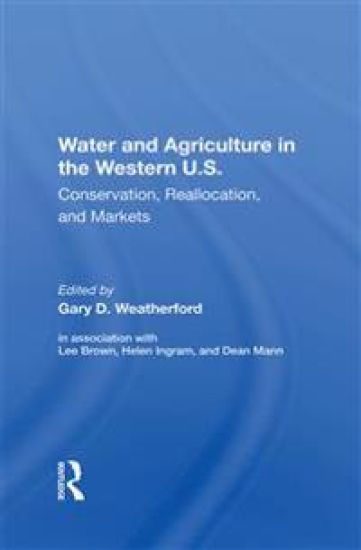
Water And Agriculture In The Western U.S.

Water And Agriculture In The Western U.S.

Gary Weatherford

TAYLOR FRANCIS LTD
2019
sidottu
One of the major questions facing the western U.S. is whether irrigation water can be conserved and reallocated to help meet increasing nonagricultural water demands. This book, based on interdisciplinary research in several states, identifies and analyzes the legal, political, economic, and social issues involved in a "conserve-and transfer" strategy. After providing an overview and policy framework for considering the role of conservation in water management, the authors use case studies to illustrate, for example, why water conservation is not a neutral policy or principle (demonstrating how other legitimate values can be adversely affected by a single-purpose pursuit of conservation); the various options available for conservation; how reallocation occurs in market transactions; and the legal restrictions on the sale of conserved surplus water.Although formal market mechanisms are found to be rudimentary or lacking in most areas of the West, the authors contend that more proficient markets will evolve to measure the economic value of agricultural water. They conclude that a "conserve-and-transfer" strategy is selectively workable through the use of incentives, but that a number of tradeoffs, social concerns, and institutional constraints, which have not been adequately recognized to date, will have to be dealt with by policymakers if the strategy is to have wider application.
Water For a Starving World

Water For a Starving World

Malin Falkenmark; Gunnar Lindh

Routledge
2019
sidottu
This book describes the role of water in development and illustrates water problems in different parts of the world with particular emphasis on the problems of the starving continents. It shows what tools will be needed and what can be done to bring the world's water under human control.
Water In A Developing World

Water In A Developing World

Albert Utton

Routledge
2019
sidottu
This book focuses on the questions of how best to manage water resources in the face of growing demand. It explores various water management problems encountered by developing countries, with an emphasis on institutional and human factors that affect economic growth.
Water Supply And Environmental Management
In the light of the need for decisionmakers in developing countries to adopt a systematic and rational approach to water supply planning, this book provides a comprehensive and balanced treatment of water policy analysis and planning in the context of environmentally sustainable development.
Water For a Starving World

Water For a Starving World

Malin Falkenmark; Gunnar Lindh

Routledge
2020
nidottu
This book describes the role of water in development and illustrates water problems in different parts of the world with particular emphasis on the problems of the starving continents. It shows what tools will be needed and what can be done to bring the world's water under human control.
Water In A Developing World

Water In A Developing World

Albert Utton

Routledge
2020
nidottu
This book focuses on the questions of how best to manage water resources in the face of growing demand. It explores various water management problems encountered by developing countries, with an emphasis on institutional and human factors that affect economic growth.