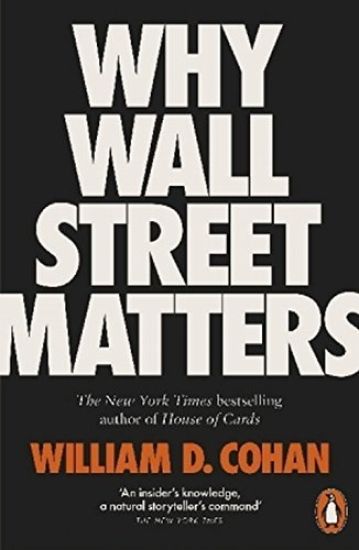
If you like your smartphone or your widescreen TV, your car or your pension, then, whether you know it or not, you are a fan of Wall Street.William D. Cohan, bestselling author of House of Cards, has long been critical of the bad behaviour that plagued much of Wall Street in the years leading up to the 2008 financial crisis, and, as an ex-banker, he is an expert on its inner workings as well. But in recent years he has become alarmed by the vitriol directed at the bankers, traders and executives who keep the wheels of our economy turning. Why Wall Street Matters is a timely and trenchant reminder of the dire consequences for us all if the essential role these institutions play in making our lives better is carelessly curtailed.
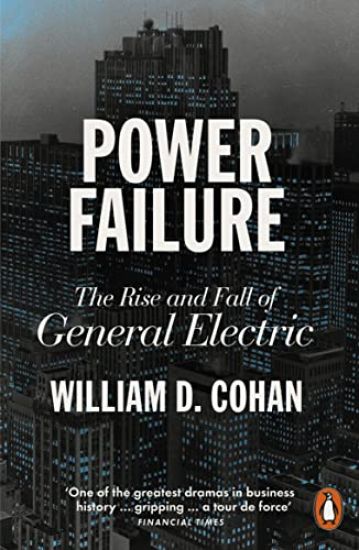
A magisterial history of the astounding rise - and unimaginable fall - of America's most iconic corporationPerhaps no company reflects American ingenuity, innovation, and industrial fortunes as well as the iconic General Electric Company. Producing storied leaders and almost every product imaginable, GE built a cult of success that hid cracks in its foundation. In this masterful history, William D. Cohan, one of America's most pre-eminent financial journalists, argues that GE's legacy is both a paragon and a cautionary tale through which to understand twentieth-century America.Power Failure limns the eventful 130-year history of GE, bringing fresh analysis drawn from rare interviews with key figures of the company's golden era, including Jack Welch himself. As Cohan recounts, Welch traded on a sterling legacy to make GE the most valuable and respected company in the world, while cloaking its vulnerabilities. What he handed to his successor Jeffrey Immelt was, Cohan argues, both an impossible standard and a more troubled reality.Tracing the company's leaps and stumbles through the personalities that defined it, Power Failure offers a surprising retelling of the GE story, puncturing the myth we think we know for a fresh look at its legacy - and what it tells us about the state of the financial world.
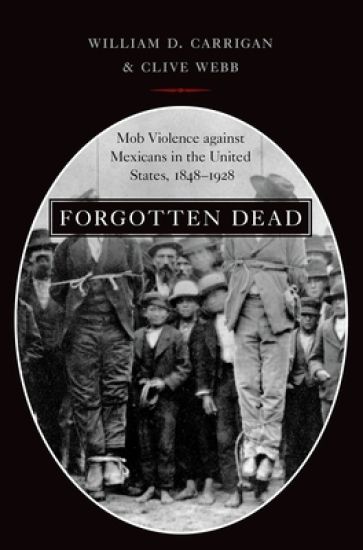
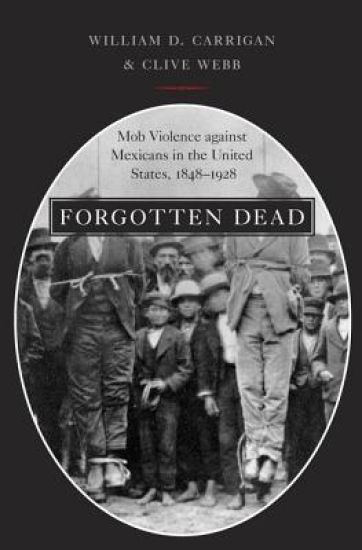
Mob violence in the United States is usually associated with the southern lynch mobs who terrorized African Americans during the Jim Crow era. In Forgotten Dead, William D. Carrigan and Clive Webb uncover a comparatively neglected chapter in the story of American racial violence, the lynching of persons of Mexican origin or descent. Over eight decades lynch mobs murdered hundreds of Mexicans, mostly in the American Southwest. Racial prejudice, a lack of respect for local courts, and economic competition all fueled the actions of the mob. Sometimes ordinary citizens committed these acts because of the alleged failure of the criminal justice system; other times the culprits were law enforcement officers themselves. Violence also occurred against the backdrop of continuing tensions along the border between the United States and Mexico aggravated by criminal raids, military escalation, and political revolution. Based on Spanish and English archival documents from both sides of the border, Forgotten Dead explores through detailed case studies the characteristics and causes of mob violence against Mexicans across time and place. It also relates the numerous acts of resistance by Mexicans, including armed self-defense, crusading journalism, and lobbying by diplomats who pressured the United States to honor its rhetorical commitment to democracy. Finally, it contains the first-ever inventory of Mexican victims of mob violence in the United States. Carrigan and Webb assess how Mexican lynching victims came in the minds of many Americans to be the "forgotten dead" and provide a timely account of Latinos' historical struggle for recognition of civil and human rights.
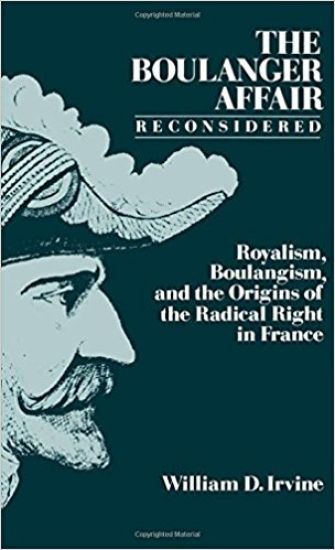
The most serious threat to the stability of France's Third Republic was General Boulanger's bid for power in 1888-89. Most recent scholarship of the Boulanger Affair has focused on the combination of socialism and national chauvinism in the movement supporting Boulanger's campaign, and has seen in this alliance the left-wing origins of twentieth-century fascism. William Irvine challenges that analysis, arguing that it was royalist and conservative support which provided the crucial financial and electoral backing to the Boulanger movement. This places the origins of the exploitation of mass politics by extreme rightists in France much earlier than had previously been supposed. Irvine's book is based on previously unused archive materials, including the private papers of the French royal family, which have only recently been made available to scholars.
Mob violence in the United States is usually associated with the southern lynch mobs who terrorized African Americans during the Jim Crow era. This book uncovers what is by contrast a neglected chapter in the story of American racial violence, the lynching of persons of Mexican origin or descent. Over eight decades lynch mobs murdered hundreds of Mexicans, mostly in the American Southwest. Racial prejudice, a lack of respect for local courts, and economic competition all fueled the actions of the mob. Sometimes it was ordinary citizens who committed these acts because of the alleged failure of the criminal justice system; other times the culprits were law enforcement officers themselves. Violence also occurred against the backdrop of continuing tensions along the border between the United States and Mexico aggravated by criminal raids, military escalation, and political revolution. Based on exhaustive research on both sides of the border, the first half of Forgotten Dead explores the characteristics and causes of mob violence against Mexicans across time and place. The second half of the book relates the numerous acts of resistance by Mexicans including armed self-defense, crusading journalism, and lobbying by diplomats who pressured the United States to honor its rhetorical commitment to democracy. In reconstructing these stories, the authors provide detailed case studies and assess how Mexican lynching victims came in the minds of many Americans to be the "forgotten dead." The conclusion of the book also contains the first-ever inventory of Mexican victims of mob violence in the United States. With Latinos having an increasingly powerful influence on American public life, this book provides a timely account of their historical struggle for recognition of civil and human rights.
The International Edition of Introduction to Optical Mineralogy provides comprehensive coverage of the optical properties of minerals. It describes in detail more than 125 common rock-forming minerals and a selection of ore minerals. Revised chapters on optical theory discuss the petrographic microscope, the nature and properties of light, the behaviour of light in isotropic and anisotropic materials, and uniaxial and biaxial anisotropic optics.
The fourth edition of Introduction to Mineralogy combines material now covered in both traditional and optical mineralogy courses and focuses on describing minerals within their geologic context. Introduction to Mineralogy is suitable as a primary or supporting text for mineralogy, optical mineralogy, petrology, earth materials, and/or economic geology courses. It presents the important content of mineralogy including crystallography, chemical bonding, controls on mineral structure, mineral stability, and crystal growth to provide a foundation that enables students to understand the nature and occurrence of minerals.
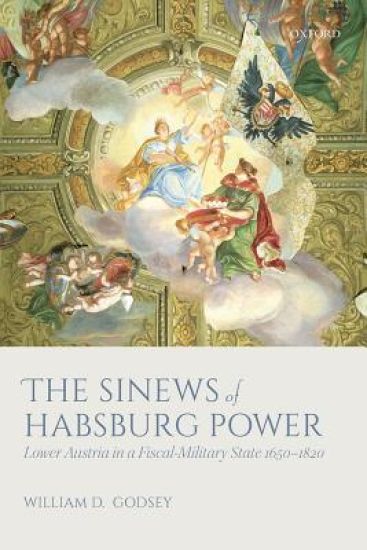
The Sinews of Habsburg Power explores the domestic foundations of the immense growth of central European Habsburg power from the rise of a permanent standing army after the Thirty Years' War to the end of the Napoleonic wars. With a force that grew irregularly in size from around 25,000 soldiers to as many as half a million in the War of the Sixth Coalition, the Habsburg monarchy participated in shifting international constellations of rivalry from western Europe to the Near East and in some two dozen, partly overlapping armed conflicts. Raising forces of such magnitude constituted a central task of Habsburg government, one that ultimately required the cooperation of society and its elites. The monarchy's composite-territorial structures in the guise of the Lower Austrian Estates -- a leading representative body and privileged corps -- formed a vital, if changing, element underlying Habsburg international success and resilience. With its capital at Vienna, the archduchy below the river Enns (the historic designation of Lower Austria) was geographically, politically, and financially a key Habsburg possession. Fiscal-military exigency induced the Estates to take part in new and evolving arrangements of power that served the purposes of government; in turn the Estates were able in previously little-understood ways and within narrowing boundaries to preserve vital interests in a changing world. The Estates survived because they were necessary, not only thanks to their increasing financial potency, but also because they offered a politically viable way of exacting ever-larger quantities of money, men, and other resources from local society. These circumstances would persist as ruling became more regularized, formalized, and homogenized, and as the very understanding of the Estates as a social and political phenomenon was evolving.
Is the United Kingdom capable of grand strategy? Common wisdom suggests otherwise. Some think it implausible amid the maelstrom of domestic politics, while others believe the UK lacks the necessary autonomy, as a cog in the US-led order. British Grand Strategy in the Age of American Hegemony challenges these claims. William D. James contends that grand strategy is an unavoidable part of governing. Grand strategy is the highest level of national security decision-making, encompassing judgements over a state's overarching objectives and interests, as well as its security environment and resource base. Getting these decisions 'right' is vital in moments of geopolitical flux. Employing several historical case studies between 1940-2003 and marshalling a host of primary sources, James argues that British politicians and officials have thought in grand strategic terms under American hegemony - even if they do not realise or admit to this. He also demonstrates that the role of allies in shaping British grand strategy has been overstated. Finally, James highlights the conditions under which domestic political actors can influence grand strategic decision-making. Written for practitioners as well as scholars, the book concludes with several policy recommendations at this inflection point in British history.
The second edition of Introduction to Mineralogy follows the highly successful first edition, which become an overnight market leader. Introduction to Mineralogy consolidates much of the material now covered in traditional mineralogy and optical mineralogy courses and focuses on describing minerals within their geologic context. It presents the important traditional content of mineralogy including crystallography, chemical bonding, controls on mineral structure, mineral stability, and crystal growth to provide a foundation that enables students to understand the nature and occurrence of minerals. Physical, optical, and X-ray powder diffraction techniques of mineral study are described in detail, and common chemical analytical methods are outlined as well. Detailed descriptions of over 100 common minerals are provided, and the geologic context within which these minerals occur is emphasized. Appendices provide tables and diagrams to help students with mineral identification, using both physical and optical properties. Numerous line drawings, photographs, and photomicrographs help make complex concepts understandable. Introduction to Mineralogy is available with Daniel Schulze's An Atlas of Minerals in Thin Section for a nominal additional fee.
William D. Cohan's Money and Power: How Goldman Sachs Came to Rule the World is a chronicle of the most successful, iconic bank on Wall Street, from the firm's founding in 1869 to the present day. Goldman Sachs are the investment bank all other banks - and most businesses - want to emulate; the firm with the best talent, the best clients, the best strategy. But is their success just down to the gilded magic of the 'Goldman way'? William D. Cohan has gained unprecedented access to Goldman's inner circle - both on and off the record. In an astonishing story of clashing egos, backstabbing, sex scandals, private investigators, court cases and government cabals, he reveals what really lies beneath their gold-plated image. 'The best analysis yet of Goldman's increasingly tangled web of conflicts' Economist 'Startling ... lifts the lid on Goldman's pivotal role in the meltdown' Mail on Sunday 'Cohan portrays a firm that has grown so large and hungry that it's no longer long-term greedy but short-term vicious. And that's the wonder - and horror - of Goldman Sachs' Businessweek 'Cohan's book tells of bitter power struggles and business cock-ups' Guardian 'A definitive account of the most profitable and influential investment bank of the modern era' The New York Times Book Review William D. Cohan was an award-winning investigative journalist before embarking on a seventeen-year career as an investment banker on Wall Street. His first book, The Last Tycoons, about Lazard, won the 2007 Financial Times/Goldman Sachs Business Book of the Year Award and was a New York Times bestseller. His second book, House of Cards, also a bestseller, is an account of the last days of Bear Stearns & Co.
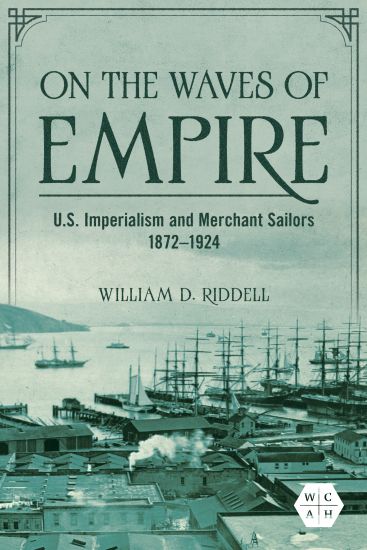
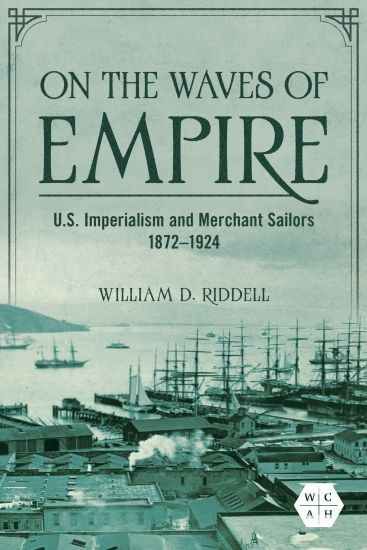
In the aftermath of the Spanish-American War, the United States’ acquisition of an overseas empire compelled the nation to reconsider the boundary between domestic and foreign--and between nation and empire. William D. Riddell looks at the experiences of merchant sailors and labor organizations to illuminate how domestic class conflict influenced America’s emerging imperial system. Maritime workers crossed ever-shifting boundaries that forced them to reckon with the collision of different labor systems and markets. Formed into labor organizations like the Sailor’s Union of the Pacific and the International Seaman’s Union of America, they contested the U.S.’s relationship to its empire while capitalists in the shipping industry sought to impose their own ideas. Sophisticated and innovative, On the Waves of Empire reveals how maritime labor and shipping capital stitched together, tore apart, and re-stitched the seams of empire.
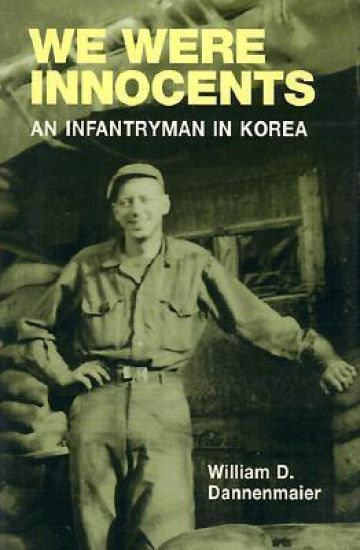
Known as the Forgotten War, the "police action" in Korea resulted in almost as many American combat deaths in three years as the Vietnam War did in ten. Yet for many Americans today, the Korean War brings to mind nothing more than the television series "M*A*S*H." William Dannenmaier served in Korea with the U.S. Army from December 1952 to January 1954, first as a radioman and then as a radio scout with the Fifteenth Infantry Regiment. Eager to serve a cause in which he fervently believed-the safeguarding of South Korea from advancing Chinese Communists-he enlisted in the army with an innocence that soon evaporated. His letters from the front, most of them to his sister, Ethel, provide a springboard for his candid and wry observations of the privations, the boredom, and the devastation of infantry life. At the same time these letters, designed to disguise the true danger of his tasks and his dehumanizing circumstances, reflect a growing failure to communicate with those outside the combat situation. Woven through the letters is Dannenmaier's narrative account of his combat experiences, including a vivid re-creation of the bloody battle for Outpost Harry, which he describes as "trivial and insignificant-except to the men who fought it."A high-intensity, eight-day battle for a hill American forces would abandon three months later with the signing of the truce, Outpost Harry was largely ignored by the press despite heavy casualties and many official citations for heroism. From his vantage point as an Everyman, Dannenmaier describes the frustration of men on the front lines who never saw their commanding superiors, the exhaustion of soldiers whose long-promised leaves never materialized, the transitory friendships and shared horrors that left indelible memories. Endangered by minefields and artillery fire, ground down by rumors and constant tension, these men returned-if they returned at all-profoundly and irrevocably changed. This intimate, revealing memoir, a rare account by a common soldier, is a tribute to the Americans who served in a conflict that has only recently begun to gain a place in official public memory.
How a culture of violence legitimized lynching among ordinary people On May 15, 1916, a crowd of fifteen thousand witnessed the lynching of an eighteen-year-old black farm worker named Jesse Washington. Most central Texans of the time failed to call for the punishment of the mob’s leaders. In The Making of a Lynching Culture, now in paperback, William D. Carrigan seeks to explain not how a fiendish mob could lynch one man but how a culture of violence that nourished this practice could form and endure for so long among ordinary people. Beginning with the 1836 independence of Texas, The Making of a Lynching Culture reexamines traditional explanations of lynching, including the role of the frontier, economic tensions, and political conflicts. Using a voluminous body of court records, newspaper accounts, oral histories, and other sources, Carrigan shows how notions of justice and historical memory were shaped to glorify violence and foster a culture that legitimized lynching.
In the aftermath of the Spanish-American War, the United States’ acquisition of an overseas empire compelled the nation to reconsider the boundary between domestic and foreign--and between nation and empire. William D. Riddell looks at the experiences of merchant sailors and labor organizations to illuminate how domestic class conflict influenced America’s emerging imperial system. Maritime workers crossed ever-shifting boundaries that forced them to reckon with the collision of different labor systems and markets. Formed into labor organizations like the Sailor’s Union of the Pacific and the International Seaman’s Union of America, they contested the U.S.’s relationship to its empire while capitalists in the shipping industry sought to impose their own ideas. Sophisticated and innovative, On the Waves of Empire reveals how maritime labor and shipping capital stitched together, tore apart, and re-stitched the seams of empire.
Yet there isn't a train goes by all day But I hear its whistle shrieking.... Yet there isn't a train I wouldn't take, No matter where it's going. —Edna St. Vincent Millay, "Travel" "Yet there isn't a train I wouldn't take" is a collection of stories about favorite train journeys by an inveterate railway enthusiast and train traveler. A half century career as an engineer, Naval officer, and university administrator took Bill Middleton to almost every part of the globe, and everywhere he took with him an abiding interest in railways, and a notebook and camera to record his experiences. His North American journeys have included experiences as diverse as the long journey north through Manitoba to polar bear country on Hudson Bay, a trip to Minnesota's Mesabi Range to haul a boatload of iron ore to Lake Superior behind a giant Yellowstone articulated steam locomotive, and the trip between Costa Rica's Atlantic and Pacific coasts by narrow gauge railway. His European travels have ranged from a Pullman seat on the crack London-Paris Golden Arrow to the slow trip across Thrace on one of the last runs of the celebrated Simplon-Orient Express. In Asia he traveled through the Toros Mountains of Turkey on the famous Istanbul-Baghdad Toros Express, experienced modern high-speed railroading in the cab of Japan's Bullet Train, and rode to Asia's highest mountain east of the Himalayas on the little trains of Taiwan's Ali Shan Forestry Railway.
This comprehensive history of North American railroad electrification has been out of print for many years. Now, Indiana University Press is proud to announce its return in an new, updated second edition. For most of the first half of the 20th century the United States led the way in railroad electrification. Before the outbreak of World War II, the country had some 2,400 route-miles and more than 6,300 track-miles operating under electric power, far more than any other nation and more than 20 percent of the world's total. In almost every instance, electrification was a huge success. Running times were reduced. Tonnage capacities were increased. Fuel and maintenance costs were lowered, and the service lives of electric locomotives promised to be twice as long as those of steam locomotives. Yet despite its many triumphs, electrification of U.S. railroads failed to achieve the wide application that once was so confidently predicted. By the 1970s, it was the Soviet Union, with almost 22,000 electrified route-miles, that led the way, and the U.S. had declined to 17th place. Today, electric operation of U.S. railroads is back in the limelight. The federally funded Northeast Corridor Improvement Program has provided an expanded Northeast Corridor electrification, with high-speed trains that are giving the fastest rail passenger service ever seen in North America, while still other high-speed corridors are planned for other parts of the country. And with U.S. rail freight tonnage at its highest levels in history, the ability of electric locomotives to expand capacity promises to bring renewed consideration of freight railroad electrification. Middleton begins his ambitious chronicle of the ups and downs of railway electrification with the history of its early days, and brings it right up to the present—which is surely not the end of this complex and mercurial story.
Early in the 19th century, growing American cities began to experience transportation problems. One solution was the horse-drawn streetcar, developed in 1832, but it soon proved inadequate. The first elevated train was transporting passengers above the streets of Manhattan by 1871; the first subway opened 25 years later in Boston; and similar systems soon followed in Philadelphia and Chicago. Rapid transit was confined to these few cities until after World War II, when a new generation of systems began to appear. In the 1970s, light rail became an economical alternative to conventional rapid transit. By century's end, some three dozen cities in the U.S., Canada, and Mexico operated metropolitan rapid transit or light rail systems that transported five billion urban passengers annually, and still more were under construction or planned. These diverse systems include elevated lines ranging from Chicago's "L" to the fully automatic Skytrain metro of Vancouver, B.C.; subways from New York City's thundering tunnels—the world's largest underground system—to the thoroughly modern metro of Guadalajara; and light rail from lovingly restored New Orleans streetcars to the sleek, articulated vehicles of Silicon Valley. Metropolitan Railways is a large-scale, extensively illustrated volume that deals with the growth and development of urban rail transit systems in North America. It traces the history of rail transit technology from such impractical early schemes as a proposed steam-powered "arcade railway" under New York's Broadway through today's sophisticated systems. Rapid transit enthusiasts as well as residents of cities that are potential candidates for rapid transit or light rail systems will find this book indispensable.