

Kirjahaku
Etsi kirjoja tekijän nimen, kirjan nimen tai ISBN:n perusteella.
1000 tulosta hakusanalla William L Perry

The Centennial History of New York City, from the Discovery to the Present Day
William L Stone
Trieste Publishing
2018
nidottu

From the Gospel to the Creeds. Studies in the Early History of the Christian Church
William L Sullivan
Trieste Publishing
2018
nidottu
From the Gospel to the Creeds. Studies in the Early History of the Christian Church
William L Sullivan
Trieste Publishing
2018
nidottu

History of England from the Death of Edward the Confessor to the Death of King John, with an Introductory Sketch of the Previous History
William L R Cates
Trieste Publishing
2018
nidottu
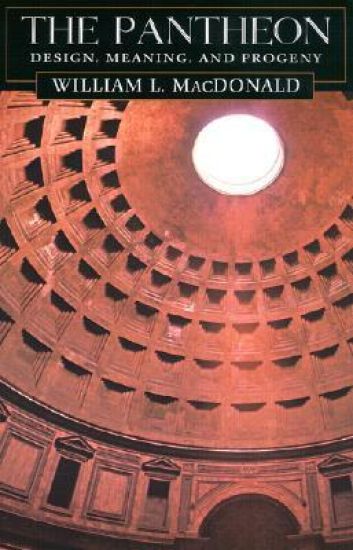
The Pantheon in Rome is one of the grand architectural statements of all ages. This richly illustrated book isolates the reasons for its extraordinary impact on Western architecture, discussing the Pantheon as a building in its time but also as a building for all time.Mr. MacDonald traces the history of the structure since its completion and examines its progeny--domed rotundas with temple-fronted porches built from the second century to the twentieth--relating them to the original. He analyzes the Pantheon's design and the details of its technology and construction, and explores the meaning of the building on the basis of ancient texts, formal symbolism, and architectural analogy. He sees the immense unobstructed interior, with its disk of light that marks the sun's passage through the day, as an architectural metaphor for the ecumenical pretensions of the Roman Empire.Past discussions of the Pantheon have tended to center on design and structure. These are but the starting point for Mr. MacDonald, who goes on to show why it ranks--along with Cheops's pyramid, the Parthenon, Wren's churches, Mansard's palaces-as an architectural archetype.
As America fought to defend democracy in Europe and Asia during World War II, its own democratic politics both aided and impeded the war effort at home and the military campaigns abroad. Now, in a broad-ranging social, political, military, and diplomatic history, William O’Neill reveals how the United States won its victory despite its reluctance to enter the war, and despite proceeding by costly half-measures even after committing to battle.


The Description for this book, The Cosmological Argument, will be forthcoming.
When Washington Shut Down Wall Street unfolds like a mystery story. It traces Treasury Secretary William Gibbs McAdoo's triumph over a monetary crisis at the outbreak of World War I that threatened the United States with financial disaster. The biggest gold outflow in a generation imperiled America's ability to repay its debts abroad. Fear that the United States would abandon the gold standard sent the dollar plummeting on world markets. Without a central bank in the summer of 1914, the United States resembled a headless financial giant. William McAdoo stepped in with courageous action, we read in Silber's gripping account. He shut the New York Stock Exchange for more than four months to prevent Europeans from selling their American securities and demanding gold in return. He smothered the country with emergency currency to prevent a replay of the bank runs that swept America in 1907. And he launched the United States as a world monetary power by honoring America's commitment to the gold standard. His actions provide a blueprint for crisis control that merits attention today. McAdoo's recipe emphasizes an exit strategy that allows policymakers to throttle a crisis while minimizing collateral damage. When Washington Shut Down Wall Street recreates the drama of America's battle for financial credibility. McAdoo's accomplishments place him alongside Paul Volcker and Alan Greenspan as great American financial leaders. McAdoo, in fact, nursed the Federal Reserve into existence as the 1914 crisis waned and served as the first chairman of the Federal Reserve Board.
How silver influenced two hundred years of world history, and why it matters todayThis is the story of silver’s transformation from soft money during the nineteenth century to hard asset today, and how manipulations of the white metal by American president Franklin D. Roosevelt during the 1930s and by the richest man in the world, Texas oil baron Nelson Bunker Hunt, during the 1970s altered the course of American and world history. FDR pumped up the price of silver to help jump start the U.S. economy during the Great Depression, but this move weakened China, which was then on the silver standard, and facilitated Japan’s rise to power before World War II. Bunker Hunt went on a silver-buying spree during the 1970s to protect himself against inflation and triggered a financial crisis that left him bankrupt.Silver has been the preferred shelter against government defaults, political instability, and inflation for most people in the world because it is cheaper than gold. The white metal has been the place to hide when conventional investments sour, but it has also seduced sophisticated investors throughout the ages like a siren. This book explains how powerful figures, up to and including Warren Buffett, have come under silver’s thrall, and how its history guides economic and political decisions in the twenty-first century.
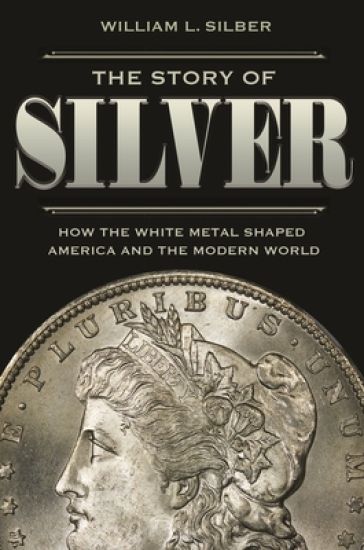
How silver influenced two hundred years of world history, and why it matters todayThis is the story of silver’s transformation from soft money during the nineteenth century to hard asset today, and how manipulations of the white metal by American president Franklin D. Roosevelt during the 1930s and by the richest man in the world, Texas oil baron Nelson Bunker Hunt, during the 1970s altered the course of American and world history. Silver has been the preferred shelter against government defaults, political instability, and inflation for most people in the world because it is cheaper than gold. The white metal has been the place to hide when conventional investments sour, but it has also seduced sophisticated investors throughout the ages like a siren. This book explains how powerful figures, up to and including Warren Buffett, have come under silver’s thrall, and how its history guides economic and political decisions in the twenty-first century.

A loyal servant of the Ottoman Empire in his early career, Sati' al-Husri (1880-1968) became one of Arab nationalism's most articulate and influential spokesmen. His shift from Ottomanism, based on religion and the multi-national empire, to Arabism, defined by secular loyalties and the concept of an Arab nation, is the theme of William Cleveland's account of "the making of an Arab nationalist." Originally published in 1972. The Princeton Legacy Library uses the latest print-on-demand technology to again make available previously out-of-print books from the distinguished backlist of Princeton University Press. These editions preserve the original texts of these important books while presenting them in durable paperback and hardcover editions. The goal of the Princeton Legacy Library is to vastly increase access to the rich scholarly heritage found in the thousands of books published by Princeton University Press since its founding in 1905.

Beginnings of Russian Industrialization, 1800-1860
William L. Blackwell
Princeton University Press
2015
pokkari
Since Russian tradition and institutions resemble those of Asia and Africa as much if not more than the patterns of Western societies, the pre-1917 industrial history of Russia, as the last part of the tsarist regime, provides one of the most important examples of early industrialization in world history. In this broad, ambitious reconstruction of the early stages of Russia's industrial development--English-Professor Blackwell shows that the period from 1800 to 1860 was one of necessary preparation for the rapid industrialization of the later 19th century. The book is based upon a wide variety of primary and secondary sources in the Russian language. Originally published in 1968. The Princeton Legacy Library uses the latest print-on-demand technology to again make available previously out-of-print books from the distinguished backlist of Princeton University Press. These editions preserve the original texts of these important books while presenting them in durable paperback and hardcover editions. The goal of the Princeton Legacy Library is to vastly increase access to the rich scholarly heritage found in the thousands of books published by Princeton University Press since its founding in 1905.

A loyal servant of the Ottoman Empire in his early career, Sati' al-Husri (1880-1968) became one of Arab nationalism's most articulate and influential spokesmen. His shift from Ottomanism, based on religion and the multi-national empire, to Arabism, defined by secular loyalties and the concept of an Arab nation, is the theme of William Cleveland's account of "the making of an Arab nationalist." Originally published in 1972. The Princeton Legacy Library uses the latest print-on-demand technology to again make available previously out-of-print books from the distinguished backlist of Princeton University Press. These editions preserve the original texts of these important books while presenting them in durable paperback and hardcover editions. The goal of the Princeton Legacy Library is to vastly increase access to the rich scholarly heritage found in the thousands of books published by Princeton University Press since its founding in 1905.

Beginnings of Russian Industrialization, 1800-1860
William L. Blackwell
PRINCETON UNIVERSITY PRESS
2016
sidottu
Since Russian tradition and institutions resemble those of Asia and Africa as much if not more than the patterns of Western societies, the pre-1917 industrial history of Russia, as the last part of the tsarist regime, provides one of the most important examples of early industrialization in world history. In this broad, ambitious reconstruction of the early stages of Russia's industrial development--English-Professor Blackwell shows that the period from 1800 to 1860 was one of necessary preparation for the rapid industrialization of the later 19th century. The book is based upon a wide variety of primary and secondary sources in the Russian language. Originally published in 1968. The Princeton Legacy Library uses the latest print-on-demand technology to again make available previously out-of-print books from the distinguished backlist of Princeton University Press. These editions preserve the original texts of these important books while presenting them in durable paperback and hardcover editions. The goal of the Princeton Legacy Library is to vastly increase access to the rich scholarly heritage found in the thousands of books published by Princeton University Press since its founding in 1905.

This new book by singer/songwriter/author Bill Dickson answers the question that has been on the lips of the human race since words were formed. Why did God create mankind? What is our true nature and intended purpose? Find out for yourself by reading "Happy To Be God's Lapdog". Bill takes the reader through a journey of introspection after he experiences a tragedy in his own life. Through philosophical exploration and methodology, Mr. Dickson arrives at a four step process for getting closer to God and His plan for individual human lives.