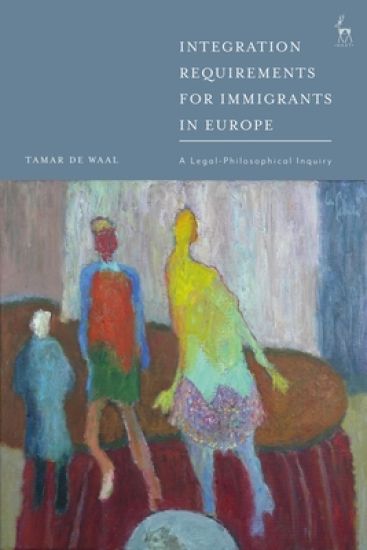
Based on legal-philosophical research, and informed by insights gleaned from empirical case studies, this book sets out three central claims about integration requirements as conditions for attaining increased rights (ie family migration, permanent residency and citizenship) in Europe:(1) That the recent proliferation of these (mandatory) integration requirements is rooted in a shift towards ‘individualised’ conceptions of integration.(2) That this shift is counterproductive as it creates barriers to participation and inclusion for newcomers (who will most likely permanently settle); and is normatively problematic insofar as it produces status hierarchies between native-born and immigrant citizens.(3) That the remedy for this situation is a firewall that disconnects integration policy from access to rights.The book draws on perspectives on immigrant integration in multiple EU Member States and includes legal and political reactions to the refugee/migrant crisis.
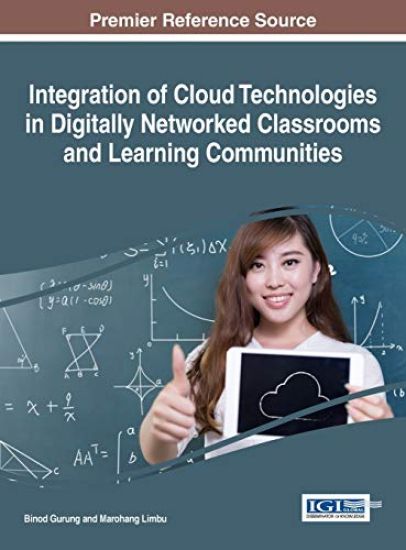
The application of emerging technology in educational settings has proven to significantly enhance students’ experiences. These tools provide better learning opportunities and engagement between students and instructors.Integration of Cloud Technologies in Digitally Networked Classrooms and Learning Communities is a pivotal reference source for the latest scholarly research on the implementation of cloud pedagogies and innovations in classroom environments. Highlighting concepts related to learning engagement, curriculum design, and theoretical perspectives, this book is ideally designed for researchers, practitioners, professionals, and students interested in the use of cloud technology in digital classrooms.
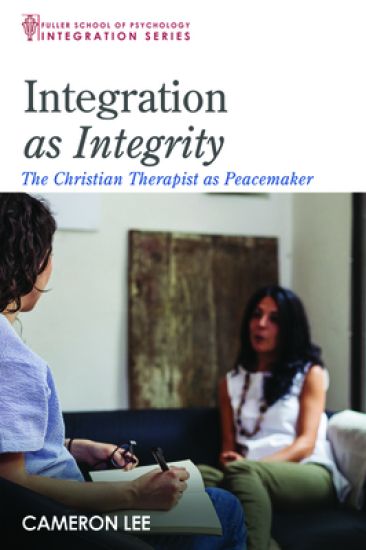
What is ""integration""? Christians serving in the psychological professions have long debated the proper way to understand the relationship between ""psychology"" on the one hand, and ""theology"" or ""Christianity"" or ""the Christian faith"" on the other. This book argues for understanding integration as a matter of personal integrity: it's not about bridging or blending academic disciplines, but about having a coherent vocational identity. What narrative will hold together both our core identity as Christians and our developing identity as clinicians? Peacemaking is proposed as the central motif, based on the Beatitudes of Jesus. Christian therapists who understand themselves as peacemakers will in turn cultivate the clinical virtues of hope, humility, compassion, and Sabbath rest.
What is ""integration""? Christians serving in the psychological professions have long debated the proper way to understand the relationship between ""psychology"" on the one hand, and ""theology"" or ""Christianity"" or ""the Christian faith"" on the other. This book argues for understanding integration as a matter of personal integrity: it's not about bridging or blending academic disciplines, but about having a coherent vocational identity. What narrative will hold together both our core identity as Christians and our developing identity as clinicians? Peacemaking is proposed as the central motif, based on the Beatitudes of Jesus. Christian therapists who understand themselves as peacemakers will in turn cultivate the clinical virtues of hope, humility, compassion, and Sabbath rest.
Einf hrung Im Rahmen der Fl chtlingskrise 2015 erwies sich die ehrenamtliche Arbeit der freiwilligen Fl chtlingshelfer als wichtiger St tzpfeiler der Integration von Asylbewerbern und Migranten in den Arbeitsmarkt. Durch ihre pers nliche N he zu den Fl chtlingen, sowie durch ihre Flexibilit t sind sie das ideale Bindeglied zwischen offiziellen Vermittlungsstrukturen und dem privatwirtschaftlichen Sektor. Insbesondere f r diese Zielgruppe, sowie f r die Veranstalter von Integrationskursen und Kursen zur Berufsausbildung ist der nachfolgende F rderungskurs konzipiert worden. Er soll ihnen helfen, die beruflichen und pers nlichen St rken und Schw chen der Arbeitssuchenden herauszuarbeiten, sowie passende Bewerbungsstrategien vermitteln. Bisher in der Fl chtlingsarbeit gemachte Praxiserfahrungen erg nzen die theoretischen Inhalte. Diese finden sich jeweils als Tipps zu den einzelnen Modulen. Warum wurde diese Buch geschrieben? Als in den Jahren 2014 / 2015 die Fl chtlingswelle den Landkreis Pfaffenhofen erreichte, entschieden sich viele unserer Mitb rger dazu, spontan und offen auf die gefl chteten Menschen zuzugehen. Aus den ersten Willkommens-Kontakten entwickelten sich neue menschliche Beziehungen - nicht nur zu den Fl chtlingen, sondern auch zwischen den Menschen, die ehrenamtliche "Nachbarschaftshilfe" leisten wollten. Die kommunalen Einrichtungen waren noch nicht auf den Ansturm und die damit verbundenen Probleme vorbereitet und waren auf die Erste Hilfe der freiwilligen Helfer angewiesen. Diese ersten zwischenmenschlichen Kontakte halfen den Gefl chteten, sich in der neuen Umgebung zurechtzufinden und unmittelbare Ansprechpartner f r die wichtigsten Fragen zu finden. Schnell wurde klar, dass f r eine gelingende Kommunikation eine Einf hrung in die deutsche Sprache unumg nglich ist. So entstanden berall vor Ort in den Gemeinschaftsunterk nften, in den kirchlichen und st dtischen Einrichtungen und auch im privaten Bereich ehrenamtliche Sprachtraining-Angebote. Sehr hilfreich waren hier die Schulungs- und Unterst tzungsangebote der LAGFA-Bayern f r ehrenamtliche Sprachlehrer. Der dringliche Wunsch, Deutsch zu lernen, wurde schon bald von dem Ruf nach Arbeit getoppt. In dieser Situation entstand die Idee, den Deutschunterricht durch ein F rderangebot zur Integration der Fl chtlinge in den Arbeitsmarkt zu erg nzen. Aus dieser Idee entstand das Projekt INFLAMA. Mit ihm m chten wir den gefl chteten Menschen eine berufliche Perspektive f r ein menschenw rdiges, selbstorganisiertes Leben in Deutschland erm glichen. Um dieses Ziel zu erreichen, sehen sich die ehrenamtlichen Projektmitglieder als Vermittler zwischen den Gefl chteten und den rtlichen Helferkreisen, den kommunalen und regionalen mtern und Einrichtungen, Ausbildungsinstitutionen, Unternehmerinitiativen sowie einzelnen Arbeitgebern. Der dringliche Wunsch, Deutsch zu lernen, wurde schon bald von dem Ruf nach Arbeit getoppt. In dieser Situation entstand die Idee, den Deutschunterricht durch ein F rderangebot zur Integration der Fl chtlinge in den Arbeitsmarkt zu erg nzen. Aus dieser Idee entstand das Projekt INFLAMA. Mit ihm m chten wir den gefl chteten Menschen eine berufliche Perspektive f r ein menschenw rdiges, selbstorganisiertes Leben in Deutschland erm glichen. Um dieses Ziel zu erreichen, sehen sich die ehrenamtlichen Projektmitglieder als Vermittler zwischen den Gefl chteten und den rtlichen Helferkreisen, den kommunalen und regionalen mtern und Einrichtungen, Ausbildungsinstitutionen, Unternehmerinitiativen sowie einzelnen Arbeitgebern. Wir sind fest davon berzeugt, dass sich aus diesen ersten ermutigenden Beziehungen ein starkes berregionales Netzwerk entwickeln wird. Johann-W. Reiling Leiter des Asylhelferkreises Feilenmoos
Building welcoming communities is as much a local project as a national one. This volume explores the activities of provincial and municipal governments, as well as a range of other important local societal players. Case studies of each of the provinces, as well as the territories, are included, as are chapters on the history of federal-provincial cooperation in immigration, and the development of provincial multiculturalism policies and programs. Each chapter provides an overview of immigration, settlement and diversity in the province or territory, an examination of the key players in the integration and inclusion of newcomers and minorities, and a discussion of specific challenges. This allows comparisons and an exploratory mapping of the range of participants and the investments - both human and financial - that have been made in the integration and inclusion of newcomers and minorities at the provincial level.
"Integration of Behavioral Sciences and Theology: A Systematic-Relational Approach is an introduction to the subject of the nature of the relationship between the behavioral sciences and theology. It examines the history of the field and offers an overview of the models of integration currently in use. It calls for a systematic and relational approach to the subject that defines integration as the placing of behavioral sciences and theology into proper relationship. This is accomplished by comparing the epistemologies and worldviews of the behavioral sciences and theology.
The goal of this book is to close the gap between high technology and accessibility for people having lost their independence due to the loss of physical and/or cognitive capabilities. Robots and mechatronic devices bring the opportunity to improve the autonomy of disabled people and facilitate their social and professional integration by assisting them to perform daily living tasks. Technical topics of interest include, but are not limited to: Communication and learning applications in SCI an CP, Interface and Internet-based designs, Issues in human-machine interaction, Personal robotics, Hardware and control, Evaluation methods, Clinical experience, Orthotics and prosthetics, Robotics for older adults, Service robotics, Movement physiology and motor control.
Integration of ICT in Smart Organizations presents the applicable concepts and methodologies of information and communication technologies, such as agent-based technologies, HUB, knowledge management, GRID, and wireless communication. This book covers these concepts, while taking into account the current results and outlining the trends in these fields, also introducing theories for the smooth operation and effective control of smart organizations in an integrated method. The authors of ""Integration of ICT in Smart Organizations"" are researchers and professors with countless years of industrial experience, who share their results in their various fields of research.
The plants spoke-- are you listening? In Integration Alchemy, Deva Arani weaves practical guidance, intimate storytelling, and ancient wisdom to help readers alchemize their psychedelic experiences and lead more joyful and meaningful lives. How do we return to our daily lives after massive transformation? How can we integrate an awakening experience without chasing high after high? Deva Arani grapples with these questions and more in Integration Alchemy: The Real Ceremony Is Your Life, weaving practical guidance, intimate storytelling, and ancient wisdom into a net of support. Integration Alchemy is a book designed to help seekers who have experienced sacred plant medicines integrate their journeys so that the healing and understandings received can take root in their day to day lives. Many seekers can find themselves adrift after these healing experiences, wondering how they can reconnect to a sense of Oneness, or even feeling unmoored from their normal lives. In light of the "psychedelic renaissance," and with plant medicine journeys becoming more accessible to Westerners, it's imperative that seekers have tools to integrate their experiences. This book offers a map that guides the seeker inward, understanding the journey from the perspective of first anchoring in the body, then exploring the mind and emotions. The reader is invited to understand and continue to heal the layers that were revealed during their ceremonies. Combining teachings from the ancient lineages of South American and Eastern spiritual wisdom keepers alongside modern Western teachers, this book offers a unique perspective that goes beyond the "psychology" of integration. Here lies an invitation to embark on an inner journey toward wholeness that is rooted in the body its innate wisdom. In so doing, readers will learn that in integration is itself an act of reciprocity with the teacher plants, wisdom keepers, Mother Earth, and existence itself. Your life is a sacred ceremony and this book is a guide to help you alchemize your healing so that you can fully participate in this life's beauty.
Integration Nation takes readers on a spirited and compelling cross-country journey, introducing us to the people challenging America's xenophobic impulses by welcoming immigrants and collaborating with the foreign-born as they become integral members of their new communities.
Since the early 1990s, unmanned aircraft systems (UAS) have operated on a limited basis in the National Airspace System (NAS). Until recently, UAS mainly supported public operations, such as military and border security operations. The list of potential uses is now rapidly expanding to encompass a broad range of other activities, including aerial photography, surveying land and crops, communications and broadcast, monitoring forest fires and environmental conditions, and protecting critical infrastructures. UAS provide new ways for commercial enterprises (civil operations) and public operators to enhance some of our nation's aviation operations through increased operational efficiency and decreased costs, while maintaining the safety of the NAS. This book focuses on the integration of civil unmanned aircraft systems in the national airspace system; provides an unmanned aircraft systems comprehensive plan; and discusses the final privacy requirements for the unmanned aircraft system test site program.
Peoples’ Agency, Popular Participation, Democratization, and Integration in Southern African Development Community Region, edited by Korwa Gombe Adar, Dorothy Mpabanga, Kebapetse Lotshwao, Thekiso Molokwane, and Norbert Musekiwa, engages in the debate associated with "the people of Southern Africa" (people of the Region)—democratization and integration nexus envisaged in the 1980 treaty which established the Southern African Development Community (SADC). The editors argue that for democratization and integration to be tangibly consolidated and institutionalized, direct involvement of the people of Southern Africa, the peoples' agency, is paramount and would lead to what is dubbed in this book as sadcness and sadcnization. More specifically, democratization and integration are about people (citizens), the sovereigns, and not merely the abstract actors called nation states. Using the case studies of Angola, Botswana, Madagascar, Mozambique, South Africa, and Zimbabwe, the contributors have, from political and public administration dimensions, engaged in this epistemology assessing, among other things, the peoples' of Southern Africa-the Southern Africa Development Community integration nexus.