Kirjojen hintavertailu. Mukana 11 617 028 kirjaa ja 12 kauppaa.

Kirjahaku

Etsi kirjoja tekijän nimen, kirjan nimen tai ISBN:n perusteella.

422 tulosta hakusanalla "Tissue Engineering"

Magnetic Resonance Imaging in Tissue Engineering
Magnetic Resonance Imaging in Tissue Engineering provides a unique overview of the field of non-invasive MRI assessment of tissue engineering and regenerative medicine Establish a dialogue between the tissue-engineering scientists and imaging experts and serves as a guide for tissue engineers and biomaterial developers alikeProvides comprehensive details of magnetic resonance imaging (MRI) techniques used to assess a variety of engineered and regenerating tissues and organsCovers cell-based therapies, engineered cartilage, bone, meniscus, tendon, ligaments, cardiovascular, liver and bladder tissue engineering and regeneration assessed by MRIIncludes a chapter on oxygen imaging method that predominantly is used for assessing hypoxia in solid tumors for improving radiation therapy but has the ability to provide information on design strategies and cellular viability in tissue engineering regenerative medicine
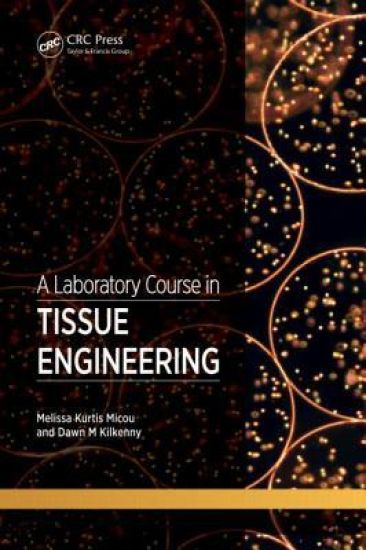
A Laboratory Course in Tissue Engineering

A Laboratory Course in Tissue Engineering

Melissa Kurtis Micou

CRC Press
2017
sidottu
Filling the need for a lab textbook in this rapidly growing field, A Laboratory Course in Tissue Engineering helps students develop hands-on experience. The book contains fifteen standalone experiments based on both classic tissue-engineering approaches and recent advances in the field. Experiments encompass a set of widely applicable techniques: cell culture, microscopy, histology, immunohistochemistry, mechanical testing, soft lithography, and common biochemical assays. In addition to teaching these specific techniques, the experiments emphasize engineering analysis, mathematical modeling, and statistical experimental design. A Solid Foundation in Tissue Engineering and Communication Skills Each experiment includes background information, learning objectives, an overview, safety notes, a list of materials, recipes, methods, pre- and postlab questions, and references. Emphasizing the importance for engineering students to develop strong communication skills, each experiment also contains a data analysis and reporting section that supplies a framework for succinctly documenting key results. A separate chapter provides guidelines for reporting results in the form of a technical report, journal article, extended abstract, abstract, or technical poster. Customize Your Courses with More Than a Semester‘s Worth of Experiments The book is a convenient source of instructional material appropriate for undergraduate or graduate students with fundamental knowledge of engineering and cell biology. All of the experiments have been extensively tested to improve the likelihood of successful data collection. In addition, to minimize lab costs, the experiments make extensive use of equipment commonly found in laboratories equipped for tissue culture. A solutions manual, available with qualifying course adoption, includes answers to pre- and postla
Polymer Based Systems on Tissue Engineering, Replacement and Regeneration
Biodegradable, polymer-based systems are playing an increasingly pivotal role in tissue engineering replacement and regeneration. This type of biology-driven materials science is slated to be one of the key research areas of the 21st century. The following aspects are crucial: the development of adequate human cell culture to produce the tissues in adequate polymer scaffold materials; the development of culture technology with which human tissues can be grown ex-vivo in 3D polymer matrices; the development of material technology for producing the degradable, 3D matrices, having mechanical properties similar to natural tissue. In addressing these and similar problems, the book contains chapters on biodegradable polymers, polymeric biomaterials, surface modification for controlling cell-material interactions, scaffold design and processing, biomimetic coatings, biocompatibility evaluation, tissue engineering constructs, cell isolation, characterisation and culture, and controlled release of bioactive agents.
Polymer Based Systems on Tissue Engineering, Replacement and Regeneration
Biodegradable, polymer-based systems are playing an increasingly pivotal role in tissue engineering replacement and regeneration. This type of biology-driven materials science is slated to be one of the key research areas of the 21st century. The following aspects are crucial: the development of adequate human cell culture to produce the tissues in adequate polymer scaffold materials; the development of culture technology with which human tissues can be grown ex-vivo in 3D polymer matrices; the development of material technology for producing the degradable, 3D matrices, having mechanical properties similar to natural tissue. In addressing these and similar problems, the book contains chapters on biodegradable polymers, polymeric biomaterials, surface modification for controlling cell-material interactions, scaffold design and processing, biomimetic coatings, biocompatibility evaluation, tissue engineering constructs, cell isolation, characterisation and culture, and controlled release of bioactive agents.
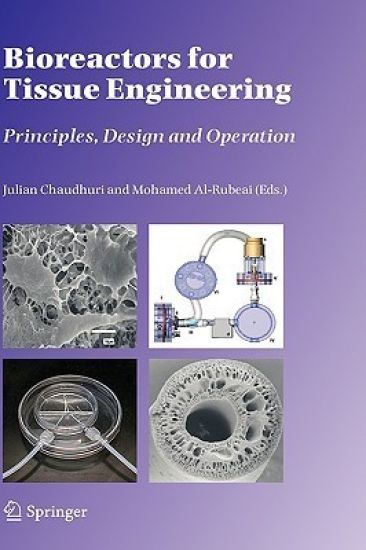
Bioreactors for Tissue Engineering

Bioreactors for Tissue Engineering

Springer-Verlag New York Inc.
2005
sidottu
For the first time in a single volume, the design, characterisation and operation of the bioreactor system in which the tissue is grown is detailed. Bioreactors for Tissue Engineering presents an overall picture of the current state of knowledge in the engineering of bioreactors for several tissue types (bone, cartilage, vascular), addresses the issue of mechanical conditioning of the tissue, and describes the use of techniques such as MRI for monitoring tissue growth. This unique volume is dedicated to the fundamentals and application of bioreactor technology to tissue engineering products. Not only will it appeal to graduate students and experienced researchers in tissue engineering and regenerative medicine, but also to tissue engineers and culture technologists, academic and industrial chemical engineers, biochemical engineers and cell biologists who wish to understand the criteria used to design and develop novel systems for tissue growth in vitro.
Nanotechnology in Tissue Engineering and Regenerative Medicine
Although nanotechnology applied to medicine has a potentially huge impact on drug delivery and tissue engineering, significant challenges need to be resolved before clinically viable nanomedicine or nanobiomedicine therapies will be available. Skillfully edited, with contributions from an expert panel of researchers, Referred to as nanomedicine or nanobiomedicine, the application of nanotechnology to medicine can impact diagnosis, monitoring, and treatment of diseases, as well as the control and understanding of biological systems. Bringing together an unparalleled field of experts, this volume explores various aspects of nanotechnology and its applications in biomedical fields. The book uses an application-oriented approach to relate laboratory-based research to the development of technologies that are easily adaptable to an industry environment, focusing chiefly on drug delivery, tissue engineering, and regenerative medicine.
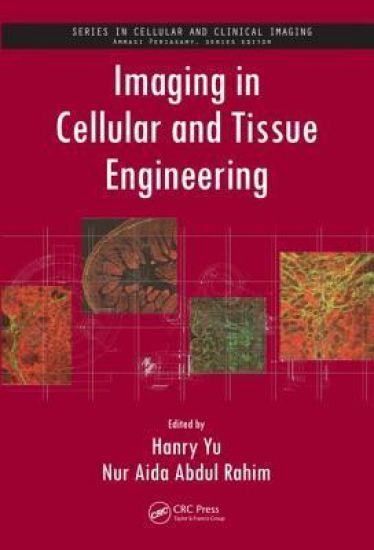
Imaging in Cellular and Tissue Engineering
Details on specific imaging modalities for different cellular and tissue engineering applications are scattered throughout articles and chapters in the literature. Gathering this information into a single reference, Imaging in Cellular and Tissue Engineering presents both the fundamentals and state of the art in imaging methods, approaches, and applications in regenerative medicine.The book underscores the broadening scope of imaging applications in cellular and tissue engineering. It covers a wide range of optical and biological applications, including the repair or replacement of whole tissues (such as bone, cartilage, blood vessels, and bladder) and more novel artificially created support systems (such as artificial pancreas and bioartificial liver). Each chapter describes a particular application, relevant optical instrumentation, physical principles governing the imaging method, and strengths and weaknesses of the technique. The book also presents current and emerging data processing procedures.As the field of tissue engineering moves from creating simpler outer body parts to more sophisticated internal organs, researchers need to evaluate and control how well the tissues are engineered and integrated into the living body. Suitable for both experts and newcomers in bioengineering and biomedical imaging, this book shows researchers how to apply imaging techniques to next-generation engineered cells and tissues. It helps them assess the suitability of specific imaging modalities for applications with various functional requirements.
A Laboratory Course in Tissue Engineering

A Laboratory Course in Tissue Engineering

Melissa Kurtis Micou

CRC Press Inc
2012
nidottu
Filling the need for a lab textbook in this rapidly growing field, A Laboratory Course in Tissue Engineering helps students develop hands-on experience. The book contains fifteen standalone experiments based on both classic tissue-engineering approaches and recent advances in the field. Experiments encompass a set of widely applicable techniques: cell culture, microscopy, histology, immunohistochemistry, mechanical testing, soft lithography, and common biochemical assays. In addition to teaching these specific techniques, the experiments emphasize engineering analysis, mathematical modeling, and statistical experimental design. A Solid Foundation in Tissue Engineering—and Communication SkillsEach experiment includes background information, learning objectives, an overview, safety notes, a list of materials, recipes, methods, pre- and postlab questions, and references. Emphasizing the importance for engineering students to develop strong communication skills, each experiment also contains a data analysis and reporting section that supplies a framework for succinctly documenting key results. A separate chapter provides guidelines for reporting results in the form of a technical report, journal article, extended abstract, abstract, or technical poster. Customize Your Courses with More Than a Semester’s Worth of ExperimentsThe book is a convenient source of instructional material appropriate for undergraduate or graduate students with fundamental knowledge of engineering and cell biology. All of the experiments have been extensively tested to improve the likelihood of successful data collection. In addition, to minimize lab costs, the experiments make extensive use of equipment commonly found in laboratories equipped for tissue culture. A solutions manual, available with qualifying course adoption, includes answers to pre- and postlab questions, suggested equipment suppliers and product numbers, and other resources to help plan a new tissue engineering course.
Gene Therapy and Tissue Engineering in Orthopaedic and Sports Medicine
This book has been written in response to the many physicians and scien­ tists working on the development of biological approaches to providing therapies for many orthopaedic disorders as well as to improving the healing of many tissues of the musculoskeletal system. The first goal of this book is to make the language compatible between the bench scientist and the clinician working in orthopaedic and sports medicine in order to cover specific areas of the orthopaedic discipline where the treatment can be improved and/or changed by the advancements in molecular medicine. Advancements in molecular biology, which encompass the study of the genetic basis of disease, have produced new diagnostic methods and drug therapies for genetic diseases and acquired disorders. The growth in the understanding of human genetics has also led to the initiation of many human gene therapy experiments. Although many approved therapeutic clinical trials using this new technology have been performed in the last ten years, the first clinical trial using this technology in the area of orthopaedics was performed at the University of Pittsburgh.
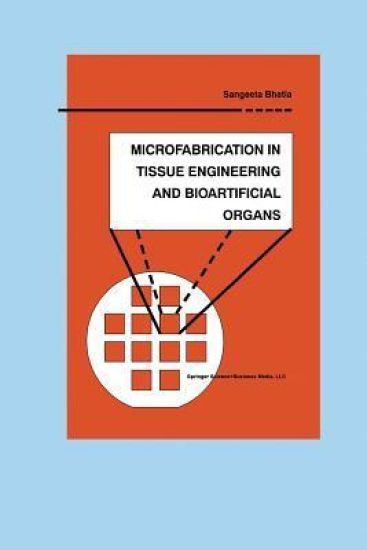
Microfabrication in Tissue Engineering and Bioartificial Organs

Microfabrication in Tissue Engineering and Bioartificial Organs

Sangeeta N. Bhatia

Springer-Verlag New York Inc.
2012
nidottu
The Microsystems Series has as its goal the creation of an outstanding set of textbooks, references, and monographs on subjects that span the broad field of microsystems. Exceptional PhD dissertations provide a good starting point for such a series, because, unlike monographs by more senior authors, which must compete with other professional duties for attention, the dissertation becomes the sole focus of the author until it is completed. Conversion to book form is then a streamlined process, with final editing and book production completed within a few months. Thus we are able to bring important and timely material into book form at a pace which tracks this rapidly developing field. Our first four books in the series were drawn from the more physics-oriented side of the microsystems field, including such diverse subjects as computer-aided design, atomic-force microscopy, and ultrasonic motion detection. Now, with Sangeeta Bhatia's work, we enter the realm of biology. Her use of artifically structured substrates to encourage the liver cells to form orderly assemblies is a fine example of how microfabrication technology can contribute to cell biology and medicine. I am pleased to be able to add this very new and very interesting work to the Microsystems Series. Stephen D. Senturia Cambridge MA Microfabrication in Tissue Engineering and Bioartificial Organs Foreword One of the emerging applications of microsystems technology in biology and medicine is in the field of tissue engineering and artificial organs. In order to function, cells need to receive proper signals from their environment.
Biologically Responsive Biomaterials for Tissue Engineering
Developments in the area of biomaterials, bionanotechnology, tissue engineering, and medical devices are becoming the core of health care. Almost all medical specialties involve the use of biomaterials, and research plays a key role in the development of new and improved treatment modalities. This volume focuses on several current trends in tissue engineering, remodelling and regeneration. Leading researchers describe the use of nanomaterials to create new functionalities when interfaced with biological molecules or structures. In addition to coverage of basic science and engineering aspects, a range of applications in bionanotechnology are presented, including diagnostic devices, contrast agents, analytical tools, physical therapy applications, and vehicles for targeted drug delivery. The use of polymers, alloys, and composites, or a combination of these, for biomaterials applications in orthopaedics is also explored. These contributions represent essential reading for the biomaterials and biomedical engineering communities, and can serve as instructional course lectures targeted at graduate and post-graduate students.
Stem Cells and Tissue Engineering

Stem Cells and Tissue Engineering

Mirjana Pavlovic; Bela Balint

Springer-Verlag New York Inc.
2012
nidottu
Stem cells are the building blocks for all other cells in an organism. The human body has about 200 different types of cells and any of those cells can be produced by a stem cell. This fact emphasizes the significance of stem cells in transplantational medicine, regenerative therapy and bioengineering. Whether embryonic or adult, these cells can be used for the successful treatment of a wide range of diseases that were not treatable before, such as osteogenesis imperfecta in children, different forms of leukemias, acute myocardial infarction, some neural damages and diseases, etc. Bioengineering, e.g. successful manipulation of these cells with multipotential capacity of differentiation toward appropriate patterns and precise quantity, are the prerequisites for successful outcome and treatment. By combining in vivo and in vitro techniques, it is now possible to manage the wide spectrum of tissue damages and organ diseases. Although the stem-cell therapy is not a response to all the questions, it provides more and more answers every day. Stem Cells and Tissue Engineering is a concise review on the functional, phenotypic, regenerative, transplantational and curative aspects of a stem cell’s entity. It is critical and encouraging at the same time, providing truthful and appropriate samples from the practice and research that can lead toward optimal use of this immense source of adjuvant and curative therapy in human pathology. Written by a clinician and a researcher, who are currently teaching what they are doing, it is recommended as a teaching tool along with an original textbook.
Stem Cell Therapy and Tissue Engineering for Cardiovascular Repair
In excess of 7 million people worldwide die of coronary heart disease each year. Only one-third of these heart attack victims recover completely. The remainder suffer the consequences of myocardial infarction and its ill fated remodeling process, resulting in chronic congestive heart failure. This malady alone is the leading cause of hospital admissions in the United States. New breakthroughs in stem cell therapy and tissue engineering have promised to reverse this dismal outcome by cardiovascular repair. World authorities, including scientists and regulatory authorities, have joined in a collaborative effort to present for the reader the first collective review of stem cell therapy for the treatment of cardiovascular disease. These contributions in basic science, pre-clinical and clinical experience guided by the regulatory pathways, assure a rapid course of translational research and clinical trials. The contents of this publication will become a prerequisite for those preparing to meet the challenges of this exciting and potentially rewarding field of stem cell research.
Biologically Responsive Biomaterials for Tissue Engineering
Developments in the area of biomaterials, bionanotechnology, tissue engineering, and medical devices are becoming the core of health care. Almost all medical specialties involve the use of biomaterials, and research plays a key role in the development of new and improved treatment modalities. This volume focuses on several current trends in tissue engineering, remodelling and regeneration. Leading researchers describe the use of nanomaterials to create new functionalities when interfaced with biological molecules or structures. In addition to coverage of basic science and engineering aspects, a range of applications in bionanotechnology are presented, including diagnostic devices, contrast agents, analytical tools, physical therapy applications, and vehicles for targeted drug delivery. The use of polymers, alloys, and composites, or a combination of these, for biomaterials applications in orthopaedics is also explored. These contributions represent essential reading for the biomaterials and biomedical engineering communities, and can serve as instructional course lectures targeted at graduate and post-graduate students.
Computer-Aided Tissue Engineering
The recent revolution in the biological sciences and bioengineering, along with the advancements of modern design and manufacturing, biomaterials, biology, and biomedicine, have brought about the new field of computer-aided tissue engineering. Advances in this fascinating new area of study encompass broad applications in large-scale tissue engineering fabrication, artificial organs, orthopaedic implants, and biological chips. Computer-Aided Tissue Engineering highlights the interdisciplinary nature of this topic and reviews the current state of computer-aided three-dimensional tissue modeling, tissue classification, and tissue fabrication and implantation. Particular focus is placed on rapid prototyping and direct digital fabrication for cell and organs, construction of tissue analogs, and precursors to 3D tissue scaffolds. Written for the highly successful Methods in Molecular Biology™ series, this work provides the kind of detailed description and implementation advice that is crucial for getting optimal results. Current and practical, Computer-Aided Tissue Engineering provides a coherent framework for researchers interested in these vital technologies and for clinicians who plan to implement them.
Biomaterials for Tissue Engineering
This volume provides protocols for the generation of various biomaterials for tissue engineering and regenerative medicine applications. The chapters in this book include a look at a range of biomaterials including hydrogels and other matrices (natural, synthetic, self-healing) for various applications including drug and gene delivery, surface modification and functionalization of biomaterials. In addition, techniques described include those for controlling biomaterial geometry, such as three-dimensional printing and electrospinning. Written in the highly successful Methods in Molecular Biology series format, chapters include introductions to their respective topics, lists of the necessary materials and reagents, step-by-step, readily reproducible laboratory protocols, and tips on troubleshooting and avoiding known pitfalls.Cutting-edge and thorough, Biomaterials for Tissue Engineering: Methods and Protocols is a valuable resource for scientists and engineers interested in this vital field of study.

Biomaterials for Tissue Engineering
This volume provides protocols for the generation of various biomaterials for tissue engineering and regenerative medicine applications. The chapters in this book include a look at a range of biomaterials including hydrogels and other matrices (natural, synthetic, self-healing) for various applications including drug and gene delivery, surface modification and functionalization of biomaterials. In addition, techniques described include those for controlling biomaterial geometry, such as three-dimensional printing and electrospinning. Written in the highly successful Methods in Molecular Biology series format, chapters include introductions to their respective topics, lists of the necessary materials and reagents, step-by-step, readily reproducible laboratory protocols, and tips on troubleshooting and avoiding known pitfalls.Cutting-edge and thorough, Biomaterials for Tissue Engineering: Methods and Protocols is a valuable resource for scientists and engineers interested in this vital field of study.
Biomaterials and Nanotechnology for Tissue Engineering
Nanotechnology and high-end characterization techniques have highlighted the importance of the material choice for the success of tissue engineering. A paradigm shift has been seen from conventional passive materials as scaffolds to smart multi-functional materials that can mimic the complex intracellular milieu more effectively. This book presents a detailed overview of the rationale involved in the choice of materials for regeneration of different tissues and the future directions in this fascinating area of materials science with specific chapters on regulatory challenges & ethics; tissue engineered medical products.
Scaffolding In Tissue Engineering
The growing interest in scaffolding design and increasing research programs dedicated to regenerative medicine corroborate the need for Scaffolding in Tissue Engineering. While certain books and journal articles address various aspects in the field, this is the first current, comprehensive text focusing on scaffolding for tissue engineering. Scaffolding in Tissue Engineering reviews the general principles of tissue engineering and concentrates on the principles, methods, and applications for a broad range of tissue engineering scaffolds. The first section presents an in-depth exploration of traditional and novel materials, including alginates, polysaccharides, and fibrillar fibrin gels. The following section covers fabrication technologies, discussing three-dimensional scaffold design, laboratory-scale manufacture of a cell carrier, phase separation, self-assembly, gas foaming, solid freeform fabrication, injectable systems, and immunoisolation techniques. Subsequent chapters examine structural and functional scaffold modification, composite scaffolds, bioactive hydrogels, gene delivery, growth factors, and degradation of biodegradable polymers. The final section explores various tissue engineering applications, comprising chapters on blood cell substitutes, and tissue engineering of nerves, the tendons, ligaments, cornea, cartilage and myocardium, meniscal tissue. While providing a comprehensive summary of current knowledge and technologies, Scaffolding in Tissue Engineering gives readers insight into new trends and directions for scaffold development and for an ever-expanding range of tissue engineering applications.
Stem Cells & Cartliage Tissue Engineering Approaches to Orthopaedic Surgery

Stem Cells & Cartliage Tissue Engineering Approaches to Orthopaedic Surgery

Wasim S Khan; Timothy E Hardingham

Nova Science Publishers Inc
2010
nidottu
Tissue is frequently damaged or lost in injury and disease. There has been an increasing interest in stem cell applications and tissue engineering approaches in surgical practice to deal with damaged or lost tissue. Tissue engineering is an exciting strategy being explored to deal with damaged or lost tissue. It is the science of generating tissue using molecular and cellular techniques, combined with material engineering principles, to replace tissue. This could be in the form of cells with or without matrices. Although there have been developments in almost all surgical disciplines, the greatest advances are being made in orthopaedics, especially in cartilage repair. This is due to many factors including the familiarity with bone marrow derived mesenchymal stem cells and cartilage being a relatively simpler tissue to engineer. Unfortunately significant hurdles remain to be overcome in many areas before tissue engineering becomes more routinely used in clinical practice.