Kirjojen hintavertailu. Mukana 11 980 279 kirjaa ja 12 kauppaa.

Kirjahaku

Etsi kirjoja tekijän nimen, kirjan nimen tai ISBN:n perusteella.

1000 tulosta hakusanalla ART WIEDERHOLD

Art of Computer Programming, The

Art of Computer Programming, The

Donald Knuth

Addison Wesley
1998
sidottu
The bible of all fundamental algorithms and the work that taught many of today's software developers most of what they know about computer programming. –Byte, September 1995 I can't begin to tell you how many pleasurable hours of study and recreation they have afforded me! I have pored over them in cars, restaurants, at work, at home... and even at a Little League game when my son wasn't in the line-up. –Charles Long If you think you're a really good programmer... read [Knuth's] Art of Computer Programming... You should definitely send me a resume if you can read the whole thing. –Bill Gates It's always a pleasure when a problem is hard enough that you have to get the Knuths off the shelf. I find that merely opening one has a very useful terrorizing effect on computers. –Jonathan Laventhol The second volume offers a complete introduction to the field of seminumerical algorithms, with separate chapters on random numbers and arithmetic. The book summarizes the major paradigms and basic theory of such algorithms, thereby providing a comprehensive interface between computer programming and numerical analysis. Particularly noteworthy in this third edition is Knuth's new treatment of random number generators, and his discussion of calculations with formal power series.
Art of Computer Programming, The

Art of Computer Programming, The

Donald Knuth

Addison Wesley
1998
sidottu
The bible of all fundamental algorithms and the work that taught many of today's software developers most of what they know about computer programming. –Byte, September 1995 I can't begin to tell you how many pleasurable hours of study and recreation they have afforded me! I have pored over them in cars, restaurants, at work, at home... and even at a Little League game when my son wasn't in the line-up. –Charles Long If you think you're a really good programmer... read [Knuth's] Art of Computer Programming... You should definitely send me a resume if you can read the whole thing. –Bill Gates It's always a pleasure when a problem is hard enough that you have to get the Knuths off the shelf. I find that merely opening one has a very useful terrorizing effect on computers. –Jonathan Laventhol The first revision of this third volume is the most comprehensive survey of classical computer techniques for sorting and searching. It extends the treatment of data structures in Volume 1 to consider both large and small databases and internal and external memories. The book contains a selection of carefully checked computer methods, with a quantitative analysis of their efficiency. Outstanding features of the second edition include a revised section on optimum sorting and new discussions of the theory of permutations and of universal hashing.
Art Since 1980

Art Since 1980

Peter Kalb

Pearson
2013
nidottu
Examines contemporary art from its roots to the present day Art Since 1980: Charting the Contemporary presents a chronological survey from the late 20th century into the early 21st century. This title is built around short discussions on individual artists. Author Peter Kalb maintains a balance between a social history of institutions and contexts, and attention to individual aesthetic choices. Works cited come from these fields: painting, photography, and sculpture, plus installation, performance, and video art.
Art of Pho

Art of Pho

Julian Hanshaw

Ccv
2010
sidottu
The noodle soup called pho is the national dish of Vietnam. When Little Blue - having been dropped by a mysterious man with a red car and being told to count to 500 - finds himself in Ho Chi Minh City, Vietnam's baffling, daunting capital,his salvation is his own mobile pho stand.
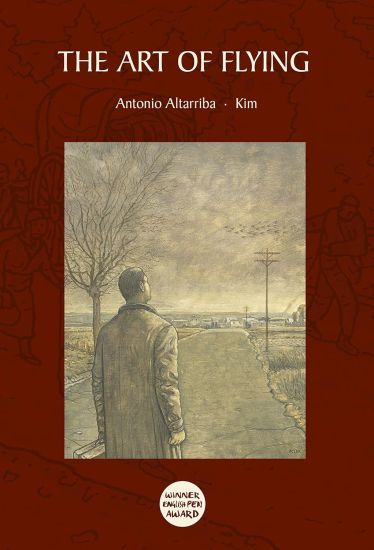
Art of Flying

Art of Flying

Antonio Altarriba

Vintage
2015
sidottu
When published in 2009, The Art of Flying was hailed as a landmark in the history of the graphic novel in Spain for its deeply touching synthesis of individual and collective memories.
Art in Mind

Art in Mind

Ernst van Alphen

University of Chicago Press
2005
sidottu
Art has the power to affect our thinking, changing not only the way we view and interact with the world but also how we create it. In Art in Mind, Ernst van Alphen probes this idea of art as a commanding force with the capacity to shape our intellect and intervene in our lives. Rather than interpreting art as merely a reflection of our social experience or a product of history, van Alphen here argues that art is a historical agent, or a cultural creator, that propels thought and experience forward. Examining a broad range of works, van Alphen - a renowned art historian and cultural theorist - demonstrates how art serves a socially constructive function by actually experimenting with the parameters of thought. Employing work from artists as diverse as Picasso, Watteau, Francis Bacon, Marlene Dumas, and Matthew Barney, he shows how art confronts its viewers with the "pain points" of cultural experience - genocide, sexuality, diaspora, and transcultural identity - and thereby transforms the ways in which human existence is conceived. Van Alphen analyzes how art visually "thinks" about these difficult cultural issues, tapping into an understudied interpretation of art as the realm where ideas and values are actively created, given form, and mobilized. In this way, van Alphen's book is a work of art in itself as it educates us in a new mode of thought that will forge equally new approaches and responses to the world.
Art in Mind

Art in Mind

Ernst van Alphen

University of Chicago Press
2005
nidottu
Art has the power to affect our thinking, changing not only the way we view and interact with the world but also how we create it. In Art in Mind, Ernst van Alphen probes this idea of art as a commanding force with the capacity to shape our intellect and intervene in our lives. Rather than interpreting art as merely a reflection of our social experience or a product of history, van Alphen here argues that art is a historical agent, or a cultural creator, that propels thought and experience forward. Examining a broad range of works, van Alphen - a renowned art historian and cultural theorist - demonstrates how art serves a socially constructive function by actually experimenting with the parameters of thought. Employing work from artists as diverse as Picasso, Watteau, Francis Bacon, Marlene Dumas, and Matthew Barney, he shows how art confronts its viewers with the "pain points" of cultural experience - genocide, sexuality, diaspora, and transcultural identity - and thereby transforms the ways in which human existence is conceived. Van Alphen analyzes how art visually "thinks" about these difficult cultural issues, tapping into an understudied interpretation of art as the realm where ideas and values are actively created, given form, and mobilized. In this way, van Alphen's book is a work of art in itself as it educates us in a new mode of thought that will forge equally new approaches and responses to the world.
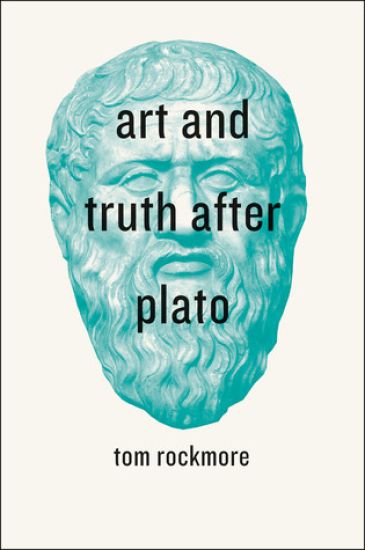
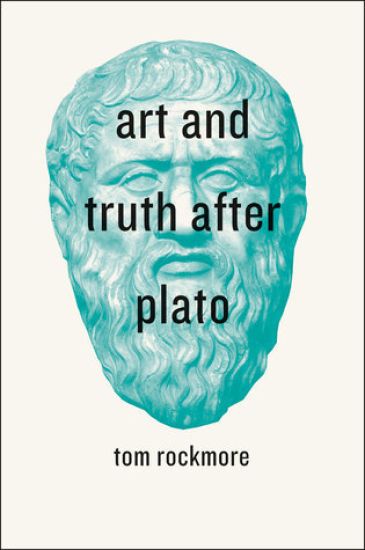
Art and Truth after Plato

Art and Truth after Plato

Tom Rockmore

University of Chicago Press
2013
sidottu
Despite its foundational role in the history of philosophy, Plato's famous argument that art does not have access to truth or knowledge is now rarely examined, in part because recent philosophers have assumed that Plato's challenge was resolved long ago. In "Art and Truth after Plato", Tom Rockmore argues that Plato has in fact never been satisfactorily answered - and to demonstrate that, he offers a comprehensive account of Plato's influence through nearly the whole history of Western aesthetics. Rockmore offers a cogent reading of the post-Platonic aesthetic tradition as a series of responses to Plato's position, examining a stunning diversity of thinkers and ideas. He visits Aristotle's Poetics, the medieval Christians, Kant's Critique of Judgment, Hegel's phenomenology, Marxism, social realism, Heidegger, and many other works and thinkers, ending with a powerful synthesis that lands on four central aesthetic arguments that philosophers have debated. More than a mere history of aesthetics, "Art and Truth after Plato" presents a fresh look at an ancient question, bringing it into contemporary relief.
Art from Start to Finish

Art from Start to Finish

University of Chicago Press
2006
sidottu
When is an artistic work finished? When the copyeditor makes the final correction to a manuscript, when the composer writes the last note of a symphony, or when the painter puts the last brushstroke on the canvas? Perhaps it's even later, when someone reads the work, when an ensemble performs, or when the painting is hung on a gallery wall for viewing? "Art from Start to Finish" gathers a unique group of contributors from the worlds of sociology, musicology, literature, and communications - many of them practicing artists in their own right - to discuss how artists from jazz musicians to painters work: how they coordinate their efforts, how they think, how they start, and, of course, how they finish their productions. Specialists in the arts have much to say about the works themselves, which are often neglected by scholars in other fields. "Art from Start to Finish" takes a different track by exploring the creative process and its social component. Any reader who makes art or has an interest in it will value this book.
Art from Start to Finish

Art from Start to Finish

University of Chicago Press
2006
nidottu
When is an artistic work finished? When the copyeditor makes the final correction to a manuscript, when the composer writes the last note of a symphony, or when the painter puts the last brushstroke on the canvas? Perhaps it's even later, when someone reads the work, when an ensemble performs, or when the painting is hung on a gallery wall for viewing? "Art from Start to Finish" gathers a unique group of contributors from the worlds of sociology, musicology, literature, and communications - many of them practicing artists in their own right - to discuss how artists from jazz musicians to painters work: how they coordinate their efforts, how they think, how they start, and, of course, how they finish their productions. Specialists in the arts have much to say about the works themselves, which are often neglected by scholars in other fields. "Art from Start to Finish" takes a different track by exploring the creative process and its social component. Any reader who makes art or has an interest in it will value this book.
Art History after Modernism

Art History after Modernism

Hans Belting; Caroline Saltzwedel; Mitch Cohen; Kenneth J. Northcott

University of Chicago Press
2003
sidottu
"Art history after modernism" does not only mean that art looks different today; it also means that our discourse on art has taken a different direction, if it is safe to say it has taken a direction at all. So begins Hans Belting's iconoclastic reconsideration of art and art history at the end of the millennium, which builds upon his earlier volume "The End of the History of Art?". "Known for his striking and original theories about the nature of art", according to the "Economist", Belting here examines how art is made, viewed and interpreted today. Arguing that contemporary art has burst out of the frame that art history had built for it, Belting calls for an entirely new approach to thinking and writing about art. He moves effortlessly between contemporary issues - the rise of global and minority art and its consequences for Western art history, installation and video art, and the troubled institution of the art museum - and questions central to art history's definition of itself, such as the distinction between high and low culture, art criticism versus art history, and the invention of modernism in art history. 48 black and white images illustrate the text, perfectly reflecting the state of contemporary art. With "Art History After Modernism", Belting retains his place as one of the most original thinkers working in the visual arts today.
Art History after Modernism

Art History after Modernism

Hans Belting; Caroline Saltzwedel; Mitch Cohen; Kenneth J. Northcott

University of Chicago Press
2003
nidottu
"Art history after modernism" does not only mean that art looks different today; it also means that our discourse on art has taken a different direction, if it is safe to say it has taken a direction at all.So begins Hans Belting's brilliant, iconoclastic reconsideration of art and art history at the end of the millennium, which builds upon his earlier and highly successful volume, The End of the History of Art?. "Known for his striking and original theories about the nature of art," according to the Economist, Belting here examines how art is made, viewed, and interpreted today. Arguing that contemporary art has burst out of the frame that art history had built for it, Belting calls for an entirely new approach to thinking and writing about art. He moves effortlessly between contemporary issues—the rise of global and minority art and its consequences for Western art history, installation and video art, and the troubled institution of the art museum—and questions central to art history's definition of itself, such as the distinction between high and low culture, art criticism versus art history, and the invention of modernism in art history. Forty-eight black and white images illustrate the text, perfectly reflecting the state of contemporary art.With Art History after Modernism, Belting retains his place as one of the most original thinkers working in the visual arts today.
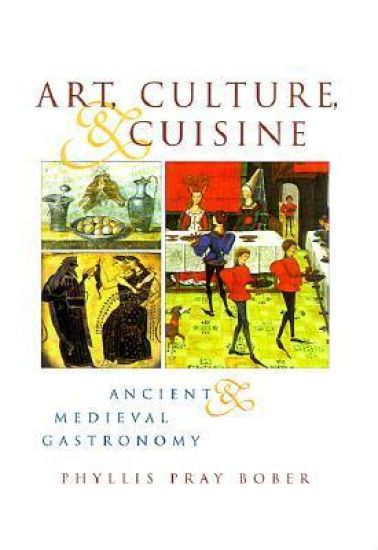
Art, Culture, and Cuisine

Art, Culture, and Cuisine

Phyllis Pray Bober

University of Chicago Press
1999
sidottu
Examines cooking through the dual lens of archaeology and art history. This book shows that cuisine - the higher, skilled and creative manifestation of cooking - is an art that should be elevated to the level of those more generally termed "fine". Phyllis Pray Bober describes prehistoric eating in ancient Turkey; traditions of the great civilizations of Egypt, Mesopotamia, Greece and Rome; and rituals of the Middle Ages and the "Late Gothic International" period. To satisfy the adventurous reader, Bober has included old menus with contemporary adaptations.
Art, Culture, and Cuisine

Art, Culture, and Cuisine

Phyllis Pray Bober

University of Chicago Press
2001
nidottu
Examines cooking through the dual lens of archaeology and art history. This book shows that cuisine - the higher, skilled and creative manifestation of cooking - is an art that should be elevated to the level of those more generally termed "fine". Phyllis Pray Bober describes prehistoric eating in ancient Turkey; traditions of the great civilizations of Egypt, Mesopotamia, Greece and Rome; and rituals of the Middle Ages and the "Late Gothic International" period. To satisfy the adventurous reader, Bober has included old menus with contemporary adaptations.
Art in Chicago

Art in Chicago

University of Chicago Press
2018
sidottu
For decades now, the story of art in America has been dominated by New York. It gets the majority of attention, the stories of its schools and movements and masterpieces the stuff of pop culture legend. Chicago, on the other hand . . . well, people here just get on with the work of making art. Now that art is getting its due. Art in Chicago is a magisterial account of the long history of Chicago art, from the rupture of the Great Fire in 1871 to the present, Manierre Dawson, Laszlo Moholy-Nagy, and Ivan Albright to Chris Ware, Anne Wilson, and Theaster Gates. The first single-volume history of art and artists in Chicago, the book-in recognition of the complexity of the story it tells-doesn't follow a single continuous trajectory. Rather, it presents an overlapping sequence of interrelated narratives that together tell a full and nuanced, yet wholly accessible history of visual art in the city. From the temptingly blank canvas left by the Fire, we loop back to the 1830s and on up through the 1860s, tracing the beginnings of the city's institutional and professional art world and community. From there, we travel in chronological order through the decades to the present. Familiar developments-such as the founding of the Art Institute, the Armory Show, and the arrival of the Bauhaus-are given a fresh look, while less well-known aspects of the story, like the contributions of African American artists dating back to the 1860s or the long history of activist art, finally get suitable rcognition. The six chapters, each written by an expert in the period, brilliantly mix narrative and image, weaving in oral histories from artists and critics reflecting on their work in the city, and setting new movements and key works in historical context. The final chapter, comprised of interviews and conversations with contemporary artists, brings the story up to the present, offering a look at the vibrant art being created in the city now and addressing ongoing debates about what it means to identify as-or resist identifying as-a Chicago artist today. The result is an unprecedentedly inclusive and rich tapestry, one that reveals Chicago art in all its variety and vigor-and one that will surprise and enlighten even the most dedicated fan of the city's artistic heritage. Part of the Terra Foundation for American Art's year-long Art Design Chicago initiative, which will bring major arts events to venues throughout Chicago in 2018, Art in Chicago is a landmark publication, a book that will be the standard account of Chicago art for decades to come. No art fan-regardless of their city-will want to miss it.
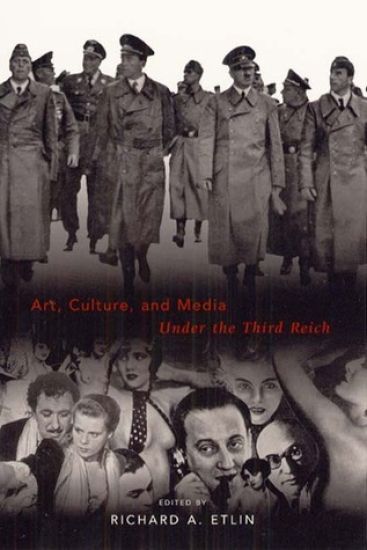
Art, Culture, and Media Under the Third Reich
"Art, Culture and Media Under the Third Reich" explores the way in which Nazi Germany used art and media to portray their country as a champion of "Kultur" and civilization. Rather than focusing strictly on the role of the arts in state-supported propaganda as other studies do, this volume reveals how multiple domains of cultural activity served to conceptually dehumanize Jews and other groups, sowing the psychological seeds for the Holocaust to come. Topics covered by the essays range from the design of the Nuremberg Party Rally Grounds to Nazi experiments with radio. Contributors address nearly every facet of the art and mass media under the Third Reich - efforts to define degenerate music; the promotion of race hatred and warfare through film, architecture and public assemblies; visual iconography and style; views of the racially ideal garden and landscape; portrayal and reception of art and culture abroad; the treatment of exiled artists; and issues of territory, conquest and cult. Anyone studying the history of Nazi Germany or the role of the arts in nationalist projects should benefit from this book.
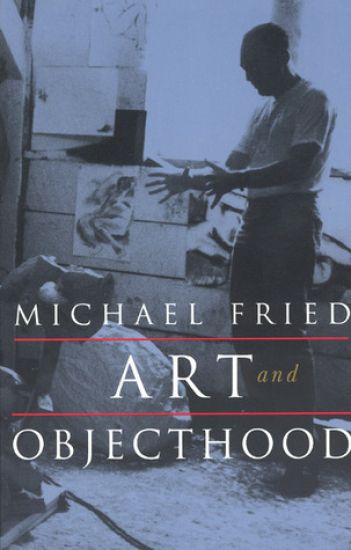
Art and Objecthood

Art and Objecthood

Michael Fried

University of Chicago Press
1998
nidottu
Michael Fried's often controversial art criticism defines the contours of late modernism in the visual arts. This volume contains 27 pieces, including the introduction to the catalogue for "Three American Painters," the text of his book "Morris Louis," and "Art and Objecthood." Originally published between 1962 and 1977, the essays continue to generate debate today. These are uncompromising writings, aware of their transformative power during a time of intense controversy about the nature of modernism and the aims and essence of advanced painting and sculpture. Ranging from brief reviews to extended essays, and including major critiques of Jackson Pollock, Morris Louis, Kenneth Noland, Jules Olitski, Frank Stella, and Anthony Caro, these writings establish a set of basic terms for understanding key issues in high modernism: the viability of Clement Greenberg's account of the infralogic of modernism, the status of figuration after Pollock, the centrality of the problem of shape, the nature of pictorial and sculptural abstraction, and the relationship between work and beholder. In a number of essays Fried contrasts the modernist enterprise with minimalist or literalist art, and, taking a position that remains provocative to this day, he argues that minimalism is essentially a genre of theatre, hence artistically self-defeating. For this volume Fried has also provided an extensive introductory essay in which he discusses how he became an art critic, clarifies his intentions in his art criticism, and draws crucial distinctions between his art criticism and the art history he also wrote.
Art and Truth after Plato

Art and Truth after Plato

Tom Rockmore

University of Chicago Press
2015
nidottu
Despite its foundational role in the history of philosophy, Plato's famous argument that art does not have access to truth or knowledge is now rarely examined, in part because recent philosophers have assumed that Plato's challenge was resolved long ago. In Art and Truth after Plato, Tom Rockmore argues that Plato has in fact never been satisfactorily answered - and to demonstrate that, he offers a comprehensive account of Plato's influence through nearly the whole history of Western aesthetics. Rockmore offers a cogent reading of the post - Platonic aesthetic tradition as a series of responses to Plato's position, examining a stunning diversity of thinkers and ideas. He visits Aristotle's Poetics, the medieval Christians, Kant's Critique of Judgment, Hegel's phenomenology, Marxism, social realism, Heidegger, and many other works and thinkers, ending with a powerful synthesis that lands on four central aesthetic arguments that philosophers have debated. More than a mere history of aesthetics, Art and Truth after Plato presents a fresh look at an ancient question, bringing it into contemporary relief.
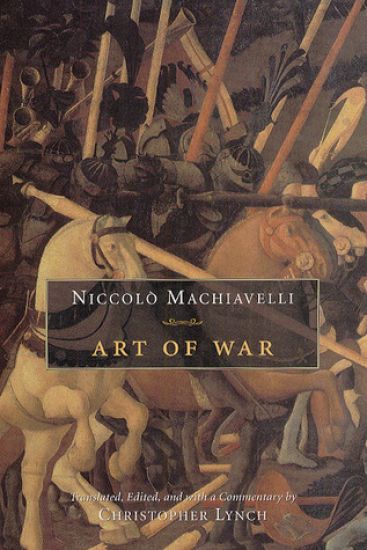
Art of War

Art of War

Niccolò Machiavelli; Christopher Lynch

University of Chicago Press
2003
sidottu
Niccolo Machiavelli's Art of War is one of the world's great classics of military and political theory. Praised by the finest military minds in history and said to have influenced no lesser lights than Frederick the Great and Napoleon, Art of War is essential reading for anyone wanting to understand the history and theory of war in the West. Christopher Lynch's fluid translation, faithful to the original but rendered in modern, idomatic English, helps readers appreciate anew Machiavelli's brilliant and often eerily prescient treatments of the relationships between war and politics, civilians and the military, and technology and tactics. Clearly laying out the fundamentals of military organization and strategy, Machiavelli marshals a veritable army of precepts, prescriptions, and examples about such topics as how to motivate soldiers and demoralize the enemy, how to avoid ambushes, and how to gain the tactical and strategic advantage in countless circumstances. To help readers better appreciate Art of War, Lynch provides an insightful introduction and a substantial interpretive essay discussing the military, political, and philosophical aspects of the work, in addition to maps, an index of names, and a glossary. Combining an abundance of relevant scholarship with the most flawless translation to date, this volume will surely be the standard for years to come.