Kirjojen hintavertailu. Mukana 11 699 587 kirjaa ja 12 kauppaa.

Kirjahaku

Etsi kirjoja tekijän nimen, kirjan nimen tai ISBN:n perusteella.

1000 tulosta hakusanalla Adam Harrell

Adam and His Tuba

Adam and His Tuba

Ziga X. Gombac; Maja Kastelic

North-South Books
2023
sidottu
Readers will be left screaming, 'Encore ' -Kirkus Reviews A playful book about finding your own path. Everyone in the circus loves to perform - except for Adam, the very youngest member of the Von Trapeze family. Wherever Adam Von Trapeze's family circus performs they inspire audiences with their breathtaking feats. Grandma Antonia breathes fire, Uncle Artem builds dizzying human pyramids, and Papa Alexei and Mama Anastasia dance blindfolded on the tightrope. Only Adam, the youngest of the family, doesn't show an interest in circus tricks and loud applause. The family is concerned. Where did they go wrong? But one day they are enchanted by the sound of a tuba. And from that day forward, the famous Von Trapeze family circus features a new performer--the one they never expected to be part of the family tradition. And he was a star. Two of the most famous Slovenian children's book artists take us into the world of the circus in their first joint work. Ziga X Gombac tells the story of Adam in clear, subtle words. With a reduced palette of warm sepia colors, Maja Kastelic lights up the circus world on and off the stage. Together they plead for trust in one's own path and encourage us to take our place in the world.
Adam Smith, Radical and Egalitarian

Adam Smith, Radical and Egalitarian

Iain McLean

Edinburgh University Press
2006
sidottu
Foreword by the Rt. Hon. Gordon Brown, Chancellor of the Exchequer This book aims to show that Adam Smith (1723-90), the author of The Wealth of Nations, was not the promoter of ruthless laissez-faire capitalism that is still frequently depicted. Smith's "right-wing" reputation was sealed after his death when it was not safe to claim that an author may have influenced the French revolutionaries. But as the author, also, of The Theory of Moral Sentiments, which he probably regarded as his more important book, Smith sought a non-religious grounding for morals, and found it in the principle of sympathy, which should lead an impartial spectator to understand others' problems. This book locates Smith in the Scottish Enlightenment; shows how the two books are perfectly consistent with one another; traces Smith's influence in France and the United States; and draws out the lessons that Adam Smith can teach policy makers in the 21st Century. Although Smith was not a religious man, he was a very acute sociologist of religion. The book accordingly explains the Scottish religious context of Smith's time, which was, as it remains, very different to the English religious context. The whole book is shot through with Iain McLean's love for the Edinburgh of his birth, and for the Scottish Enlightenment. It begins and ends with poems by Smith's great admirer Robert Burns.
Adam's Empire

Adam's Empire

Lyanda Lynn Haupt

Sphere
2016
pokkari
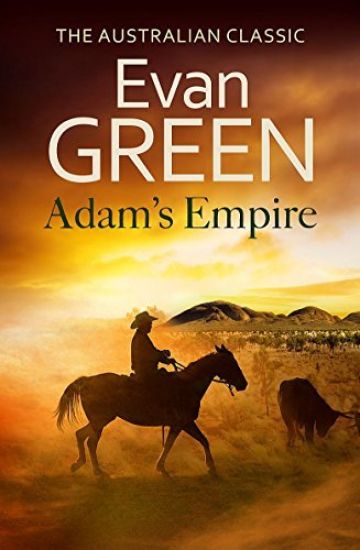
"It's a great country, but never trust it, son. It's beautiful but it's treacherous."Adam Ross had seen the way his country could destroy a man. Growing up in the Australian outback in the first half of the twentieth century with no formal education, no parents and no one to love him, he learned to fend for himself. But when he forms an unlikely friendship with Jimmy, who works in the Opal mines, his luck begins to change. The land that stole Adam's father gives him an opportunity to start anew. Armed with determination and ambition, Adam treks west to carve himself an empire. However, success doesn't come easy and Adam, a man who spent much of his life devoid of love, soon finds himself caught between two women. Torn between his love for his cold-hearted wife and his mistress, Adam must make decisions about his future and the type of man he wants to be.
Adam Smith and the Founding of Market Economics
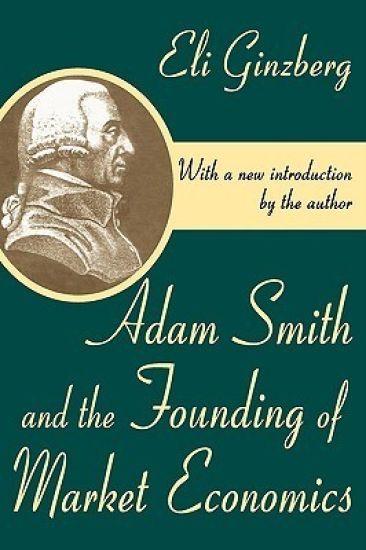
"Business is a necessary evil that the moral leaders of mankind have tolerated but never condoned. At no time did they view with favor the pursuit of material gain. The Old Testament prophets proclaimed against the rapacity of the rich. Jesus scorned the money lenders. Luther had no kind words to say to the wealthy, nor did Calvin indulge the new bourgeoisie." Thus begins this fi rst book-length study of social philosopher and political economist Adam Smith's The Wealth of Nations. Adam Smith (1723-1790) was a Scottish-born thinker who served as both professor of logic and professor of moral philosophy at Glasgow University. While the publication of his philosophic treatise The Theory of Moral Sentiments at age thirty-six gave Smith fame, The Wealth of Nations, published in 1776, has established his lasting reputation. Recognized in its own day as an important and compassionate examination of economics, the book was praised by Thomas Jefferson for its contribution to the fi eld of economics. Smith wrote The Wealth of Nations for several reasons: he was disgusted with the business methods practiced by merchants and manufacturers, and he was concerned with improving the well-being of society. Refl ecting his own concerns about the contribution economics could make to the betterment of society, Eli Ginzberg published this study of Smith's humanitarian views on commerce, industrialism, and labor. Written for his doctoral degree at Columbia University, and originally published as The House of Adam Smith, the book is divided into two parts. The fi rst part reconstructs and interprets Smith's classic The Wealth of Nations, while the second part examines Smith as the patron saint and prophet of the successes of nineteenthcentury capitalism. Adam Smith and the Founding of Market Economics is a fascinating study, and contributes signifi cantly to our understanding of capitalism, free trade, the division of management and labor, and the history of world economics in the nineteenth century. Its republication, with a new introduction by the author, will be valued by economists, political historians, students of philosophy, and policymakers.
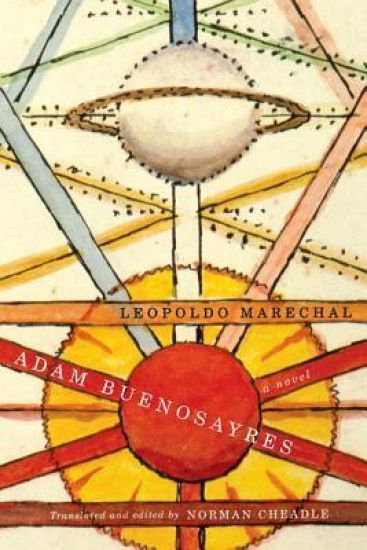
Adam Buenosayres

Adam Buenosayres

Leopoldo Marechal

McGill-Queen's University Press
2014
nidottu
A modernist urban novel in the tradition of James Joyce, Adam Buenosayres is a tour-de-force that does for Buenos Aires what Carlos Fuentes did for Mexico City or Jose Lezama Lima did for Havana - chronicles a city teeming with life in all its clever and crass, rude and intelligent forms. Employing a range of literary styles and a variety of voices, Leopoldo Marechal parodies and celebrates Argentina's most brilliant literary and artistic generation, the martinfierristas of the 1920s, among them Jorge Luis Borges. First published in 1948 during the polarizing reign of Juan Peron, the novel was hailed by Julio Cortazar as an extraordinary event in twentieth-century Argentine literature. Set over the course of three break-neck days, Adam Buenosayres follows the protagonist through an apparent metaphysical awakening, a battle for his soul fought by angels and demons, and a descent through a place resembling a comic version of Dante's hell. Presenting both a breathtaking translation and thorough explanatory notes, Norman Cheadle captures the limitless language of Marechal's original and guides the reader along an unmatched journey through the culture of Buenos Aires. This first-ever English translation brings to light Marechal's masterwork with an introduction outlining the novel's importance in various contexts - Argentine, Latin American, and world literature - and with notes illuminating its literary, cultural, and historical references. A salient feature of the Argentine canon, Adam Buenosayres is both a path-breaking novel and a key text for understanding Argentina's cultural and political history.
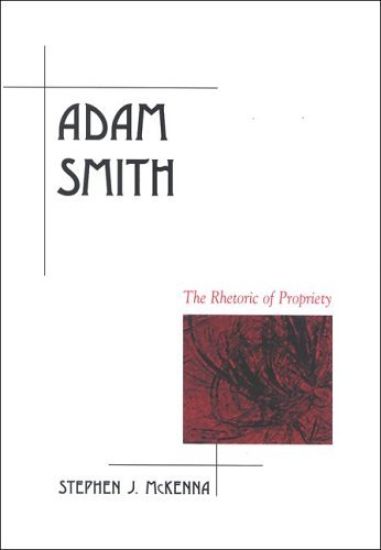
Adam Smith

Adam Smith

Stephen McKenna

State University of New York Press
2005
nidottu
Provides the first book-length treatment of Smith’s rhetorical theory, focusing on his theory of rhetorical propriety—the means by which effective communication is adapted to the variables of subject, audience, speaker or writer, purpose, and moment—and the centrality of this concept to his thought.
Adam Smith and the Philosophy of Law and Economics
Adam Smith and the Philosophy of Law and Economics is a unique book. Malloy and Evensky bring together a team of international and interdisciplinary scholars to address the work of Adam Smith as it relates to law and economics. In addition to their own contributions, the book includes works by Dr. John W. Cairns of the University of Edinburgh, Dr. J. Ralph Lindgren of Lehigh University, Professor Kenneth A.B. Mackinnon of the University of Waikato, and the Honorable Richard A. Posner of the United States Circuit Court of Appeals. Together these authors bring expertise from the areas of law, philosophy, history, economics, and law and economics to a new study of Adam Smith and his work. Part One of the book presents new and important observations on Smith's views on community, ethics, the court system, criminal law, and delictual or tort law liability. In this part of the book Smith's work is also examined from the perspective of his use as persuasive authority in the works of modern legal economists. In Part Two the 'living Smith' is explored by way of a debate between two major contributors in the field of law and economics. The debate and its analysis create a unique and contemporary opportunity to study Smith as a foundational source in the midst of a current academic and social policy dispute. The understanding of Adam Smith that emerges from this book is new and complex. It will challenge the one-dimensional portrayals of Smith as a promoter of self-interest and it will correct many of the misinterpretations of Smith that are currently fashionable in the worlds of law and economics and the philosophy of law.
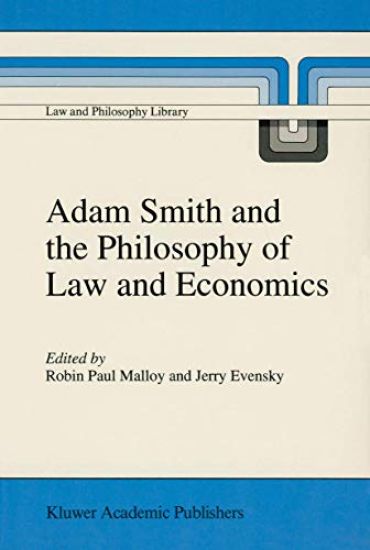
Adam Smith and the Philosophy of Law and Economics
Adam Smith and the Philosophy of Law and Economics is a unique book. Malloy and Evensky bring together a team of international and interdisciplinary scholars to address the work of Adam Smith as it relates to law and economics. In addition to their own contributions, the book includes works by Dr. John W. Cairns of the University of Edinburgh, Dr. J. Ralph Lindgren of Lehigh University, Professor Kenneth A.B. Mackinnon of the University of Waikato, and the Honorable Richard A. Posner of the United States Circuit Court of Appeals. Together these authors bring expertise from the areas of law, philosophy, history, economics, and law and economics to a new study of Adam Smith and his work. Part One of the book presents new and important observations on Smith's views on community, ethics, the court system, criminal law, and delictual or tort law liability. In this part of the book Smith's work is also examined from the perspective of his use as persuasive authority in the works of modern legal economists. In Part Two the `living Smith' is explored by way of a debate between two major contributors in the field of law and economics. The debate and its analysis create a unique and contemporary opportunity to study Smith as a foundational source in the midst of a current academic and social policy dispute. The understanding of Adam Smith that emerges from this book is new and complex. It will challenge the one-dimensional portrayals of Smith as a promoter of self-interest and it will correct many of the misinterpretations of Smith that are currently fashionable in the worlds of law and economics and the philosophy of law.
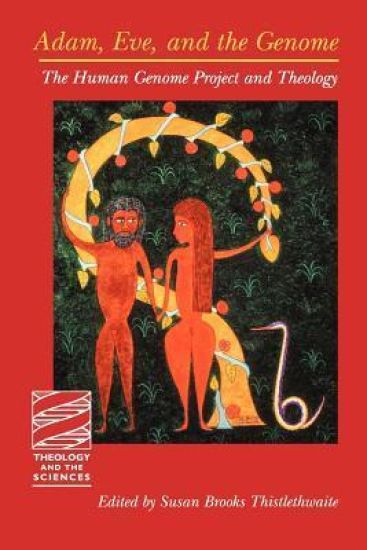
Adam, Eve, and the Genome

Adam, Eve, and the Genome

Augsburg Fortress
2003
pokkari
The project to map the human genetic codes has been widely hailed as a monumental achievement with vast medical promise. Yet the project is also fraught with ambiguities and, Susan Thistlethwaite claims, great potential dangers to society.
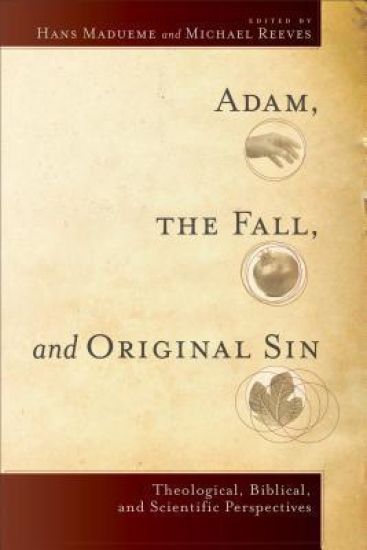
Adam, the Fall, and Original Sin – Theological, Biblical, and Scientific Perspectives

Adam, the Fall, and Original Sin – Theological, Biblical, and Scientific Perspectives

Hans Madueme; Michael R. E. Reeves

Baker Academic, Div of Baker Publishing Group
2014
nidottu
The Christian doctrines of original sin and the historical fall of Adam have been in retreat since the rise of modernity. Here leading scholars present a theological, biblical, and scientific case for the necessity of belief in original sin and the historicity of Adam and Eve in response to contemporary challenges. Representing various Christian traditions, the contributors shed light on recent debates as they present the traditional doctrine of original sin as orthodox, evangelical, and the most theologically mature and cogent synthesis of the biblical witness. This fresh look at a heated topic in evangelical circles will appeal to professors, students, and readers interested in the creation-evolution debate.
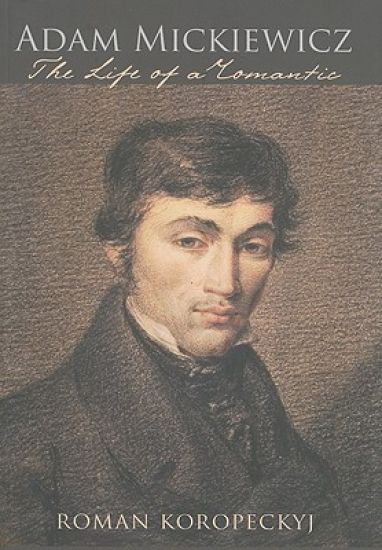
Adam Mickiewicz

Adam Mickiewicz

Roman Koropeckyj

Cornell University Press
2008
sidottu
Adam Mickiewicz (1798–1855), Poland's national poet, was one of the extraordinary personalities of the age. In chronicling the events of his life-his travels, numerous loves, a troubled marriage, years spent as a member of a heterodox religious sect, and friendships with such luminaries of the time as Aleksandr Pushkin, James Fenimore Cooper, George Sand, Giuseppe Mazzini, Margaret Fuller, and Aleksandr Herzen-Roman Koropeckyj draws a portrait of the Polish poet as a quintessential European Romantic. Spanning five decades of one of the most turbulent periods in modern European history, Mickiewicz's life and works at once reflected and articulated the cultural and political upheavals marking post-Napoleonic Europe. After a poetic debut in his native Lithuania that transformed the face of Polish literature, he spent five years of exile in Russia for engaging in Polish "patriotic" activity. Subsequently, his grand tour of Europe was interrupted by his country's 1830 uprising against Russia; his failure to take part in it would haunt him for the rest of his life. For the next twenty years Mickiewicz shared the fate of other Polish émigrés in the West. It was here that he wrote Forefathers' Eve, part 3 (1832) and Pan Tadeusz (1834), arguably the two most influential works of modern Polish literature. His reputation as his country's most prominent poet secured him a position teaching Latin literature at the Academy of Lausanne and then the first chair of Slavic Literature at the Collége de France. In 1848 he organized a Polish legion in Italy and upon his return to Paris founded a radical French-language newspaper. His final days were devoted to forming a Polish legion in Istanbul. This richly illustrated biography-the first scholarly biography of the poet to be published in English since 1911-draws extensively on diaries, memoirs, correspondence, and the poet's literary texts to make sense of a life as sublime as it was tragic. It concludes with a description of the solemn transfer of Mickiewicz's remains in 1890 from Paris to Cracow, where he was interred in the Royal Cathedral alongside Poland's kings and military heroes.
Adam Mickiewicz

Adam Mickiewicz

Roman Koropeckyj

CORNELL UNIVERSITY PRESS
2011
muu
Adam Mickiewicz (1798-1855), Poland's national poet, was one of the extraordinary personalities of the age. In chronicling the events of his life-his travels, numerous loves, a troubled marriage, years spent as a member of a heterodox religious sect...
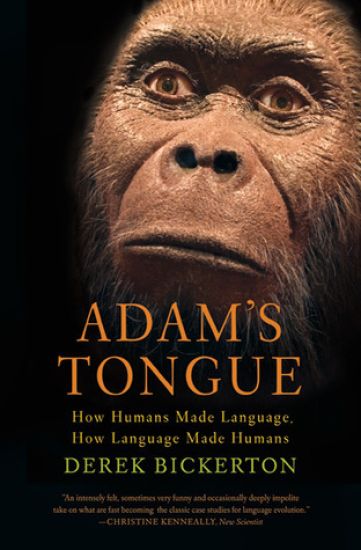
Adam's Tongue

Adam's Tongue

Bickerton Derek

Hill Wang Inc.,U.S.
2010
nidottu
How language evolved has been called 'the hardest problem in science'. In "ADAM'S TONGUE", Derek Bickerton - long a leading authority in this field - shows how and why previous attempts to solve that problem have fallen short. Taking cues from topics as diverse as the foraging strategies of ants, the distribution of large prehistoric herbivores, and the construction of ecological niches, Bickerton produces a dazzling new alternative to the conventional wisdom. Language is unique to humans, but it isn't the only thing that sets us apart from other species - our cognitive powers are qualitatively different. So could there be two separate discontinuities between humans and the rest of nature? No, says Bickerton; he shows how the mere possession of symbolic units - words - automatically opened a new and different cognitive universe, one that yielded novel innovations ranging from barbed arrowheads to the Apollo spacecraft. Written in Bickerton's lucid and irreverent style, this book is the first to thoroughly integrate the story of how language evolved with the story of how humans evolved. Sure to be controversial, it will make indispensable reading both for experts in the field and for every reader who has ever wondered how a species as remarkable as ours could have come into existence.
Adam and Eve in Paradise

Adam and Eve in Paradise

Eça de Queirós

NEW DIRECTIONS PUBLISHING CORPORATION
2025
nidottu
Gloriously translated by Margaret Jull Costa, Adam and Eve in Paradise by Eça de Queirósis not the rosy prelapsarian tale of your childhood Bible: yellow-eyed Adam is a slope-browed Neanderthal all alone and panicked, and Paradise is abominable (seethingly alive with vicious insects and roving primordial carnivores). Luckily for Adam, Eve appears: “O wonder, there before Adam, as if it were both him and not him, was another Being very similar to him, only more slender and covered with a more silken down, and who was regarding him with wide, lustrous, liquid eyes… And slowly, gently rubbing its bare knees together, the whole of this silken, tender Being was offering itself up in astonished, lascivious submission. It was Eve… It was you, O Venerable Mother!” But still we must pity poor Adam and Eve: “Our Parents’ tireless, desperate efforts were devoted entirely to surviving in the midst of a Nature that was ceaselessly, furiously plotting their destruction. And Adam and Eve spent those days—which Semitic texts celebrate as delightful—always trembling, always whimpering, always fleeing!” Eça de Queirós’s pleasure in the glories of language and his delight in skewering all complacencies are richly palpable, leaving the reader smiling and sighing: Ahhh, those Genesiac days…
Adam Usk's Secret

Adam Usk's Secret

Steven Justice

University of Pennsylvania Press
2015
sidottu
Adam Usk, a Welsh lawyer in England and Rome during the first years of the fifteenth century, lived a peculiar life. He was, by turns, a professor, a royal advisor, a traitor, a schismatic, and a spy. He cultivated and then sabotaged figures of great influence, switching allegiances between kings, upstarts, and popes at an astonishing pace. Usk also wrote a peculiar book: a chronicle of his own times, composed in a strangely anxious and secretive voice that seems better designed to withhold vital facts than to recount them. His bold starts tumble into anticlimax; he interrupts what he starts to tell and omits what he might have told. Yet the kind of secrets a political man might find safer to keep-the schemes and violence of regime change-Usk tells openly. Steven Justice sets out to find what it was that Adam Usk wanted to hide. His search takes surprising turns through acts of political violence, persecution, censorship, and, ultimately, literary history. Adam Usk's narrow, eccentric literary genius calls into question some of the most casual and confident assumptions of literary criticism and historiography, making stale rhetorical habits seem new. Adam Usk's Secret concludes with a sharp challenge to historians over what they think they can know about literature-and to literary scholars over what they think they can know about history.
Adam's Sin, Our Humanity, and Christ's Redemption in Cyril of Alexandria

Adam's Sin, Our Humanity, and Christ's Redemption in Cyril of Alexandria

Anthony Bibawy

THE CATHOLIC UNIVERSITY OF AMERICA PRESS
2025
nidottu
As a result of the neo-patristic movement of the early twentieth century, the teachings of original sin and atonement as understood in the West were questioned and reformulated based on what was believed to be early Eastern Christian patristic thought. This new paradigm proposed that humanity inherited death and corruption, but not sin, from Adam and that the purpose of the Incarnation and salvific work of Christ was to restore humanity from death and corruption, but not an inherent sinfulness.In contrast to this popular and seemingly dogmatic paradigm and false dichotomy between Western and Eastern teaching on sin and atonement, this volume asserts that the writings of many Eastern fathers of the early fifth century incorporate many, if not the majority, of the terms and teachings behind what have been labeled as Western departures concerning original sin and atonement. Through a comprehensive analysis of the writings of Cyril of Alexandria and some of his contemporaries in the early fifth century East during the time of the Pelagian controversy, this book demonstrates that a central and consistent theme of their soteriology revolves around the sinfulness and guilt of all humanity that is rooted in Adam's sin by nature and is resolved only through recapitulation into the new root, the second Adam, the impeccable Christ. Christ's impeccability is necessary to correct the state of sinfulness and guilt in humanity through his incarnation and spotless sacrifice on the cross as a ransom and substitute on behalf of and in exchange of all to satisfy the divine justice and to restore humanity to its original state in the divine image.