Kirjojen hintavertailu. Mukana 11 342 296 kirjaa ja 12 kauppaa.

Kirjahaku

Etsi kirjoja tekijän nimen, kirjan nimen tai ISBN:n perusteella.

1000 tulosta hakusanalla Alban Butler

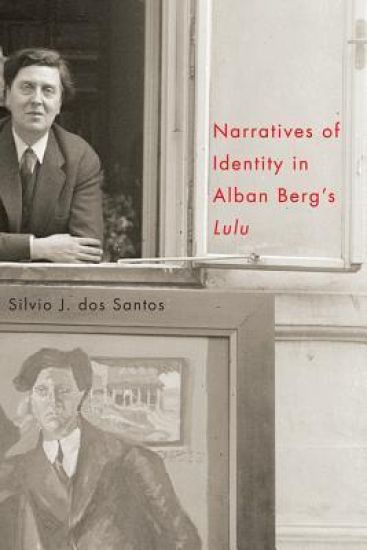
Narratives of Identity in Alban Berg's "Lulu"

Narratives of Identity in Alban Berg's "Lulu"

Silvio dos Santos

University of Rochester Press
2014
sidottu
This book explores the crossroads between autobiographical narratives and musical composition in Alban Berg's Lulu, unveiling aspects of encoded social customs, gender identity, and personal experiences within musical structures. Exploring the crossroads between autobiographical narrative and musical composition, this book examines Berg's transformation of Frank Wedekind's Erdgeist and Die Büchse der Pandora -- the plays used in the formationof the libretto for Lulu -- according to notions of gender identity, social customs, and the aesthetics of modernity in the Vienna of the 1920s and 1930s. While Berg modernized several aspects of the plays and incorporatedserial techniques of composition from Arnold Schoenberg, he never let go of the idealistic Wagnerian perspectives of his youth. In fact, he went as far as reconfiguring aspects of Richard Wagner's life as an ideal identity to beplayed out in the compositional process. In composing the opera, Berg also reflected on the most important cultural figures in fin-de-siècle Vienna that affected his worldview, including Karl Kraus, Emil Lucka, Otto Weininger, andothers. Combining analysis of Berg's correspondence, numerous sketches for Lulu, and the finished work with interpretive models drawn from cultural studies and philosophy, this book elucidates the ways in which Berg grappled at the end of his life with his self-image as an "incorrigible romantic," and explains aspects of his musical language that have been considered strange or anomalous in Berg scholarship. Silvio J. dos Santos isassistant professor of musicology at the University of Florida.
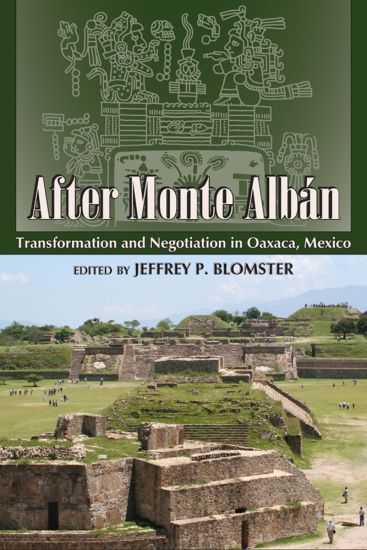
After Monte Albán

After Monte Albán

University Press of Colorado
2017
nidottu
After Monte Albán reveals the richness and interregional relevance of Postclassic transformations in the area now known as Oaxaca, which lies between Central Mexico and the Maya area and, as contributors to this volume demonstrate, achieved cultural centrality in pan-Mesoamerican networks. Large nucleated states throughout Oaxaca collapsed after 700 C.E., including the great Zapotec state centered in the Valley of Oaxaca, Monte Albán. Elite culture changed in fundamental ways as small city-states proliferated in Oaxaca, each with a new ruling dynasty required to devise novel strategies of legitimization. The vast majority of the population, though, sustained continuity in lifestyle, religion, and cosmology.Contributors synthesize these regional transformations and continuities in the lower Rio Verde Valley, the Valley of Oaxaca, and the Mixteca Alta. They provide data from material culture, architecture, codices, ethnohistoric documents, and ceramics, including a revised ceramic chronology from the Late Classic to the end of the Postclassic that will be crucial to future investigations. After Monte Albán establishes Postclassic Oaxaca's central place in the study of Mesoamerican antiquity. Contributors include Jeffrey P. Blomster, Bruce E. Byland, Gerardo Gutierrez, Byron Ellsworth Hamann, Arthur A. Joyce, Stacie M. King, Michael D. Lind, Robert Markens, Cira Martínez López, Michel R. Oudijk, and Marcus Winter.
I am called Alban

I am called Alban

Laurence Attewill

The Choir Press
2023
nidottu
There are many excellent books on St Albans, its cathedral and its history but Laurence Attewill brings a fresh focus on Alban and his legacy. I Am Called Alban tells the Alban story in an easy and readable style, and makes the case that a thread of continuity can be traced through the whole period despite existential threats. I Am Called Alban does not shrink from asking awkward questions: who was Alban and was he really martyred and if so, when? Did his cult, given a huge boost by St Germanus in the 5th century, survive the Saxon take-over in the centuries following the Roman secession? Was the Saxon monastery really founded by King Offa? Why did the Norman Archbishop Lanfranc, attach so much importance to the status of St Alban as the English protomartyr? And what did the monks of this rejuvenated monastery, the most important in the country, actually do? Following the dissolution of the monastery in the Reformation, how did the Abbey church, bigger than most cathedrals, survive as the parish church of the decidedly modest town of St Albans? The story is concluded with the dramatic events that led to the elevation of the Abbey as the cathedral of a new diocese in the 19th century.
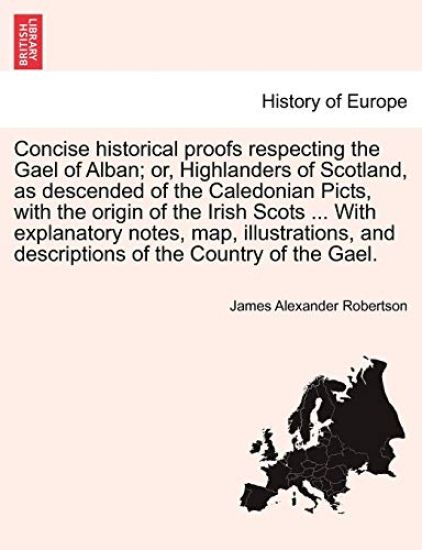
Concise Historical Proofs Respecting the Gael of Alban; Or, Highlanders of Scotland, as Descended of the Caledonian Picts, with the Origin of the Irish Scots ... with Explanatory Notes, Map, Illustrations, and Descriptions of the Country of the Gael.
Title: Concise historical proofs respecting the Gael of Alban; or, Highlanders of Scotland, as descended of the Caledonian Picts, with the origin of the Irish Scots ... With explanatory notes, map, illustrations, and descriptions of the Country of the Gael.Publisher: British Library, Historical Print EditionsThe British Library is the national library of the United Kingdom. It is one of the world's largest research libraries holding over 150 million items in all known languages and formats: books, journals, newspapers, sound recordings, patents, maps, stamps, prints and much more. Its collections include around 14 million books, along with substantial additional collections of manuscripts and historical items dating back as far as 300 BC.The HISTORY OF EUROPE collection includes books from the British Library digitised by Microsoft. This collection includes works chronicling the development of Western civilisation to the modern age. Highlights include the development of language, political and educational systems, philosophy, science, and the arts. The selection documents periods of civil war, migration, shifts in power, Muslim expansion into Central Europe, complex feudal loyalties, the aristocracy of new nations, and European expansion into the New World. ++++The below data was compiled from various identification fields in the bibliographic record of this title. This data is provided as an additional tool in helping to insure edition identification: ++++ British Library Robertson, James Alexander; 1865. 8 . 10370.bb.29.