Kirjojen hintavertailu. Mukana 12 083 983 kirjaa ja 12 kauppaa.

Kirjahaku

Etsi kirjoja tekijän nimen, kirjan nimen tai ISBN:n perusteella.

1000 tulosta hakusanalla Athanasios Terzis

Athanasius

Athanasius

Khaled Anatolios

Routledge
1998
sidottu
In this volume, Khaled Anatolios presents a comprehensive study of Saint Athanasius, one of the most influential figures in the development of Christian doctrine. He analyzes the coherence of Athanasius' theology by relating the various aspects of his doctrine - God, creation, theological anthropology, Christology and redemption, and the life of grace - to a pervasive emphasis on the radical distinction, and simultaneous relation, between God and world. Athanasius: The Coherence of his Thought provides a systematic account of the overall inner logic of the Athanasian vision. It shows how the various aspects of his doctrine are mutually related and in so doing elucidates the complexities both of Athanasian thought and Christian doctrine in general.
Athanasius

Athanasius

Khaled Anatolios

Routledge
2004
sidottu
This book presents the fundamental elements of Athanasius' response to the central questions of the identity of Jesus and the nature of his relationship with God. Providing a useful introduction on his life and work, the book focuses on the tumultuous doctrinal controversies of the day in which he was a central figure. Key selections from his writings, newly translated, have all been chosen with a view to presenting the rationale for Athanasius' fundamental theological positions: the divinity and humanity of Christ, human redemption, the divinity and work of the Holy Spirit, the logic of Christian worship, and the scriptural basis for the doctrinal formulations of the Council of Nicaea.Students of history and classical studies, and even students of religious studies will find this an essential part of their course reading.
Athanasius

Athanasius

Khaled Anatolios

Routledge
2004
nidottu
This book presents the fundamental elements of Athanasius' response to the central questions of the identity of Jesus and the nature of his relationship with God. Providing a useful introduction on his life and work, the book focuses on the tumultuous doctrinal controversies of the day in which he was a central figure. Key selections from his writings, newly translated, have all been chosen with a view to presenting the rationale for Athanasius' fundamental theological positions: the divinity and humanity of Christ, human redemption, the divinity and work of the Holy Spirit, the logic of Christian worship, and the scriptural basis for the doctrinal formulations of the Council of Nicaea.Students of history and classical studies, and even students of religious studies will find this an essential part of their course reading.
Athanasius

Athanasius

Khaled Anatolios

Routledge
2004
nidottu
In this volume, Khaled Anatolios presents a comprehensive study of Saint Athanasius, one of the most influential figures in the development of Christian doctrine. He analyzes the coherence of Athanasius' theology by relating the various aspects of his doctrine - God, creation, theological anthropology, Christology and redemption, and the life of grace - to a pervasive emphasis on the radical distinction, and simultaneous relation, between God and world. Athanasius: The Coherence of his Thought provides a systematic account of the overall inner logic of the Athanasian vision. It shows how the various aspects of his doctrine are mutually related and in so doing elucidates the complexities both of Athanasian thought and Christian doctrine in general.
Athanasius Kircher
First published in 2004.Athanasius Kircher (1602-1680) -- German Jesuit, occultist, polymath - was one of most curious figures in the history of science. He dabbled in all the mysteries of his time: the heavenly bodies, sound amplification, museology, botany, Asian languages, the pyramids of Egypt -- almost anything incompletely understood. Kircher coined the term electromagnetism, printed Sanskrit for the first time in a Western book, and built a famous museum collection. His wild, beautifully illustrated books are sometimes visionary, frequently wrong, and yet compelling documents in the history of ideas. They are being rediscovered in our own time. This volume contains new essays on Kircher and his world by leading historians and historians of science, including Stephen Jay Gould, Ingrid Rowland, Anthony Grafton, Daniel Stoltzenberg, Paula Findlen, and Barbara Stafford.-
Athanasius Kircher
First published in 2004.Athanasius Kircher (1602-1680) -- German Jesuit, occultist, polymath - was one of most curious figures in the history of science. He dabbled in all the mysteries of his time: the heavenly bodies, sound amplification, museology, botany, Asian languages, the pyramids of Egypt -- almost anything incompletely understood. Kircher coined the term electromagnetism, printed Sanskrit for the first time in a Western book, and built a famous museum collection. His wild, beautifully illustrated books are sometimes visionary, frequently wrong, and yet compelling documents in the history of ideas. They are being rediscovered in our own time. This volume contains new essays on Kircher and his world by leading historians and historians of science, including Stephen Jay Gould, Ingrid Rowland, Anthony Grafton, Daniel Stoltzenberg, Paula Findlen, and Barbara Stafford.-
Athanasius Kircher's Theatre of the World

Athanasius Kircher's Theatre of the World

Joscelyn Godwin

Thames Hudson Ltd
2015
nidottu
Athanasius Kircher (1602–80) was acknowledged to be the most learned man of his age. By profession a Jesuit priest, he made himself an authority on every subject under (and above) the sun and published the results of his researches in over thirty lavishly illustrated volumes in Latin. His museum in Rome was famous and visited by everybody in the world of learning. Inevitably, his work has been superseded in most areas of study, but he remains a key figure in the history of ideas and in recent years there has been a revival of interest, in which Joscelyn Godwin has played a leading role. But while every other aspect of his thought has been studied, the fascinating engravings with which he illustrated his ideas have been largely ignored. This book fills that gap. It is divided into 15 chapters grouped by the engravings’ subject; these illustrations reveal his singular mind and the way he was drawn to mysticism and magic.
Athanasius and Constantius

Athanasius and Constantius

Timothy D. Barnes

Harvard University Press
2001
nidottu
As the high-ranking Bishop of Alexandria from 328 to 373, Athanasius came into conflict with no fewer than four Roman emperors—Constantine himself, his son Constantius, Julian the Apostate, and the “Arian” Valens. In this new reconstruction of Athanasius’s career, Timothy D. Barnes analyzes the nature and extent of the Bishop’s power, especially as it intersected with the policies of these emperors.Repeatedly condemned and deposed by church councils, the Bishop persistently resurfaced as a player to contend with in ecclesiastic and imperial politics. Barnes’s work reveals that Athanasius’s writings, though a significant source for this period, are riddled with deliberate misinterpretations, which historians through the ages have uncritically accepted.Untangling longstanding misconceptions, Barnes reveals the Bishop’s true role in the struggles within Christianity, and in the relations between the Roman emperor and the Church at a critical juncture.
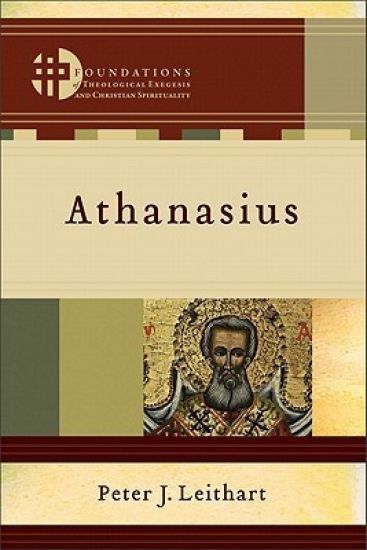
Athanasius

Athanasius

Peter J. Leithart; Hans Boersma; Matthew Levering

Baker Academic, Div of Baker Publishing Group
2011
nidottu
This volume by a respected theologian offers fresh consideration of the work of famous fourth-century church father Athanasius, giving specific attention to his use of Scripture, his deployment of metaphysical categories, and the intersection between the two. Peter Leithart not only introduces Athanasius and his biblical theology but also puts Athanasius into dialogue with contemporary theologians.This volume launches the series Foundations of Theological Exegesis and Christian Spirituality. Edited by Hans Boersma and Matthew Levering, the series critically recovers patristic exegesis and interpretation for contemporary theology and spirituality. Each volume covers a specific church father and illuminates the exegesis that undergirds the Nicene tradition. The series contributes to the growing area of theological interpretation and will appeal to both evangelical and Catholic readers.
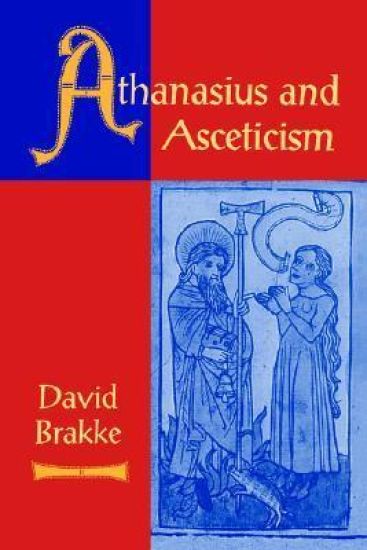
Athanasius and Asceticism

Athanasius and Asceticism

David Brakke

Johns Hopkins University Press
1999
pokkari
It is often assumed that early Christian asceticism drew its followers completely away from worldly concerns into the realm of pure spirituality. But the life and thought of Athanasius, Bishop of Alexandria (AD 328-73), shows just how worldly-and deeply political-ascetic theology could be. David Brakke examines this important church leader's efforts to reconcile asceticism's compelling intensity with the more conventional needs of the families and everyday believers on whom the Church relied for support and stability. Brakke describes how Athanasius joined with other fourth century bishops to create a strongly unified Christian church in Egypt, bringing both the solitary monks of the desert and the female ascetics in the cities under church authority by organizing them into auxiliaries of the emerging local parishes. By carefully integrating ascetic values and practices into a comprehensive vision of the church as a heavenly commonwealth, Brakke argues, Athanasius unified a community of Christians practicing diverse versions of their faith and helped to establish the lines of administrative and pastoral authority that would be essential to the church's future success. This illuminating study of the turmoil of fourth century Christianity also includes the first English translations of many of Athanasius's ascetic and pastoral writings.
Athanasius

Athanasius

Paulist Press International,U.S.
1979
nidottu
"The [publisher] is to be congratulated on a major publishing enterprise....It is an important ecumenical series, each book being translated or edited from the original or best available texts and introduced by recognized scholars and spiritual leaders. This means that for the first time authoritative texts of these great classics are being made available in an attractive large paperback format with four-color original art covers and with the texts, notes, introductions and prefaces all presented in an easy-to-read type." Methodist Recorder Athanasius: The Life of Antony and The Letter to Marcellinus Translation and introduction by Robert c. Gregg Preface by William A. Clebsch "And it seems to me that these words become like a mirror to the persons singing them, so that he might perceive himself and the emotions of his soul, and thus affected, he might recite them. For in fact he who hears the one reading receives the song that is recited as being about him, and either, when he is convicted by his conscience, being pierced, he will repent, or hearing of the hope that resides in God, and of the succor available to believers-how this kind of grace exists for him-he exults and begins to give thanks to God." Athanasius (c. 295–373) Athanasius was a major figure of 14th-century Christendom. As the Bishop of Alexandria, spiritual master and theologian, he led the Church in its battle against the Arian heresy. Athanasius' The Life of Antony is one of the foremost classics of Christian asceticism. It tells the spiritual story of St. Antony, the founder of Christian monasticism. Written at the request of the desert monks of Egypt to provide "an ideal pattern of the ascetical life," it immediately became astonishingly popular. This work contributed greatly to the establishment of monastic life in Western Christianity. From a literary perspective, it created a new Christian genre for the lives of saints. The Letter to Marcellinus is an introduction to the spiritual sense of the Psalms. The Psalms are presented as a variety of attitudes which coexist in a truly harmonious and whole sense of prayer. William A. Clebsch of Stanford University, President of the American Academy of Religion, in his Preface to this volume, says, "This translator's fidelity to the texts ensures that the reader receives in these works Athanasius' meaning, so far as feasible in the order of his thoughts and in the equivalence of his words." †
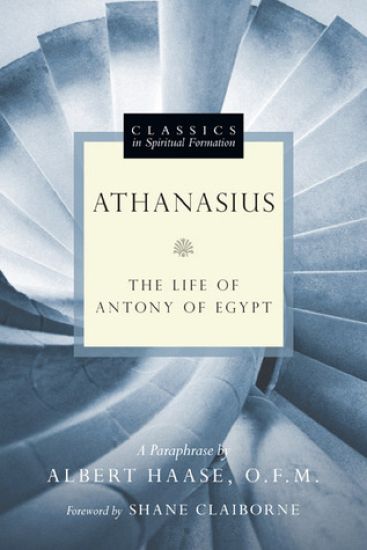
Athanasius

Athanasius

Albert Haase OFM

Inter-Varsity Press,US
2012
nidottu
Also included in this volume are a few lesser known pieces of Athanasius's writing: Letter to Ammoun, Letter to Dracontius and Festal Letters 39.
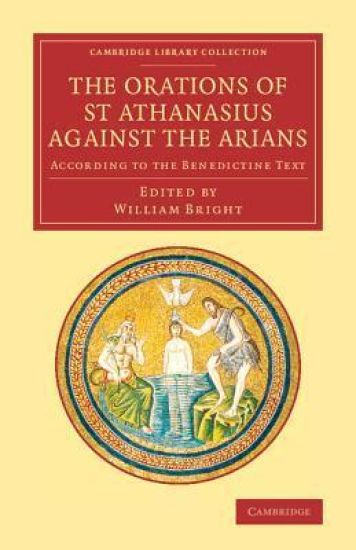
The Orations of St Athanasius Against the Arians

The Orations of St Athanasius Against the Arians

Athanasius

Cambridge University Press
2014
pokkari
In the fourth century, a group of Christians who followed the teachings of Arius, an Alexandrian presbyter, claimed that Christ was not truly divine but a created being. According to Arius, God alone is unique and self-existent: the Son is not. Although Arianism was condemned as heretical at the Council of Nicaea in 325, it continued to exert significant influence. Patriarch of Alexandria, St Athanasius (c.296–373) was among the most vigorous defenders of the orthodox view of the divinity of Christ. This 1873 publication presents the original Greek of four polemical orations directed against the Arian heretics. Also included is an account of Athanasius' life and a commentary on his work provided by William Bright (1824–1901), Regius Professor of Ecclesiastical History at Oxford, who specialised in the history of the early church.