Kirjojen hintavertailu. Mukana 11 342 296 kirjaa ja 12 kauppaa.

Kirjahaku

Etsi kirjoja tekijän nimen, kirjan nimen tai ISBN:n perusteella.

1000 tulosta hakusanalla Barnett Singer

The Fractured Metropolis

The Fractured Metropolis

Jonathan Barnett

Routledge
2019
sidottu
This book provides a thorough analysis of cities and the entire metropolitan region, considering how both are intrinsically linked and influence one other, targeted at architects, students, urban designers and planners, landscape architects, and city and regional officials.
You Ought To!

You Ought To!

Bernard Barnett

Routledge
2019
sidottu
The superego is one of those psychoanalytic concepts that has been assimilated into ordinary language, like repression, the unconscious and the Oedipus complex. Because it has become such a familiar notion, its complexity may not always be appreciated, nor the controversy that it can inspire. Its origins, for example, its timing in the course of
The Philosophy of Higher Education

The Philosophy of Higher Education

Ronald Barnett

Routledge
2021
sidottu
Providing a comprehensive introduction to the philosophy of higher education this book steps nimbly through the field, leading it into new areas and advancing an imaginative ecological realism. Each chapter takes the form of a short essay, tackling a particular topic such as values, knowledge, teaching, critical thinking and social justice. It also examines key issues including academic freedom, the digital university and the Anthropocene, and draws on classic as well as contemporary texts in the field.Composed of five parts, the book travels on a compelling journey: Part one identifies foundations of the field, distinguishing between the ideas of university and higher education, Part two examines key concepts, including research, culture, academic freedom and reason, Part three focuses on higher education as a set of educational practices and being a student, Part four is concerned with the university as an institution and includes the matters of leadership and the spirit of the university, Part five turns to the university in the world, and argues for an ecological perspective.Written in a lively and accessible style, and ideal for anyone coming to the field for the first time but also of interest to experienced scholars, this book offers sightings of new possibilities for higher education and the university.
The Philosophy of Higher Education

The Philosophy of Higher Education

Ronald Barnett

Routledge
2021
nidottu
Providing a comprehensive introduction to the philosophy of higher education this book steps nimbly through the field, leading it into new areas and advancing an imaginative ecological realism. Each chapter takes the form of a short essay, tackling a particular topic such as values, knowledge, teaching, critical thinking and social justice. It also examines key issues including academic freedom, the digital university and the Anthropocene, and draws on classic as well as contemporary texts in the field.Composed of five parts, the book travels on a compelling journey: Part one identifies foundations of the field, distinguishing between the ideas of university and higher education, Part two examines key concepts, including research, culture, academic freedom and reason, Part three focuses on higher education as a set of educational practices and being a student, Part four is concerned with the university as an institution and includes the matters of leadership and the spirit of the university, Part five turns to the university in the world, and argues for an ecological perspective.Written in a lively and accessible style, and ideal for anyone coming to the field for the first time but also of interest to experienced scholars, this book offers sightings of new possibilities for higher education and the university.
Rhetorical Realism

Rhetorical Realism

Scot Barnett

Routledge
2019
nidottu
Rhetorical Realism responds to the surging interest in nonhumans across the humanities by exploring how realist commitments have historically accompanied understandings of rhetoric from antiquity to the present. For a discipline that often defines itself according to human speech and writing, the nonhuman turn poses a number of challenges and opportunities for rhetoric. To date, many of the responses to the nonhuman turn in rhetoric have sought to address rhetoric’s compatibility with new conceptions of materiality. In Rhetorical Realism, Scot Barnett extends this work by transforming it into a new historiographic methodology attuned to the presence and occlusion of things in rhetorical history. Through investigations of rhetoric’s place in Aristotelian metaphysics, the language invention movement of the seventeenth century, and postmodern conceptions of rhetoric as an epistemic art, Barnett’s study expands the scope of rhetorical inquiry by showing how realist ideas have worked to frame rhetoric’s scope and meanings during key moments in its history. Ultimately, Barnett argues that all versions of rhetoric depend upon some realist assumptions about the world. Rather than conceive of the nonhuman as a dramatic turning point in rhetorical theory, Rhetorical Realism encourages rhetorical theorists to turn another eye toward what rhetoricians have always done—defining and configuring rhetoric within a broader ontology of things.
Ladyfingers and Nun's Tummies

Ladyfingers and Nun's Tummies

Martha Barnett

Vintage Books
1998
pokkari
"Everything in [this book] is delightful to learn. Barnette takes us through languages and across millennia in a charming style . . . that offers endless food for thought." --The New Yorker What makes the pretzel a symbol of religious devotion, and what pasta is blasphemous in every bite? How did a drunken brawl lead to the name lobster Newburg? What naughty joke is contained in a loaf of pumpernickel? Why is cherry a misnomer, and why aren't refried beans fried twice? You'll find the answers in this delectable exploration of the words we put into our mouths. Here are foods named for the things they look like, from cabbage (from the Old North French caboche, "head") to vermicelli ("little worms"). You'll learn where people dine on nun's tummy and angel's breast. There are foods named after people (Graham crackers) and places (peaches), along with commonplace terms derived from words involving food and drink (dope, originally a Dutch word for "dipping sauce"). Witty, bawdy, and stuffed with stories, Ladyfingers and Nun's Tummies is a feast of history, culture, and language."Why didn't anyone think of this before? . . . What fun Martha Barnette has made of it all, every name for every dish explained and traced and jollied." --William F. Buckley, Jr. "Truly delicious . . . a vast multicultural smorgasbord of our culinary delights . . . a tour de force."--Los Angeles Times Book Review
The Sound of the Sea

The Sound of the Sea

Cynthia Barnett

WW Norton Co
2021
sidottu
Seashells have been the most coveted and collected of nature’s creations for thousands of years. They were money before coins, jewellery before gems, art before canvas. In The Sound of the Sea, Cynthia Barnett blends cultural history and environmental science to trace our long love affair with seashells and the hidden lives of the mollusks that make them. From the mysterious glow of giant clams to the surprising origin of Shell Oil as a family business importing exotic shells, the book is filled with unforgettable stories. As it explores the perfect symmetry of a Chambered Nautilus, the pink-glossed lip of a Queen Conch or what we hear when we hold a shell to the ear, it makes a powerful argument for listening to shells—and acting on what they are telling us about the impacts of climate change on the seas, marine life and humanity.
The A–Z of Applied Quality

The A–Z of Applied Quality

DENISE BARNETT AND NAN KEMP

CHAPMAN AND HALL
1994
nidottu
Although quality initiatives and management skills are not new issues in hospitals, their financial evaluation may be a source of pressure to those managing clinical directorates. This A-Z reference provides an immediate source of ideas and includes practical examples. It covers 100 quality issues, from pets and pillows to staff management and training. The work takes account of the varied backgrounds from which the clinical directors may come. The up-to-date information contained in this text should be of use to health care managers in hospitals.
Setting Environmental Standards

Setting Environmental Standards

Vic Barnett; A. O'Hagan

Chapman and Hall
1997
sidottu
Introducing a novel approach to setting environmental pollution standards that allow for proper treatment of uncertainty and variation, this book surveys the forms of standards and proposes a new kind of "statistically verifiable ideal standard."Setting Environmental Standards includes:a current analysis regarding the treatment of uncertainty and variation in environmental standard setting a review of basic principles in standard setting, including costs, actions and effects, and benefits examples where uncertainty and variation have been well-treated in current practice as well as examples where clear deficiencies are apparent specific proposals for the future approach to setting environmental pollution standards - encompassing the anticipated elements of uncertainty and variabilityThe issues discussed serve statisticians as well as those persons involved with environmental standards. Scientists in agencies responsible for setting standards, in organizations advising such agencies or working in industries subject to these standards, will find Setting Environmental Standards an invaluable reference.
Sociology and Development

Sociology and Development

Tony Barnett

Routledge
1988
nidottu
First Published in 1988. This stimulating and original book examines how sociological theory helps us to understand development. The author, writing with clarity and from long practical experience in the field of development, aims to show how different sociological theories cast light on the process of development both in the 'Third World' and in the 'Developed World'. He pays particular attention to the way in which that theory reflects the social, economic, political and racial assumptions of the time in which it originates. Tony Barnett maintains that the development process requires an understanding of the economic, cultural and political ways in which people organize their lives. This is facilitated throughout the book with the use of carefully selected and wide-ranging examples, quotations and case-studies which support and amplify ideas in the narrative - producing a truly interactive text that fully involves the reader. Sociology and Development is as illuminating about the developed world as it is about the underdeveloped world. But, as the author asserts, we are all citizens of the same world, increasingly - although unequally - sharing common resources, ideas and experiences. Sociology can tell us about the origins of this inequality and how it is maintained. Indeed, it is the book's main argument that an understanding of the relationship between sociology and the analysis of development can tell us much about whether, how and why development has occurred. Sociology and Development will be of great value to students of Development Studies, Third World Studies, Area Studies, and those wanting to supplement their work in economics and other development-rel,ated disciplines in both the social and environmental sciences. It is also a thought-provoking, entertaining and enlightening introduction for non-specialists.
A History of Russian Economic Thought

A History of Russian Economic Thought

Vincent Barnett

Routledge
2005
sidottu
The collapse of the Union of Soviet Socialist Republic at the end of the 1980’s was conceived as a victory for capitalist democracy. Here, Vincent Barnett provides the first comprehensive account of the historical development of Russian and Soviet economic thought across the nineteenth and twentieth centuries, and considers its future in the twenty-first century.Utilizing an extensive range of historical sources, Barnett examines the different strands of thought, including classical, neoclassical, historical, socialist, liberal and Marxian schools. He traces their influence, and the impact their ideas had on shaping policies. An excellent addition to the Routledge History of Economic Thought series, this book covers pre-1870, Tsarist economics, the late Tsarist period, the impact of the war, Bolshevik economics, Stalinist economics, Russian economics after 1940. Incorporating a detailed timeline of the most significant Russian economists work and analyzing the effects of historical discontinuities on the institutional structure of Russian economics as a discipline, Barnett delivers an essential text for postgraduates and professionals interested in economic history and the evolution of Russian economic thought.
The Revolutionary Russian Economy, 1890-1940
The pre-revolutionary Russian economy was backward and stagnant. Whatever the criticisms of the economy post-revolution, the turnaround in terms of growth and output was staggering. This book looks at the alternatives to Stalin's reform program that had such tragic outcomes. Applying the ideas of orthodox economic theory, Marxism and also institutionalism, the volume encourages the reader to think critically about the development of the Russian / Soviet economy, and also examines the original theories of Russian economists of the period. Intelligent writing, incisive insights and impressive originality characterise Vincent Barnett's book, which will be a valuable resource for all economic and political historians with an interest in Russia.
Marx

Marx

Vincent Barnett

Routledge
2009
sidottu
Karl Marx has been portrayed in equal measure both as a political prophet who foresaw the end of capitalist exploitation, and as a populist Anti- Christ whose totalitarian legacy has cost millions of lives worldwide. This new biography looks beyond these caricatures in order to understand more about the real Karl Marx; about his everyday life and personal circumstances as well as his political ideology.The book tells the life story of a man of ideas, showing how his political and economic thought developed alongside his life and practical work. Vincent Barnett seeks to paint Karl Marx not as a static, unwavering character, but as a man whose beliefs developed dynamically over time. The book explores his personal background, and problems of personal income and family health. It also examines the influence of Hegel's methods on Marx's work, and his relationship with Engels.This lively, up to date guide to the life of Karl Marx provides an excellent starting point for students in history, politics and philosophy, and for all those with an interest in Marxism and political ideas.
Marx

Marx

Vincent Barnett

Routledge
2009
nidottu
Karl Marx has been portrayed in equal measure both as a political prophet who foresaw the end of capitalist exploitation, and as a populist Anti- Christ whose totalitarian legacy has cost millions of lives worldwide. This new biography looks beyond these caricatures in order to understand more about the real Karl Marx; about his everyday life and personal circumstances as well as his political ideology.The book tells the life story of a man of ideas, showing how his political and economic thought developed alongside his life and practical work. Vincent Barnett seeks to paint Karl Marx not as a static, unwavering character, but as a man whose beliefs developed dynamically over time. The book explores his personal background, and problems of personal income and family health. It also examines the influence of Hegel's methods on Marx's work, and his relationship with Engels.This lively, up to date guide to the life of Karl Marx provides an excellent starting point for students in history, politics and philosophy, and for all those with an interest in Marxism and political ideas.
Humanitarianism Contested

Humanitarianism Contested

Michael Barnett; Thomas G. Weiss

Routledge
2011
sidottu
This book provides a succinct but sophisticated understanding of humanitarianism and insight into the on-going dilemmas and tensions that have accompanied it since its origins in the early nineteenth century. Combining theoretical and historical exposition with a broad range of contemporary case studies, the book: provides a brief survey of the history of humanitarianism, beginning with the anti-slavery movement in the early nineteenth century and continuing to today’s challenge of post-conflict reconstruction and saving failed states explains the evolution of humanitarianism. Not only has it evolved over the decades, but since the end of the Cold War, humanitarianism has exploded in scope, scale, and significance presents an overview of the contemporary humanitarian sector, including briefly who the key actors are, how they are funded and what they do with their money analyses the ethical dilemmas confronted by humanitarian organization, not only in the abstract but also, and most importantly, in real situations and when lives are at stake examines how humanitarianism poses fundamental ethical questions regarding the kind of world we want to live in, what kind of world is possible, and how we might get there. An accessible and engaging work by two of the leading scholars in the field, Humanitarianism Contested is essential reading for all those concerned with the future of human rights and international relations.
Humanitarianism Contested

Humanitarianism Contested

Michael Barnett; Thomas G. Weiss

Routledge
2011
nidottu
This book provides a succinct but sophisticated understanding of humanitarianism and insight into the on-going dilemmas and tensions that have accompanied it since its origins in the early nineteenth century. Combining theoretical and historical exposition with a broad range of contemporary case studies, the book: provides a brief survey of the history of humanitarianism, beginning with the anti-slavery movement in the early nineteenth century and continuing to today’s challenge of post-conflict reconstruction and saving failed states explains the evolution of humanitarianism. Not only has it evolved over the decades, but since the end of the Cold War, humanitarianism has exploded in scope, scale, and significance presents an overview of the contemporary humanitarian sector, including briefly who the key actors are, how they are funded and what they do with their money analyses the ethical dilemmas confronted by humanitarian organization, not only in the abstract but also, and most importantly, in real situations and when lives are at stake examines how humanitarianism poses fundamental ethical questions regarding the kind of world we want to live in, what kind of world is possible, and how we might get there. An accessible and engaging work by two of the leading scholars in the field, Humanitarianism Contested is essential reading for all those concerned with the future of human rights and international relations.
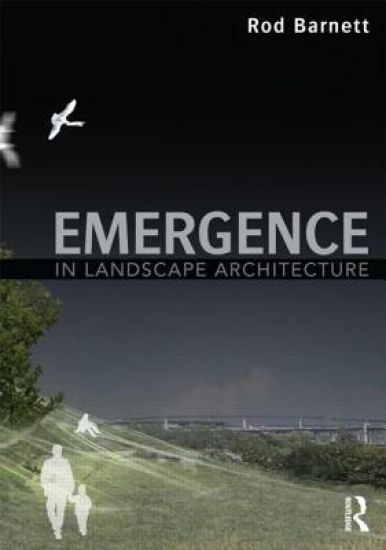
Emergence in Landscape Architecture
All landscapes are complex systems which are continually changing as a result of relatively simple interactions. This condition of adaption and evolution is called emergence. Related to chaos theory and self-organising systems, emergence highlights the ever changing and developing urban and natural world – and the need to work flexibly within this.Just as an aborist must understand the development and functions of a tree in order to fully understand his actions in relation to it, so must a landscape architect understand the ecological functions of a specific terrain in order to appreciate how the landscape will respond to the conditions he establishes. This bottom-up approach is essential when dealing with the natural environment – and, as Barnett argues, the urban environment. Covering critically the theory behind emergence in landscape architecture, the author also uses practical examples from international landscapes as a key tool in his mission to explain the basis of emergence and how it is essential to our understanding of both urban and natural systems. Ideal for students and educators in landscape architecture, landscape urbanism and architectural theory, this book provides a full discourse on the theory and practice behind emergence in landscape and features full colour images.
Emergence in Landscape Architecture
All landscapes are complex systems which are continually changing as a result of relatively simple interactions. This condition of adaption and evolution is called emergence. Related to chaos theory and self-organising systems, emergence highlights the ever changing and developing urban and natural world – and the need to work flexibly within this.Just as an aborist must understand the development and functions of a tree in order to fully understand his actions in relation to it, so must a landscape architect understand the ecological functions of a specific terrain in order to appreciate how the landscape will respond to the conditions he establishes. This bottom-up approach is essential when dealing with the natural environment – and, as Barnett argues, the urban environment. Covering critically the theory behind emergence in landscape architecture, the author also uses practical examples from international landscapes as a key tool in his mission to explain the basis of emergence and how it is essential to our understanding of both urban and natural systems. Ideal for students and educators in landscape architecture, landscape urbanism and architectural theory, this book provides a full discourse on the theory and practice behind emergence in landscape and features full colour images.
A History of Russian Economic Thought

A History of Russian Economic Thought

Vincent Barnett

Routledge
2009
nidottu
The collapse of the Union of Soviet Socialist Republic at the end of the 1980’s was conceived as a victory for capitalist democracy. Here, Vincent Barnett provides the first comprehensive account of the historical development of Russian and Soviet economic thought across the nineteenth and twentieth centuries, and considers its future in the twenty-first century.Utilizing an extensive range of historical sources, Barnett examines the different strands of thought, including classical, neoclassical, historical, socialist, liberal and Marxian schools. He traces their influence, and the impact their ideas had on shaping policies. An excellent addition to the Routledge History of Economic Thought series, this book covers pre-1870, Tsarist economics, the late Tsarist period, the impact of the war, Bolshevik economics, Stalinist economics, Russian economics after 1940. Incorporating a detailed timeline of the most significant Russian economists work and analyzing the effects of historical discontinuities on the institutional structure of Russian economics as a discipline, Barnett delivers an essential text for postgraduates and professionals interested in economic history and the evolution of Russian economic thought.
E.E. Slutsky as Economist and Mathematician
E.E. Slutsky is perhaps the Russian/Ukrainian economist most quoted by mainstream economists today. This is the first research monograph to examine the life and work of the internationally-renowned economist and mathematician. It does so from both a ‘history of economics’ perspective and a ‘history of science’ perspective, bringing these two strands together in order to demonstrate Slutsky’s enduring legacy as an innovative researcher and an influential intellectual. It also presents some of Slutsky’s lesser-known (and hitherto-unavailable) works in English translation.