Kirjojen hintavertailu. Mukana 11 342 296 kirjaa ja 12 kauppaa.

Kirjahaku

Etsi kirjoja tekijän nimen, kirjan nimen tai ISBN:n perusteella.

1000 tulosta hakusanalla Benedict Boo

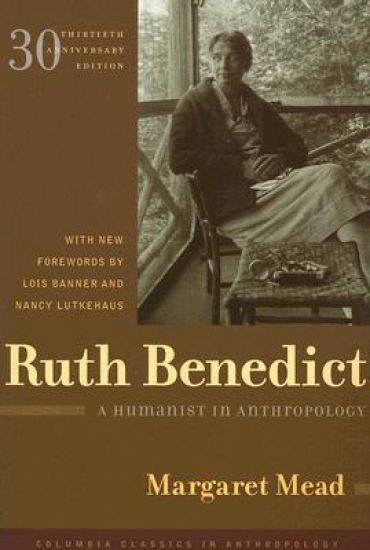
Ruth Benedict

Ruth Benedict

Margaret Mead; Lois Banner; Nancy Lutkehaus

Columbia University Press
2005
sidottu
By weaving discussions of the personal and professional writings of Ruth Benedict (1887-1948), Margaret Mead offers a deeply insightful portrait of a woman who overcame the barriers of sexism to become one of the most compelling intellectual figures in twentieth-century American life. In this work, Mead defends Benedict's humanistic approach to anthropology and considers her most important works. Benedict's work is also presented in the context of her personal life. Benedict was a shy young woman who felt alienated from her conservative family and society's expectations. Ultimately, she defined her life through her extraordinary work in anthropology and a commitment to public service. Benedict believed that anthropology should speak to contemporary ethical and political questions. In addition to a selection of Benedict's anthropological writings, this edition includes new forewords by two leading Benedict scholars.
Ruth Benedict

Ruth Benedict

Margaret Mead; Lois Banner; Nancy Lutkehaus

Columbia University Press
2005
pokkari
By weaving discussions of the personal and professional writings of Ruth Benedict (1887-1948), Margaret Mead offers a deeply insightful portrait of a woman who overcame the barriers of sexism to become one of the most compelling intellectual figures in twentieth-century American life. In this work, Mead defends Benedict's humanistic approach to anthropology and considers her most important works. Benedict's work is also presented in the context of her personal life. Benedict was a shy young woman who felt alienated from her conservative family and society's expectations. Ultimately, she defined her life through her extraordinary work in anthropology and a commitment to public service. Benedict believed that anthropology should speak to contemporary ethical and political questions. In addition to a selection of Benedict's anthropological writings, this edition includes new forewords by two leading Benedict scholars.
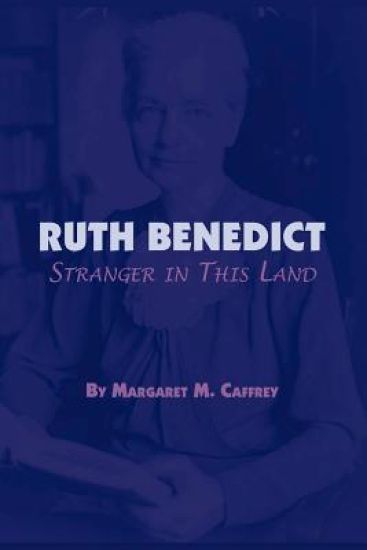
Ruth Benedict

Ruth Benedict

Margaret M. Caffrey

University of Texas Press
1989
nidottu
Poet, anthropologist, feminist—Ruth Fulton Benedict was all of these and much more. Born into the last years of the Victorian era, she came of age during the Progressive years and participated in inaugurating the modern era of American life. Ruth Benedict: Stranger in This Land provides an intellectual and cultural history of the first half of the twentieth century through the life of an important and remarkable woman.As a Lyricist poet, Ruth Benedict helped define Modernism. As an anthropologist, she wrote the classic Patterns of Culture and at one point was considered the foremost anthropologist in the United States—the first woman ever to attain such status. She was an intellectual and an artist living in a time when women were not encouraged to be either. In this fascinating study, Margaret Caffrey attempts to place Benedict in the cultural matrix of her time and successfully shows the way in which Benedict was a product of and reacted to the era in which she lived.Caffrey goes far beyond providing simple biographical material in this well-written interdisciplinary study. Based on exhaustive research, including access for the first time to the papers of Margaret Mead, Benedict's student and friend, Caffrey is able to put Benedict's life clearly in perspective. By identifying the family and educational influences that so sharply influenced Benedict's psychological makeup, the author also closely analyzes the currents of thought that were strong when Victorianism paralleled the Modernism that figured in Benedict's life work. The result is a richly detailed study of a gifted woman.This important work will be of interest to students of Modernism, poetry, and women's studies, as well as to anthropologists.
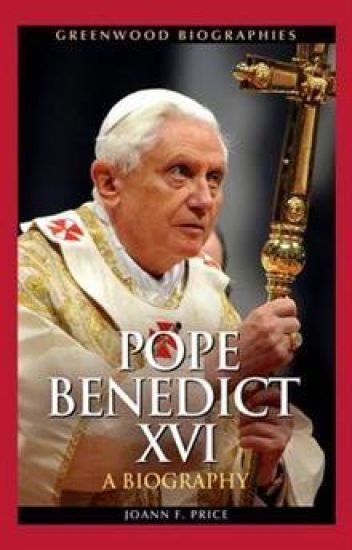
Pope Benedict XVI

Pope Benedict XVI

Joann F. Price

Greenwood Press
2013
sidottu
This comprehensive biography of Pope Benedict XVI emphasizes his theological positions and contributions as a theologian.Pope Benedict XVI: A Biography is an incisive exploration of the life and career of the current head of the Roman Catholic Church, with an emphasis on his theological positions and contributions as a theologian. Written by a Catholic priest who is an expert on Bavarian theology, the book looks at Benedict's family life, his teen years in Nazi Germany, his rise in the Church, and the beliefs that shape his Papacy.Readers of this biography will learn that, in addition to his native German, Benedict XVI speaks Italian, French, English, Spanish, and Latin fluently, has a knowledge of Portuguese, and can read ancient Greek and biblical Hebrew. They will discover that he plays the piano and is very fond of cats. Perhaps surprisingly, they will find that during the time of the Second Vatican Council, the Pope was viewed as a reformer, and that he continues to regard himself as a supporter of the Council's teaching, holding, however, that those teachings have been widely misinterpreted. All this and more make for a fascinating—and instructive—reading experience.
Legs Benedict

Legs Benedict

Daheim Mary

Avon Books
2018
nidottu
A week of "mayhem-as-usual" at Hillside Manor kicks off with the arrival of a mysterious "Mr. Smith" and his floozie "Mrs." from New York City--and it accelerates into chaos when Mr. Smith himself kicks off, a victim of the foulest of plays. Hostess Judith McMonigle Flynn is shocked to learn that her now-defunct roomer was actually "Legs" Benedict--hit man for the notorious Ronzini Family--and that virtually every other guests at her B&B had good reason to want Legs broken. Judith's policeman-hubby Joe is understandably peeved that homicide happened (again!) under his own roof. And when the FBI moves in--more interested in nabbing a Nazi nutcase than a malicious mobster murderer--the local cops clear out, leaving Judith, Joe and irrepressible cousin Renie to find out who whacked the wiseguy before the hits keep coming.
Pope Benedict XVI and the Politics of Modernity
In Benedict XVI and the Politics of Modernity, distinguished scholars from North America and Europe examine Pope Benedict XVI’s searching reflections on the challenges and prospects facing modern Western society. For more than five decades, Joseph Ratzinger/Pope Benedict XVI has made the subject of the continued health and vitality of Western civilization a focal point of his reflections. From his early (1968) Introduction to Christianity to his later (2005) Values in a Time of Upheaval, the Pope has argued that the preservation of the social, political, scientific, and spiritual way of life that characterizes modern Western societies hinges upon our rediscovery of the unique roots and distinctive nature of Western civilization.Focusing on Pope Benedict XVI’s nuanced account as to why the modern West cannot currently afford to forget or neglect its premodern Hellenic and Christian roots, this book will interest religious and nonreligious people who are concerned about the future of democracy and religion in contemporary Western societies.This book was based on a special issue of Perpsectives on Political Science.
Eggs Benedict Arnold

Eggs Benedict Arnold

Childs Laura

Berkley Publishing Corporation,U.S.
2009
pokkari
When Cackleberry Clubber Suzanne delivers a pie to funeral director Ozzie Driesden, she discovers him not working "at" the embalming table but lying "on" the embalming table. She barely has time to recognize his corpse before she's drugged with chloroform. With more suspects than breakfast specials, the Cackleberry Club scrambles to crack the case before one of their own ends up six feet under.
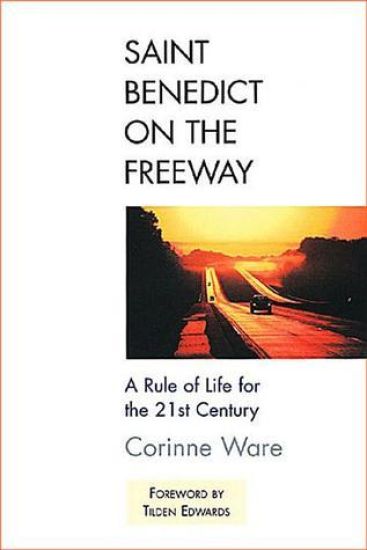
Saint Benedict on the Freeway

Saint Benedict on the Freeway

Corinne Ware

Abingdon Press
2001
pokkari
How can we heal the rift between our daily lives and the sacred? How can we live a life capable of hearing "the still small voice" of God while experiencing the speed and sensory overload of modern life? This book is Ware's answer to these questions. She acknowledges that others have addressed the questions. On the one hand there are books which have significant depth but speak in academic or "in-group" language and provide little help adapting these insights to everyday life. On the other hand, there are practical "how-to" exercises which assist in very particular spiritual experiences but which do not offer integrated, sustainable, life-changing patterns. St. Benedict on the Freeway fills this gap. It "translates into twenty-first century life spiritually formative practices worked out in the past, creatively adapting those disciplines to contemporary daily life." This adaptation is the heart of Ware's book. She attempts first to draw attention to our own awareness of God. She discusses how a "Rule" functioned for Benedict's time, and how it can function for us as a liberating reminder of God instead of as another repressive and burdensome taskmaster. Ware also asks how the hours of prayer--vigils, lauds, prime, terce, sext, none, vespers, compline--can increase our spiritual awareness even if our 'community' does not stop for prayer at designated times during the day. Also, Ware explores prayer in dimensions beyond the spoken word. The author targets what she terms "something more"-people: those who want to grow spiritually but do not know how to do so. Typically these people go on retreats and hear inspirational speakers, but their everyday lives lack the luster of those occasional times. They go from one spiritual oasis to another, wishing for something that will sustain them in between. St. Benedict on the Freeway responds to this yearning as both a book for personal reading and a resource for small groups in the church.
The Benedict Bastard

The Benedict Bastard

Cate Campbell

Kensington Publishing
2014
pokkari
Though born into one of Seattle's most prestigious families, Margot Benedict has fought to claim all the independence offered to young women in 1923. Where her brother Preston embraced a life of debauchery, Margot has a thriving medical practice. Working at a local orphanage, she's shocked to see a young boy who looks every inch a Benedict. But though she's convinced this is the illegitimate child Preston once mentioned, Margot has no way to prove any family connection. At sixteen, Bronwyn Morgan fell in love with dashing Preston Benedict. Seduced and abandoned, she's arrived at Benedict Hall determined to find the son she was forced to give away. Aging matriarch Edith takes the fragile girl under her wing, but Edith's own delicate state and Preston's dangerous animosity collide, jeopardizing not only a child's future, but the Benedict legacy itself.
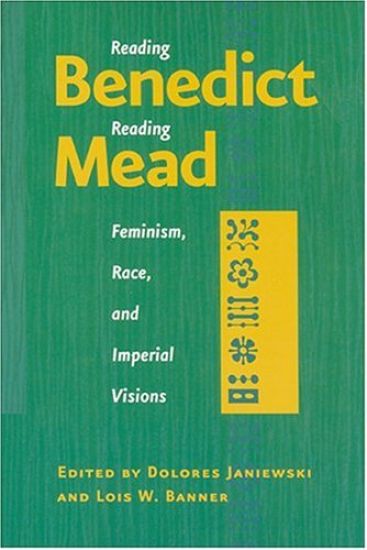
Reading Benedict / Reading Mead

Reading Benedict / Reading Mead

Johns Hopkins University Press
2005
sidottu
As anthropologists, public intellectuals, and feminists, Ruth Benedict and Margaret Mead played remarkable roles in twentieth-century life and thought-and far beyond the academy. Their work helped to popularize anthropology while introducing such terms as culture and racism into common parlance. At the same time, they contributed to wider debates about environmentalism, sexuality, the women's movement, and American foreign policy. In this collection, prominent international scholars come together to explore the lives, works, and legacies of two influential figures in American anthropology. The contributions reflect a wide range of topics and perspectives: Benedict and Mead's complicated personal and professional relationship; their activities as scholars and outspoken intellectuals; their efforts to promote feminism and undermine racism; their contributions to (and the challenges they posed to) the imperialist project; and the stories behind their best-known works, The Chrysanthemum and the Sword and Coming of Age in Samoa. Together, the essays provide a useful and provocative introduction to Benedict and Mead as well as to the ongoing debate about the legacy they left behind. Contributors: Lois Banner, University of Southern California; Margaret M. Caffrey, University of Memphis; Nanako Fukui, Kansai University; Angela Gilliam, Evergreen State College; Pauline Kent, Ryukoku University; C. Douglas Lummis, Okinawa International University; Nancy Lutkehaus, University of Southern California; Judith Schachter Modell, Carnegie Mellon University; Maureen Molloy, University of Auckland; Louise M. Newman, University of Florida; Dolores E. Janiewski, Victoria University of Wellington; Christopher Shannon, University of Notre Dame; Gerald Sullivan, University of Notre Dame; Sharon Tiffany, University of Wisconsin, Whitewater; Jean Walton, University of Rhode Island; Virginia Yans, Rutgers, the State University of New Jersey
Reading Benedict / Reading Mead

Reading Benedict / Reading Mead

Johns Hopkins University Press
2005
pokkari
As anthropologists, public intellectuals, and feminists, Ruth Benedict and Margaret Mead played remarkable roles in twentieth-century life and thought-and far beyond the academy. Their work helped to popularize anthropology while introducing such terms as culture and racism into common parlance. At the same time, they contributed to wider debates about environmentalism, sexuality, the women's movement, and American foreign policy. In this collection, prominent international scholars come together to explore the lives, works, and legacies of two influential figures in American anthropology. The contributions reflect a wide range of topics and perspectives: Benedict and Mead's complicated personal and professional relationship; their activities as scholars and outspoken intellectuals; their efforts to promote feminism and undermine racism; their contributions to (and the challenges they posed to) the imperialist project; and the stories behind their best-known works, The Chrysanthemum and the Sword and Coming of Age in Samoa. Together, the essays provide a useful and provocative introduction to Benedict and Mead as well as to the ongoing debate about the legacy they left behind. Contributors: Lois Banner, University of Southern California; Margaret M. Caffrey, University of Memphis; Nanako Fukui, Kansai University; Angela Gilliam, Evergreen State College; Pauline Kent, Ryukoku University; C. Douglas Lummis, Okinawa International University; Nancy Lutkehaus, University of Southern California; Judith Schachter Modell, Carnegie Mellon University; Maureen Molloy, University of Auckland; Louise M. Newman, University of Florida; Dolores E. Janiewski, Victoria University of Wellington; Christopher Shannon, University of Notre Dame; Gerald Sullivan, University of Notre Dame; Sharon Tiffany, University of Wisconsin, Whitewater; Jean Walton, University of Rhode Island; Virginia Yans, Rutgers, the State University of New Jersey
Ruth Benedict

Ruth Benedict

Virginia Heyer Young

University of Nebraska Press
2005
sidottu
Considered one of the most influential and articulate figures in American anthropology, Ruth Benedict (1887–1948) was trained by Franz Boas and Elsie Clews Parsons and collaborated with the equally renowned anthropologist Margaret Mead, a student of hers with whom she was for a time romantically involved. When Benedict died suddenly at the age of sixty-one, she was popularly known for two best-selling works: Patterns of Culture, which became an exemplary model of the integration of societies, and The Chrysanthemum and the Sword, a study of Japanese culture commissioned by the U.S. government during World War II. Benedict's lasting contribution to anthropology, however, cannot be appreciated solely through her more famous works. Equally innovative were her unpublished or little-noticed writings, which covered such topics as cross-cultural attributes of free societies, the national cultures of Thailand and Romania, and the comparison of Asian consensus politics with American political patterns. This biography by one of Benedict's last graduate students, Virginia Heyer Young, draws on these works, on Benedict's correspondence and collaborative work with Margaret Mead, and on unpublished course notes. Young finds the ordering patterns in the rich materials Benedict left in her papers and demonstrates that Benedict was embarking on new interpretive directions in the last decade of her life—bringing her methods of holistic comparison to bear on contemporary cultures and on the dynamics of social cohesion. Benedict's work, in fact, anticipated trends in anthropology in the decades to come by projecting a framework of individuals not only shaped by their culture but also using their culture for personal or collective objectives. Young's arresting and nuanced portrait of Benedict in her last years leads one to wonder what direction American anthropology might have taken had Benedict completed the book she was working on at the time of her death.
Pope Benedict XVI in the Holy Land

Pope Benedict XVI in the Holy Land

Pope Benedict

Paulist Press International,U.S.
2011
nidottu
Addresses given by Pope Benedict XVI on his visit to the Holy Land from May 8-15, 2009. Includes an interview with the Holy Father; welcoming ceremony, visit to Regina Pacis center; visit to the ancient basilica of the memorial of Moses; blessing of the cornerstone; meeting with Muslim religious leaders; celebration of vespers; homily at Amman international stadium; blessing of the foundation stone; courtesy visit to two chief rabbis, and farewell ceremony. †
Saint Benedict's Wisdom

Saint Benedict's Wisdom

Luigi Gioia

Liturgical Press
2020
nidottu
Monastic spirituality has much to offer Christians who live far beyond monastery walls. In Saint Benedict's Wisdom Luigi Gioia, OSB, demonstrates that monastic spirituality is a gift for the whole Church. Because monastic vows are fundamentally a deep dive into one's baptismal commitments, monastic experience speaks to all the faithful who wish to do the same within different lifestyles. As an expression of divine wisdom, monasticism offers a way of deeply integrating spirituality with the rest of life, teaching us to seek holiness, not only in prayer, but also through work, sharing of food, sleep, and life in community.Written by one of the most insightful commentators on monastic life today, Saint Benedict's Wisdom shines the light of monasticism on many aspects of contemporary Christian living, including evangelization, leadership, suffering, authentic chastity, the experience of God, reform of structures, and the practice of theology. It will appeal to anyone seeking to live a more authentic Christian life in addition to vowed monastics, monastic oblates, and associates.Luigi Gioia, OSB, is a research associate at the Von Hugel Institute for Critical Catholic Inquiry at Cambridge University and a professor of systematic theology at the Pontifical University of Sant'Anselmo in Rome. In great demand as a retreat leader all over the world, he is the author several books, including Say It to God: In Search of Prayer (the Archbishop of Canterbury's Lent Book 2018) and Touched by God: The Way to Contemplative Prayer.