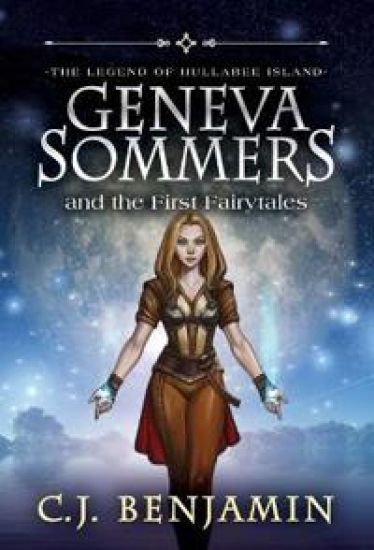
Fairytales all begin with Once Upon a Time . . . but do they always have a happy every after?Find out where the magic of Hullabee Island begins. Mermaids, Father Time, Mother Nature, fairies and magic mirrors are just a few of the mysterious myths and legends that shroud the island in mystery. Discover how Geneva and her friends first meet and uncover the strange beauty of their island and the power it holds.Six fairytales ripped from Hullabee Island's world of folklore and legends.
John Stevens Cabot Abbott (September 19, 1805 - June 17, 1877), an American historian, pastor, and pedagogical writer, was born in Brunswick, Maine to Jacob and Betsey Abbott. Early life: He was a brother of Jacob Abbott, and was associated with him in the management of Abbott's Institute, New York City, and in the preparation of his series of brief historical biographies. Dr. Abbott graduated at Bowdoin College in 1825, prepared for the ministry at Andover Theological Seminary, and between 1830 and 1844, when he retired from the ministry in the Congregational Church, preached successively at Worcester, Roxbury and Nantucket, all in Massachusetts. Literary career: Owing to the success of a little work, The Mother at Home, he devoted himself, from 1844 onwards, to literature. He was a voluminous writer of books on Christian ethics, and of popular histories, which were credited with cultivating a popular interest in history. He is best known as the author of the widely popular History of Napoleon Bonaparte (1855), in which the various elements and episodes in Napoleon's career are described. Abbott takes a very favourable view towards his subject throughout. Also among his principal works are: History of the Civil War in America (1863-1866), and The History of Frederick II, Called Frederick the Great (New York, 1871). He also did a forward to a book called Life of Boone by W.M. Bogart, about Daniel Boone in 1876. In general, except that he did not write juvenile fiction, his work in subject and style closely resembles that of his brother, Jacob Abbott.... Benjamin Franklin FRS, FRSE (January 17, 1706 O.S. January 6, 1705] - April 17, 1790) was one of the Founding Fathers of the United States. Franklin was a renowned polymath and a leading author, printer, political theorist, politician, freemason, postmaster, scientist, inventor, humorist, civic activist, statesman, and diplomat. As a scientist, he was a major figure in the American Enlightenment and the history of physics for his discoveries and theories regarding electricity. As an inventor, he is known for the lightning rod, bifocals, and the Franklin stove, among other inventions. He facilitated many civic organizations, including Philadelphia's fire department and the University of Pennsylvania, an Ivy League institution. Franklin earned the title of "The First American" for his early and indefatigable campaigning for colonial unity, initially as an author and spokesman in London for several colonies. As the first United States Ambassador to France, he exemplified the emerging American nation.Franklin was foundational in defining the American ethos as a marriage of the practical values of thrift, hard work, education, community spirit, self-governing institutions, and opposition to authoritarianism both political and religious, with the scientific and tolerant values of the Enlightenment. In the words of historian Henry Steele Commager, "In a Franklin could be merged the virtues of Puritanism without its defects, the illumination of the Enlightenment without its heat." To Walter Isaacson, this makes Franklin "the most accomplished American of his age and the most influential in inventing the type of society America would become." Franklin became a successful newspaper editor and printer in Philadelphia, the leading city in the colonies, publishing the Pennsylvania Gazette at the age of 23.He became wealthy publishing this and Poor Richard's Almanack, which he authored under the pseudonym "Richard Saunders". After 1767, he was associated with the Pennsylvania Chronicle, a newspaper that was known for its revolutionary sentiments and criticisms of the British policies. He pioneered and was first president of Academy and College of Philadelphia which opened in 1751 and later became the University of Pennsylvania. He organized and was the first secretary of the American Philosophical Society and was elected president in 1769. ....
Title: Glimpses of ancient Hackney and Stoke Newington. Being a reprint of a series of articles appearing in the Hackney Mercury ... With an appendix ... By F. R. C. S. i.e. Benjamin Clarke.] With a portrait.]Publisher: British Library, Historical Print EditionsThe British Library is the national library of the United Kingdom. It is one of the world's largest research libraries holding over 150 million items in all known languages and formats: books, journals, newspapers, sound recordings, patents, maps, stamps, prints and much more. Its collections include around 14 million books, along with substantial additional collections of manuscripts and historical items dating back as far as 300 BC.The HISTORY OF BRITAIN & IRELAND collection includes books from the British Library digitised by Microsoft. As well as historical works, this collection includes geographies, travelogues, and titles covering periods of competition and cooperation among the people of Great Britain and Ireland. Works also explore the countries' relations with France, Germany, the Low Countries, Denmark, and Scandinavia. ++++The below data was compiled from various identification fields in the bibliographic record of this title. This data is provided as an additional tool in helping to insure edition identification: ++++ British Library S., F R. C.; Clarke, Benjamin; 1894 288 p.; 4 . 10350.ee.24.
The 18th century was a wealth of knowledge, exploration and rapidly growing technology and expanding record-keeping made possible by advances in the printing press. In its determination to preserve the century of revolution, Gale initiated a revolution of its own: digitization of epic proportions to preserve these invaluable works in the largest archive of its kind. Now for the first time these high-quality digital copies of original 18th century manuscripts are available in print, making them highly accessible to libraries, undergraduate students, and independent scholars.Rich in titles on English life and social history, this collection spans the world as it was known to eighteenth-century historians and explorers. Titles include a wealth of travel accounts and diaries, histories of nations from throughout the world, and maps and charts of a world that was still being discovered. Students of the War of American Independence will find fascinating accounts from the British side of conflict. ++++The below data was compiled from various identification fields in the bibliographic record of this title. This data is provided as an additional tool in helping to insure edition identification: ++++British LibraryT076487With a page of errata.Trowbridge: printed by T. Long, 1796. iv,314, 2]p.; 8
The 18th century was a wealth of knowledge, exploration and rapidly growing technology and expanding record-keeping made possible by advances in the printing press. In its determination to preserve the century of revolution, Gale initiated a revolution of its own: digitization of epic proportions to preserve these invaluable works in the largest archive of its kind. Now for the first time these high-quality digital copies of original 18th century manuscripts are available in print, making them highly accessible to libraries, undergraduate students, and independent scholars.Medical theory and practice of the 1700s developed rapidly, as is evidenced by the extensive collection, which includes descriptions of diseases, their conditions, and treatments. Books on science and technology, agriculture, military technology, natural philosophy, even cookbooks, are all contained here.++++The below data was compiled from various identification fields in the bibliographic record of this title. This data is provided as an additional tool in helping to insure edition identification: ++++British LibraryT010666London: printed for L. Davis, 1774. vii, 1],26p.; 4
The 18th century was a wealth of knowledge, exploration and rapidly growing technology and expanding record-keeping made possible by advances in the printing press. In its determination to preserve the century of revolution, Gale initiated a revolution of its own: digitization of epic proportions to preserve these invaluable works in the largest archive of its kind. Now for the first time these high-quality digital copies of original 18th century manuscripts are available in print, making them highly accessible to libraries, undergraduate students, and independent scholars.The eighteenth-century fascination with Greek and Roman antiquity followed the systematic excavation of the ruins at Pompeii and Herculaneum in southern Italy; and after 1750 a neoclassical style dominated all artistic fields. The titles here trace developments in mostly English-language works on painting, sculpture, architecture, music, theater, and other disciplines. Instructional works on musical instruments, catalogs of art objects, comic operas, and more are also included. ++++The below data was compiled from various identification fields in the bibliographic record of this title. This data is provided as an additional tool in helping to insure edition identification: ++++British LibraryT028807 London, 1787]. 21, 1]p.; 8
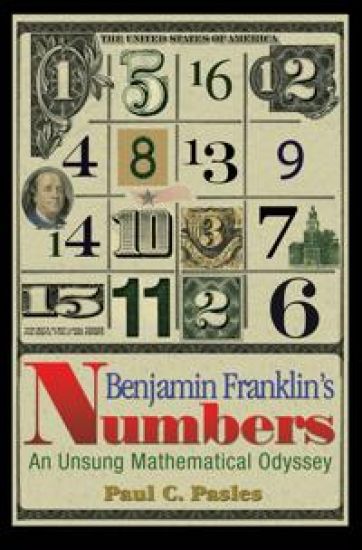
Few American lives have been as celebrated--or as closely scrutinized--as that of Benjamin Franklin. Yet until now Franklin's biographers have downplayed his interest in mathematics, at best portraying it as the idle musings of a brilliant and ever-restless mind. In Benjamin Franklin's Numbers, Paul Pasles reveals a side of the iconic statesman, scientist, and writer that few Americans know--his mathematical side. In fact, Franklin indulged in many areas of mathematics, including number theory, geometry, statistics, and economics. In this generously illustrated book, Pasles gives us the first mathematical biography of Benjamin Franklin. He draws upon previously unknown sources to illustrate Franklin's genius for numbers as never before. Magic squares and circles were a lifelong fascination of Franklin's. Here, for the first time, Pasles gathers every one of these marvelous creations together in one place. He explains the mathematics behind them and Franklin's hugely popular Poor Richard's Almanac, which featured such things as population estimates and a host of mathematical digressions. Pasles even includes optional math problems that challenge readers to match wits with the bespectacled Founding Father himself. Written for a general audience, this book assumes no technical skills beyond basic arithmetic. Benjamin Franklin's Numbers is a delightful blend of biography, history, and popular mathematics. If you think you already know Franklin's story, this entertaining and richly detailed book will make you think again.
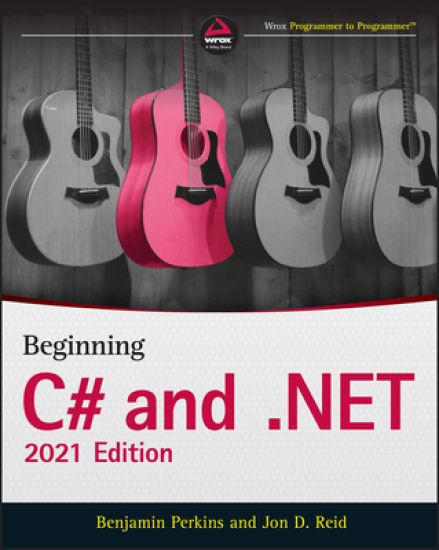
Get a running start to learning C# programming with this fun and easy-to-read guide As one of the most versatile and powerful programming languages around, you might think C# would be an intimidating language to learn. It doesn’t have to be! In Beginning C# and .NET: 2021 Edition, expert Microsoft programmer and engineer Benjamin Perkins and program manager Jon D. Reid walk you through the precise, step-by-step directions you’ll need to follow to become fluent in the C# language and .NET. Using the proven WROX method, you’ll discover how to understand and write simple expressions and functions, debug programs, work with classes and class members, work with Windows forms, program for the web, and access data. You’ll even learn about some of the new features included in the latest releases of C# and .NET, including data consumption, code simplification, and performance. The book also offers: Detailed discussions of programming basics, like variables, flow control, and object-oriented programming that assume no previous programming experience “Try it Out” sections to help you write useful programming code using the steps you’ve learned in the book Downloadable code examples from wrox.com Perfect for beginning-level programmers who are completely new to C#, Beginning C# and .NET: 2021 Edition is a must-have resource for anyone interested in learning programming and looking for a fun and intuitive place to start.


![Glimpses of Ancient Hackney and Stoke Newington. Being a Reprint of a Series of Articles Appearing in the Hackney Mercury ... with an Appendix ... by F. R. C. S. [I.E. Benjamin Clarke.] [With a Portrait.]](/covers/9781241319663.jpg)