Kirjojen hintavertailu. Mukana 11 342 296 kirjaa ja 12 kauppaa.

Kirjahaku

Etsi kirjoja tekijän nimen, kirjan nimen tai ISBN:n perusteella.

1000 tulosta hakusanalla Benjamin Sacks

Benjamin Franklin, Genius of Kites, Flights and Voting Rights
This unconventional biography of Benjamin Franklin, the great American Renaissance man, explores examples of Franklin's diverse genius and accomplishments in different fields. Among the topics explored are Franklin's views on women's issues, such as disapproving of impractical hoopskirts, supporting their education, and suggesting insurance for widows and spinsters. It describes his love of a good hoax, contributions to ballooning while an ambassador in France, experiments with the famous kite, and advances in heating houses. His work with money is also covered, including methods of printing money to confuse counterfeiters, a revolutionary way of making a print of a real leaf, and his updated portrait on the present $100 bill. Franklin's role as head of a commission to examine (and debunk) mesmerism is addressed. No stranger to controversy, Franklin headed the first successful attempt to unify the colonies to create a country. This work shows that Franklin is more responsible than any other for the founding of the United States--and also that he was a leading cause of the French Revolution, providing the French with an example of a successful rebellion, lessons on how to shift power from the king, and ideas about erecting a constitutional government (in addition, he weakened the French royal treasury by extracting loans and gifts to support America).

Benjamin Ferencz, Nuremberg Prosecutor and Peace Advocate
At the conclusion of World War II, war crimes tribunals were carried out at Nuremberg, Germany. Justice was meted out for major war criminals, and Benjamin Ferencz was chief prosecutor for what the Associated Press said was the largest murder trial in history. This biography of the last living Nuremberg prosecutor traces his life from early childhood growing up as an immigrant in Hell's Kitchen in New York City, to Harvard Law School, to the U.S. Army and Patton's Judge Advocate War Crimes Investigation Section, to the Nuremberg Tribunals and beyond. His life has been spent working toward the goal of world peace through law, not war, including the successful formation of the International Criminal Court, in which Ferencz played a key role.
Benjamin's Library

Benjamin's Library

Jane O. Newman

Cornell University Press and Cornell University Library
2011
pokkari
In Benjamin's Library, Jane O. Newman offers, for the first time in any language, a reading of Walter Benjamin's notoriously opaque work, Origin of the German Tragic Drama that systematically attends to its place in discussions of the Baroque in Benjamin's day. Taking into account the literary and cultural contexts of Benjamin's work, Newman recovers Benjamin's relationship to the ideologically loaded readings of the literature and political theory of the seventeenth-century Baroque that abounded in Germany during the political and economic crises of the Weimar years. To date, the significance of the Baroque for Origin of the German Tragic Drama has been glossed over by students of Benjamin, most of whom have neither read it in this context nor engaged with the often incongruous debates about the period that filled both academic and popular texts in the years leading up to and following World War I. Armed with extraordinary historical, bibliographical, philological, and orthographic research, Newman shows the extent to which Benjamin participated in these debates by reconstructing the literal and figurative history of sixteenth- and seventeenth-century books that Benjamin analyzes and the literary, art historical and art theoretical, and political theological discussions of the Baroque with which he was familiar. In so doing, she challenges the exceptionalist, even hagiographic, approaches that have become common in Benjamin studies. The result is a deeply learned book that will infuse much-needed life into the study of one of the most influential thinkers of the twentieth century.
Benjamin Disraeli Letters

Benjamin Disraeli Letters

Benjamin Disraeli

University of Toronto Press
1993
sidottu
Against a European background of the 1848 revolutions and Louis Napoleon's 1851 coup, the 602 letters of this volume cover Disraeli's accession to the leadership of his party in the House of Commons and his first attempts to move the party beyond reactionary protectionism and ultra-Protestantism. In this period, Disraeli works hard at all aspects of his new role, finding 'good men' to bring into the party, patching rifts within it, and establishing a new platform on which to maintain the system of landed aristocracy in the age of free trade. When the chance to form a government comes, however, his party is unsuccessful. The turmoil in the world at large is matched by that in Disraeli's own affairs. Foremost are the deaths of his father, a central figure in his intellectual development, and of Lord George Bentinck, the anchor of his financial and political strategies. Once again, his creditors threaten to drive him from public life, and come alarmingly close to success on at least one occasion. In addition, his marriage goes through a major crisis, as Mary Anne Disraeli's jealousy over his frequent correspondence with Lady Londonderry and his regular visits to her precipitates an actual separation and period of estrangement. His major correspondent and confidante continues to be his sister Sarah, but there are also a surprising number of letters (many of them previously unpublished) to major figures such as Metternich and Derby. The volume ends with the exchanges between Disraeli and other political leaders on the verge of a second chance at government, which in 1852 will bring a brief taste of power at last.
Benjamin Disraeli Letters

Benjamin Disraeli Letters

Benjamin Disraeli

University of Toronto Press
1997
sidottu
Benjamin Disraeli, Queen Victoria's favourite prime minister, was, in the words of Robert Blake, 'the best letter-writer among English statesmen.' This, the latest volume in the critically acclaimed Letters of Benjamin Disraeli series, contains or describes 951 letters (784 previously unpublished) written by Disraeli between 1852 and 1856. These years cover his first cabinet post, as chancellor of the exchequer, his attempts as House leader to unify the Conservative party, and his opposition to the Crimean War, both in the House and in his newspaper, The Press. Included are significant runs of correspondence, such as 63 letters (34 previously unpublished) to the 14th Earl of Derby, and 75 letters (none previously published) to Lord Stanley, the future 15th Earl of Derby, as well as more personal ones, such as 59 letters to the eccentric Mrs Brydges Willyams, the 'female Croesus' who offered Disraeli a substantial legacy. These illuminate anew both his public and private life, and show the strength of his resolve to reshape party policies to suit the age of industrialism and free trade. New light is also thrown on other matters, such as the supposed plagiarism in his panegyric on the Duke of Wellington. Ten appendices include full cabinet lists, Disraeli's own reminiscences of the period, and Stanley's remarkable verbatim notes of intimate conversations with Disraeli at Hughenden Manor.
Benjamin Disraeli Letters

Benjamin Disraeli Letters

Benjamin Disraeli

University of Toronto Press
1982
sidottu
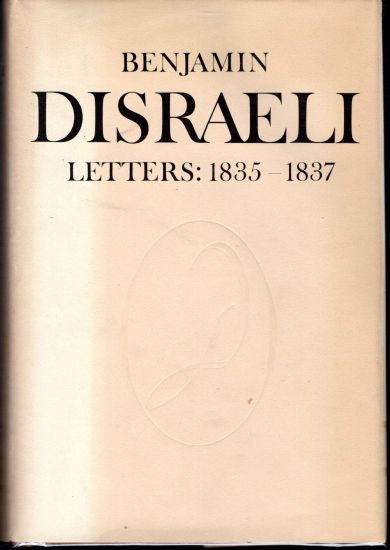
The 334 letters in this volume cover the period from Disraeli's establishment in the Tory camp under the patronage of Lord Lyndhurst to his election to parliament in 1837. The most important issue to which they speak is the course of Disraeli's political ambitions. In 1835 the road to parliament was not yet clear, for he continued to be haunted by troubles from his past. He was beset by charges of opportunism in his Taunton campaign of 1835, and the longest letters here are those to Edwards Beadon written in justification of past conduct; Disraeli had still to learn the truth of his later dictum, 'never explain.' Also, debts contracted many years before continued to plague him, as they would in years to come. He was tempted by a variety of money-making schemes and the later correspondence makes clear just how close he came to permanent ruin at the hands of his creditors in the spring of 1837. Had the fate of debtors' prison materialized it is doubtful that he would ever have been eligible, in law or in reputation, for a parliamentary career. Disraeli's eventual election for Maidstone in the summer of 1837 marked the emergence of his formal public role. Because he set out early and was a long time in attaining his goals, one is tempted to laud his patience. But the record here suggests that it was instead a matter of energy and endurance. This volume of the Letters brings Disraeli to the threshold of the Victorian era and the beginning of his career as a politician. In late 1837 he failed in his maiden speech, but all major successes lay ahead.
Benjamin Disraeli Letters

Benjamin Disraeli Letters

Benjamin Disraeli

University of Toronto Press
1989
sidottu
The 435 letters in this volume cover the most dramatic period of Disraeli's middle life - one which is still subject to continuing debate and interpretation, but the one in which the potential of his diverse talents at last begins to be realized. In his second Parliamentary session (1842 to 1847) the member for Shrewsbury establishes himself as the most exciting speaker in the House of Commons. The letters also provoke reassessment of the political splinter group 'Young England,' whose aims are nothing less than the purge and reform of the Conservative party. In 1947, as a peader of the Protectionists, he achieves his political goal of fifteen before: election as a member in his home county of Buckinghamshire. In this period, too, he becomes a best-selling novelist, with his three 'condition of England' novels. Finally, as 'knight of the shire' and with his debts more manageable through the help and thrift of his wife, Mary Anne, he is in a position to realize another ambition, that of becoming a country gentleman, and begins the purchase of Hughenden Manor. Ten appendixes include Disraeli's 1847 election canvass lists, his commonplace books of this period, and a complete inventory of the contents of his London residence, the collateral for a desperate loan in 1842.
Benjamin Disraeli Letters

Benjamin Disraeli Letters

Benjamin Disraeli

University of Toronto Press
2004
sidottu
Benjamin Disraeli was perhaps the most colourful Prime Minister in British history. This seventh volume of the highly acclaimed Benjamin Disraeli Letters edition shows also that he was a dedicated, resourceful, and farsighted statesman. It contains 670 letters written between 1857 and 1859. They address friends, family, political colleagues, and, not least, Queen Victoria and Prince Albert. During this period, Disraeli shepherded a fragile Conservative government through the Indian Mutiny, the Second Opium War with China, the Orsini bomb plot, and the Franco-Austrian-Piedmontese War, only to fail at home over parliamentary reform. Day-by-day politics and behind-the-scenes strategy dominate, while lighter-hearted letters to friends and family reveal the private Disraeli’s charm and wit. With an appendix of 115 newly found letters dating from 1825, as well as information on 219 unfound letters, full annotations to each letter, an exhaustive name-and-subject index and a comprehensive introduction, this volume will be a vital resource for new understanding of this enigmatic statesman.
Benjamin Disraeli Letters

Benjamin Disraeli Letters

Benjamin Disraeli

University of Toronto Press
2009
sidottu
Benjamin Disraeli (1804-81) was one of the most important figures in nineteenth-century Europe, spending three decades in British government and twice serving as prime minister. This volume collects 556 of Disraeli's letters from a tumultuous period in European history – years that witnessed the Italian revolution, the Polish revolt against Russia, anxiety about Napoleon III's intentions in Europe, and the American Civil War. The letters, of which more than four hundred have never before been published, provide revealing insights into Disraeli's thoughts on political and social issues; they also illuminate his style of leadership and the inner workings of the Conservative party. This eighth volume of Benjamin Disraeli Letters also includes recently recovered letters from years covered by previous volumes, including four to Lionel de Rothschild that reveal a hitherto unknown collaboration between Rothschild, Disraeli, and Lord George Bentinck on an anonymous pamphlet promoting Jewish political rights. Fully annotated, this volume is a welcome addition to the series.
Benjamin Franklin and the American Revolution
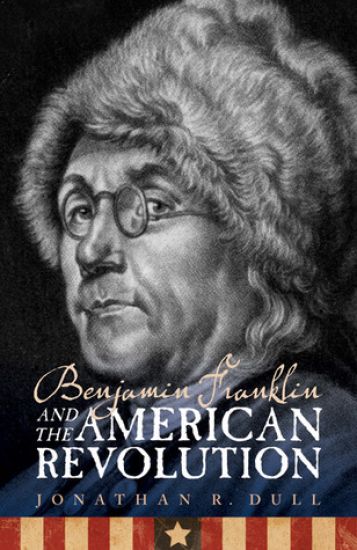
The inventor, the ladies' man, the affable diplomat, and the purveyor of pithy homespun wisdom: we all know the charming, resourceful Benjamin Franklin. What is less appreciated is the importance of Franklin's part in the American Revolution: except for Washington he was its most irreplaceable leader. Although aged and in ill health, Franklin served the cause with unsurpassed zeal and dedication. Jonathan R. Dull, whose decades of work on The Papers of Benjamin Franklin have given him rare insight into his subject, explains Franklin's role in the Revolution, what prepared him for that role, and what motivated him. The Franklin presented here, a man immersed in the violence, danger, and suffering of the Revolution, is a tougher person than the Franklin of legend. Dull's portrait captures Franklin's confidence and self-righteousness about himself and the American cause. It shows his fanatical zeal, his hatred of King George III and George's American supporters (particularly Franklin's own son), and his disdain for hardship and danger. It also shows a side of Franklin that he tried to hide: his vanity, pride, and ambition. Though not as lovable and avuncular as the person of legend, this Franklin is more interesting, more complex, and in many ways more impressive.
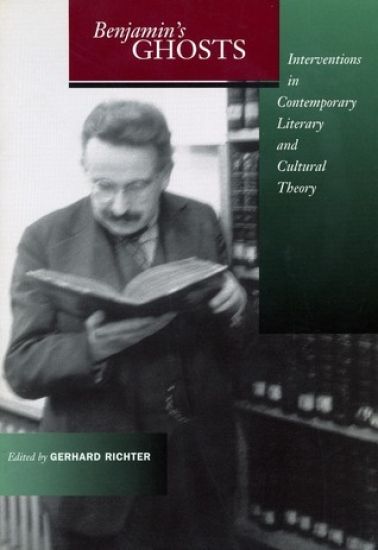
Benjamin's Ghosts

Benjamin's Ghosts

Stanford University Press
2002
sidottu
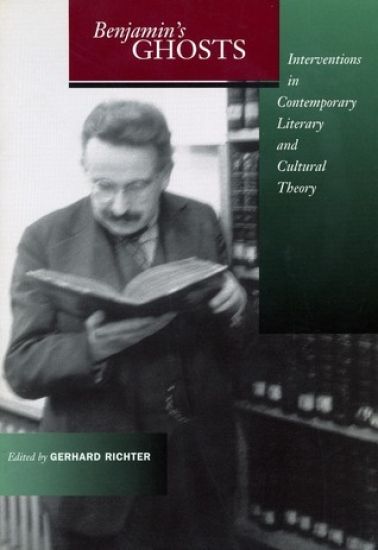
This book explores the implications for today's critical concerns of the work of Walter Benjamin (1892-1940). Although his writings are considered to be among the most powerful and suggestive theoretical enterprises of the twentieth century, his ideas are strangely resistant to cooptation by the established doctrines of various critical programs. The innovative essays gathered here engage this resistance by examining the notion of the ghostly in Benjamin's work. The contributors show that the urgent and haunting truths Benjamin offers point toward new forms of responsibility, even as they withdraw from straightforward meaning and transparent forms of expression. These truths reside in a figurative elsewhere, a ghostly space that his texts delimit but never fully inhabit, and these essays seek to do justice to the ghosts of Benjamin that are already on board with us. Through close textual readings and thoughtful contextualizations, internationally known Benjamin scholars engage a wide range of issues, including: the status of the image in Benjamin's literary reflections and in his meditations on cinema and visual culture; abiding Benjaminian notions of messianism, aura, reproducibility, semblance, and melancholy; Benjamin's relation to Freud; his innovative rethinking of history, virtuality, and translation; and his reflections on tragedy and prophecy, the geometrical dimensions of writing, and the relation between eros and language. The contributors are Norbert Bolz, Fritz Breithaupt, Stanley Corngold, Peter Fenves, Eva Geulen, Miriam Hansen, Beatrice Hanssen, Lutz Koepnick, Tom McCall, Kevin McLaughlin, Bettine Menke, Rainer Nägele, Gerhard Richter, Laurence Rickels, and Sigrid Weigel.
Benjamin's Ghosts

Benjamin's Ghosts

Stanford University Press
2002
pokkari
This book explores the implications for today's critical concerns of the work of Walter Benjamin (1892-1940). Although his writings are considered to be among the most powerful and suggestive theoretical enterprises of the twentieth century, his ideas are strangely resistant to cooptation by the established doctrines of various critical programs. The innovative essays gathered here engage this resistance by examining the notion of the ghostly in Benjamin's work. The contributors show that the urgent and haunting truths Benjamin offers point toward new forms of responsibility, even as they withdraw from straightforward meaning and transparent forms of expression. These truths reside in a figurative elsewhere, a ghostly space that his texts delimit but never fully inhabit, and these essays seek to do justice to the ghosts of Benjamin that are already on board with us. Through close textual readings and thoughtful contextualizations, internationally known Benjamin scholars engage a wide range of issues, including: the status of the image in Benjamin's literary reflections and in his meditations on cinema and visual culture; abiding Benjaminian notions of messianism, aura, reproducibility, semblance, and melancholy; Benjamin's relation to Freud; his innovative rethinking of history, virtuality, and translation; and his reflections on tragedy and prophecy, the geometrical dimensions of writing, and the relation between eros and language. The contributors are Norbert Bolz, Fritz Breithaupt, Stanley Corngold, Peter Fenves, Eva Geulen, Miriam Hansen, Beatrice Hanssen, Lutz Koepnick, Tom McCall, Kevin McLaughlin, Bettine Menke, Rainer Nägele, Gerhard Richter, Laurence Rickels, and Sigrid Weigel.
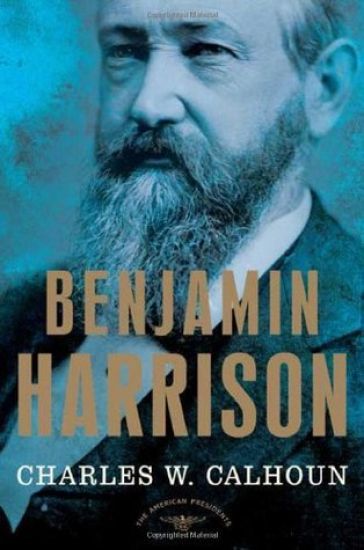
Benjamin Harrison: The American Presidents Series: The 23rd President, 1889-1893
The scion of a political dynasty ushers in the era of big government Politics was in Benjamin Harrison's blood. His great-grandfather signed the Declaration and his grandfather, William Henry Harrison, was the ninth president of the United States. Harrison, a leading Indiana lawyer, became a Republican Party champion, even taking a leave from the Civil War to campaign for Lincoln. After a scandal-free term in the Senate-no small feat in the Gilded Age-the Republicans chose Harrison as their presidential candidate in 1888. Despite losing the popular vote, he trounced the incumbent, Grover Cleveland, in the electoral college. In contrast to standard histories, which dismiss Harrison's presidency as corrupt and inactive, Charles W. Calhoun sweeps away the stereotypes of the age to reveal the accomplishments of our twenty-third president. With Congress under Republican control, he exemplified the activist president, working feverishly to put the Party's planks into law and approving the first billion-dollar peacetime budget. But the Democrats won Congress in 1890, stalling his legislative agenda, and with the First Lady ill, his race for reelection proceeded quietly. (She died just before the election.) In the end, Harrison could not beat Cleveland in their unprecedented rematch. With dazzling attention to this president's life and the social tapestry of his times, Calhoun compellingly reconsiders Harrison's legacy.
Benjamin Franklin's Letters to the Press, 1758-1775

Benjamin Franklin's Letters to the Press, 1758-1775

The University of North Carolina Press
2012
nidottu
This collection of Franklin's political writings contains more than double the number previously recognized as his. Much of this writing was performed during the intensive press campaigns for repeal by parliament of obnoxious measures, such as the Stamp Act and Townshend Acts. His letters reveal the adjustment he was making in his private ideas of British empire and American rights.Originally published in 1950.A UNC Press Enduring Edition -- UNC Press Enduring Editions use the latest in digital technology to make available again books from our distinguished backlist that were previously out of print. These editions are published unaltered from the original, and are presented in affordable paperback formats, bringing readers both historical and cultural value.
Benjamin Franklin and Polly Baker

Benjamin Franklin and Polly Baker

Hall Max

The University of North Carolina Press
2012
nidottu
Hall has made the first detailed investigation of Polly Baker. It leads through the exciting world of eighteenth-century journalism, literature, and statecraft. Ben Franklin occupies a position in the story second only to Polly Baker herself. Evident throughout is the tendency of people, even in an age of enlightenment, to believe what they see--provided they see it in print.Originally published in 1960.A UNC Press Enduring Edition -- UNC Press Enduring Editions use the latest in digital technology to make available again books from our distinguished backlist that were previously out of print. These editions are published unaltered from the original, and are presented in affordable paperback formats, bringing readers both historical and cultural value.
Benjamin Constant's Philosophy of Liberalism

Benjamin Constant's Philosophy of Liberalism

Dodge Guy H.

The University of North Carolina Press
2012
nidottu
This first work in English to focus on Constant as a political theorist shows that his thinking was molded by the French Revolution of 1789 and by Napoleon's regime. Constant is identified as the first to recognize Bonapartism as a new form of despotism, arising from the theory of popular sovereignty, which is still the basis for modern Fascist and Communist regimes. His political thought is analyzed within the framework of his philosophy of history, law, ethics, and religion.A UNC Press Enduring Edition -- UNC Press Enduring Editions use the latest in digital technology to make available again books from our distinguished backlist that were previously out of print. These editions are published unaltered from the original, and are presented in affordable paperback formats, bringing readers both historical and cultural value.
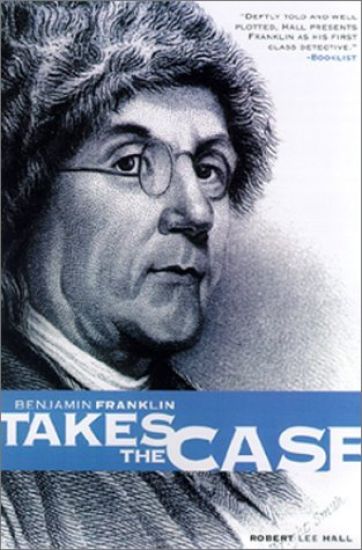
Benjamin Franklin Takes the Case

Benjamin Franklin Takes the Case

Robert Lee Hall

UNIVERSITY OF PENNSYLVANIA PRESS
2001
nidottu
More than ten years ago, Robert Lee Hall made a startling discovery. Within a secret compartment of an old armoire once owned by his great aunt, he found a yellowing manuscript describing a series of mysterious criminal cases. What made these stories so unusual was that they were solved by the renowned scientist and statesman, Benjamin Franklin, while he was a resident of London to plead the case of the American colonies before the British crown. Written by Hall's ancestor, Nick Handy, who happened to be Franklin's assistant throughout these adventures, Hall transcribed the tales and presented them in the order of their occurrence. In Benjamin Franklin Takes the Case, the first mystery in Hall's series, the great Doctor Franklin meets the young orphan Nick Handy in the print shop of an old friend. When his friend is suddenly murdered, it is up to Franklin and Nick to prove who was responsible for the grisly deed. Turning detective, Franklin pursues the strange case along the dark byways of London and into its grand houses, uncovering a theft ring, a profitable trade in slaves and prostitutes, and strong reasons to believe that Nick is in grave danger. Employing his keen sense of scientific observation and his inventor's creative mind, the doctor is able to solve a case that the constables had thought would be impossible to break.