Retain key chapter content with this student-friendly workbook that includes chapter objective questions, key-term definition queries, and multiple choice, fill-in-the-blank, and true-or-false problems, along with an extensive number of NATEF job sheets.
The student workbook is designed to help you retain key chapter content. Included within this resource are chapter objective questions; key-term definition queries; and multiple choice, fill-in-the-blank, and true-or-false problems.
The 18th century was a wealth of knowledge, exploration and rapidly growing technology and expanding record-keeping made possible by advances in the printing press. In its determination to preserve the century of revolution, Gale initiated a revolution of its own: digitization of epic proportions to preserve these invaluable works in the largest archive of its kind. Now for the first time these high-quality digital copies of original 18th century manuscripts are available in print, making them highly accessible to libraries, undergraduate students, and independent scholars.Western literary study flows out of eighteenth-century works by Alexander Pope, Daniel Defoe, Henry Fielding, Frances Burney, Denis Diderot, Johann Gottfried Herder, Johann Wolfgang von Goethe, and others. Experience the birth of the modern novel, or compare the development of language using dictionaries and grammar discourses. ++++The below data was compiled from various identification fields in the bibliographic record of this title. This data is provided as an additional tool in helping to insure edition identification: ++++British LibraryT137327Dublin: printed by P. Wogan, 1798. 3v.; 12
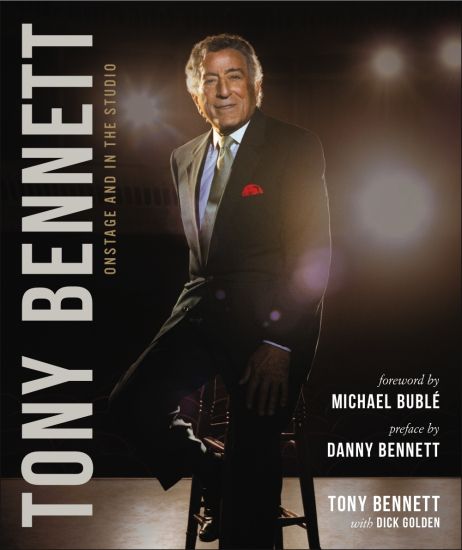
This beautiful definitive book—a follow-up to Tony Bennett: In the Studio (2007), which focused on Tony’s artwork—explores the themes, influences, and inspirations that inform his music and creative life. Along with more than 140 images, including photographs, personal memorabilia, album covers, and notes, this stunning volume includes essays from celebrated friends and colleagues.
The 1866 transatlantic yacht race was a match that saw three yachts battle their way across the Atlantic in the dead of winter in pursuit of a $90,000 prize. Six men died in the brutal and close-fought contest, and the event changed the perception of yachting from a slightly effete gentlemen’s pursuit into something altogether more rugged and adventurous. The race also symbolized the beginning of America’s ‘gilded age’, with its associated obscene wealth and largesse (the $90,000 prize put up by the three contestants is about $15 million in today’s money), as well as the thawing of relations between the US and UK. The narrative focuses on the victorious yacht Henrietta and her owner James Gordon Bennett. Bennett was the son of the multimillionaire proprietor of the New York Herald, and a notorious playboy. His infamous stunts included driving his carriage through the streets of New York naked, tipping a railway porter $30,000, and turning up at his own engagement party blind drunk and mistaking the fire for a urinal, which led to the coining of the phrase ‘Gordon Bennett!’. However, Bennett was also a serious yachtsman and had served with distinction during the civil war aboard Henrietta, and he was the only owner to be aboard his own boat during the race. Other characters include Bennett’s captain Samuel Samuels (legendary clipper skipper, ex-convict and occasional vaudeville actor), financier Leonard Jerome, aboard Henrietta as race invigilator (he also happened to be grandfather to Winston Churchill) and Stephen Fisk, a journalist so desperate to cover the race that he evaded a summons to appear as a witness in court and instead smuggled himself aboard Henrietta in a crate of champagne. Using the framework of the race to discuss the various historical themes, there’s ample drama, and the diverse and eccentric range of characters ensure that this is a book laced with plenty of human interest, scandal and adventure.
"How to Make the Best of Life" is a 1923 self help book by English writer Arnold Bennett. It offers the reader simple, practical advice on how to lead a good life, looking at how one should deal with such aspects as business, love, children, citizenship, and much more. A timeless self-betterment manual that has helped improve people's lives for nearly a hundred years. Contents include: "Temperament and Habits", "Establishing Good Humour: Three Aids", "The Business of Education", "Starting Life", "Falling in Love", "Marriage", "The Continuation of Marriage", "Children", "Not for the Young", and "Being Interested in the Community". Enoch Arnold Bennett (1867-1931) was an English writer. Although he is perhaps best remembered for his popular novels, Bennett also produced work in other areas including the theatre, propaganda, journalism, and film. Other notable works by this author include: "Helen with a High Hand" (1910), "The Card" (1911), and "Hilda Lessways" (1911). This classic work is being republished now in a new edition complete with an introductory essay on Arnold Bennett by F. J. Harvey Darton.
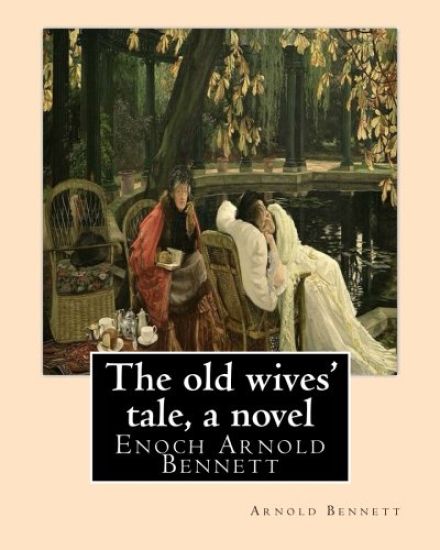
The Old Wives' Tale is a novel by Arnold Bennett, first published in 1908. It deals with the lives of two very different sisters, Constance and Sophia Baines, following their stories from their youth, working in their mother's draper's shop, into old age. It is generally regarded as one of Bennett's finest works. It covers a period of about 70 years from roughly 1840 to 1905, and is set in Burslem and Paris. Bennett was initially inspired to write the book by a chance encounter in a Parisian restaurant. In the introduction to the book, he says...an old woman came into the restaurant to--dine. She was fat, shapeless, ugly, and grotesque. She had a ridiculous voice, and ridiculous gestures. It was easy to see that she lived alone, and that in the long lapse of years she had developed the kind of peculiarity which induces guffaws among the thoughtless.and--I reflected, concerning the grotesque diner: "This woman was once--young, slim, perhaps beautiful; certainly free from these ridiculous mannerisms. Very probably she is unconscious of her singularities. Her case is a tragedy. One ought to be able to make a heartrending novel out of the history of a woman such as she." Every stout, ageing woman is not grotesque-far from it -but there is an extreme pathos in the mere fact that every stout ageing woman was once a young girl with the unique charm of youth in her form and movements and in her mind. And the fact that the change from the young girl to the stout ageing woman is made up of an infinite number of infinitesimal changes, each unperceived by her, only intensifies the pathos.Bennett also found inspiration in Maupassant's novel Une Vie. The book is broken up into four parts. The first section, "Mrs Baines" details the adolescence of both Sophia and Constance, and their life in their father's shop and house (a combined property). The father is ill and bedridden, and the main adult in their life is Mrs Baines, their mother.By the end of the first book, Sophia (whose name reflects her sophistication, as opposed to the constant Constance) has eloped with a travelling salesman. Constance meanwhile marries Mr Povey, who works in the shop. The second part, "Constance", details the life of Constance from that point forward up until the time she is reunited with her sister in old age. Her life, although outwardly prosaic, is nevertheless filled with personal incident, including the death of her husband, Mr Povey, and her concerns about the character and behaviour of her son.The third part, "Sophia", carries forward the story of what happened to Sophia after her elopement. Abandoned by her husband in Paris, Sophia eventually becomes the owner of a successful pensione. The final part, "What Life Is", details how the two sisters are eventually reunited. Sophia returns to England and the house of her childhood, where Constance still lives. Enoch Arnold Bennett (27 May 1867 - 27 March 1931) was an English writer. He is best known as a novelist, but he also worked in other fields such as journalism, propaganda and film.Bennett was born in a modest house in Hanley in the Potteries district of Staffordshire. Hanley is one of a conurbation of six towns which were joined together at the beginning of the 20th century as Stoke-on-Trent. Enoch Bennett, his father, qualified as a solicitor in 1876, and the family moved to a larger house between Hanley and Burslem.Bennett was educated locally in Newcastle-under-Lyme. Bennett was employed by his father but the working relationship failed. Bennett found himself doing jobs such as rent-collecting which were uncongenial. He also resented the low pay; it is no accident that the theme of parental miserliness is important in his novels. In his spare time he was able to do a little journalism, but his breakthrough as a writer came after he had moved from the Potteries. At the age of 21, he left his father's practice and went to London as a solicitor's clerk.




![Rosalie Du Pont; or, Treason in the Camp... [A Sequel to the Female Spy] by Emerson Bennett.](/covers/9781425508029.jpg)