Kirjahaku
Etsi kirjoja tekijän nimen, kirjan nimen tai ISBN:n perusteella.
1000 tulosta hakusanalla Bertrand

St-Bertrand-de-Comminges
INSTITUT GEOGRAPHIQUE NATIONAL
2024
kartta, viikattu
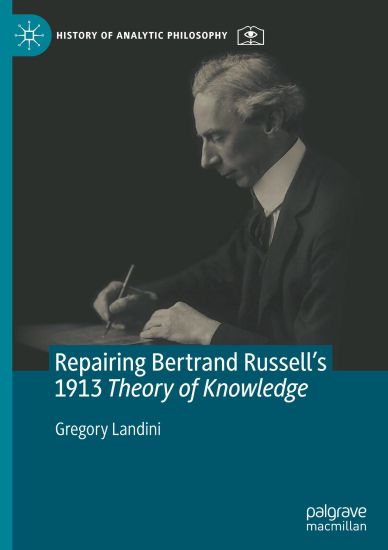
Repairing Bertrand Russell’s 1913 Theory of Knowledge
Gregory Landini
Springer Nature Switzerland AG
2022
sidottu
This book repairs and revives the Theory of Knowledge research program of Russell’s Principia era. Chapter 1, 'Introduction and Overview', explains the program’s agenda. Inspired by the non-Fregean logicism of Principia Mathematica, it endorses the revolution within mathematics presenting it as a study of relations. The synthetic a priori logic of Principia is the essence of philosophy considered as a science which exposes the dogmatisms about abstract particulars and metaphysical necessities that create prisons that fetter the mind. Incipient in The Problems of Philosophy, the program’s acquaintance epistemology embraced a multiple-relation theory of belief. It reached an impasse in 1913, having been itself retrofitted with abstract particular logical forms to address problems of direction and compositionality. With its acquaintance epistemology in limbo, ScientificMethod in Philosophy became the sequel to Problems. Chapter 2 explains Russell’s feeling intellectually dishonest. Wittgenstein’s demand that logic exclude nonsense belief played no role. The 1919 neutral monist era ensued, but Russell found no epistemology for the logic essential to philosophy. Repairing, Chapters 4–6 solve the impasse. Reviving, Chapters 3 and 7 vigorously defend the facts about Principia. Studies of modality and entailment are viable while Principia remains a universal logic above the civil wars of the metaphysicians.
Repairing Bertrand Russell’s 1913 Theory of Knowledge
Gregory Landini
Springer Nature Switzerland AG
2023
nidottu
This book repairs and revives the Theory of Knowledge research program of Russell’s Principia era. Chapter 1, 'Introduction and Overview', explains the program’s agenda. Inspired by the non-Fregean logicism of Principia Mathematica, it endorses the revolution within mathematics presenting it as a study of relations. The synthetic a priori logic of Principia is the essence of philosophy considered as a science which exposes the dogmatisms about abstract particulars and metaphysical necessities that create prisons that fetter the mind. Incipient in The Problems of Philosophy, the program’s acquaintance epistemology embraced a multiple-relation theory of belief. It reached an impasse in 1913, having been itself retrofitted with abstract particular logical forms to address problems of direction and compositionality. With its acquaintance epistemology in limbo, ScientificMethod in Philosophy became the sequel to Problems. Chapter 2 explains Russell’s feeling intellectually dishonest. Wittgenstein’s demand that logic exclude nonsense belief played no role. The 1919 neutral monist era ensued, but Russell found no epistemology for the logic essential to philosophy. Repairing, Chapters 4–6 solve the impasse. Reviving, Chapters 3 and 7 vigorously defend the facts about Principia. Studies of modality and entailment are viable while Principia remains a universal logic above the civil wars of the metaphysicians.

Warum Bertrand Russel kein Christ war. Seine kritische Sicht auf die Weltreligionen
Tobias Zepf
Grin Publishing
2016
pokkari

Zaza Bertrand - Japanese Whispers
APE
2017
nidottu


The Collected Papers of Bertrand Russell, Volume 1
Routledge
1983
sidottu
Covering the topics of God, immortality, conscience and immortality, this volume presents a selection of essays of the first decade of Russell as an independent thinker. It includes his graduate essays, adolescent writings and ideas on ethics, Bacon, Hobbes and DesCartes, psychology and politics.
The Collected Papers of Bertrand Russell, Volume 8
Routledge
1986
sidottu
This volume collects together all of Russell's philosophical papers inspired by his work with Whitehead on 'Principia Mathematica'.

The Collected Papers of Bertrand Russell, Volume 6
Routledge
1992
sidottu
The years covered by this volume of the Collected Papers of Bertrand Russell were among the most productive, philosophically speaking, of Russell's entire career. In addition to the papers reprinted here, he bought Principia Mathematica to its finished form and wrote The Problems of Philosophy, Theory of Knowledge and Knowledge of the External World. In October 1910 he began teaching at Cambridge, having accepted an appointment as lecturer in logic and the principles of mathematics at Trinity College for a term of five years. A year later Ludwig Wittgenstein began to attend his lectures. Within a few months he was influencing Russell's philosophical thinking as much as, or more than, Russell was influencing his.
The Collected Papers of Bertrand Russell, Volume 3
Routledge
1994
sidottu
This volume shows Russell in transition from a neo-Kantian and neo-Hegelian philosopher to an analytic philosopher of the first rank. During this period his research centred on writing The Principles of Mathematics where he drew together previously unpublished drafts. These shed light on Russell's paradox. This material will alter previous accounts of how he discovered his paradox and the related paradox of the largest cardinal. The volume also includes a previously unpublished draft of an early attempt to solve his paradox, as well as the earliest known version of his generalised relation arithmetic. It contains three articles which have never previously been published in English.

The Collected Papers of Bertrand Russell, Volume 4
Routledge
1994
sidottu
This volume covers the period from the beginning of Whitehead and Russell's work on Volume 2 of the Principles of Mathematics to the critical discovery of the theory of descriptions in 1905. The volume contains a large number of unpublished manuscripts which give a vivd picture of Russell wrestling with the logical paradoxes, often unsuccessfully, as he tries out one foundational scheme after another. Previously unpublished work in the theory of denoting is included, which predates the famous article of 1905. This volume also gathers together several manuscripts on the so-called `zig-zag' theory with which Russell attempted to provide a type-free foundation for mathematics. A number of reviews and survey articles, together with two talks on modality and truth, are also published for the first time.
The Collected Papers of Bertrand Russell, Volume 10
Routledge
1996
sidottu
During the period covered by this volume, Bertrand Russell first retired from and then resumed his philosophical career. In 1927 he published two philosophy books, The Analysis of Matter and An Outline of Philosophy. His next book in academic philosophy, An Inquiry into Meaning and Truth, was not published until 1940.Yet, Russell published a significant amount of essays and popular books between 1927 and 1946, mostly to finance the running of Beacon Hill School, and his growing family. Those years also saw his break-up with Dora Russell, his marriage to Patricia (Peter) Spence and a move of the family to the United States. Volume 10 brings together Russell's writings on ethics, politics, religion and academic philsophy. It is an invaluable guide to the thought and development of one of the most famous philosophers of this century.
The Collected Papers of Bertrand Russell, Volume 15
Routledge
2000
sidottu
The Collected Papers of Bertrand Russell, Volume 15 assembles Russell's writings on his experiences of visiting and reflecting on Russia and China.Having emerged from the Great War determined to prevent another armed conflict, Russell became a champion of international socialism as the antidote to the destructive forces of nationalism and capitalism. His quest for international reconstruction led to two enduring experiences, his trip first to Bolshevik Russia in 1920 and then to divided China in 1920-21. These letters describe those experiences which confirmed his emergence as a popular commentator on contemporary political issues.The volume includes two unpublished papers on Russell's trip to Russia.