
Kirjahaku
Etsi kirjoja tekijän nimen, kirjan nimen tai ISBN:n perusteella.
1000 tulosta hakusanalla Byron Perry
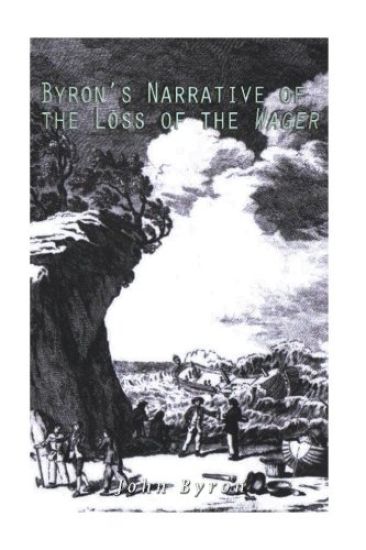
Byron's Narrative of the Loss of the Wager
John Byron
Createspace Independent Publishing Platform
2016
nidottu
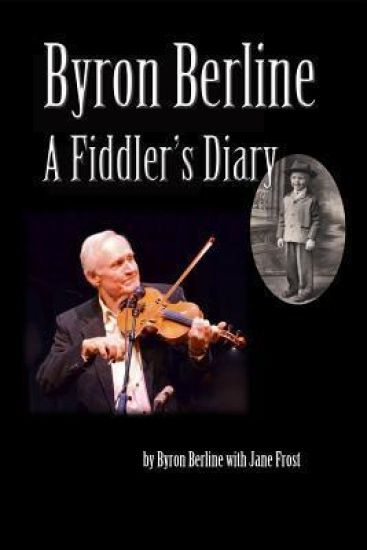
Forty years of journal entries document the L.A. recording industry from the Rolling Stones to the Byrds, and Alvin and the Chipmunks. They include hilarious stories of being one of the most sought after session players on the west coast, by three time National Fiddle Champion, Byron Berline, a Flying Burrito Brother who founded Country Gazette, The L.A. Fiddle Band and Sundance.His avoidance and survival of the drug-filled music industry, is amazing and heart lifting. His stories of the road are hilarious and the detailed journal entries are a researchers dream. From earthquakes to scoring motion pictures and having some of Charles Manson's Family in his home, this autobiography is the account of an Oklahoma farm boy's life and career -- from entering the University of Oklahoma on a football scholarship and graduating with a javelin in one hand and a fiddle in the other. It continues through acting in movies and his time playing/recording with Bill Monroe, Mickey Mouse, Linda Ronstadt, Emmy Lou Harris, Vince Gill, Mark O'Connor, Doug Dillard, Rod Stewart, Ann Murray, Earl Scruggs, and the Eagles, to his spiraling success as a musician, husband and father.Byron Berline, A Fiddler's Diary, is a peek inside the music industry as only an "A" list insider could explicitly describe. For baby-boomers, it is a dance down memory lane, with all the music and recording artists we love. His story is abundantly entertaining with enough documentation to be considered a reference work.Byron continues to tour, run his Doublestop Fiddle Shop and produces about twenty shows a year at his Music Hall in Guthrie, Oklahoma, as well as being the founder of the annual Oklahoma International Bluegrass Festival and Guthrie's annual Western Swing Festival. Byron continues to perform, record and write, with the same intensity and enthusiasm he has always maintained. He remains... "one of the most inventive fiddle players."In February, 2013, Grammy nominated, Byron Berline, received his highest recognition to date, being inducted into the National Fiddler's Hall of Fame. In genuine humble response, he invites everyone to, "Stop by the fiddle shop and say, 'hi.'"
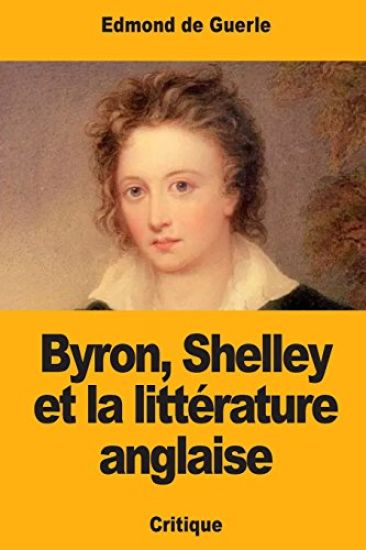
Byron, Shelley et la littérature anglaise
Edmond de Guerle
Createspace Independent Publishing Platform
2018
nidottu
Le duc de Saint-Simon se demande au d but de ses m moires si la charit chr tienne permet d' crire l'histoire de son temps, et apr s avoir lu son livre, on n'est point tent de s' tonner de ce pieux scrupule. Que resterait-il en effet de la plupart des grands hommes, s'il se trouvait toujours, marchant dans l'ombre de leur gloire, des Tacite, des Machiavel et des Saint-Simon pour mettre nu la faiblesse et la perversit humaines, que la grandeur rev t d'une si l g re corce ? Je ne sais s'il r de aujourd'hui autour des hommes puissants de ce monde quelqu'un de ces peintres aust res, je ne sais m me pas s'il y a des originaux assez curieux pour tenter la s v rit de leur pinceau; mais on est en attendant poss d d'une trange manie de rejuger les morts. Notre temps n'est cependant point fort l'aise pour tenir une balance quitable en pesant le pass , car il a tout la fois le culte des h ros et le culte de la v rit dans l'histoire; il fait des demi-dieux, et il veut voir en m me temps ces demi-dieux dans un d shabill qui les montre assez laids; il l ve des idoles et les brise pour regarder un peu comment elles sont faites l'int rieur. Je ne suis pas bien s r que l'humilit chr tienne fasse son profit de ces comptes qu'on pr tend r gler avec une si exacte quit . Les h ros en sortent grandis quant au g nie, diminu s quant la personne, et au lieu de nous appara tre dans cette majestueuse unit qui ne tente l'imitation que par les grands c t s, ils laissent voir sous le scalpel des bizarreries et des faiblesses que singent avec bonheur les petits esprits et qui font parfois chanceler les grands...
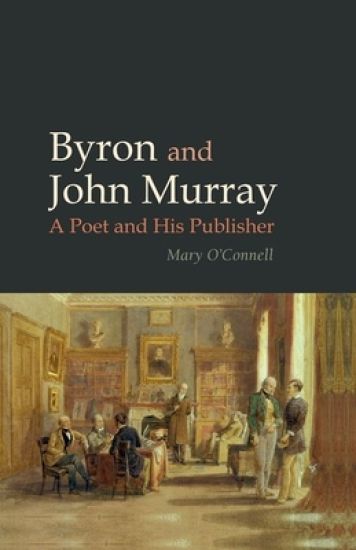
Byron and John Murray: A Poet and His Publisher is the first comprehensive account of the relationship between Byron and the man who published his poetry for over ten years. It is commonly seen as a paradox of Byron’s literary career that the liberal poet was published by a conservative publishing house. It is less of a paradox when, as this book illustrates, we see John Murray as a competitive, innovative publisher who understood how to deal with his most famous author. The book begins by charting the early years of Murray’s success prior to the publication of Childe Harold’s Pilgrimage, and describes Byron’s early engagement with the literary marketplace. The book describes in detail how Byron became one of Murray’s authors, before documenting the success of their commercial association and the eventual and protracted disintegration of their relationship. Byron wrote more letters to John Murray than anyone else and their correspondence represents a fascinating dialogue on the nature of Byron’s poetry, and particularly the nature of his fame. It is the central argument of this book that Byron’s ambivalent attitude towards professional writing and popular literature can be illuminated through an understanding of his relationship with John Murray.
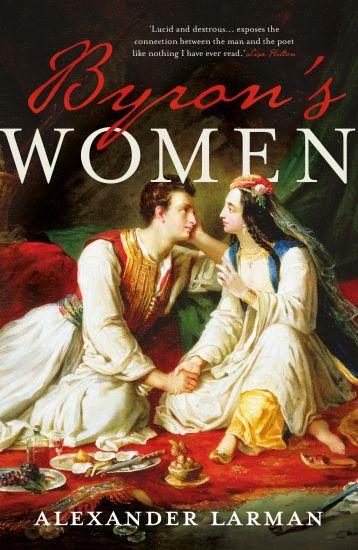
One was the mother who bore him; three were women who adored him; one was the sister he slept with; one was his abused and sodomized wife; one was his legitimate daughter; one was the fruit of his incest; another was his friend Shelley's wife, who avoided his bed and invented science fiction instead. Nine women; one poet named George Gordon, Lord Byron - mad, bad and very very dangerous to know. The most flamboyant of the Romantics, he wrote literary bestsellers, he was a satirist of genius, he embodied the Romantic love of liberty (the Greeks revere him as a national hero), he was the prototype of the modern celebrity - and he treated women (and these women in particular) abominably. In BYRON AND HIS WOMAN, Alex Larman tells their extraordinary, moving and often shocking stories. In so doing, he creates a scurrilous 'anti-biography' of one of England's greatest poets, whose life is views - to deeply unflattering effect - through the prism of the nine damaged woman's lives.
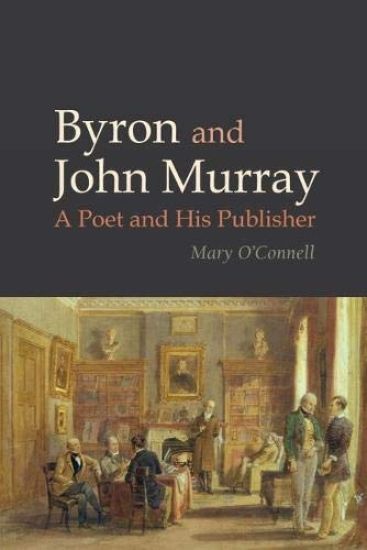
Byron and John Murray: A Poet and His Publisher is the first comprehensive account of the relationship between Byron and the man who published his poetry for over ten years. It is commonly seen as a paradox of Byron’s literary career that the liberal poet was published by a conservative publishing house. It is less of a paradox when, as this book illustrates, we see John Murray as a competitive, innovative publisher who understood how to deal with his most famous author. The book begins by charting the early years of Murray’s success prior to the publication of Childe Harold’s Pilgrimage, and describes Byron’s early engagement with the literary marketplace. The book describes in detail how Byron became one of Murray’s authors, before documenting the success of their commercial association and the eventual and protracted disintegration of their relationship. Byron wrote more letters to John Murray than anyone else and their correspondence represents a fascinating dialogue on the nature of Byron’s poetry, and particularly the nature of his fame. It is the central argument of this book that Byron’s ambivalent attitude towards professional writing and popular literature can be illuminated through an understanding of his relationship with John Murray.
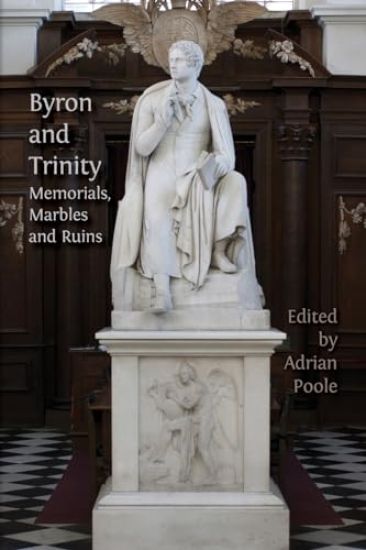
This collection of essays reprints previously published writings about Trinity College Cambridge's most celebrated writer, Lord Byron, for the bicentennial commemoration of his death on 19 April 1824. Bringing together diverse contributions from a series of scholars, three of them fellows of Trinity College, it explores various aspects of Byron's life and writing. The collection draws out the relationships between 'memorials, marbles and ruins', themes always prominent in his thinking and feeling.The earliest essay reprinted here dates from the bicentenary of Byron's birth in 1788. Thirty-six years and two centuries later, this collection honours a figure of enduring, complex significance, with whom Trinity College is proud to be associated. It will be of value to scholars and students of Byron, as well as those interested in his life, in the bi-centenary year of his death.
This collection of essays reprints previously published writings about Trinity College Cambridge's most celebrated writer, Lord Byron, for the bicentennial commemoration of his death on 19 April 1824. Bringing together diverse contributions from a series of scholars, three of them fellows of Trinity College, it explores various aspects of Byron's life and writing. The collection draws out the relationships between 'memorials, marbles and ruins', themes always prominent in his thinking and feeling.The earliest essay reprinted here dates from the bicentenary of Byron's birth in 1788. Thirty-six years and two centuries later, this collection honours a figure of enduring, complex significance, with whom Trinity College is proud to be associated. It will be of value to scholars and students of Byron, as well as those interested in his life, in the bi-centenary year of his death.
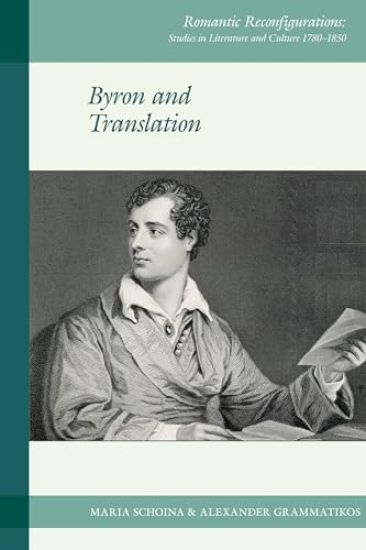
Byron and Translation
LIVERPOOL UNIVERSITY PRESS
2024
sidottu
This collection of essays offers an image of Byron not only as a poet – for which he is best known – but as a translator of foreign literature and culture. To recover this underexplored element of Byron’s work, the contributors examine his translated pieces in both textual and extra-textual contexts, including analysis of manuscripts, composition history, publishing history, and other literary and historical factors. They explore the motives behind Byron’s choice to translate in the first place, as well as reconstructing the translational methods he applied, and his ideas on translation and the role of the translator in general. The book focuses too on Byron’s ‘geographical mobility’, which also involved the act of translation, though in a metaphorical sense. The cosmopolitan poet mediated and interpreted all the time: foreign cultures, behaviours, modes of living, customs and habits. In this sense, translation becomes for the poet a dynamic ‘movement’ between languages, across texts and around various contexts, offering Byron a vital space for the articulation of his ideas. Byron’s translation work reminds us how Romantic writers and readers sought to learn about and engage with the wider world and its various languages.
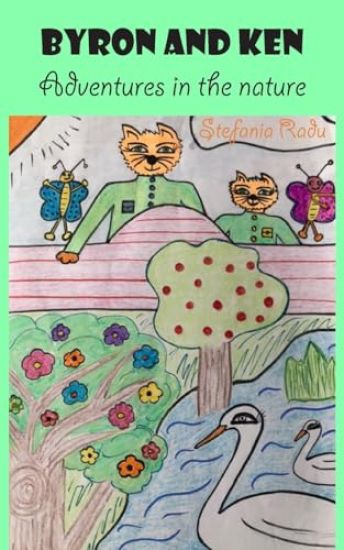
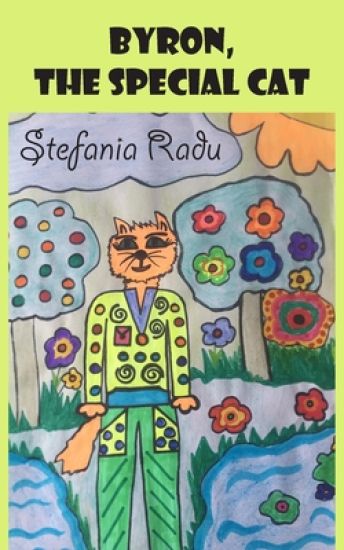
Byron and Ken, Adventures in the nature is a book showing a small glimpse of what a special cat can think about daily experiences. Byron and Ken are two kittens who love to explore the outdoor areas. Byron has sensory issues and he dislikes changes in his life, however his brother Ken helps him a lot to accept new options and to try new things. By the same author, Byron the special cat.
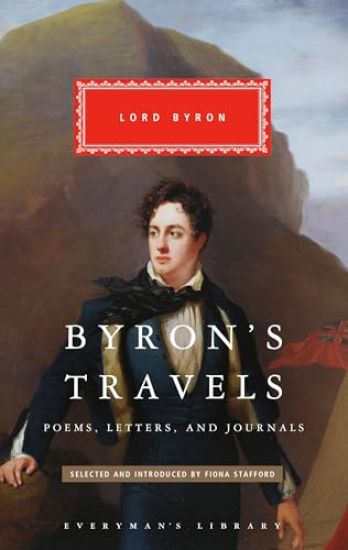
In Lord Byron's lifetime, details of his travels were widely known through poems set in different countries, ranging from his homes in Scotland and England, through Europe and the Middle East, to the South Pacific and into extra-terrestrial realms. At the same time, a much more personal story was being shared with friends and family. Even when divided from those whose company he most enjoyed, Byron continued to share his thoughts and feelings about wherever he happened to be. His compulsive letter-writing reveals a strong desire to reach across space, to connect and reconnect with those elsewhere. While his memoirs did not survive the ceremonial posthumous bonfire at 50 Albemarle Street, many of Byron's correspondents treasured every word in their possession. This means a remarkable legacy has been preserved in letters that still seem as alive with conversational energy as when they were dashed off more than two hundred years ago. Through Byron's letters and journals, we are still able to become mental travellers, transported across time and space by this brilliant, mercurial, magnificent and often maddening writer.

In 1816, following the scandalous collapse of his marriage, Lord Byron left England forever. His first destination was the Villa Diodati by Lake Geneva where he stayed together with Percy Bysshe Shelley, Mary Godwin, Claire Clairmont and John Polidori. Byron in Geneva focuses sharply on the poet’s life in the summer of that year, a famous time for meteorologists (for whom 1816 is the year without a summer), but also that crucial moment in the development of his writing when, urged on by Shelley, Byron tried to transform himself into a Romantic poet of the Wordsworthian variety. The book gives a vivid impression of what Byron thought and felt in these few months after the breakdown of his marriage, but also explores the different aspects of his nature that emerge in contact with a remarkable cast of supporting characters, which also included Madame de Staël, who presided over a famous salon in Coppet, across the lake from Geneva, and Matthew Lewis, author of the splendidly erotic `Gothic’ best-seller, The Monk. David Ellis sets out to challenge recent damning studies of Byron and through his meticulous exploration of the private and public life of the poet at this pivotal moment, he reasserts the value of Byron’s wit, warm-heartedness, and hatred of cant.
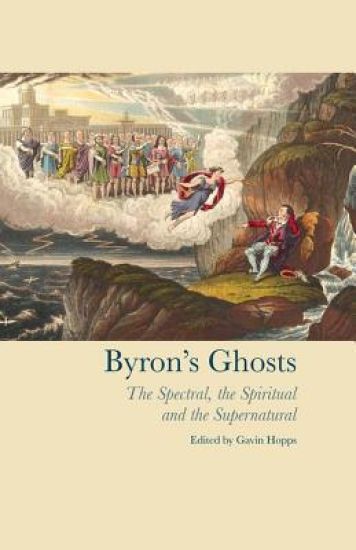
Byron's Ghosts
Liverpool University Press
2013
sidottu
Byron is rarely thought of as a spiritual writer. However, as this bold new collection shows, this is the result of an impoverished notion of the ‘spiritual’ and a reflection of biased priorities in Romantic studies. Reflecting on the poet’s claim that ‘immaterialism’s a serious matter’, this interdisciplinary collection of essays, from British and American scholars, calls into question the prevailing ‘materialist’ consensus, and offers a fresh and theoretically inflected reading of Byron’s poetry. Byron’s Ghosts is the first book-length examination of spectrality in Byron’s work. It is on the one hand concerned with what Mary Shelley in her essay ‘On Ghosts’ refers to as ‘the true old-fashioned, foretelling, flitting, gliding ghost’, though it is also a postmodern response to the ‘spectral turn’ in critical theory, which brings into view a range of phantom effects and ‘non-Gothic’ spectres. Focusing attention on these diverse modalities of the ghostly, the specially assembled essays complicate the popular image of Byron as a sceptical or ‘anti-Romantic’ poet and reveal a great deal about his work that could not be uncovered in any other way.
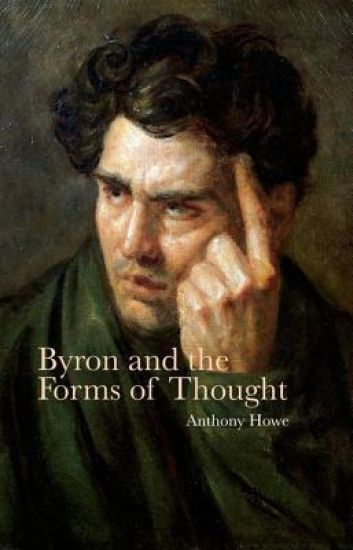
An Open Access edition of this book is available on the Liverpool University Press website and the OAPEN library.Byron and the Forms of Thought is a major new study of Byron as a poet and thinker. While informed by recent work on Byron’s philosophical contexts, the book questions attempts to describe Byron as a philosopher of a particular kind. It approaches Byron, rather, as a writer fascinated by the different ways of thinking philosophy and poetry are taken to represent. After an Introduction that explores Byron’s reception as a thinker, the book moves to a new reading of Byron’s scepticism, arguing for a close proximity, in Byron’s thought, between epistemology and poetics. This is explored through readings of Byron’s efforts both as a philosophical poet and writer of critical prose. The conclusions reached form the basis of an extended reading of Don Juan as a critical narrative that investigates connections between visionary and political consciousness. What emerges is a deeply thoughtful poet intrigued and exercised by the possibilities of literary form.
Byron at the Theatre
Cambridge Scholars Publishing
2007
sidottu
Byron at the Theatre is a collection of essays by a wide spectrum of European scholars, dealing with Byron's dramas in a variety of ways. It starts with a long and detailed introduction on Byron and Drury Lane, incorporating much recent research done on the riotous and squalid conditions of the theatre in Regency London – conditions which go far towards explaining Byron's distaste for the idea of theatrical success.There follows a chapter about the influence on Byron of Vittorio Alfieri, a vital subject which has not been written about thoroughly for over a century, and which goes far to explain what motivated Byron's experiments in classical drama. The main body of the essays discuss Byron's plays from thematic perspectives, and examine Byron himself as a figure in the dramas of Goethe and Stoppard. There is a chapter on Rudolph Nureyev's little-known Manfred ballet, and another on Byron himself as a dramatic performer.Byron at the Theatre is a vital book for anyone interested in this much-discussed but little-understood aspect of Byron's life and work.
Everyone loves a good hamburger, and Byron makes the best. Since 2007, Byron's restaurants have become renowned for as the place to head for a proper hamburger.Founder Tom Byng and head chef Fred Smith know everything there is to know about burgers. They've tasted thousands of them all around the world in their quest for perfection, driven by the belief that nothing beats a juicy burger - the ultimate comfort food, and so satisfying in its simplicity.It's something worth getting the barbecue out for, the friends over, the family round and the apron on. Along with plenty of other comfort foods (chicken wings, onion rings, meatloaf, ranch salad, cherry pie, brownies and more), this book shares some of Tom and Fred's brilliant recipes and insider tips, to encourage you to enjoy great food in good company - food to lift the spirits and warm the soul.
Byron's poetry took Europe by storm in the early nineteenth century and the poems which made him a star are here represented by a selection of the early lyrics, including still popular pieces such as 'She walks in beauty' and 'We'll go a no more a-roving'. But Byron's real talent was for comedy. He is the greatest comic poet of the Romantic movement and his comic verse is here represented by Beppo, A Vision Of Judgement and selections from his greatest masterpiece, Don Juan, which satirizes the very reputation for amourous adventures which helped to make Byron himself famous.