

Kirjahaku
Etsi kirjoja tekijän nimen, kirjan nimen tai ISBN:n perusteella.
1000 tulosta hakusanalla C. Carr

Is Your Child Ready for Kindergarten? 85+ Fun & Easy Activities to Prepare for the Big Day!
C. Carrozza; A. Miata
Createspace Independent Publishing Platform
2013
nidottu
Only yesterday you were practicing tummy time with your infant, and suddenly you're staring at the kindergarten registration form Though sometimes, we'd love to freeze time, the reality stands: kindergarten is coming. Did you know that today's kindergarten classroom is very different than it was years ago? New standards of education mean more is expected of your child at every stage, and the early childhood curriculum is fast-paced from day one. As parents, we want to ensure that our children are well-prepared to start their formal education, but, many of us don't know where to start and most of us don't have the time. Get the inside scoop directly from kindergarten teachers and parents who have experienced students' success throughout the years and know the "do's" and "don'ts" to preparing students for a great first year. This easy-to-read and fun-to-follow book reveals at-home activities and valuable information to prepare your child in a way that is stress-free and fun for both of you. -Practice essential skills for early reading and math-Use checklists to follow your child's progress-Get started instantly with tips, activities & moreIs Your Child Ready for Kindergarten? provides everything you need to prepare your child for kindergarten while having fun and spending precious time together.

Translation, into French, of the following books: A. Livre des Deux Chemins ( XIe dynastie ), B. Livre de l'Amdouat ( XVIIIe dynastie ), C. Livre des Portes ( XVIIIe dynastie ), D. Livre des Cavernes ( XVIIIe dynastie ), E. Livre de la Vache du ciel ( XVIIIe dynastie ), F. Livre de la Nuit ( XIXe dynastie ), G. Livre du Jour ( XIXe dynastie ), H. Livre de parcourir l' ternit ( poque ptol ma que ).
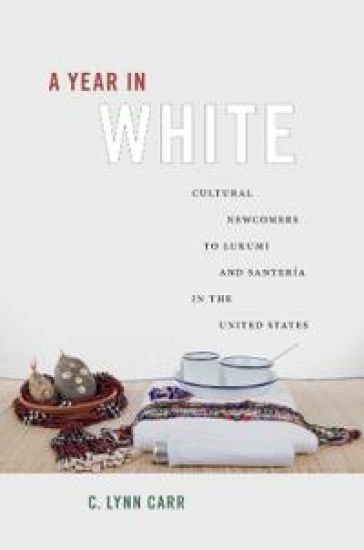
In the Afro-Cuban Lukumi religious tradition—more commonly known in the United States as Santería—entrants into the priesthood undergo an extraordinary fifty-three-week initiation period. During this time, these novices—called iyawo—endure a host of prohibitions, including most notably wearing exclusively white clothing. In A Year in White, sociologist C. Lynn Carr, who underwent this initiation herself, opens a window on this remarkable year-long religious transformation. In her intimate investigation of the “year in white,” Carr draws on fifty-two in-depth interviews with other participants, an online survey of nearly two hundred others, and almost a decade of her own ethnographic fieldwork, gathering stories that allow us to see how cultural newcomers and natives thought, felt, and acted with regard to their initiation. She documents how, during the iyawo year, the ritual slowly transforms the initiate’s identity. For the first three months, for instance, the iyawo may not use a mirror, even to shave, and must eat all meals while seated on a mat on the floor using only a spoon and their own set of dishes. During the entire year, the iyawo loses their name and is simply addressed as “iyawo” by family and friends. Carr also shows that this year-long religious ritual—which is carried out even as the iyawo goes about daily life—offers new insight into religion in general, suggesting that the sacred is not separable from the profane and indeed that religion shares an ongoing dynamic relationship with the realities of everyday life. Religious expression happens at home, on the streets, at work and school. Offering insight not only into Santería but also into religion more generally, A Year in White makes an important contribution to our understanding of complex, dynamic religious landscapes in multicultural, pluralist societies and how they inhabit our daily lives.
In the Afro-Cuban Lukumi religious tradition—more commonly known in the United States as Santería—entrants into the priesthood undergo an extraordinary fifty-three-week initiation period. During this time, these novices—called iyawo—endure a host of prohibitions, including most notably wearing exclusively white clothing. In A Year in White, sociologist C. Lynn Carr, who underwent this initiation herself, opens a window on this remarkable year-long religious transformation. In her intimate investigation of the “year in white,” Carr draws on fifty-two in-depth interviews with other participants, an online survey of nearly two hundred others, and almost a decade of her own ethnographic fieldwork, gathering stories that allow us to see how cultural newcomers and natives thought, felt, and acted with regard to their initiation. She documents how, during the iyawo year, the ritual slowly transforms the initiate’s identity. For the first three months, for instance, the iyawo may not use a mirror, even to shave, and must eat all meals while seated on a mat on the floor using only a spoon and their own set of dishes. During the entire year, the iyawo loses their name and is simply addressed as “iyawo” by family and friends. Carr also shows that this year-long religious ritual—which is carried out even as the iyawo goes about daily life—offers new insight into religion in general, suggesting that the sacred is not separable from the profane and indeed that religion shares an ongoing dynamic relationship with the realities of everyday life. Religious expression happens at home, on the streets, at work and school. Offering insight not only into Santería but also into religion more generally, A Year in White makes an important contribution to our understanding of complex, dynamic religious landscapes in multicultural, pluralist societies and how they inhabit our daily lives.


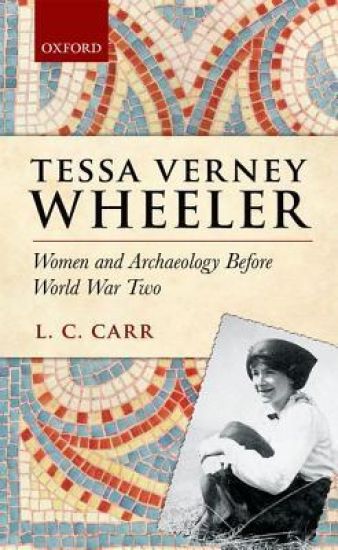
In this book, Carr unravels the biography of the archaeologist Tessa Verney Wheeler, a charming, tiny woman whose untimely death left her archaeological career overshadowed by her distinguished husband, Sir Mortimer Wheeler. Despite a short career of just over twenty years, Verney Wheeler published and excavated extensively while simultaneously developing new archaeological techniques, brought archaeology into the lives of the general public through her connections with the Press and the encouragement of site tours, and was an inspiring teacher to an impressive roster of students. In this biography, her life is recovered through an examination of her written work, archives, sites, and photographs, as well as through the memories of those who knew her. By means of a discussion of the very personal life and work of one woman, Carr explores the role of women in early British archaeology, resulting in a fascinating picture of a woman and a vivid evocation of the interwar period in London and Wales. From her work retraining colliery navvies as archaeological diggers in Roman amphitheatres on the Welsh borders, to cheap omelettes with her students at the Lyons Corner House on Piccadilly in London, Verney Wheeler crossed social and physical borders with a grace and appeal that remains very palpable today.
Psychology and the Developing World
Stuart C. Carr; John F. Schumaker
Praeger Publishers Inc
1996
sidottu
Previous leading commentators on the development of psychology in the Third World have conceived of three major stages: an attempt to assimilate Western psychology, with predictably negative results; the study of indigenous constructs, with more relevant applications; and, finally, transcending stage one and stage two to choose theories and methods on their applied merit alone. Psychology and the Developing World has been assembled to document how close psychology has come to researching that stage. Contributors were carefully selected to provide a unique overview of the latest applications of the discipline as a whole. Their work reveals how psychology is being applied to educational needs, management needs, and health needs. This book shows how development studies and allied disciplines cannot ignore psychology's potential for the Third World.

Right Place, Right Time: The Journey of a Pueblo of Laguna Native
Robert C. Carr
All about Indians Press
2014
nidottu
Behaviour at work can no longer be stereotyped as global or local – modern or traditional – with very little in-between. Instead work behaviour is a complex interplay between Global and Local values. It takes place in a Glocality. Thus individual achievement co-exists with group aspirations, pay diversity takes place in a social context, teamwork reflects cultural narrative, and labour mobility is bound by community bias. Globalization and Culture at Work: Exploring their Combined Glocality breaks new ground by exploring such glocalities, and the implications they create for managing human potential better. The volume is essential reading for researchers, managers, culturalists and consultants of work behaviour alike.
Consumption Of The Lungs And Asthma, Arrested And Cured: In The Majority Of Cases, By Inhalation, And Other Rational Means (1847)
Daniel C. Carr
KESSINGER PUBLISHING, LLC
2008
nidottu
Behaviour at work can no longer be stereotyped as global or local – modern or traditional – with very little in-between. Instead work behaviour is a complex interplay between Global and Local values. It takes place in a Glocality. Thus individual achievement co-exists with group aspirations, pay diversity takes place in a social context, teamwork reflects cultural narrative, and labour mobility is bound by community bias. Globalization and Culture at Work: Exploring their Combined Glocality breaks new ground by exploring such glocalities, and the implications they create for managing human potential better. The volume is essential reading for researchers, managers, culturalists and consultants of work behaviour alike.

Psychology has focused more on personalities in poverty -- pathologizing -- than on contexts for poverty reduction (Pick & Sirkin, 2010). As a result, the discipline has inadvertently sequestered and isolated itself, and its potential contribution, from poverty reduction initiatives - globally and locally. In recent years, there have been major developments in both the scope and depth of psychological research on global development issues. Some of the key developments include significant advances in understanding of what motivates teachers in schools, on designing community interventions to promote health, and on managing the development of human “capacity” in aid and development projects. The Psychology of Poverty Reduction is poised to capture such advances in the understanding of ‘what works’ - and what does not.
A Review of the Potential Effects of Climate Change on Quaking Aspen (Populus tremuloides) in the Western United States and a New Tool for Surveying S
Susan C. Carr
Createspace Independent Publishing Platform
2012
nidottu

The Unnatural State of Many Black Communities in America
Linda C. Carr
Createspace Independent Publishing Platform
2013
nidottu

Your dog and cat are planning a takeover: rescuing yourself from your pets
Erin C. Carr
Createspace Independent Publishing Platform
2013
nidottu

The Sweet Tooth Cookbook: Pies, Cookies, Candies and Other Desserts,
Erin C. Carr
Createspace Independent Publishing Platform
2013
nidottu

Psychology has focused more on personalities in poverty -- pathologizing -- than on contexts for poverty reduction (Pick & Sirkin, 2010). As a result, the discipline has inadvertently sequestered and isolated itself, and its potential contribution, from poverty reduction initiatives - globally and locally. In recent years, there have been major developments in both the scope and depth of psychological research on global development issues. Some of the key developments include significant advances in understanding of what motivates teachers in schools, on designing community interventions to promote health, and on managing the development of human “capacity” in aid and development projects. The Psychology of Poverty Reduction is poised to capture such advances in the understanding of ‘what works’ - and what does not.