Originally published in 1981, this study presents Jung’s theory of adult personality development, and analyses and interprets in its biographical and historical context the genesis and development of Jung’s theory of the individuation process. Dr Staude argues that an in-depth study of Jung’s life offers insights into the patterns and processes of adult development, and he focuses particularly on Jung’s writings during and immediately after his mid-life transition. He shows how Jung articulated his hard-won insights into adult development in his books and essays and into his analytic practice, and considers how Jung’s developmental theory relates to the changes he experienced in his own life and in his socio-historical environment. Dr Staude concludes that Jung’s emphasis on impersonal universals of human psychic development complements and supplements the personal emphasis of ego development theory and provides the foundations for a more holistic understanding of adult developmental psychology.
Originally published in 1981, this study presents Jung’s theory of adult personality development, and analyses and interprets in its biographical and historical context the genesis and development of Jung’s theory of the individuation process. Dr Staude argues that an in-depth study of Jung’s life offers insights into the patterns and processes of adult development, and he focuses particularly on Jung’s writings during and immediately after his mid-life transition. He shows how Jung articulated his hard-won insights into adult development in his books and essays and into his analytic practice, and considers how Jung’s developmental theory relates to the changes he experienced in his own life and in his socio-historical environment. Dr Staude concludes that Jung’s emphasis on impersonal universals of human psychic development complements and supplements the personal emphasis of ego development theory and provides the foundations for a more holistic understanding of adult developmental psychology.
This work has been selected by scholars as being culturally important, and is part of the knowledge base of civilization as we know it. This work was reproduced from the original artifact, and remains as true to the original work as possible. Therefore, you will see the original copyright references, library stamps (as most of these works have been housed in our most important libraries around the world), and other notations in the work.This work is in the public domain in the United States of America, and possibly other nations. Within the United States, you may freely copy and distribute this work, as no entity (individual or corporate) has a copyright on the body of the work.As a reproduction of a historical artifact, this work may contain missing or blurred pages, poor pictures, errant marks, etc. Scholars believe, and we concur, that this work is important enough to be preserved, reproduced, and made generally available to the public. We appreciate your support of the preservation process, and thank you for being an important part of keeping this knowledge alive and relevant.
C. G. Jung hat in seiner umfassenden Arbeit zur Psychologie unter Anderem die hier behandelten sechs Haupt-Archetypen (Grundverhaltensmuster) identifiziert. Diese sind "Herrscher/in", "Krieger/in", "Weise/r", "Mystiker/in", "Liebende/r" und "Spa vogel". Jeder Mensch besitzt Merkmale aller Archetypen. Jeder Archetyp kann in berzogener, ausgewogener oder unterentwickelter Auspr gung in Ihnen vorhanden sein. Das Ziel dieser Analyse ist die Selbsterkenntnis. In welchen Bereichen sind Sie im Flu ("Ausgewogen")? In welchen schie en Sie ber das Ziel hinaus (" berzogen")? Zu welchen Kennzeichen eines Archetyps haben Sie vielleicht ungen genden Zugang ("Unterentwickelt")? Ziel der Arbeit an der eigenen Pers nlichkeit darf es sein, sich den ausgewogenen Auspr gungen der Archetypen anzun hern.
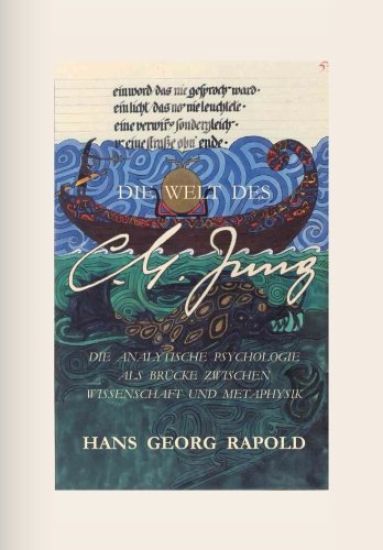
CARL GUSTAV JUNG (1875-1961) hat nicht nur Freud's Psychoanalyse erweitert, sondern ein Weltbild hinterlassen, das heute modern, ganzheitlich und aktueller erscheint denn je. Seine analytische Psychologie ist keine Lehre, sondern empirische Erforschung der menschlichen Psyche, die es erlaubt rationale Br cken zu schlagen zur Metaphysik. Die Schwelle, die uns den Eintritt in Jung's faszinierende Welt erschwert, besteht im Umfang seines Werks und der Tatsache, dass er es ablehnte ein strukturiertes Lehrbuch zu verfassen. In der vorliegenden Darstellung werden die gro en Themen der analytischen Psychologie bersichtlich und unverf lscht zusammengefasst, oft in Jung's eigener Formulierung. Die grundlegenden Konzepte des kollektiven Unbewussten, des Archetypus, der Individuation oder der Synchronizit t entsprechen weder religionsfeindlicher Spekulation noch banalen Lebens-Rezepten. Vielmehr handelt es sich um die psychischen Grundlagen menschlichen Geistes, vererbt und unverzichtbar, die sich nicht nur individuell in unsern Tr umen, Phantasien und Psychosen u ern, sondern bereinstimmend in intellektuellen und kulturellen Leistungen der Menschheit - ob Naturphilosophie, Monotheismus, antike Mythologie, Christentum, Buddhismus, Taoismus oder mittelalterliche Alchemie, ja bis hin zur modernen Quantenphysik. Zur Macht des Irrationalen geh rt allerdings nicht nur dessen Licht und sch pferische Kraft, sondern auch Finsternis und zerst rerische Gewalt. Die gr te Gefahr f r den Menschen sieht Jung deshalb nicht in elementaren Ereignissen physikalischer oder biologischer Natur, sondern in psychischen Katastrophen pers nlicher, vor allem aber kollektiver Art. Nichts belegt den Einbruch eines gegebenenfalls verheerenden Unbewussten in die individuelle Vernunft und Moral besser als die Geschichte des Menschen und die Gr ueltaten, die im Namen kollektiver Wahnideen in der zivilisierten Welt unserer Tage noch immer ver bt werden.
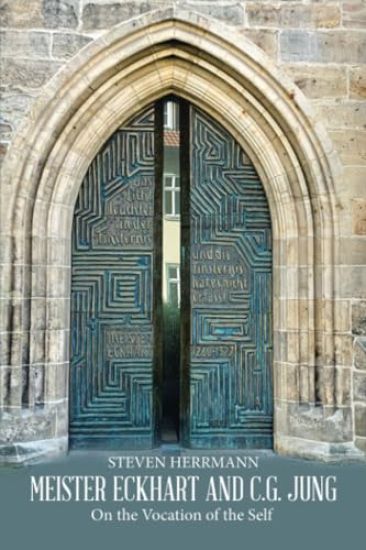
Most Christian readers today have been taught by Church theologians of many different creeds that one must have faith in Christ above everything else. Meister Eckhart and C.G. Jung taught us to have trust in ourselves, in our own inner images of God, or the Self first. Eckhart was a man of the earth who came after Christ. By birth of the Holy Spirit in humanity, Herrmann means in this book the birth of the Self in Eckhart and Jung and also in you, the reader. We are all after Christs and are therefore incarnating the Holy Spirit through our callings to individuate from the Imprinter, which is beyond God, not the traditional God of theology. One of the good things that comes with being a postmodern Jungian analyst, and not a member of the Catholic Church as an institution, is the freedom and liberty granted to spiritually democratic people who can speak their own truths from conscience. Herrmann's book adds something new and significant to the gendered language in theology: God is beyond gender. The book remains true to what Eckhart said about God and Sophia, or Wisdom; for as everyone knows today who has made a deep reading of the Master's works, he was in essence talking about men and women, about all people. God could be a she or an it in postmodernity. In fact, for Eckhart and Jung, the origin of God is the feminine Godhead, or primal Ground of all metaphysical and empirical being. Both theologically and psychologically speaking, the Self, or Holy Spirit is essentially trans-dual, above all duality of male or female. For Eckhart and Jung, the vocation of the Self includes the archetypal feminine, the soul or anima and animus, above all categories of thought, transcendent of time and above gender.
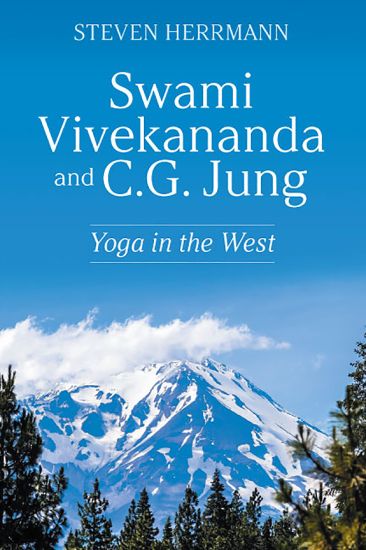
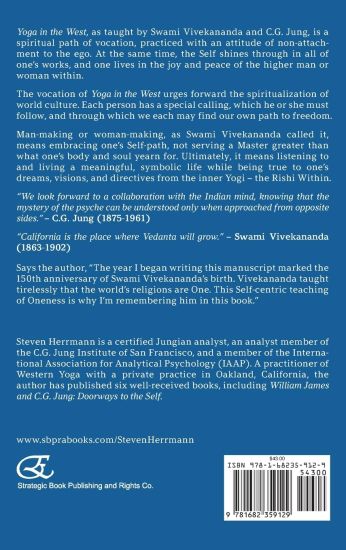
Yoga in the West, as taught by Swami Vivekananda and C.G. Jung, is a spiritual path of vocation, practiced with an attitude of non-attachment to the ego. At the same time, the Self shines through in all of one's works, and one lives in the joy and peace of the higher man or woman within.The vocation of Yoga in the West urges forward the spiritualization of world culture. Each person has a special calling, which he or she must follow, and through which we each may find our own path to freedom.Man-making or woman-making, as Swami Vivekananda called it, means embracing one's Self-path, not serving a Master greater than what one's body and soul yearn for. Ultimately, it means listening to and living a meaningful, symbolic life while being true to one's dreams, visions, and directives from the inner Yogi - the Rishi Within."We look forward to a collaboration with the Indian mind, knowing that the mystery of the psyche can be understood only when approached from opposite sides." - C.G. Jung (1875-1961)"California is the place where Vedanta will grow." - Swami Vivekananda (1863-1902)Says the author, "The year I began writing this manuscript marked the 150th anniversary of Swami Vivekananda's birth. Vivekananda taught tirelessly that the world's religions are One. This Self-centric teaching of Oneness is why I'm remembering him in this book."(About the Author)Steven Herrmann is a certified Jungian analyst, an analyst member of the C.G. Jung Institute of San Francisco, and a member of the International Association for Analytical Psychology (IAAP). A practitioner of Western Yoga with a private practice in Oakland, California, the author has published six well-received books, including William James and C.G. Jung: Doorways to the Self.
Yoga in the West, as taught by Swami Vivekananda and C.G. Jung, is a spiritual path of vocation, practiced with an attitude of non-attachment to the ego. At the same time, the Self shines through in all of one's works, and one lives in the joy and peace of the higher man or woman within.The vocation of Yoga in the West urges forward the spiritualization of world culture. Each person has a special calling, which he or she must follow, and through which we each may find our own path to freedom.Man-making or woman-making, as Swami Vivekananda called it, means embracing one's Self-path, not serving a Master greater than what one's body and soul yearn for. Ultimately, it means listening to and living a meaningful, symbolic life while being true to one's dreams, visions, and directives from the inner Yogi - the Rishi Within."We look forward to a collaboration with the Indian mind, knowing that the mystery of the psyche can be understood only when approached from opposite sides." - C.G. Jung (1875-1961)"California is the place where Vedanta will grow." - Swami Vivekananda (1863-1902)Says the author, "The year I began writing this manuscript marked the 150th anniversary of Swami Vivekananda's birth. Vivekananda taught tirelessly that the world's religions are One. This Self-centric teaching of Oneness is why I'm remembering him in this book."(About the Author)Steven Herrmann is a certified Jungian analyst, an analyst member of the C.G. Jung Institute of San Francisco, and a member of the International Association for Analytical Psychology (IAAP). A practitioner of Western Yoga with a private practice in Oakland, California, the author has published six well-received books, including William James and C.G. Jung: Doorways to the Self.