

Kirjahaku
Etsi kirjoja tekijän nimen, kirjan nimen tai ISBN:n perusteella.
1000 tulosta hakusanalla Chanan Beizer


Henshaw, J: Memoir of the life of the Rt. Rev. Richard Chann
Antigonos Verlag
2024
nidottu

Henshaw, J: Memoir of the life of the Rt. Rev. Richard Chann
Antigonos Verlag
2024
sidottu

De la philologie, de l¿origine de l¿épopée et du mythe de chaman
Vlada Jurievna Sarkisova-Kouamé
ÉDITIONS UNIVERSITAIRES EUROPÉENNES
2022
nidottu


A Voyage round the World, performed during the years 1790, 1791, and 1792, by Étienne Marchand, preceded by a historical introduction, and illustrated by charts, Translated from the French. (Journal of the route by Captain P. Chanal. Vol. II.
Charles Pierre Claret De Fleurieu; Étienne Marchand
British Library, Historical Print Editions
2011
pokkari

A Voyage round the World, performed during the years 1790, 1791, and 1792, by Étienne Marchand, preceded by a historical introduction, and illustrated by charts, etc. Translated from the French, etc. (Journal of the route by Captain P. Chanal.) VOL. I
Charles Pierre Claret De Fleurieu; Étienne Marchand
British Library, Historical Print Editions
2011
pokkari

“An enjoyable story about friendship and positive self-image, this is one to consider for picture book collections.” —School Library JournalAvocado longs to be Today’s Special in this vibrant, pun-filled picture book by Chana Stiefel and Anna Süßbauer about self-discovery and the value of uplifting your friends.Avocado wants to stand out, but nothing seems to be working. With the help of her friends, she self-reflects and discovers that all along she was special. This social emotional learning story will help young readers to develop relationship skills and self-awareness. Perfect for fans of Dragons Love Tacos and The Food Group stories. It’s a delightful day at the Farmer’s Market. Zesty limes! Juicy peaches! Sweet corn! But Avocado has a pit in her stomach. She longs to be Today’s Special.Strolling through the aisles, Avocado asks her farm-fresh friends to help her discover what makes her stand out. Tomato offers to teach her salsa. Pumpkin proposes funny faces. Garlic suggests she add some zing! Nothing seems to work until—Ding ding!—the bright and shiny Toaster inspires Avocado to reflect more deeply.Chana Stiefel’s heartwarming text blends with Anna Süßbauer’s eye-popping illustrations spark sweet and meaningful conversations about self-discovery and friendship.
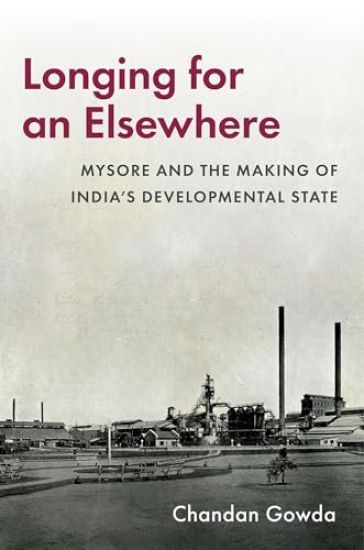
Longing for an Elsewhere is about the colonial ancestry of India's contemporary embrace of economic development. Unlike existing scholarship that traces the emergence of the developmental state to the mid-twentieth century process of decolonization, it argues that these origins are anchored in the preoccupation of local colonial elites with emulating industrialization in Europe and the United States. Beyond re-periodizing the birth of development discourse, the book argues that culture actively shapes a putatively economic process such as development. Specifically, it examines the chief cultural factors that guided the princely state of Mysore's endeavours for achieving development during its period of British indirect rule (1881-1947). Historians and social scientists have tended to overlook semi-autonomous polities in colonial India like Mysore that were neither fully colonized nor independent. The Mysore state elite took advantage of their political semi-autonomy, afforded by British indirect rule, to initiate a range of development programs. Drawing on a wide breadth of under-explored archival evidence, the book shows that the elite used a creative amalgam of diverse strands of European thought and Indian culture to forge state development practice in colonial India. Gowda analyzes the institutional dynamics of three elite-led state projects: the Bhadravati Iron Works, the Village Improvement Scheme, and the Block System of Irrigation. In doing so, he argues that the state's support for these projects can be explained by a belief in the inevitability of industrial modernity and a claim for recognition of Mysore's capacity for progress. Examining the operation of this cultural logic allows us to theorize the developmental state, a type of state often found in formerly colonized societies and deserving of independent analytical attention by social theorists. Interdisciplinary in nature, the book draws from debates in sociology, history, and anthropology.
Shortlisted, 2025 Philip Abrams Memorial Prize, British Sociological AssociationShortlisted, 2025 MSA First Book Award, Memory Studies AssociationFinalist, 2024 C. Wright Mills Award, Society for the Study of Social ProblemsHow are histories of racial oppression dealt with in contexts of diversity? Chana Teeger tackles this question by examining how young South Africans, born into democracy, confront their country’s racist apartheid past in high school history lessons. Drawing on extensive observational, interview, and textual data, Distancing the Past vividly chronicles how students learn that racism is a thing of the past, even as they experience it in their everyday lives.Teeger shows how teachers’ desire to avoid conflict between students mirrors a national focus on racial reconciliation, leading to the historical distancing of the recent apartheid past. This historical distancing allows schools to present a façade of transformation. Beneath the surface, however, the lessons reproduce unequal power relations at school and legitimize inequality at the societal level. In documenting these processes, Distancing the Past illuminates the subtle reconfiguration of racism in the era of civil liberties. It shows how acknowledging the racist past is not enough. When the past is remembered—but its legacies ignored—racism can continue unabated in the present.Distancing the Past is a timely account of the remaking of race and inequality in the aftermath of de jure discrimination. It offers vital lessons for other societies grappling with their own racist histories.
Shortlisted, 2025 Philip Abrams Memorial Prize, British Sociological AssociationShortlisted, 2025 MSA First Book Award, Memory Studies AssociationFinalist, 2024 C. Wright Mills Award, Society for the Study of Social ProblemsHow are histories of racial oppression dealt with in contexts of diversity? Chana Teeger tackles this question by examining how young South Africans, born into democracy, confront their country’s racist apartheid past in high school history lessons. Drawing on extensive observational, interview, and textual data, Distancing the Past vividly chronicles how students learn that racism is a thing of the past, even as they experience it in their everyday lives.Teeger shows how teachers’ desire to avoid conflict between students mirrors a national focus on racial reconciliation, leading to the historical distancing of the recent apartheid past. This historical distancing allows schools to present a façade of transformation. Beneath the surface, however, the lessons reproduce unequal power relations at school and legitimize inequality at the societal level. In documenting these processes, Distancing the Past illuminates the subtle reconfiguration of racism in the era of civil liberties. It shows how acknowledging the racist past is not enough. When the past is remembered—but its legacies ignored—racism can continue unabated in the present.Distancing the Past is a timely account of the remaking of race and inequality in the aftermath of de jure discrimination. It offers vital lessons for other societies grappling with their own racist histories.

The youngest of twenty children of sharecroppers in rural Mississippi, Fannie Lou Hamer witnessed throughout her childhood the white cruelty, political exclusion, and relentless economic exploitation that defined African American existence in the Delta. In this intimate biography, Chana Kai Lee documents Hamer's lifelong crusade to empower the poor through collective action, her rise to national prominence as a civil rights activist, and the personal costs of her ongoing struggle to win a political voice and economic self-sufficiency for blacks in the segregated South. Lee looks at Hamer's early work as a field secretary for the Student Nonviolent Coordinating Committee in Mississippi, her dramatic appearance at the 1964 Democratic National Convention, and her ongoing work as a militant grassroots leader in her own community.
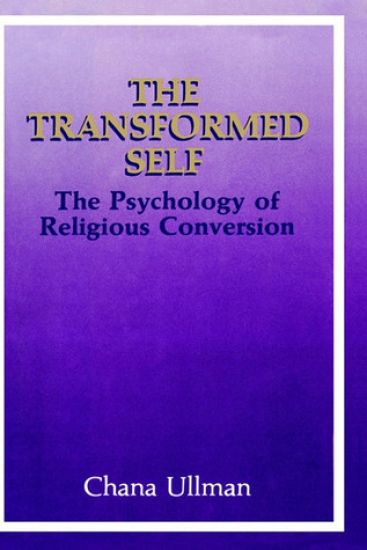
This book is about the dramatic experience of religious conver sion. The phenomenon of religious conversion lies at the crossroad of several disciplines. As the title of this book indicates, my own interest in religious conversion is not sociological, historical, nor anthropolog ical. My primary interest is not even in the domain of the psychology of religion. That is, this book is not a comprehensive review of the social psychological factors that shape religious beliefs in general and religious conversions in particular. Rather, my primary interest is in the experience of conversion as an instance of a meaningful, sudden change in the course of individu al lives. Religious conversion is examined in this book prinwrily from the point of view of the psychology of the self. My aim is to elucidate the experience of religious conversion as a change in the self and to raise suggestions for the study of the self that derive from the data on religious conversion. This interest dictated the scope as well as the methods of the present investigation. Namely, I have chosen to study individuals who have indeed changed visibly as a result of their conversion. My inquiry was based on self-report, assuming the importance of the person's own point of view. Finally, my inquiry was semi-clinical, vii viii PREFACE based on the assumption of an underlying structure to the varieties of conversion experiences.
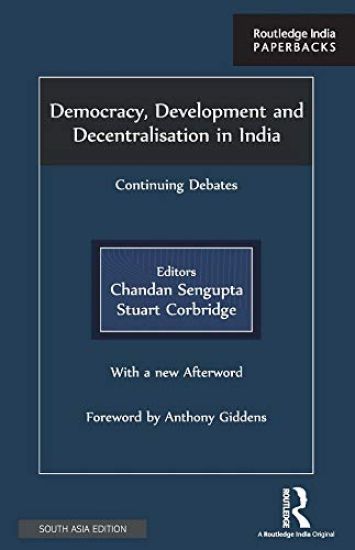
Continuing Debates. Offering new insights into the political economy of contemporary India, this book considers how and why unequal patterns of economic growth have taken shape within the context of a democratic and decentralising political system, and how this has impacted upon the processes of economic development.

Polymeric Membrane Synthesis, Modification, and Applications
Chandan Das; Kibrom Alebel Gebru
CRC Press
2020
nidottu
Membranes and membrane separation techniques have grown from a simple laboratory tool to an industrial process with considerable technical and commercial impact. The book deals with both the fundamental concepts of preparation, characterization and modification, practical applications along with recent advancements of electro-spun and phase inverted polymeric membranes. Divided into two parts, part one of this book covers the fundamental concepts and practical applications of novel electro-spun membranes while the latter covers basic concepts and further advancements of the conventional phase inverted membranes extensively.Key Features Covers fundamental concepts and practical applications of electro-spun and phase inverted polymeric membranes Includes general properties, characterization, preparation and modification of polymeric membranes Discusses advanced modification of polymeric membranes (functionalization, grafting) using phase inversion process, and effects of solubility parameter and additives on the phase inversion process Reviews electro-spun membranes for biomedical applications, industrial effluents treatment and removal of water contaminants Explores a separate economic analysis section for the discussed membranes

This book provides a balanced blend of fundamental concepts of fabrication, characterization of conventional ceramics, extending to present the recent advances in ceramic membranes. It covers the basic concepts of ceramic membranes as well as practical and theoretical knowledge in conventional and advanced ceramic membranes combined with unorthodox ideas for novel approaches in ceramic membranes. Book includes lot of real time examples derived largely from research work by authors. Aimed at researchers, students and academics in the field of membrane engineering around the globe, it has following key features: Guides readers through manufacturing, characterizing and using low-cost ceramic technology. Provides an overview of the different types of ceramic membranes, catalytic reactors and their uses. Covers industrial application, separation and purification. Includes recent developments and advances in membrane fabrication. Discusses new raw materials for ceramic membranes.
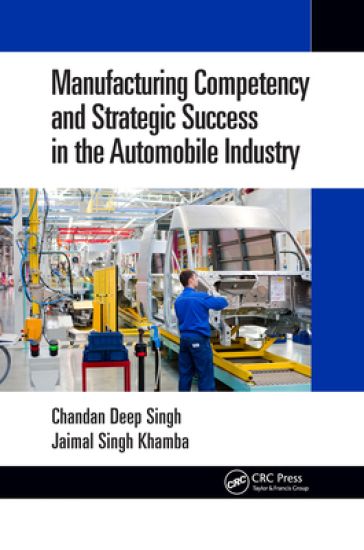
Manufacturing Competency and Strategic Success in the Automobile Industry
Chandan Deep Singh; Jaimal Singh Khamba
CRC Press
2020
nidottu
Strategic success of industry depends upon manufacturing competencies (i.e., the competitive advantage to ensure better quality and reliability), which will increase sales and create a sound customer base. Competitive priorities are the operating advantages that are assessed, evaluated, and measured within the parameters of cost, quality, time, design, and flexibility. The book explains the manufacturing competencies upon which the strategic success of the automobile industry depends. The impact of manufacturing competency on strategic success is analyzed and modelled using suitable qualitative and quantitative techniques.Key Features Outlines manufacturing competencies in correlation with successful strategic planning for current manufacturing environment Provides methodology or guidelines for linking defined strategic plans with manufacturing competencies Defines strategic success in the context of the automobile industry Analyses and models manufacturing competency impacts using qualitative and quantitative techniques Develops qualitative models with real-time case studies
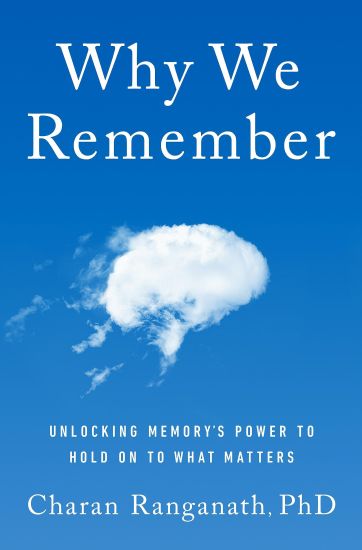
Why We Remember: Unlocking Memory's Power to Hold on to What Matters
Charan Ranganath
Doubleday Books
2024
sidottu
NEW YORK TIMES BESTSELLER - LOS ANGELES TIMES BESTSELLER - Memory is far more than a record of the past. In this groundbreaking tour of the mind and brain, one of the world's top memory researchers reveals the powerful role memory plays in nearly every aspect of our lives, from recalling faces and names, to learning, decision-making, trauma and healing. A BEST SCIENCE BOOK OF THE YEAR: Financial Times, Smithsonian Magazine, The Telegraph, Waterstones, The Times, Marie Claire, Greater Good Magazine, Bookshop.org "Why We Remember offers a radically new and engaging explanation of how and why we remember." --Dr. Matthew Walker, author of Why We Sleep A new understanding of memory is emerging from the latest scientific research. In Why We Remember, pioneering neuroscientist and psychologist Charan Ranganath radically reframes the way we think about the everyday act of remembering. Combining accessible language with cutting-edge research, he reveals the surprising ways our brains record the past and how we use that information to understand who we are in the present, and to imagine and plan for the future. Memory, Dr. Ranganath shows, is a highly transformative force that shapes how we experience the world in often invisible and sometimes destructive ways. Knowing this can help us with daily remembering tasks, like finding our keys, and with the challenge of memory loss as we age. What's more, when we work with the brain's ability to learn and reinterpret past events, we can heal trauma, shed our biases, learn faster, and grow in self-awareness. Including fascinating studies and examples from pop culture, and drawing on Ranganath's life as a scientist, father, and child of immigrants, Why We Remember is a captivating read that unveils the hidden role memory plays throughout our lives. When we understand its power-- and its quirks--we can cut through the clutter and remember the things we want to remember. We can make freer choices and plan a happier future.