Kirjojen hintavertailu. Mukana 11 717 486 kirjaa ja 12 kauppaa.

Kirjahaku

Etsi kirjoja tekijän nimen, kirjan nimen tai ISBN:n perusteella.

1000 tulosta hakusanalla Chartier-E

Espaces de convivialité sur le chantier

Espaces de convivialité sur le chantier

Paulo Luz de Oliveira Junior

Editions Notre Savoir
2023
pokkari
Cette tude vise d montrer de mani re simple et illustrative comment les installations des zones de vie des travailleurs sur les chantiers de construction devraient tre, conform ment la norme r glementaire NR 18 et souligner l'importance de l'application des normes de s curit et de sant dans l'environnement de travail. Des conditions id ales dans les espaces de vie sont galement des facteurs importants pour la sant et la s curit des travailleurs sur les chantiers de construction, en garantissant leur sant et leur bien- tre. Cette promotion rend plus agr able la coexistence stimulant l'employ qui passe actuellement plus de temps vivre dans un environnement de travail qu'avec sa famille.
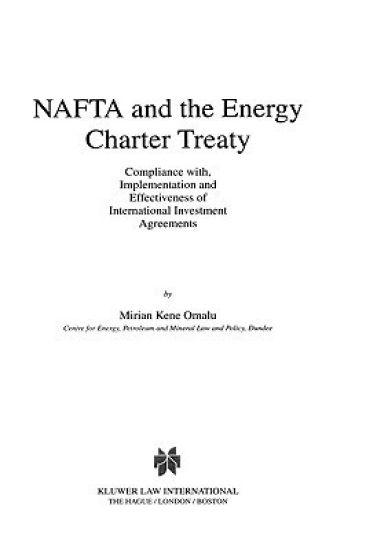
NAFTA and the Energy Charter Treaty: Compliance With, Implementation and Effectiveness of International Investment Agreements
The North American Free Trade Agreement (NAFTA) and the Energy Charter Treaty (ECT) are the first major multilateral treaties to impose obligations on governments concerning the protection and treatment of foreign investments. These obligations are enforceable by private companies. NAFTA and the ECT examines the effectiveness of the investment rules of these treaties and analyzes the mechanisms adopted to enhance compliance, and to facilitate the implementation and enforcement of the relevant rules and regulations.Coverage of this work includes: a conceptual analysis of the precise meaning and theoretical foundation of compliance, implementation, and effectiveness; an examination of issues of direct effect and direct international responsibility in terms of the practical question of the treaties' impact on the domestic regimes of states; an exploration of the issues of transparency and monitoring to achieve enhanced compliance; and a close look at a number of key links in the field - between the investment rules and the workings of national legal and governmental systems, between national and international law, between different disciplines involved (international law, international relations, international politics, and economics), and between transparency and compliance monitoring. NAFTA and the ECT also offers several helpful features, including results from a questionnaire-based survey circulated to the main players in the realm of foreign investment which offer insights on the prevalent perception of the industry towards NAFTA and the ECT; and suggested provisions and frameworks which would enhance the effectiveness of the investment rules.The issues probed and conclusions reached and the interdisciplinary and comparative approach taken should make NAFTA and the ECT a a useful resource for academics, policymakers, and others interested in the effectiveness of international investment agreements and the tools employed in their implementation and enforcement.
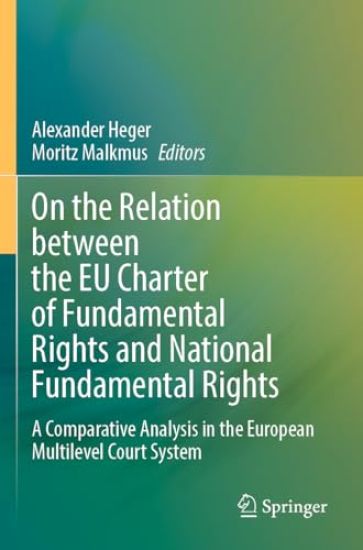
On the Relation between the EU Charter of Fundamental Rights and National Fundamental Rights
The sometimes complex and controversial relation between the fundamental rights of the European Union, as enshrined in the EU Charter of Fundamental Rights (CFR), and national fundamental rights in the context of constitutional review is reflected in a series of landmark decisions in the multilateral cooperation of European courts, which have reshaped the fundamental rights architecture in the multilevel system in recent decades. This book aims to contribute to a systematic and comprehensive analysis of the EU and constitutional law issues involved, thus serving as a reference point for scholars and practitioners dealing with this emerging topic in depth. Following this approach, it sheds light on the broader Union legal context of these developments, examines the role of the CFR for Constitutional Courts, the relationship between constitutional and ordinary courts, and assesses the key decisions concerning the application of the CFR as a standard of constitutional review. It also draws some initial conclusions on the development of the European fundamental rights architecture, its prospects and possible implications for the Union’s legal order. The book contains several contributions by European legal experts from academia and the judiciary, who examine the different methods of constitutional application of the CFR from a comparative law perspective. These contributions deal with the following aspects: first, the role of the CFR for the respective Constitutional Court with regard to the application of EU law as well as national law falling within the scope of the CFR; second, the relationship between the respective Constitutional Court and the ordinary courts with regard to the application of the CFR; third, the relevant facts and legal reasoning of the most important Constitutional Court decisions on the application of the CFR as a relevant standard of constitutional review; fourth, the relevant case law of the CJEU on the relationship between Union and national fundamental rights, as well as its broader implications for the multilateral cooperation of European courts. The individual chapters examine, inter alia, the following decisions: Verfassungsgerichtshof (Austria), March 14, 2012, U 466/11 et al.; Corte Constituzionale (Italy), January 23, 2019, Sentenza 20/2019; Bundesverfassungsgericht (Germany), November 6, 2019, 1 BvR 276/17; Tribunal Constitucional (Portugal), June 3, 2022, Acórdão 268/2022; Tribunal Constitucional (Spain), June 29, 2022, Sentencia Decision 89/2022.
On the Relation between the EU Charter of Fundamental Rights and National Fundamental Rights
The sometimes complex and controversial relation between the fundamental rights of the European Union, as enshrined in the EU Charter of Fundamental Rights (CFR), and national fundamental rights in the context of constitutional review is reflected in a series of landmark decisions in the multilateral cooperation of European courts, which have reshaped the fundamental rights architecture in the multilevel system in recent decades. This book aims to contribute to a systematic and comprehensive analysis of the EU and constitutional law issues involved, thus serving as a reference point for scholars and practitioners dealing with this emerging topic in depth. Following this approach, it sheds light on the broader Union legal context of these developments, examines the role of the CFR for Constitutional Courts, the relationship between constitutional and ordinary courts, and assesses the key decisions concerning the application of the CFR as a standard of constitutional review. It also draws some initial conclusions on the development of the European fundamental rights architecture, its prospects and possible implications for the Union’s legal order. The book contains several contributions by European legal experts from academia and the judiciary, who examine the different methods of constitutional application of the CFR from a comparative law perspective. These contributions deal with the following aspects: first, the role of the CFR for the respective Constitutional Court with regard to the application of EU law as well as national law falling within the scope of the CFR; second, the relationship between the respective Constitutional Court and the ordinary courts with regard to the application of the CFR; third, the relevant facts and legal reasoning of the most important Constitutional Court decisions on the application of the CFR as a relevant standard of constitutional review; fourth, the relevant case law of the CJEU on the relationship between Union and national fundamental rights, as well as its broader implications for the multilateral cooperation of European courts. The individual chapters examine, inter alia, the following decisions: Verfassungsgerichtshof (Austria), March 14, 2012, U 466/11 et al.; Corte Constituzionale (Italy), January 23, 2019, Sentenza 20/2019; Bundesverfassungsgericht (Germany), November 6, 2019, 1 BvR 276/17; Tribunal Constitucional (Portugal), June 3, 2022, Acórdão 268/2022; Tribunal Constitucional (Spain), June 29, 2022, Sentencia Decision 89/2022.