Kirjojen hintavertailu. Mukana 11 244 527 kirjaa ja 12 kauppaa.

Kirjahaku

Etsi kirjoja tekijän nimen, kirjan nimen tai ISBN:n perusteella.

747 tulosta hakusanalla Cherokee Hatcher

The Cherokee Strip

The Cherokee Strip

Marquis James

University of Oklahoma Press
2003
nidottu
Here is the perpetual variety of small town Oklahoma characters, incidents, changes; the self-confidence of an American boyhood; in honest, winning revelation.""-Kirkus Reviews
The Cherokee Cases

The Cherokee Cases

Jill Norgren; Kermit L. Hall; Melvin I. Urofsky

University of Oklahoma Press
2004
nidottu
This compact history is the first to explore two landmark U.S. Supreme Court cases of the early 1830s: Cherokee Nation v. Georgia and Worcester v. Georgia. Legal historian Jill Norgren details the extraordinary story behind these cases, describing how John Ross and other leaders of the Cherokee Nation, having internalized the principles of American law, tested their sovereignty rights before Chief Justice John Marshall in the highest court of the land. The Cherokees' goal was to solidify these rights and to challenge the aggressive actions that the government and people of Georgia carried out against them under the aegis of law. Written in a style accessible both to students and to general readers, The Cherokee Cases is an ideal guide to understanding the political development of the Cherokee Nation in the early nineteenth century and the tragic outcome of these cases so critical to the establishment of U.S. federal Indian law.
The Cherokee Syllabary

The Cherokee Syllabary

Ellen Cushman

University of Oklahoma Press
2011
sidottu
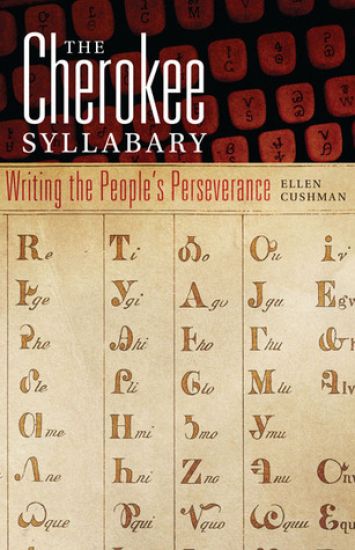
In 1821, Sequoyah, a Cherokee metalworker and inventor, introduced a writing system that he had been developing for more than a decade. His creation - the Cherokee syllabary - helped his people learn to read and write within five years and became a principal part of their identity. This groundbreaking study traces the creation, dissemination, and evolution of Sequoyah's syllabary from script to print to digital forms. Breaking with conventional understanding, author Ellen Cushman shows that the syllabary was not based on alphabetic writing, as is often thought, but rather on Cherokee syllables and, more importantly, on Cherokee meanings.Employing an engaging narrative approach, Cushman relates how Sequoyah created the syllabary apart from Western alphabetic models. But he called it an alphabet because he anticipated the Western assumption that only alphabetic writing is legitimate. Calling the syllabary an alphabet, though, has led to our current misunderstanding of just what it is and of the genius behind it - until now.In her opening chapters, Cushman traces the history of Sequoyah's invention and explains the logic of the syllabary's structure and the graphic relationships among the characters, both of which might have made the system easy for native speakers to use. Later chapters address the syllabary's enduring significance, showing how it allowed Cherokees to protect, enact, and codify their knowledge and to weave non-Cherokee concepts into their language and life. The result was their enhanced ability to adapt to social change on and in Cherokee terms.Cushman adeptly explains complex linguistic concepts in an accessible style, even as she displays impressive understanding of interrelated issues in Native American studies, colonial studies, cultural anthropology, linguistics, rhetoric, and literacy studies. Profound, like the invention it explores, The Cherokee Syllabary will reshape the study of Cherokee history and culture.Published through the Recovering Languages and Literacies of the Americas initiative, supported by the Andrew W. Mellon Foundation.
The Cherokee Nation in the Civil War

The Cherokee Nation in the Civil War

Clarissa W. Confer

University of Oklahoma Press
2012
nidottu
No one questions the horrific impact of the Civil War on America, but few realize its effect on American Indians. Residents of Indian Territory found the war especially devastating. Their homeland was beset not only by regular army operations but also by guerillas and bushwhackers. Complicating the situation even further, Cherokee men fought for the Union as well as the Confederacy and created their own ""brothers' war.""This book offers a broad overview of the war as it affected the Cherokees - a social history of a people plunged into crisis. The Cherokee Nation in the Civil War shows how the Cherokee people, who had only just begun to recover from the ordeal of removal, faced an equally devastating upheaval in the Civil War. Clarissa W. Confer illustrates how the Cherokee Nation, with its sovereign status and distinct culture, had a wartime experience unlike that of any other group of people - and suffered perhaps the greatest losses of land, population, and sovereignty.Confer examines decision-making and leadership within the tribe, campaigns and soldiering among participants on both sides, and elements of civilian life and reconstruction. She reveals how a centuries-old culture informed the Cherokees' choices, with influences as varied as matrilineal descent, clan affiliations, economic distribution, and decentralized government combining to distinguish the Native reaction to the war.The Cherokee Nation in the Civil War recalls a people enduring years of hardship while also struggling for their future as the white man's war encroached on the physical and political integrity of their nation.
The Cherokee Syllabary

The Cherokee Syllabary

Ellen Cushman

University of Oklahoma Press
2013
nidottu
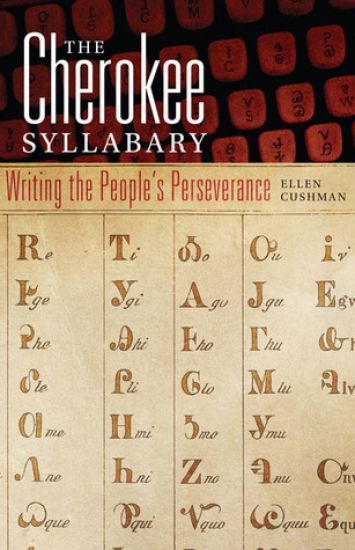
In 1821, Sequoyah, a Cherokee metalworker and inventor, introduced a writing system that he had been developing for more than a decade. His creation - the Cherokee syllabary - helped his people learn to read and write within five years and became a principal part of their identity. This groundbreaking study traces the creation, dissemination, and evolution of Sequoyah's syllabary from script to print to digital forms. Breaking with conventional understanding, author Ellen Cushman shows that the syllabary was not based on alphabetic writing, as is often thought, but rather on Cherokee syllables and, more importantly, on Cherokee meanings.Employing an engaging narrative approach, Cushman relates how Sequoyah created the syllabary apart from Western alphabetic models. But he called it an alphabet because he anticipated the Western assumption that only alphabetic writing is legitimate. Calling the syllabary an alphabet, though, has led to our current misunderstanding of just what it is and of the genius behind it - until now.In her opening chapters, Cushman traces the history of Sequoyah's invention and explains the logic of the syllabary's structure and the graphic relationships among the characters, both of which might have made the system easy for native speakers to use. Later chapters address the syllabary's enduring significance, showing how it allowed Cherokees to protect, enact, and codify their knowledge and to weave non-Cherokee concepts into their language and life. The result was their enhanced ability to adapt to social change on and in Cherokee terms.Cushman adeptly explains complex linguistic concepts in an accessible style, even as she displays impressive understanding of interrelated issues in Native American studies, colonial studies, cultural anthropology, linguistics, rhetoric, and literacy studies. Profound, like the invention it explores, The Cherokee Syllabary will reshape the study of Cherokee history and culture.Published through the Recovering Languages and Literacies of the Americas initiative, supported by the Andrew W. Mellon Foundation.
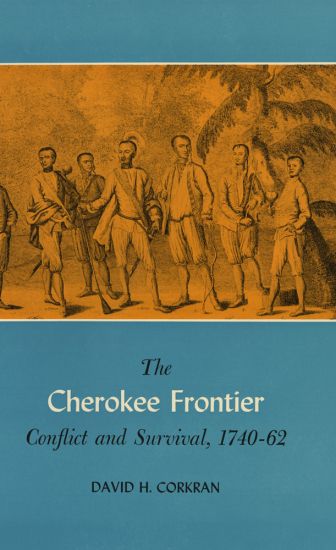
The Cherokee Frontier

The Cherokee Frontier

David H. Corkran

University of Oklahoma Press
2016
nidottu
American Indians have talent in both oratory and statesmanship. American history provides abundant examples of Indians' adroit political maneuvering with the whites. Less well known are the maneuvers that took place within individual tribes. The Cherokee Indians are celebrated for their political and social achievements. But the fact that the Cherokee concept of nationalism was formulated long before the nineteenth century has been overlooked. From 1740 until 1762 the Cherokees lived in the area of present-day North Carolina, South Carolina, Georgia, and Virginia, and they were a homogeneous people, albeit struggling in the face of opposition within and without. During this critical period the traditional nationalist forces in the nation had to contend with many brands of factionalism. The traditional leadership, stemming from Overhill Chota, came into conflict with the English puppet leadership at Overhill Great Tellico, and French-English rivalry split the nation into two forces. One, led by Old Hop, the first Beloved Man of the nation, advocated neutrality. The other, led by Attakullaculla, favored the English alliance. After a cruel war with the English, in which two royal expeditionary forces laid waste the Cherokee country, Attakullaculla was able to bring about a peace. This realistic picture of Indian intrigue reveals the influence of intratribal conflict on colonial history - demonstrating that the Cherokees' own problems were more significant than European pressure in shaping events. The story of Cherokee statesmanship in terms of Indian institutions provides fresh insight into this era of colonial and American Indian history.
Eastern Cherokee Stories

Eastern Cherokee Stories

Sandra Muse Isaacs; Joyce Dugan

University of Oklahoma Press
2019
sidottu
Throughout our Cherokee history,"" writes Joyce Dugan, former principal chief of the Eastern Band of Cherokee Indians, ""our ancient stories have been the essence of who we are."" These traditional stories embody the Cherokee concepts of Gadugi, working together for the good of all, and Duyvkta, walking the right path, and teach listeners how to understand and live in the world with reverence for all living things. In Eastern Cherokee Stories, Sandra Muse Isaacs uses the concepts of Gadugi and Duyvkta to explore the Eastern Cherokee oral tradition, and to explain how storytelling in this tradition - as both an ancient and a contemporary literary form - is instrumental in the perpetuation of Cherokee identity and culture. Muse Isaacs worked among the Eastern Cherokees of North Carolina, recording stories and documenting storytelling practices and examining the Eastern Cherokee oral tradition as both an ancient and contemporary literary form. For the descendants of those Cherokees who evaded forced removal by the U.S. government in the 1830s, storytelling has been a vital tool of survival and resistance - and as Muse Isaacs shows us, this remains true today, as storytelling plays a powerful role in motivating and educating tribal members and others about contemporary issues such as land reclamation, cultural regeneration, and language revitalization. The stories collected and analyzed in this volume range from tales of creation and origins that tell about the natural world around the homeland, to post-Removal stories that often employ Native humor to present the Cherokee side of history to Cherokee and non-Cherokee alike. The persistence of this living oral tradition as a means to promote nationhood and tribal sovereignty, to revitalize culture and language, and to present the Indigenous view of history and the land bears testimony to the tenacity and resilience of the Cherokee people, the Ani-Giduwah.
Eastern Cherokee Stories

Eastern Cherokee Stories

Sandra Muse Isaacs; Joyce Dugan

UNIVERSITY OF OKLAHOMA PRESS
2022
nidottu
“Throughout our Cherokee history,” writes Joyce Dugan, former principal chief of the Eastern Band of Cherokee Indians, “our ancient stories have been the essence of who we are.” These traditional stories embody the Cherokee concepts of Gadugi, working together for the good of all, and Duyvkta, walking the right path, and teach listeners how to understand and live in the world with reverence for all living things. In Eastern Cherokee Stories, Sandra Muse Isaacs uses the concepts of Gadugi and Duyvkta to explore the Eastern Cherokee oral tradition, and to explain how storytelling in this tradition—as both an ancient and a contemporary literary form—is instrumental in the perpetuation of Cherokee identity and culture. Muse Isaacs worked among the Eastern Cherokees of North Carolina, recording stories and documenting storytelling practices and examining the Eastern Cherokee oral tradition as both an ancient and contemporary literary form. For the descendants of those Cherokees who evaded forced removal by the U.S. government in the 1830s, storytelling has been a vital tool of survival and resistance—and as Muse Isaacs shows us, this remains true today, as storytelling plays a powerful role in motivating and educating tribal members and others about contemporary issues such as land reclamation, cultural regeneration, and language revitalization. The stories collected and analyzed in this volume range from tales of creation and origins that tell about the natural world around the homeland, to post-Removal stories that often employ Native humor to present the Cherokee side of history to Cherokee and non-Cherokee alike. The persistence of this living oral tradition as a means to promote nationhood and tribal sovereignty, to revitalize culture and language, and to present the Indigenous view of history and the land bears testimony to the tenacity and resilience of the Cherokee people, the Ani-Giduwah.
A Cherokee Woman's America

A Cherokee Woman's America

University Press of Florida
2005
sidottu
This first scholarly edition of the writings of a unique Native American woman details an extraordinary life in a combination of genres including oral history, ethnography, and western adventure sketches. Narcissa Owen was of mixed Cherokee and Scots-Irish descent and the daughter of a leader of the Old Settlers (those Cherokees who moved west prior to their subsequent forced removal by the U.S. government, the notorious Trail of Tears). The Memoirs reveal a fascinating and complex 19th-century woman - an artist, music teacher, storyteller, Confederate slave owner, Washington socialite, wife of a white railroad executive, widow, and mother of the first Native American U.S. Senator, Robert L. Owen, Jr. Her writings interpret the history of the tribe and describe the cultural upheaval of the Cherokees moving west. They also offer a glimpse into antebellum, Civil War, and Reconstruction American life. This edition provides a wealth of background information including a biographical preface, chronology of Owen's life, genealogy, and textual footnotes. In addition, an introductory essay places the Memoirs in the context of Owen's predecessors and contemporaries, including Cherokee cultural and literary tradition, the larger Indian historical/literary context, and women's writing of the late 19th and early 20th centuries.
Eastern Cherokee Fishing

Eastern Cherokee Fishing

Heidi M. Altman

The University of Alabama Press
2006
nidottu
In ""Eastern Cherokee Fishing"", life histories, folktales, and reminiscences about fish gathered from interviews with Cherokee and non-Cherokee people provide a clear and personal picture of the changes in the Qualla Boundary (Eastern Band of the) Cherokee in the last 75 years. Coupled with documentary research, these ethnographic histories illuminate changes in the language, culture, and environment (particularly, aquatic resources) since contact with Europeans and examine the role these changes have played in the traditions and lives of the contemporary Cherokees. Interviewees include a great range of informants, from native speakers of Cherokee with extensive knowledge of traditional fishing methods to Euro-American English speakers whose families have lived in North Carolina for many generations and know about contemporary fishing practices in the area. The topic of fishing thus offers perspective on the Cherokee language, the vigor of the Cherokee system of native knowledge, and the history of the relationship between Cherokee people and the local environment. Heidi Altman also examines the role of fishing as a tourist enterprise and how fishing practices affect tribal waters.
Toward Cherokee Removal

Toward Cherokee Removal

Adam J. Pratt

University of Georgia Press
2020
sidottu
Cherokee Removal excited the passions of Americans across the country. Nowhere did those passions have more violent expressions than in Georgia, where white intruders sought to acquire Native land through intimidation and state policies that supported their disorderly conduct. Cherokee Removal and the Trail of Tears, although the direct results of federal policy articulated by Andrew Jackson, were hastened by the state of Georgia. Starting in the 1820s, Georgians flocked onto Cherokee land, stole or destroyed Cherokee property, and generally caused havoc. Although these individuals did not have official license to act in such ways, their behavior proved useful to the state. The state also dispatched paramilitary groups into the Cherokee Nation, whose function was to intimidate Native inhabitants and undermine resistance to the state’s policies. The lengthy campaign of violence and intimidation white Georgians engaged in splintered Cherokee political opposition to Removal and convinced many Cherokees that remaining in Georgia was a recipe for annihilation. Although the use of force proved politically controversial, the method worked. By expelling Cherokees, state politicians could declare that they had made the disputed territory safe for settlement and the enjoyment of the white man’s chance.Adam J. Pratt examines how the process of one state’s expansion fit into a larger, troubling pattern of behavior. Settler societies across the globe relied on legal maneuvers to deprive Native peoples of their land and violent actions that solidified their claims. At stake for Georgia’s leaders was the realization of an idealized society that rested on social order and landownership. To achieve those goals, the state accepted violence and chaos in the short term as a way of ensuring the permanence of a social and political regime that benefitted settlers through the expansion of political rights and the opportunity to own land. To uphold the promise of giving land and opportunity to its own citizens—maintaining what was called the white man’s chance—politics within the state shifted to a more democratic form that used the expansion of land and rights to secure power while taking those same things away from others.
Toward Cherokee Removal

Toward Cherokee Removal

Adam J. Pratt

UNIVERSITY OF GEORGIA PRESS
2022
pokkari
Cherokee Removal excited the passions of Americans across the country. Nowhere did those passions have more violent expressions than in Georgia, where white intruders sought to acquire Native land through intimidation and state policies that supported their disorderly conduct. Cherokee Removal and the Trail of Tears, although the direct results of federal policy articulated by Andrew Jackson, were hastened by the state of Georgia. Starting in the 1820s, Georgians flocked onto Cherokee land, stole or destroyed Cherokee property, and generally caused havoc. Although these individuals did not have official license to act in such ways, their behavior proved useful to the state. The state also dispatched paramilitary groups into the Cherokee Nation, whose function was to intimidate Native inhabitants and undermine resistance to the state’s policies. The lengthy campaign of violence and intimidation white Georgians engaged in splintered Cherokee political opposition to Removal and convinced many Cherokees that remaining in Georgia was a recipe for annihilation. Although the use of force proved politically controversial, the method worked. By expelling Cherokees, state politicians could declare that they had made the disputed territory safe for settlement and the enjoyment of the white man’s chance.Adam J. Pratt examines how the process of one state’s expansion fit into a larger, troubling pattern of behavior. Settler societies across the globe relied on legal maneuvers to deprive Native peoples of their land and violent actions that solidified their claims. At stake for Georgia’s leaders was the realization of an idealized society that rested on social order and landownership. To achieve those goals, the state accepted violence and chaos in the short term as a way of ensuring the permanence of a social and political regime that benefitted settlers through the expansion of political rights and the opportunity to own land. To uphold the promise of giving land and opportunity to its own citizens—maintaining what was called the white man’s chance—politics within the state shifted to a more democratic form that used the expansion of land and rights to secure power while taking those same things away from others.
The Cherokee Nation

The Cherokee Nation

University of New Mexico Press
2008
nidottu
The Cherokee Nation is one of the largest and most important of all the American Indian tribes. The first history of the Cherokees to appear in over four decades, this is also the first to be endorsed by the tribe and the first to be written by a Cherokee.Robert Conley begins his survey with Cherokee origin myths and legends. He then explores their relations with neighboring Indian groups and European missionaries and settlers. He traces their forced migrations west, relates their participations on both sides of the Civil War and the wars of the twentieth century, and concludes with an examination of Cherokee life today.Conley provides analyses for general readers of all ages to learn the significance of tribal lore and Cherokee tribal law. Following the history is a listing of the Principal Chiefs of the Cherokees with a brief biography of each and separate listings of the chiefs of the Eastern Cherokees and the Western Cherokees. For those who want to know more about Cherokee heritage and history, Conley offers additional reading lists at the end of each chapter.
A Cherokee Encyclopedia

A Cherokee Encyclopedia

Robert J. Conley

University of New Mexico Press
2007
sidottu
A quick reference guide for many of the people, places, and things connected to the United Keetoowah Band of Cherokees, as well as for the other officially recognized Cherokee groups, the Cherokee Nation and the Eastern Band of Cherokees.
1832 Cherokee Land Lottery of Georgia

1832 Cherokee Land Lottery of Georgia

Southern Historical Press
2016
nidottu
By: James F. Smith, Pub. 1838, Reprinted 2016, 504 pages, maps, New Index, ISBN #0-89308-033-0.This is the sixth of the land lotteries held in Georgia. This land lottery divided up the land of the former Cherokee Indian Country in 1832. This land area was divided into the present counties of: Cass (renamed Bartow in 1861), Cherokee, Cobb, Floyd, Forsyth, Gilmer, Lumpkin, Murray, Paulding, and Union. This volume contains the names of over 27,000 fortunate drawers or persons who drew land in these counties, together with their county of residence at the time of said lottery. There are some 60 maps showing each county and district, helping a person to better locate the exact location of an ancestors land.
The Cherokee Bride

The Cherokee Bride

Stephen a Enna

IngramSpark
2022
pokkari
The Cherokee Bride takes place in the year 1850. It is the story of a 17-year-old woman whose name is Maggie Carter. Maggie is an out-of-control kid who is half Cherokee Indian and halfwhite.She grew up in Fayetteville Arkansas and was the child of a single parent Cherokee Indian whowas rarely around to give her guidance or support. Her mother died when she was 14 and fromthen on, she was on her own without support from anyone. In 1850 an article was posted intown that got her attention. A man named Major Peter Jenkins was organizing a wagon trainthat would leave Fayetteville heading for the California Gold Rush. With nothing to hold her inFayetteville Maggie signs up and is selected to be one of the scouts for the train. In 1850 earlypioneers faced multiple problems and challengers while on the trail but the most serious werethree diseases that were killing people right and left. They were Smallpox, Measles and Cholera.The train would face all three as they travelled west.When the wagon train arrives in Grand River Oklahoma Peter recruits five Cherokee Indiansto join the train as scouts. It would be their knowledge that he would rely on to lead the trainacross the long prairies, around the huge mountains in the path and across deserts with no wateravailable.The lead brave selected to serve as Chief Scout is a young man named Jimmy light featherChawkta. Jimmy is smart, speaks three different Indian languages and was practically born on ahorse.This story will keep you on edge as you follow Maggie, Jimmy, and Peter in their 2000-mile trekacross the United States Territories to the California Gold rush.