Kirjojen hintavertailu. Mukana 12 083 983 kirjaa ja 12 kauppaa.

Kirjahaku

Etsi kirjoja tekijän nimen, kirjan nimen tai ISBN:n perusteella.

765 tulosta hakusanalla Cherokee Randolph

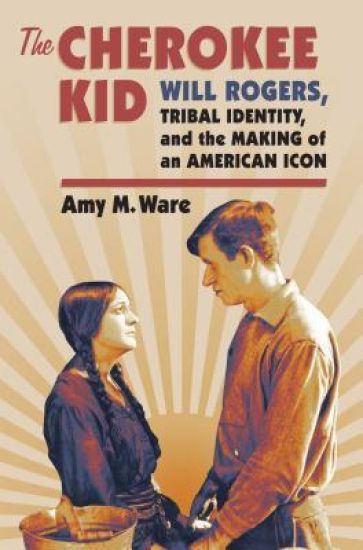
The Cherokee Kid

The Cherokee Kid

Amy M. Ware

University Press of Kansas
2015
sidottu
Early in the twentieth century, the political humorist Will Rogers was arguably the most famous cowboy in America. And though most in his vast audience didn’t know it, he was also the most famous Indian of his time. Those who know of Rogers’s Cherokee heritage and upbringing tend to minimize its importance, or to imagine that Rogers himself did so—notwithstanding his avowal in interviews: “I’m a Cherokee and they’re the finest Indians in the World.” The truth is, throughout his adult life and his work the Oklahoma cowboy made much of his American Indian background. And in doing so, as Amy Ware suggests in this book, he made Cherokee artistry a fundamental part of American popular culture.Rogers, whose father was a prominent and wealthy Cherokee politician and former Confederate slaveholder, was born into the Paint Clan in the town of Oolagah in 1879 and raised in the Cooweescoowee District of the Cherokee Nation. Ware maps out this milieu, illuminating the familial and social networks, as well as the Cherokee ranching practices, educational institutions, popular publications and heated political debates that so firmly grounded Rogers in the culture of the Cherokees. Through his early career, from Wild West and vaudeville performer to Ziegfeld Follies headliner in the late 1910s, she reveals how Rogers embodied the seemingly conflicting roles of cowboy and Indian, in effect enacting the blending of these identities in his art. Rogers’s work in the film industry also reflected complex notions of American Indian identity and history, as Ware demonstrates in her reading of the clearest examples, including Laughing Billy Hyde, in which Rogers, an Indian, portrayed a white prospector married to an Indian woman— who was played by a white actress.In his work as a columnist for the New York Times, and in his radio performances, Ware continues to trace the Cherokee influence on Rogers’s material—and in turn its impact on his audiences. It is in these largely uncensored performances that we see another side of Rogers’ Cherokee persona—a tribal elitism that elevated the Cherokee above other Indian nations. Ware’s exploration of this distinction exposes still-common assumptions regarding Native authenticity in the history of American culture, even as her in-depth look at Will Rogers’s heritage and legacy reshapes our perspective on the Native presence in that history, and in the life and work of a true American icon.
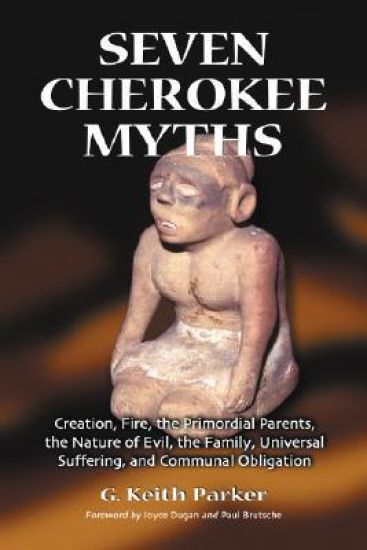
Seven Cherokee Myths

Seven Cherokee Myths

G. Keith Parker

McFarland Co Inc
2005
pokkari
Like ancient peoples the world over, the Cherokees of the southern Appalachian Mountains passed along their traditions and beliefs through stories, songs, dances, and religious and healing rituals. With the creation of Cherokee writing by Sequoyah, some of the traditions were also recorded in books. While evoking local geography and natural phenomena, the stories were also enhanced by powerful psychological and spiritual dynamics. This work examines seven myths that grew out of Cherokee culture, looking at how they emerged to explain archetypal issues. Each of the seven stories is told in full and is followed by a detailed history and analysis that provides its background, its associated rituals, and its psychological basis. One quickly discovers that while the myths are ancient, they are strikingly modern in their understanding of human personality development, family dynamics, community solidarity, and the reality of religion or spirituality. Grounded in the experience of this American Indian people and the land they inhabited, the myths tell universal truths. Instructors considering this book for use in a course may request an examination copy here.
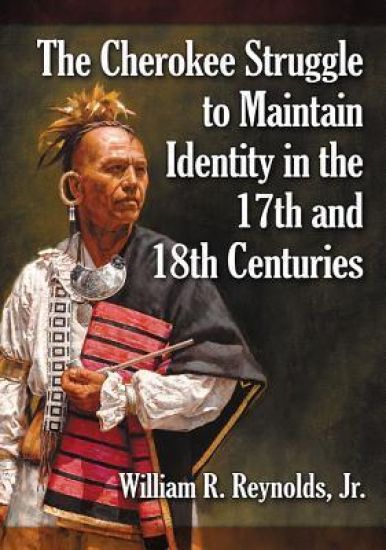
The Cherokee Struggle to Maintain Identity in the 17th and 18th Centuries
With the arrival of Europeans in North America, the Cherokee were profoundly affected. This book thoroughly discusses their history during the Colonial and Revolutionary War eras. Starting with the French and Indian War, the Cherokee were allied with the British, relying on them for goods like poorly made muskets. The alliance proved unequal, with the British refusing aid--even as settlers made incursions into Cherokee lands--while requiring them to fight on the British side against the French and rebellious Americans. At the same time, the Cherokee were moving away from their traditions, and leadership disagreements caused their nation to become fragmented. All of this resulted in the loss of Cherokee ancestral lands.
1880 Cherokee Nation Census, Indian Territory (Oklahoma), Volume 2 of 2
VOLUME 2 ONLYThis book is a transcription of the 1880 Cherokee Nation census, complete with census card numbers, which were added in 1900. The Dawes Commission used these census cards for tribal enrollment, and each tribe had their own census cards. Some persons may appear on multiple cards if they were adopted by an associated tribe, as in the case of the Shawnee and Delaware who often appear on Cherokee census cards. There are also separate cards for the Freedmen of the tribe.Entries are grouped by districts-Canadian, Cooweescoowee, Delaware, Flint, Goingsnake, Illinois, Saline, Sequoyah, Tahlequah and Orphans. Transcribed entries include names, race, age and sex, with additional remarks by the original census takers transcribed when legible. A census column notes the 1900 Dawes census card numbers with some 1883 and 1894 entries, and indicates dead for persons that died between 1880 and 1900. Marital status is noted with yes or no. A fullname index, with surnames corrected or unified wheneverpossible, enhances this work.
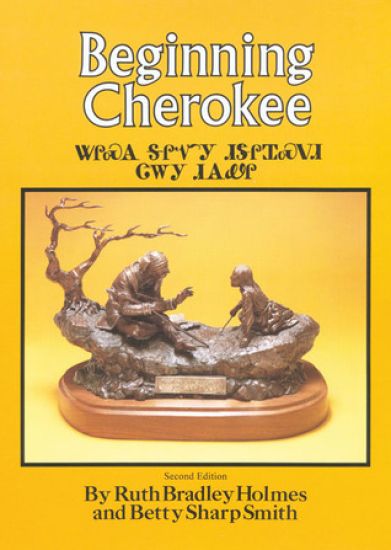
Beginning Cherokee

Beginning Cherokee

Ruth Bradley Holmes; Betty Sharp Smith

University of Oklahoma Press
1978
nidottu
This book, the first of its kind, teaches the rudiments of Cherokee, which is the native tongue of about 20,000 Americans, although most of those who speak it use it only as a second language. Cherokee has had several recognized dialects in the past. The two main dialects today are the North Carolina, spoken on the Qualla Reservation by about 3,000 persons, and the Oklahoma, or Western, which is a consensus of the different ways of speech among the Cherokees mingled there after their removal from the East in the 1830's. This book uses the Oklahoma dialect.Recent increased interest has created a demand for Amerindian language courses. Many Cherokees who ignored past opportunities to learn the language from their families are now regretting the loss. Parents who once believed that such knowledge would only be a disadvantage to their children have changed their minds. Youths who have now concluded that their ancestors had much to offer are anxious to investigate the language for themselves. Those who do not have time to spare for organized study would often like to have a convenient source book on the Cherokee language and its syllabary. Beginning Cherokee was written to fill these needs. It will help everyone who uses this book, whether Cherokee or not, to understand that Indian tribes are contemporary people with an enduring heritage. The Cherokee language frames an outlook and an intellect that can contribute much to civilization in the future, as it has in the past.
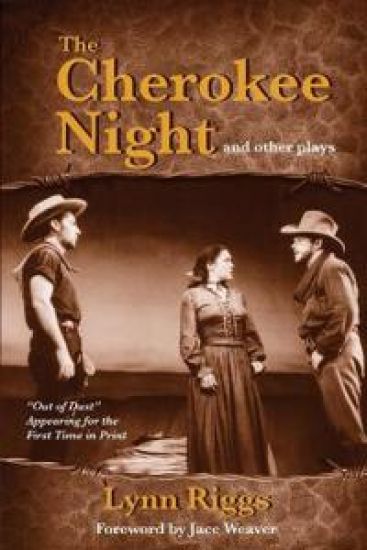
The Cherokee Night and Other Plays

The Cherokee Night and Other Plays

Lynn Riggs; Jace Weaver

University of Oklahoma Press
2003
sidottu
Special Limited Edition leatherbound hardcoverThe author of numerous plays and film scripts, including Green Grow the Lilacs, later made into the hit musical Oklahoma!, Lynn Riggs (18991954) is recognized as one of America's most engaging dramatists and was the only active American Indian dramatist during the first half of the twentieth century. An elegant leatherbound collector's edition, The Cherokee Night and Other Plays, features his never-before-published play Out of Dust, as well as The Cherokee Night and Green Grow the Lilacs.A mixed-blood Cherokee, Riggs wrote about the people, places, and events of the Oklahoma he knew so well. A cattle rancher's son, Riggs was born in the Verdigris Valley south of Claremore in Indian Territory. He first gained recognition as a poet in the early 1920s while attending the University of Oklahoma and later moved to New York, where he worked on and around Broadway. In 1927 Riggs was awarded the Guggenheim Fellowship, and while in France on that fellowship, he began writing Green Grow the Lilacs, which Rodgers and Hammerstein made into the Broadway musical Oklahoma! in 1943. By the end of his life, Riggs had written some thirty plays and scripts for fourteen films produced between 1930 and 1955.In their 1939 Handbook of Oklahoma Writers, Mary Hays Marable and Elaine Boylan observe: ""Lynn Riggs hitched his wagon to Pegasus and rode into the theatre with an output of poetic and regional plays that has brought him outstanding success.""
The Cherokee Night and Other Plays

The Cherokee Night and Other Plays

Lynn Riggs; Jace Weaver

University of Oklahoma Press
2003
nidottu
Special Limited Edition leatherbound hardcoverThe author of numerous plays and film scripts, including Green Grow the Lilacs, later made into the hit musical Oklahoma!, Lynn Riggs (18991954) is recognized as one of America's most engaging dramatists and was the only active American Indian dramatist during the first half of the twentieth century. An elegant leatherbound collector's edition, The Cherokee Night and Other Plays, features his never-before-published play Out of Dust, as well as The Cherokee Night and Green Grow the Lilacs.A mixed-blood Cherokee, Riggs wrote about the people, places, and events of the Oklahoma he knew so well. A cattle rancher's son, Riggs was born in the Verdigris Valley south of Claremore in Indian Territory. He first gained recognition as a poet in the early 1920s while attending the University of Oklahoma and later moved to New York, where he worked on and around Broadway. In 1927 Riggs was awarded the Guggenheim Fellowship, and while in France on that fellowship, he began writing Green Grow the Lilacs, which Rodgers and Hammerstein made into the Broadway musical Oklahoma! in 1943. By the end of his life, Riggs had written some thirty plays and scripts for fourteen films produced between 1930 and 1955.In their 1939 Handbook of Oklahoma Writers, Mary Hays Marable and Elaine Boylan observe: ""Lynn Riggs hitched his wagon to Pegasus and rode into the theatre with an output of poetic and regional plays that has brought him outstanding success.""
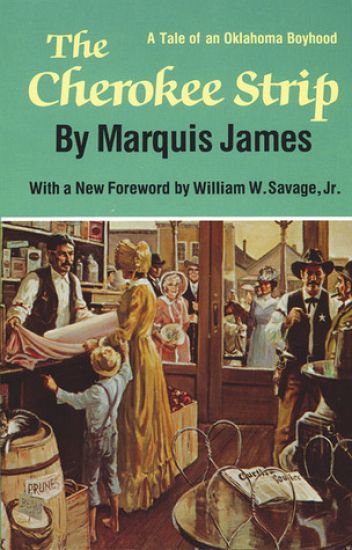
The Cherokee Strip

The Cherokee Strip

Marquis James

University of Oklahoma Press
2003
nidottu
Here is the perpetual variety of small town Oklahoma characters, incidents, changes; the self-confidence of an American boyhood; in honest, winning revelation.""-Kirkus Reviews
The Cherokee Cases

The Cherokee Cases

Jill Norgren; Kermit L. Hall; Melvin I. Urofsky

University of Oklahoma Press
2004
nidottu
This compact history is the first to explore two landmark U.S. Supreme Court cases of the early 1830s: Cherokee Nation v. Georgia and Worcester v. Georgia. Legal historian Jill Norgren details the extraordinary story behind these cases, describing how John Ross and other leaders of the Cherokee Nation, having internalized the principles of American law, tested their sovereignty rights before Chief Justice John Marshall in the highest court of the land. The Cherokees' goal was to solidify these rights and to challenge the aggressive actions that the government and people of Georgia carried out against them under the aegis of law. Written in a style accessible both to students and to general readers, The Cherokee Cases is an ideal guide to understanding the political development of the Cherokee Nation in the early nineteenth century and the tragic outcome of these cases so critical to the establishment of U.S. federal Indian law.
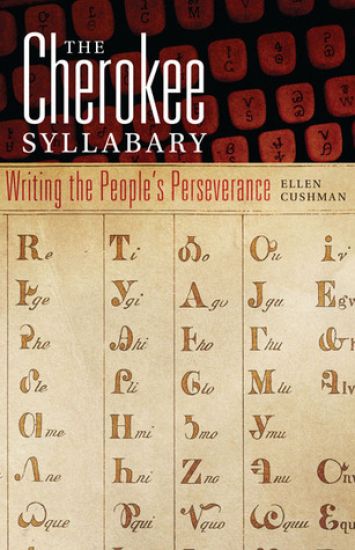
The Cherokee Syllabary

The Cherokee Syllabary

Ellen Cushman

University of Oklahoma Press
2011
sidottu
In 1821, Sequoyah, a Cherokee metalworker and inventor, introduced a writing system that he had been developing for more than a decade. His creation - the Cherokee syllabary - helped his people learn to read and write within five years and became a principal part of their identity. This groundbreaking study traces the creation, dissemination, and evolution of Sequoyah's syllabary from script to print to digital forms. Breaking with conventional understanding, author Ellen Cushman shows that the syllabary was not based on alphabetic writing, as is often thought, but rather on Cherokee syllables and, more importantly, on Cherokee meanings.Employing an engaging narrative approach, Cushman relates how Sequoyah created the syllabary apart from Western alphabetic models. But he called it an alphabet because he anticipated the Western assumption that only alphabetic writing is legitimate. Calling the syllabary an alphabet, though, has led to our current misunderstanding of just what it is and of the genius behind it - until now.In her opening chapters, Cushman traces the history of Sequoyah's invention and explains the logic of the syllabary's structure and the graphic relationships among the characters, both of which might have made the system easy for native speakers to use. Later chapters address the syllabary's enduring significance, showing how it allowed Cherokees to protect, enact, and codify their knowledge and to weave non-Cherokee concepts into their language and life. The result was their enhanced ability to adapt to social change on and in Cherokee terms.Cushman adeptly explains complex linguistic concepts in an accessible style, even as she displays impressive understanding of interrelated issues in Native American studies, colonial studies, cultural anthropology, linguistics, rhetoric, and literacy studies. Profound, like the invention it explores, The Cherokee Syllabary will reshape the study of Cherokee history and culture.Published through the Recovering Languages and Literacies of the Americas initiative, supported by the Andrew W. Mellon Foundation.
The Cherokee Nation in the Civil War

The Cherokee Nation in the Civil War

Clarissa W. Confer

University of Oklahoma Press
2012
nidottu
No one questions the horrific impact of the Civil War on America, but few realize its effect on American Indians. Residents of Indian Territory found the war especially devastating. Their homeland was beset not only by regular army operations but also by guerillas and bushwhackers. Complicating the situation even further, Cherokee men fought for the Union as well as the Confederacy and created their own ""brothers' war.""This book offers a broad overview of the war as it affected the Cherokees - a social history of a people plunged into crisis. The Cherokee Nation in the Civil War shows how the Cherokee people, who had only just begun to recover from the ordeal of removal, faced an equally devastating upheaval in the Civil War. Clarissa W. Confer illustrates how the Cherokee Nation, with its sovereign status and distinct culture, had a wartime experience unlike that of any other group of people - and suffered perhaps the greatest losses of land, population, and sovereignty.Confer examines decision-making and leadership within the tribe, campaigns and soldiering among participants on both sides, and elements of civilian life and reconstruction. She reveals how a centuries-old culture informed the Cherokees' choices, with influences as varied as matrilineal descent, clan affiliations, economic distribution, and decentralized government combining to distinguish the Native reaction to the war.The Cherokee Nation in the Civil War recalls a people enduring years of hardship while also struggling for their future as the white man's war encroached on the physical and political integrity of their nation.
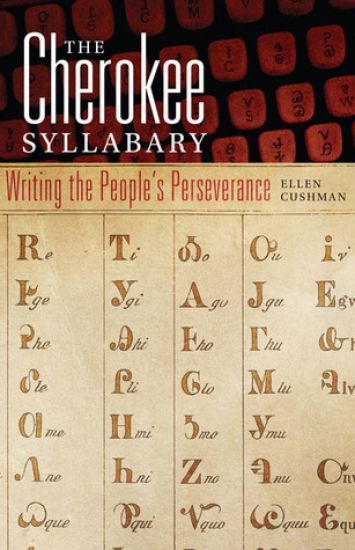
The Cherokee Syllabary

The Cherokee Syllabary

Ellen Cushman

University of Oklahoma Press
2013
nidottu
In 1821, Sequoyah, a Cherokee metalworker and inventor, introduced a writing system that he had been developing for more than a decade. His creation - the Cherokee syllabary - helped his people learn to read and write within five years and became a principal part of their identity. This groundbreaking study traces the creation, dissemination, and evolution of Sequoyah's syllabary from script to print to digital forms. Breaking with conventional understanding, author Ellen Cushman shows that the syllabary was not based on alphabetic writing, as is often thought, but rather on Cherokee syllables and, more importantly, on Cherokee meanings.Employing an engaging narrative approach, Cushman relates how Sequoyah created the syllabary apart from Western alphabetic models. But he called it an alphabet because he anticipated the Western assumption that only alphabetic writing is legitimate. Calling the syllabary an alphabet, though, has led to our current misunderstanding of just what it is and of the genius behind it - until now.In her opening chapters, Cushman traces the history of Sequoyah's invention and explains the logic of the syllabary's structure and the graphic relationships among the characters, both of which might have made the system easy for native speakers to use. Later chapters address the syllabary's enduring significance, showing how it allowed Cherokees to protect, enact, and codify their knowledge and to weave non-Cherokee concepts into their language and life. The result was their enhanced ability to adapt to social change on and in Cherokee terms.Cushman adeptly explains complex linguistic concepts in an accessible style, even as she displays impressive understanding of interrelated issues in Native American studies, colonial studies, cultural anthropology, linguistics, rhetoric, and literacy studies. Profound, like the invention it explores, The Cherokee Syllabary will reshape the study of Cherokee history and culture.Published through the Recovering Languages and Literacies of the Americas initiative, supported by the Andrew W. Mellon Foundation.
The Cherokee Frontier

The Cherokee Frontier

David H. Corkran

University of Oklahoma Press
2016
nidottu
American Indians have talent in both oratory and statesmanship. American history provides abundant examples of Indians' adroit political maneuvering with the whites. Less well known are the maneuvers that took place within individual tribes. The Cherokee Indians are celebrated for their political and social achievements. But the fact that the Cherokee concept of nationalism was formulated long before the nineteenth century has been overlooked. From 1740 until 1762 the Cherokees lived in the area of present-day North Carolina, South Carolina, Georgia, and Virginia, and they were a homogeneous people, albeit struggling in the face of opposition within and without. During this critical period the traditional nationalist forces in the nation had to contend with many brands of factionalism. The traditional leadership, stemming from Overhill Chota, came into conflict with the English puppet leadership at Overhill Great Tellico, and French-English rivalry split the nation into two forces. One, led by Old Hop, the first Beloved Man of the nation, advocated neutrality. The other, led by Attakullaculla, favored the English alliance. After a cruel war with the English, in which two royal expeditionary forces laid waste the Cherokee country, Attakullaculla was able to bring about a peace. This realistic picture of Indian intrigue reveals the influence of intratribal conflict on colonial history - demonstrating that the Cherokees' own problems were more significant than European pressure in shaping events. The story of Cherokee statesmanship in terms of Indian institutions provides fresh insight into this era of colonial and American Indian history.
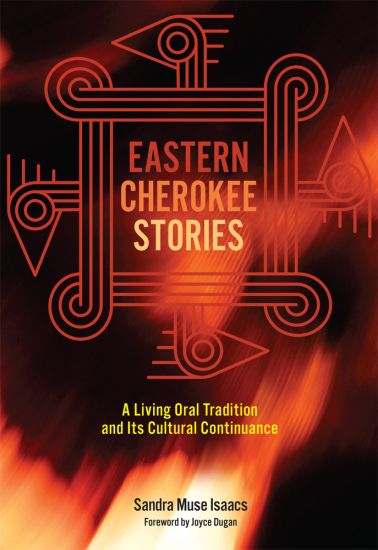
Eastern Cherokee Stories

Eastern Cherokee Stories

Sandra Muse Isaacs; Joyce Dugan

University of Oklahoma Press
2019
sidottu
Throughout our Cherokee history,"" writes Joyce Dugan, former principal chief of the Eastern Band of Cherokee Indians, ""our ancient stories have been the essence of who we are."" These traditional stories embody the Cherokee concepts of Gadugi, working together for the good of all, and Duyvkta, walking the right path, and teach listeners how to understand and live in the world with reverence for all living things. In Eastern Cherokee Stories, Sandra Muse Isaacs uses the concepts of Gadugi and Duyvkta to explore the Eastern Cherokee oral tradition, and to explain how storytelling in this tradition - as both an ancient and a contemporary literary form - is instrumental in the perpetuation of Cherokee identity and culture. Muse Isaacs worked among the Eastern Cherokees of North Carolina, recording stories and documenting storytelling practices and examining the Eastern Cherokee oral tradition as both an ancient and contemporary literary form. For the descendants of those Cherokees who evaded forced removal by the U.S. government in the 1830s, storytelling has been a vital tool of survival and resistance - and as Muse Isaacs shows us, this remains true today, as storytelling plays a powerful role in motivating and educating tribal members and others about contemporary issues such as land reclamation, cultural regeneration, and language revitalization. The stories collected and analyzed in this volume range from tales of creation and origins that tell about the natural world around the homeland, to post-Removal stories that often employ Native humor to present the Cherokee side of history to Cherokee and non-Cherokee alike. The persistence of this living oral tradition as a means to promote nationhood and tribal sovereignty, to revitalize culture and language, and to present the Indigenous view of history and the land bears testimony to the tenacity and resilience of the Cherokee people, the Ani-Giduwah.
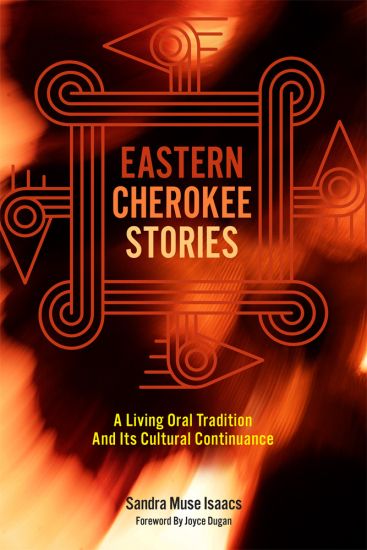
Eastern Cherokee Stories

Eastern Cherokee Stories

Sandra Muse Isaacs; Joyce Dugan

UNIVERSITY OF OKLAHOMA PRESS
2022
nidottu
“Throughout our Cherokee history,” writes Joyce Dugan, former principal chief of the Eastern Band of Cherokee Indians, “our ancient stories have been the essence of who we are.” These traditional stories embody the Cherokee concepts of Gadugi, working together for the good of all, and Duyvkta, walking the right path, and teach listeners how to understand and live in the world with reverence for all living things. In Eastern Cherokee Stories, Sandra Muse Isaacs uses the concepts of Gadugi and Duyvkta to explore the Eastern Cherokee oral tradition, and to explain how storytelling in this tradition—as both an ancient and a contemporary literary form—is instrumental in the perpetuation of Cherokee identity and culture. Muse Isaacs worked among the Eastern Cherokees of North Carolina, recording stories and documenting storytelling practices and examining the Eastern Cherokee oral tradition as both an ancient and contemporary literary form. For the descendants of those Cherokees who evaded forced removal by the U.S. government in the 1830s, storytelling has been a vital tool of survival and resistance—and as Muse Isaacs shows us, this remains true today, as storytelling plays a powerful role in motivating and educating tribal members and others about contemporary issues such as land reclamation, cultural regeneration, and language revitalization. The stories collected and analyzed in this volume range from tales of creation and origins that tell about the natural world around the homeland, to post-Removal stories that often employ Native humor to present the Cherokee side of history to Cherokee and non-Cherokee alike. The persistence of this living oral tradition as a means to promote nationhood and tribal sovereignty, to revitalize culture and language, and to present the Indigenous view of history and the land bears testimony to the tenacity and resilience of the Cherokee people, the Ani-Giduwah.
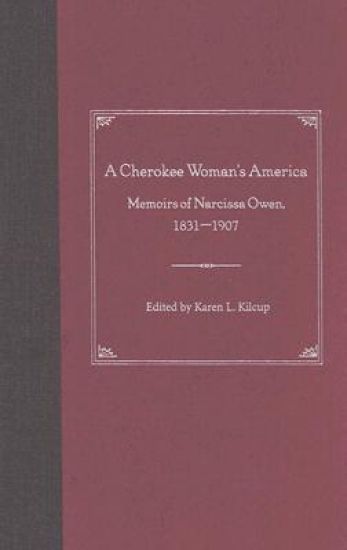
A Cherokee Woman's America

A Cherokee Woman's America

University Press of Florida
2005
sidottu
This first scholarly edition of the writings of a unique Native American woman details an extraordinary life in a combination of genres including oral history, ethnography, and western adventure sketches. Narcissa Owen was of mixed Cherokee and Scots-Irish descent and the daughter of a leader of the Old Settlers (those Cherokees who moved west prior to their subsequent forced removal by the U.S. government, the notorious Trail of Tears). The Memoirs reveal a fascinating and complex 19th-century woman - an artist, music teacher, storyteller, Confederate slave owner, Washington socialite, wife of a white railroad executive, widow, and mother of the first Native American U.S. Senator, Robert L. Owen, Jr. Her writings interpret the history of the tribe and describe the cultural upheaval of the Cherokees moving west. They also offer a glimpse into antebellum, Civil War, and Reconstruction American life. This edition provides a wealth of background information including a biographical preface, chronology of Owen's life, genealogy, and textual footnotes. In addition, an introductory essay places the Memoirs in the context of Owen's predecessors and contemporaries, including Cherokee cultural and literary tradition, the larger Indian historical/literary context, and women's writing of the late 19th and early 20th centuries.
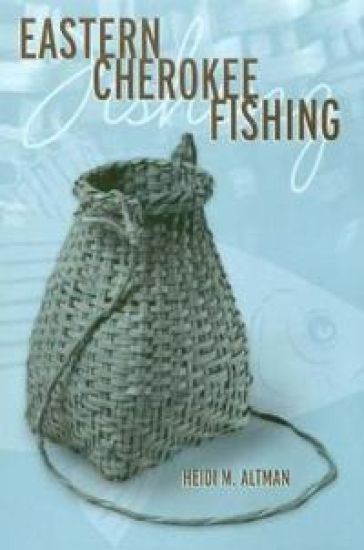
Eastern Cherokee Fishing

Eastern Cherokee Fishing

Heidi M. Altman

The University of Alabama Press
2006
nidottu
In ""Eastern Cherokee Fishing"", life histories, folktales, and reminiscences about fish gathered from interviews with Cherokee and non-Cherokee people provide a clear and personal picture of the changes in the Qualla Boundary (Eastern Band of the) Cherokee in the last 75 years. Coupled with documentary research, these ethnographic histories illuminate changes in the language, culture, and environment (particularly, aquatic resources) since contact with Europeans and examine the role these changes have played in the traditions and lives of the contemporary Cherokees. Interviewees include a great range of informants, from native speakers of Cherokee with extensive knowledge of traditional fishing methods to Euro-American English speakers whose families have lived in North Carolina for many generations and know about contemporary fishing practices in the area. The topic of fishing thus offers perspective on the Cherokee language, the vigor of the Cherokee system of native knowledge, and the history of the relationship between Cherokee people and the local environment. Heidi Altman also examines the role of fishing as a tourist enterprise and how fishing practices affect tribal waters.