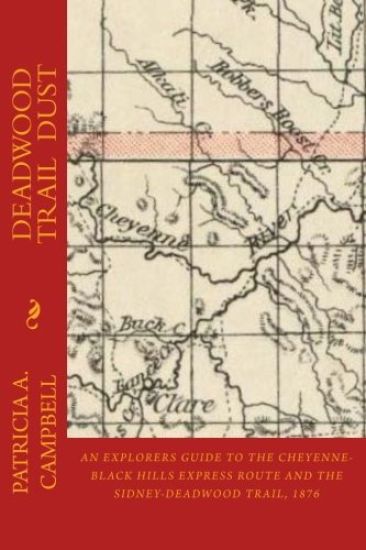
1876 was a momentous year during the Black Hills Gold Rush. The author's research on the famous Cheyenne-Black Hills Stage and Express Route, led her to numerous maps and descriptions about the trail, with dashes and dots, and a few geographical features. To better understand these stage stations and her ancestor's role as shotgun messengers, the author began to document what can still be seen today. Using the locations in this book, you can see where many of the stations used to be situated, including old horse corrals, telegraph wire roads, relics of possible stations, and numerous trail ruts made by heavy freight across the prairie. Campbell relates, "While it's been difficult to know exactly where the wheels on the famous coach rolled all of the time, it is possible to see many aspects of the Deadwood Stage route using satellite imagery based on early maps. All the credit goes to those dedicated individuals who preserved the trail years ago before there were computers. Thankfully, we no longer need to use a surveyor's measuring wheel and give dimensions in chains to study the old trail."
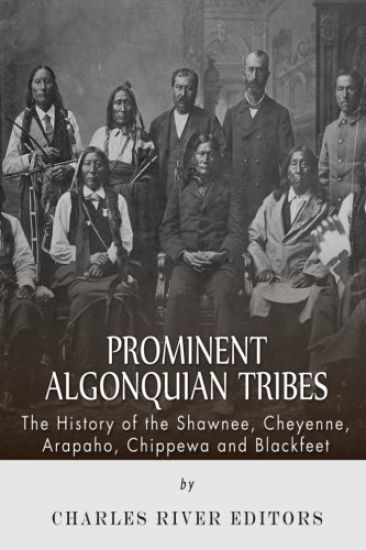
*Includes pictures *Includes accounts of the tribes written by contemporaries *Includes bibliographies for further reading *Includes a table of contents Throughout the 19th century, American settlers pushing across the Western frontier came into contact with diverse American tribes, producing a series of conflicts ranging from the Great Plains to the Southwest, from the Trail of Tears to the Pacific Northwest. Indian leaders like Geronimo became feared and dreaded men in America, and Sitting Bull's victory over George Custer's 7th Cavalry at Little Bighorn was one of the nation's most traumatic military endeavors. Given this history, it's no surprise that the Shawnee continue to be closely associated with their most famous leader, Tecumseh, the most famous Native American of the early 19th century. While leading the Shawnee, he attempted to peacefully establish a Native American nation east of the Mississippi River in the wake of the American Revolution. One of the most famous Native American tribes on the Great Plains is the Cheyenne, and their fame may be surpassed only by their influence on American history. Having split off from other groups around the 16th-17th centuries, the Cheyenne shifted from a sedentary agricultural society to the kind of nomadic g.roup many envision when thinking of groups on the Plains. But it was land disputes and conflicts with white settlers and the Cheyenne that set in motion the chain of events that led to the most famous battle among Native Americans and the American government: the Battle of the Little Bighorn. Like other notable Plains tribes, the Arapaho split off from other groups around the 16th-17th centuries and shifted from a sedentary agricultural society to the kind of nomadic group many envision when thinking of groups on the Plains. That nomadic lifestyle brought them into contact with the Sioux and Cheyenne, both of whom became allies as white settlers pushed west and led to conflicts. The United States sought to defuse tensions with natives during the westward push by drafting treaties regarding major pieces of land, often without understanding the complex structure of the various tribes, and subgroups within those tribes. Most notably, the Arapaho were victims of the Sand Creek Massacre in 1864, an action considered so heinous that the leader of the attack, Colonel John Chivington, was actually relieved of command after it. Outside of the Midwest, the Chippewa are not as well-known as other Native American tribes like the Sioux or Cherokee, but they have long been one of the biggest groups in all of North America. Not surprisingly, their presence around the Great Lakes region made them especially important to early European explorers who sailed the St. Lawrence and came into contact with the natives as they continued searching for the Northwest Passage. The French in particular conducted substantial fur trading with the Chippewa, and it is thanks to the European explorers that the various groups have all been identified as Chippewa today. The territory of the Blackfeet, at its greatest extent, encompassed a vast area from the eastern Rocky Mountains of Alberta and Montana and extending several hundred miles out onto the Great Plains, around the upper reaches of the Saskatchewan River and its tributaries in Alberta and the upper reaches of the Missouri River and its tributaries in Montana. The area of the land most sacred to the Blackfeet is the Sweet Grass Hills, which are located just south of the Canadian border in the central part of Montana. These are a group of buttes forested with balsam firs rising several thousand feet above the surrounding plains and which can be seen for a considerable distance. This was also Napi's favorite resting place in the mythology of the Blackfeet. Young Blackfeet went up into the Hills on their vision quests and, as their predecessors had done for several thousands of years, left inscriptions and petroglyphs.
Petrichor is a word describing the smell of the earth after the rain. Petrichor Poetry & Writings is capturing the essence of that word. Rainstorms come and go in life and one way to cope is through a creative outlet. Cheyenne's happens to be writing poetry. Poetry is a beautiful way of writing because it allows the reader to form different translations of one simple piece. Petrichor Poetry & Writings can have you laughing one minute, angry the next, and in tears all in a matter of a few pages turned. Petrichor Poetry & Writings is a raw and vulnerable book designed to make the reader feel every human emotion possible. So, take a chance and open it up
This book was different than my first, this book was poems that didn't come easy. I had to dig deep and even emotionally open myself up. Thus, came the name Elysian Poems. I stuck strictly to poems in this book rather than adding a few creative writing pieces. Elysian simply means, beautifully or creative; divinely inspired; peaceful; or perfect. By no means do I think my writings are perfect, but there were many times these pieces were divinely inspired flowing out of my brain at late hours of the night. I hope you truly enjoy these poems and find your own interpretation to each one.
Maroon Daydreams is more than a backward walk through memory and more than a sun-soaked vision for what could be: it is a manifesto to the chaos life unravels, a love letter for a healing journey-moment by moment. The hurt and the hope. Cheyenne Raine invites us into this unfolding.