Kirjojen hintavertailu. Mukana 11 717 486 kirjaa ja 12 kauppaa.

Kirjahaku

Etsi kirjoja tekijän nimen, kirjan nimen tai ISBN:n perusteella.

1000 tulosta hakusanalla Claude Matoux

Il y a en chacun de nous, une force créative illimitée. Utilisons-la: Claude qui écrit d'abord et qui réfléchit ensuite... réfléchit ? Enfin parfois.
J'ai d cid de rassembler ici mes improvisations, celles que je fais souvent sur Facebook, avec cette id e s rement idiote que les ventes r alis es me permettront de produire, mes pi ces de th tre. Je sais que nombre d'entre vous, seront pr ts m'aider.
Claude Chabrol

Claude Chabrol

University Press of Mississippi
2020
sidottu
Claude Chabrol (1930–2010) was a founding member of the French New Wave, the group of filmmakers that revolutionized French filmmaking in the late 1950s and early 1960s. One of the most prolific directors of his generation, Chabrol averaged more than one film per year from 1958 until his death in 2010. Among his most influential films, Le Beau Serge, Les Cousins, and Les Bonnes Femmes established his central place within the New Wave canon. In contrast to other filmmakers of the New Wave such as Jean-Luc Godard and Éric Rohmer, Chabrol exhibited simultaneously a desire to create films as works of art and an impulse to produce work that would be commercially successful and accessible to a popular Audience. The seventeen interviews in this volume, most of which have been translated into English for the first time, offer new insights into Chabrol’s remarkably wide-ranging filmography, providing a sense of his attitudes and ideas about a number of Subjects. Chabrol shares anecdotes about his work with such actors as Isabelle Huppert, Gerard Depardieu, and Jean Yanne, and offers fresh perspectives on other directors including Jean-Luc Godard, Fritz Lang, and Alfred Hitchcock. His mistrust of conventional wisdom often leads him to make pronouncements intended as much to shock as to elucidate, and he frequently questions established ideas and normative attitudes toward moral, ethical, and social behaviors. Chabrol’s intelligence is far-reaching, moving freely between philosophy, politics, psychology, literature, and history, and his iconoclastic spirit, combined with his blend of sarcasm and self-deprecating humor, give his interviews a tone that hovers between a high moral seriousness and a cynical sense of hilarity in the face of the world’s complexities.
Claude Chabrol

Claude Chabrol

University Press of Mississippi
2019
pokkari
Claude Chabrol (1930–2010) was a founding member of the French New Wave, the group of filmmakers that revolutionized French filmmaking in the late 1950s and early 1960s. One of the most prolific directors of his generation, Chabrol averaged more than one film per year from 1958 until his death in 2010. Among his most influential films, Le Beau Serge, Les Cousins, and Les Bonnes Femmes established his central place within the New Wave canon. In contrast to other filmmakers of the New Wave such as Jean-Luc Godard and Éric Rohmer, Chabrol exhibited simultaneously a desire to create films as works of art and an impulse to produce work that would be commercially successful and accessible to a popular Audience. The seventeen interviews in this volume, most of which have been translated into English for the first time, offer new insights into Chabrol’s remarkably wide-ranging filmography, providing a sense of his attitudes and ideas about a number of Subjects. Chabrol shares anecdotes about his work with such actors as Isabelle Huppert, Gerard Depardieu, and Jean Yanne, and offers fresh perspectives on other directors including Jean-Luc Godard, Fritz Lang, and Alfred Hitchcock. His mistrust of conventional wisdom often leads him to make pronouncements intended as much to shock as to elucidate, and he frequently questions established ideas and normative attitudes toward moral, ethical, and social behaviors. Chabrol’s intelligence is far-reaching, moving freely between philosophy, politics, psychology, literature, and history, and his iconoclastic spirit, combined with his blend of sarcasm and self-deprecating humor, give his interviews a tone that hovers between a high moral seriousness and a cynical sense of hilarity in the face of the world’s complexities.
Life Of Claude A. Gunder: Saved By The Blood From A Drunkard's Hell
The book ""Life of Claude A. Gunder: Saved By The Blood From A Drunkard's Hell"" is a memoir written by Claude A. Gunder himself. The book tells the story of Gunder's life, beginning with his childhood and continuing through his adult years. Gunder shares his experiences growing up in a family plagued by alcoholism and how he himself became an alcoholic.The book describes how Gunder's life spiraled out of control due to his addiction to alcohol, leading him down a path of self-destruction and despair. However, Gunder eventually found redemption through his faith in God and the power of the blood of Jesus Christ.Gunder's memoir is a powerful testament to the transformative power of faith and the ability of individuals to overcome even the most difficult of circumstances. The book is a poignant and honest account of one man's journey to redemption and serves as an inspiration to others who may be struggling with addiction or other challenges in their own lives.This Is A New Release Of The Original 1909 Edition.This scarce antiquarian book is a facsimile reprint of the old original and may contain some imperfections such as library marks and notations. Because we believe this work is culturally important, we have made it available as part of our commitment for protecting, preserving, and promoting the world's literature in affordable, high quality, modern editions, that are true to their original work.
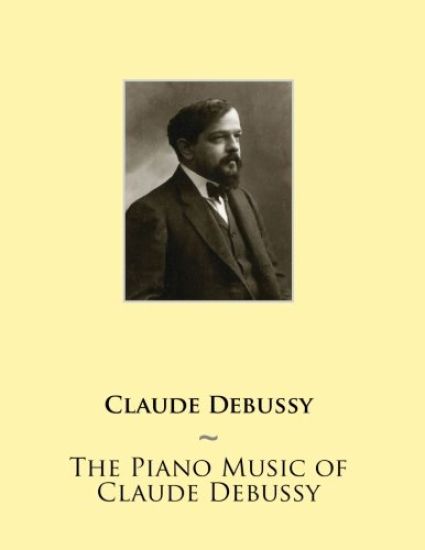
The Piano Music of Claude Debussy

The Piano Music of Claude Debussy

Claude Debussy

Createspace Independent Publishing Platform
2015
pokkari
Sheet music for Claude Debussy's piano works. This volume contains the following pieces: 1 - Two Arabesques - Piano Solo L. 662 - Ballade for the Piano L. 703 - D'un Cahier D'Esquisses L. 994 - Complete Estampes for the Piano L. 1005 - Masques for the Piano L. 1056 - L'Isle joyeuse for the Piano L. 1067 - Images - Books 1 and 2 for Solo Piano (L.110 & L. 111)8 - Children's Corner for Piano Solo L. 1139 - La Plus Que Lente for Piano Solo L. 12110 - Preludes - Book 2 for Solo Piano L. 12311 - Berceuse h ro que - Piano Solo L. 132
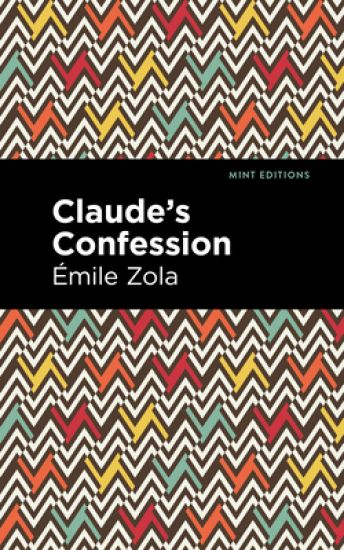
Claude's Confession

Claude's Confession

mile Zola

West Margin Press
2022
sidottu
Claude’s Confession (1865) is a novel by French author Émile Zola. Written at night while Zola was employed at Hachette, Claude’s Confession proved scandalous upon publication and resulted in the loss of his job. Undeterred by the response to his literary debut, Zola took advantage of his newfound infamy in order to embark on a career as one of France’s foremost experimental writers. Intent on exploring taboo and the lives of people on the edge of society, Zola crafts a narrative capable of illuminating the human condition while humanizing those typically disdained by the literary elite. Born and raised in Provence, Claude is shocked to find that the Paris of legend is a city mired in poverty, decay, and loneliness. As he struggles to make ends meet in order to pay for his tiny apartment, he takes notice of a young woman who lives in the same building as him. Although he knows she is a prostitute, his feelings for him grow stronger than the impulse to look down on her way of life. After months of silent longing, he opens his door to find her standing there, desperate for help after being evicted. Despite his limited income, he welcomes her inside, and their relationship soon develops into a passionate romance. Claude’s Confession is a story of forbidden love, fading hope, and the false promise of modern life. Written at the very beginning of Zola’s career, it shows the innerworkings of a young mind interested in subjects too often ignored by writers, a mind whose guiding principle is truth and truth alone. With a beautifully designed cover and professionally typeset manuscript, this edition of Émile Zola’s Claude’s Confession is a classic work of French literature reimagined for modern readers.
Claude's Confession

Claude's Confession

Emile Zola

West Margin Press
2022
nidottu
LARGE PRINT EDITION.Claude’s Confession (1865) is a novel by French author Émile Zola. Written at night while Zola was employed at Hachette, Claude’s Confession proved scandalous upon publication and resulted in the loss of his job. Undeterred by the response to his literary debut, Zola took advantage of his newfound infamy in order to embark on a career as one of France’s foremost experimental writers. Intent on exploring taboo and the lives of people on the edge of society, Zola crafts a narrative capable of illuminating the human condition while humanizing those typically disdained by the literary elite. Born and raised in Provence, Claude is shocked to find that the Paris of legend is a city mired in poverty, decay, and loneliness. As he struggles to make ends meet in order to pay for his tiny apartment, he takes notice of a young woman who lives in the same building as him. Although he knows she is a prostitute, his feelings for him grow stronger than the impulse to look down on her way of life. After months of silent longing, he opens his door to find her standing there, desperate for help after being evicted. Despite his limited income, he welcomes her inside, and their relationship soon develops into a passionate romance. Claude’s Confession is a story of forbidden love, fading hope, and the false promise of modern life. Written at the very beginning of Zola’s career, it shows the innerworkings of a young mind interested in subjects too often ignored by writers, a mind whose guiding principle is truth and truth alone. With a beautifully designed cover and professionally typeset manuscript, this edition of Émile Zola’s Claude’s Confession is a classic work of French literature reimagined for modern readers.
Claude's Confession

Claude's Confession

mile Zola

Graphic Arts Books
2021
pokkari
Claude’s Confession (1865) is a novel by French author Émile Zola. Written at night while Zola was employed at Hachette, Claude’s Confession proved scandalous upon publication and resulted in the loss of his job. Undeterred by the response to his literary debut, Zola took advantage of his newfound infamy in order to embark on a career as one of France’s foremost experimental writers. Intent on exploring taboo and the lives of people on the edge of society, Zola crafts a narrative capable of illuminating the human condition while humanizing those typically disdained by the literary elite. Born and raised in Provence, Claude is shocked to find that the Paris of legend is a city mired in poverty, decay, and loneliness. As he struggles to make ends meet in order to pay for his tiny apartment, he takes notice of a young woman who lives in the same building as him. Although he knows she is a prostitute, his feelings for him grow stronger than the impulse to look down on her way of life. After months of silent longing, he opens his door to find her standing there, desperate for help after being evicted. Despite his limited income, he welcomes her inside, and their relationship soon develops into a passionate romance. Claude’s Confession is a story of forbidden love, fading hope, and the false promise of modern life. Written at the very beginning of Zola’s career, it shows the innerworkings of a young mind interested in subjects too often ignored by writers, a mind whose guiding principle is truth and truth alone. With a beautifully designed cover and professionally typeset manuscript, this edition of Émile Zola’s Claude’s Confession is a classic work of French literature reimagined for modern readers.
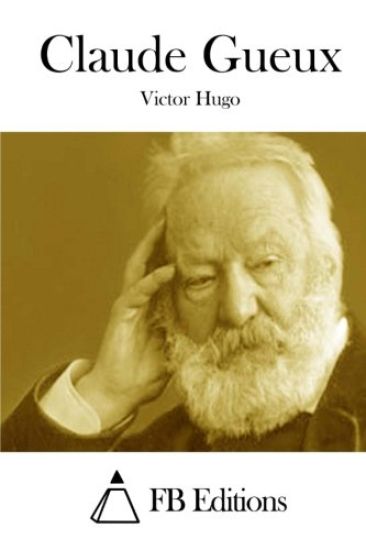
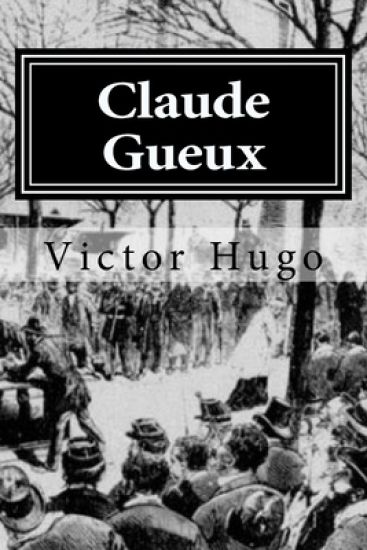
Claude Gueux

Claude Gueux

Victor Hugo

Createspace Independent Publishing Platform
2015
nidottu
Victor Hugo ach ve la derni re pr face du Dernier Jour d'un condamn en 1832. Quand il d couvre dans la Gazette des tribunaux du 19 mars 1832, le compte rendu du proc s d'un certain Claude Gueux condamn mort pour meurtre, il y d couvre comme un cho de son plaidoyer contre la peine de mort et d cide alors d'en faire un roman. Il retranscrit donc la vie de Claude Gueux d s son entr e dans la prison jusqu' son ex cution en passant par les motifs de son crime et son proc s. Suit une longue r flexion de Victor Hugo sur les r les et les devoirs de la soci t face au criminel.
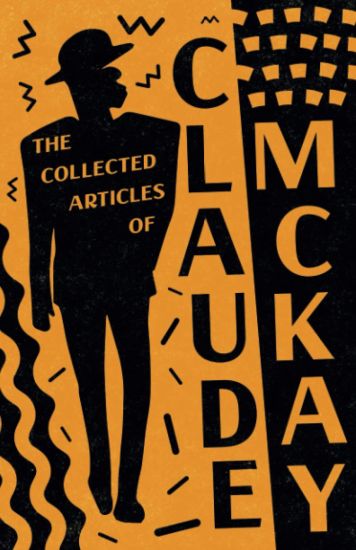
The Collected Articles of Claude McKay
Festus Claudius "Claude" McKay OJ (1890-1948) was a Jamaican-born American poet and writer famous for his central role in the Harlem Renaissance. After travelling to America to attend college, he came across W. E. B. Du Bois's "The Souls of Black Folk", which inspired in him an interest in politics. In 1914 he moved to New York City and five years later wrote his most famous work, "If We Must Die", a sonnet dealing with the spate of white-on-black race riots and lynchings that succeeded the First World War. McKay's political and literary endeavours eventually took him to Russia, where he collaborated on "The Negroes of America" (1923) and "Trial by Lynching" (1925), which explored American black-white racism from a Marxist class-conflict perspective. After coming to terms with the Authoritarianism of the Soviet Union, McKay left for Western Europe in 1923. This book contains a fantastic collection of McKay's most influential articles on race and politics, not to be missed by those with an interest in American history and global politics during the twentieth century. Contents include: "Claude Mckay by Robert Thomas Kerlin", "Socialism and the Negro", "The Capitalist Way: Lettow-Vorbeck", "A Black Man Replies", "Review of First Principles of Working Class Education", "Communists and the Local Councils of Action", "The Revolution in Currency", "The Yellow Peril and the Dockers", "How Black Sees Green and Red", etc. Other notable works by this author include: "Gingertown" (1932), "A Long Way from Home" (1937) and "My Green Hills of Jamaica" (1979). Read & Co. Books are proudly publishing this brand new collection of classic articles, now complete with an introductory biography from Robert Thomas Kerlin's "Negro Poets and their Poems" (1923).