Kirjojen hintavertailu. Mukana 11 627 067 kirjaa ja 12 kauppaa.

Kirjahaku

Etsi kirjoja tekijän nimen, kirjan nimen tai ISBN:n perusteella.

802 tulosta hakusanalla Cohn A

Most-Cited Scholars in Criminology and Criminal Justice, 1986-2010

Most-Cited Scholars in Criminology and Criminal Justice, 1986-2010

Ellen G Cohn; David P. Farrington; Amaia Iratzoqui

Springer International Publishing AG
2013
nidottu
?? ?This brief examines the influence and prestige of scholars and works in the field of Criminology and Criminal Justice, as well as changes in influence and prestige over a period of 25 years, based on citation analysis. Methods of measuring scholarly influence can be highly controversial, but the authors of this work clearly outline their methodology, developed over years of experience working with this area of study. Through their expertise in Criminology and Criminal Justice, they are able to solve problems that affect or confound many traditional forms of citation analysis, such as irregularly cited references or self-citations. It includes 25 years of data (1986 through 2010) on the most-cited scholars and works in major American and international Criminology and Criminal Justice journals, and provides an objective measure of influence and prestige. Through an analysis of the data, the authors also document the intellectual development of criminology and criminal justice as a field of study since 1986. They highlight the development of research trends and indicate areas for future research. This book is designed for use by scholars and academics in the fields of Criminology and Criminal Justice, and the methodology will be of interest to researchers in related disciplines, including Sociology and Social Psychology. --Cohn, Farrington, and Iratzoqui provide an invaluable service in unpacking the criminological enterprise. Using systematic citational analysis, they illuminate the core patterns of scholarly influence that have shaped the field’s development. This volume is an essential resource for all those wishing to understand which scholars and writings have done most—within and across time periods—to affect thinking about crime and justice. Francis T. CullenDistinguished Research ProfessorUniversity of Cincinnati-Citation analyses have becomeone of the most significant measures of scholarly influence. They are especially useful for revealing major trends over time regarding authors and the topics of interest to the wider field. Cohn, Farrington, and Iratzoqui's Most Cited Scholars in Criminology and Criminal Justice, 1986-2010 provides the most up-to-date, comprehensive, and longitudinal investigation of scholarly influence in criminology/criminal justice. This resource is a most interesting read, one that supplies not a mere counting of citations but clear ideas about where the field has been centered and where it is trending into the future.Alex R. PiqueroAshbel Smith Professor of CriminologyUniversity of Texas at Dallas
Universal Algebra

Universal Algebra

P.M. Cohn

Kluwer Academic Publishers
1981
sidottu
The present book was conceived as an introduction for the user of universal algebra, rather than a handbook for the specialist, but when the first edition appeared in 1965, there were practically no other books entir~ly devoted to the subject, whether introductory or specialized. Today the specialist in the field is well provided for, but there is still a demand for an introduction to the subject to suit the user, and this seemed to justify a reissue of the book. Naturally some changes have had to be made; in particular, I have corrected all errors that have been brought to my notice. Besides errors, some obscurities in the text have been removed and the references brought up to date. I should like to express my thanks to a number of correspondents for their help, in particular C. G. d'Ambly, W. Felscher, P. Goralcik, P. J. Higgins, H.-J. Hoehnke, J. R. Isbell, A. H. Kruse, E. J. Peake, D. Suter, J. S. Wilson. But lowe a special debt to G. M. Bergman, who has provided me with extensivecomments. particularly on Chapter VII and the supplementary chapters. I have also con­ sulted reviews of the first edition, as well as the Italian and Russian translations.
Universal Algebra

Universal Algebra

P.M. Cohn

Kluwer Academic Publishers
1981
nidottu
The present book was conceived as an introduction for the user of universal algebra, rather than a handbook for the specialist, but when the first edition appeared in 1965, there were practically no other books entir~ly devoted to the subject, whether introductory or specialized. Today the specialist in the field is well provided for, but there is still a demand for an introduction to the subject to suit the user, and this seemed to justify a reissue of the book. Naturally some changes have had to be made; in particular, I have corrected all errors that have been brought to my notice. Besides errors, some obscurities in the text have been removed and the references brought up to date. I should like to express my thanks to a number of correspondents for their help, in particular C. G. d'Ambly, W. Felscher, P. Goralcik, P. J. Higgins, H.-J. Hoehnke, J. R. Isbell, A. H. Kruse, E. J. Peake, D. Suter, J. S. Wilson. But lowe a special debt to G. M. Bergman, who has provided me with extensivecomments. particularly on Chapter VII and the supplementary chapters. I have also con­ sulted reviews of the first edition, as well as the Italian and Russian translations.
An Anthropologist Among the Historians and Other Essays
These twenty-three essays by Professor Cohn are collected here for the first time. The first section is concerned with methodology within the disciplines of history and anthropology, particularly as these relate to scholarly writings on India. The more empirical offerings within the next four sections are concerned with `anthropological history'.
Evaluating Criminology and Criminal Justice

Evaluating Criminology and Criminal Justice

Ellen G. Cohn; David P. Farrington; Richard A. Wright

Praeger Publishers Inc
1998
sidottu
Using citation analysis, this study examines the influence and prestige of scholars, journals, and university departments in the fields of criminology and criminal justice. In the tradition of Marvin E. Wolfgang's Evaluating Criminology, the authors apply this quantitative method to evaluate the impact of individuals and their research efforts on two fields and to identify interconnections among scholars and their publications. This examination of the most-cited scholars, works, and topics in major American and international journals from 1986 to 1990 and from 1991 to 1995 provides valuable and unbiased feedback for researchers and practitioners.The nine chapters of this book detail a wide range of findings in both criminology and criminal justice. After an introduction to the methodology, chapters two, three, and four divide recent scholarship into two periods, 1986 to 1990 and 1991 to 1995, in order to consider the most-cited scholars, works, and topics. Chapter five provides a longitudinal analysis of scholars in the discipline since 1945. Chapters six and seven provide a system of prestige-ratings for relevant journals as well as page coverage analysis of the most influential scholars. The continuing controversy over whether the two fields are converging or diverging is the subject of chapter eight, and the work concludes with a prescription for further research.
A Practical Handbook for the Actor

A Practical Handbook for the Actor

Melissa Bruder; Lee Michael Cohn; Madeleine Olnek; Nathaniel Pollack; Robert Previto; Scott Zigler

Random House USA Inc
1986
pokkari
Six actors and actresses explain their philosophy concerning the theater, discuss physical action, scene analysis, costume, makeup, and mannerisms, and identify the common problems working actors must overcome
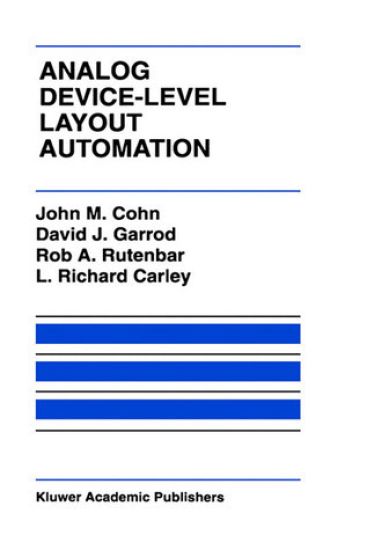
Analog Device-Level Layout Automation

Analog Device-Level Layout Automation

John M. Cohn; David J. Garrod; Rob A. Rutenbar; Rick Carley

Springer
1994
sidottu
This book presents a detailed summary of research on automatic layout of device-level analog circuits that was undertaken in the late 1980s and early 1990s at Carnegie Mellon University. We focus on the work behind the creation of the tools called KOAN and ANAGRAM II, which form part of the core of the CMU ACACIA analog CAD system. KOAN is a device placer for custom analog cells; ANANGRAM II a detailed area router for these analog cells. We strive to present the motivations behind the architecture of these tools, including detailed discussion of the subtle technology and circuit concerns that must be addressed in any successful analog or mixed-signal layout tool. Our approach in organizing the chapters of the book has been to present our algo­ rithms as a series of responses to these very real and very difficult analog layout problems. Finally, we present numerous examples of results generated by our algorithms. This research was supported in part by the Semiconductor Research Corpora­ tion, by the National Science Foundation, by Harris Semiconductor, and by the International Business Machines Corporation Resident Study Program. Finally, just for the record: John Cohn was the designer of the KOAN placer; David Garrod was the designer of the ANAGRAM II router (and its predeces­ sor, ANAGRAM I). This book was architected by all four authors, edited by John Cohn and Rob Rutenbar, and produced in finished form by John Cohn.
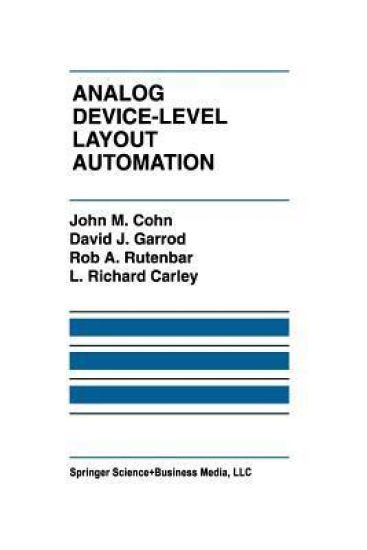
Analog Device-Level Layout Automation

Analog Device-Level Layout Automation

John M. Cohn; David J. Garrod; Rob A. Rutenbar; Rick Carley

Springer-Verlag New York Inc.
2012
nidottu
This book presents a detailed summary of research on automatic layout of device-level analog circuits that was undertaken in the late 1980s and early 1990s at Carnegie Mellon University. We focus on the work behind the creation of the tools called KOAN and ANAGRAM II, which form part of the core of the CMU ACACIA analog CAD system. KOAN is a device placer for custom analog cells; ANANGRAM II a detailed area router for these analog cells. We strive to present the motivations behind the architecture of these tools, including detailed discussion of the subtle technology and circuit concerns that must be addressed in any successful analog or mixed-signal layout tool. Our approach in organizing the chapters of the book has been to present our algo­ rithms as a series of responses to these very real and very difficult analog layout problems. Finally, we present numerous examples of results generated by our algorithms. This research was supported in part by the Semiconductor Research Corpora­ tion, by the National Science Foundation, by Harris Semiconductor, and by the International Business Machines Corporation Resident Study Program. Finally, just for the record: John Cohn was the designer of the KOAN placer; David Garrod was the designer of the ANAGRAM II router (and its predeces­ sor, ANAGRAM I). This book was architected by all four authors, edited by John Cohn and Rob Rutenbar, and produced in finished form by John Cohn.
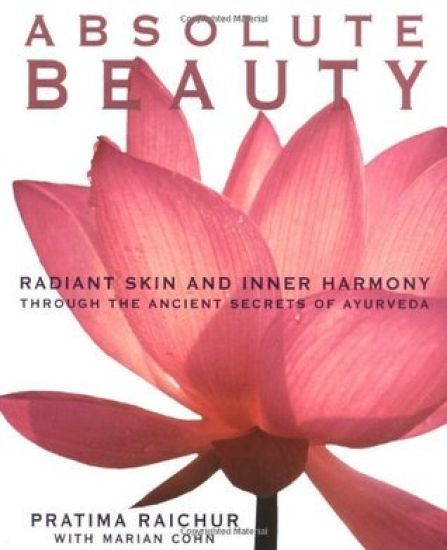
Absolute Beauty: Radiant Skin and Inner Harmony Through the Ancient Secrets of Ayurveda
We all know absolute beauty when we see it--skin that glows with health and an outer bearing that projects inner tranquillity. Yet, despite our every effort and expense, few of us know how to achieve it. In Absolute Beauty, Pratima Raichur, a chemist and internationally recognized expert on Ayurvedic skin care, explains how the external skin tissue is the physical reflection of everything that happens within the body: the way we eat and breathe, as well as the thoughts and emotions that fill our mind and color our spirit. Here, in the first beauty and skin care guide to reveal the secret to lasting radiance through the principles of Ayurveda, Pratima Raichur offers readers: a detailed self-test to determine their exact skin type customized skin care plans for each skin type proven-effective advice for addressing the most troubling skin problems essential nutritional information instructions for detoxifying the body
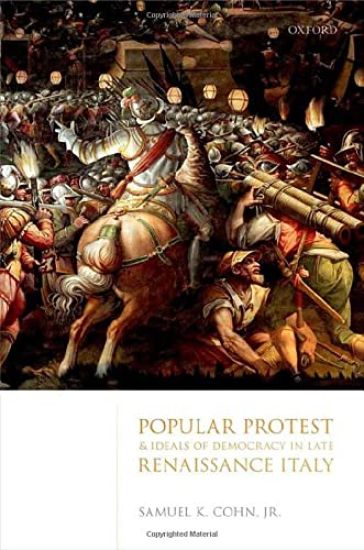
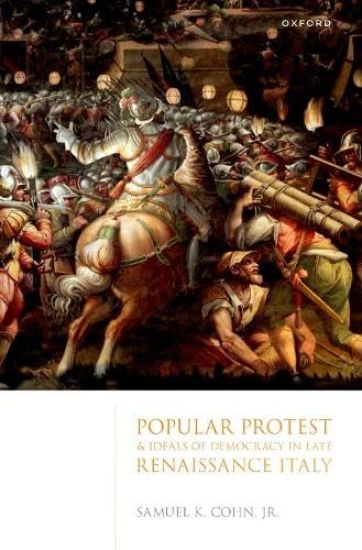
Popular Protest and Ideals of Democracy in Late Renaissance Italy
Popular Protest and Ideals of Democracy in Late Renaissance Italy is the first study to analyse popular protest across the Italian peninsula and the Venetian colonies during the early modern period, 1494 to 1559. Drawing on over 100 contemporary chronicles and diaries, the fifty-eight volumes of Marin Sanudo's diplomatic dispatches, mercantile letters, and commentary, and 586 collective supplications scattered through archival sources from towns and villages in the Grand duchy of Milan, Samuel K. Cohn, Jr. places these incidents and their patterns in comparative perspectives, first with the late medieval heyday of popular revolt and then with regions north of the Alps. Cohn finds new developments during the early modern period such as an increase in women rebels, mutinies of soldiers, and new tactics of revolts such as shop closures, peaceful demonstrations of strength, and use of religious processions for discussions of tactics and strategies for obtaining logistic advantage. At the same time, these protests show convergences with the medieval Italian past, with leaders coming almost exclusively from the ranks of nonelites, religious ideology playing a surprisingly minor role, and the majority of revolts centring overwhelming in towns and cities. Finally, this study demonstrates that democracies do not just die under the duress of military occupation and growing powers of autocratic regimes. Ideals of representation and equality not only persisted; they could emerge in new forms and with greater sophistication.
Popular Protest and Ideals of Democracy in Late Renaissance Italy
Popular Protest and Ideals of Democracy in Late Renaissance Italy is the first study to analyse popular protest across the Italian peninsula and the Venetian colonies during the early modern period, 1494 to 1559. Drawing on over 100 contemporary chronicles and diaries, the fifty-eight volumes of Marin Sanudo's diplomatic dispatches, mercantile letters, and commentary, and 586 collective supplications scattered through archival sources from towns and villages in the Grand duchy of Milan, Samuel K. Cohn, Jr. places these incidents and their patterns in comparative perspectives, first with the late medieval heyday of popular revolt and then with regions north of the Alps. Cohn finds new developments during the early modern period such as an increase in women rebels, mutinies of soldiers, and new tactics of revolts such as shop closures, peaceful demonstrations of strength, and use of religious processions for discussions of tactics and strategies for obtaining logistic advantage. At the same time, these protests show convergences with the medieval Italian past, with leaders coming almost exclusively from the ranks of nonelites, religious ideology playing a surprisingly minor role, and the majority of revolts centring overwhelming in towns and cities. Finally, this study demonstrates that democracies do not just die under the duress of military occupation and growing powers of autocratic regimes. Ideals of representation and equality not only persisted; they could emerge in new forms and with greater sophistication.
After Noah

After Noah

Andrew Linzey; Dan Cohn-Sherbok

Mowbray
1997
nidottu
A comprehensive study of Jewish and Christian teaching about animals, this text argues that the treatment of animals is not only a moral issue, but also a theological and spiritual one. The authors show how Jews and Christians have often failed to promote a compassionate and sensitive regard for animals. The text argues that the way we treat animals is a benchmark of the kind of society we are, and that in recognizing the true, and biblically based, value of animals, we liberate ourselves from the idolatry which is to be found at the heart of much contemporary spirituality. It is addressed to all people of faith who believe that, in devaluing animals, we ultimately devalue ourselves and our own souls.
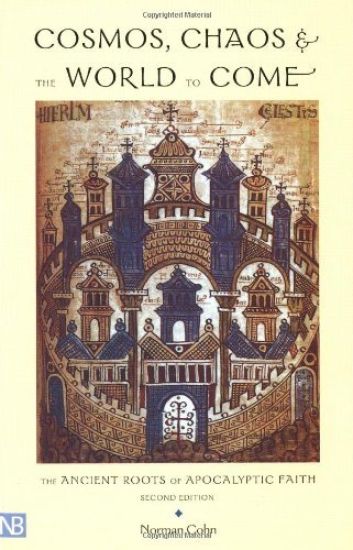
Cosmos, Chaos and the World to Come

Cosmos, Chaos and the World to Come

Norman Cohn

Yale University Press
2001
pokkari
All over the world people look forward to a perfect future, when the forces of good will be finally victorious over the forces of evil. Once this was a radically new way of imagining the destiny of the world and of mankind. How did it originate, and what kind of world-view preceded it? In this engrossing book, the author of the classic work The Pursuit of the Millennium takes us on a journey of exploration, through the world-views of ancient Egypt, Mesopotamia, and India, through the innovations of Iranian and Jewish prophets and sages, to the earliest Christian imaginings of heaven on earth.Until around 1500 B.C., it was generally believed that once the world had been set in order by the gods, it was in essence immutable. However, it was always a troubled world. By means of flood and drought, famine and plague, defeat in war, and death itself, demonic forces threatened and impaired it. Various combat myths told how a divine warrior kept the forces of chaos at bay and enabled the world to survive. Sometime between 1500 and 1200 B.C., the Iranian prophet Zoroaster broke from that static yet anxious world-view, reinterpreting the Iranian version of the combat myth. For Zoroaster, the world was moving, through incessant conflict, toward a conflictless state—“cosmos without chaos.” The time would come when, in a prodigious battle, the supreme god would utterly defeat the forces of chaos and their human allies and eliminate them forever, and so bring an absolutely good world into being. Cohn reveals how this vision of the future was taken over by certain Jewish groups, notably the Jesus sect, with incalculable consequences. Deeply informed yet highly readable, this magisterial book illumines a major turning-point in the history of human consciousness. It will be mandatory reading for all who appreciated The Pursuit of the Millennium.
Love, Sex and Marriage

Love, Sex and Marriage

Dan Cohn-Sherbok; George D. Chryssides; Dawoud El-Alami

SCM Press
2013
nidottu
In all three Abrahamic faiths, Judaism, Christianity and Islam, marriage is part of God's plan for humanity, as illustrated in the Hebrew Scriptures, the New Testament, and the Koran as well as the religious literature of these three traditions. It is viewed as a sacred bond as well as a means to personal fulfilment. It is more than a legal contract, rather an institution with cosmic significance, legitimized through divine authority. In Judaism, Christianity and Islam, the purpose of marriage is to build a home, create a family and thereby perpetuate society. Yet, despite the similarity of perception in the great monotheistic faiths, there are important differences. In this book three scholars outline sex law, betrothal and marriage, family life and the understanding of divorce in these traditions and discuss the differences between them in a student-friendly and accessible way.
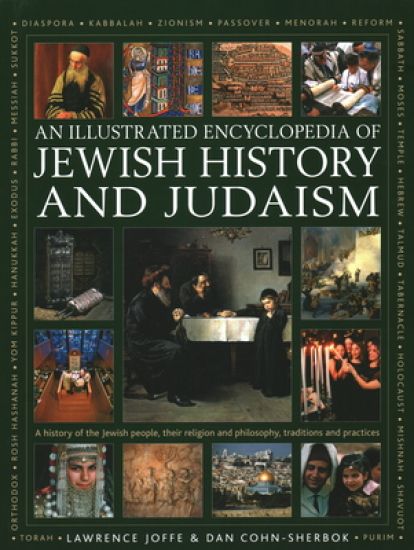
Jewish History and Judaism: An Illustrated Encyclopedia of

Jewish History and Judaism: An Illustrated Encyclopedia of

Lawrence Joffe; Dan Cohn-Sherbok

ANNESS PUBLISHING
2022
sidottu
This book offers an account of the 4,000-year history of the Jews, from the ancient Patriarchs and Kings through to modern times. It also explores the Jewish faith, its traditional beliefs and practices, its festivals and celebrations, and the way of life of Jewish people today. Divided into two volumes, The History of the Jews, details how the Jewish people flourished over time, creating the Hebrew Bible, before enduring centuries of persecution, culminating in the mass migration from Europe to America, and the eventual return to the Promised Land of Israel. The second volume, Judaism, explores the variety of religious forms of Jewish existence. The central tenets of Jewish belief are outlined and all aspects of religious life are described including the Sabbath, festivals, and home ceremonies.
Waymish: Why Are You Making It So Hard for me to give you my money?

Waymish: Why Are You Making It So Hard for me to give you my money?

Ray Considine; Ted Cohn; Chris Considine

Waymish
2020
nidottu
WAYMISH is an acronym for: Why Are You Making It So Hard...for Me to give You my Money? It represents all the slights and indifferences made by employees and organizations that lead customers to believe that you don't really want their business. Things like not listening to what the customer is saying, putting policies ahead of common sense, not attempting to resolve complaints, etc. Can you afford to create unhappy customers that take their business elsewhere? How many customers does your organization lose every day? How many were planning to give you their money but ended up leaving in frustration? It may be more than you think And these days you can't afford to lose even one good customer. Let this unforgettable program teach your staff the attitudes and behaviors that make customers feel valued so they will buy from you again and again. Benefits: - Increases revenue by teaching staff how to avoid common customer frustrations that result in lost sales - Maximizes customer lifetime value by teaching skills that positively impact customer satisfaction - Creates positive word-of-mouth and referral business by showing staff how to meet customer expectations and practice service recovery This is not a collection of stories about stupid customer service mistakes. And it's not yet another treatise on Customer Service Excellence. It's a training book reported in storytelling style. Use these stories in brief staff and employee meetings. Be sure to have your people solve the problems. Have them volunteer answers and sug¬gest better ways to serve customers. In later company or departmental meetings, interject quick sessions on WAYMISH. Repeat examples and constant service suggestions will make your people aware how widespread the "WAYMISH bug" can be . . . and why no company is immune. Over time, these mini-lessons will reinforce in employees' minds how important Lifetime
Algebraic Numbers and Algebraic Functions

Algebraic Numbers and Algebraic Functions

P.M. Cohn

Taylor Francis Ltd
2017
sidottu
This book is an introduction to the theory of algebraic numbers and algebraic functions of one variable. The basic development is the same for both using E Artin's legant approach, via valuations. Number Theory is pursued as far as the unit theorem and the finiteness of the class number. In function theory the aim is the Abel-Jacobi theorem describing the devisor class group, with occasional geometrical asides to help understanding. Assuming only an undergraduate course in algebra, plus a little acquaintance with topology and complex function theory, the book serves as an introduction to more technical works in algebraic number theory, function theory or algebraic geometry by an exposition of the central themes in the subject.